10 Parenting Smart Tips for your Children
Parenting does not come with a perfect manual, yet every parent wants the same thing: to raise kind, confident, responsible, and emotionally secure children. The good news is that strong parenting is not about being flawless. It is about being present, consistent, and thoughtful in the small moments that shape a child’s life every day.
Children learn more from what they see than from what they are told. They notice how parents handle stress, speak to others, keep promises, and respond to mistakes. That is why smart parenting is less about control and more about guidance. It means creating a home where children feel loved, understood, and gently directed toward better choices.
If you are looking for practical parenting tips for kids: that actually work in daily life, these ideas can help you build a healthier relationship with your child while teaching life skills that last far beyond childhood.
1. Lead With Love, But Stay Consistent

Children need affection, but they also need structure. Love without guidance can create confusion, while rules without warmth can create distance. Smart parenting happens when both are present together.
A child should know that your love is steady, even when their behavior needs correction. This helps them separate their actions from their worth. Instead of saying, “You are bad,” say, “That choice was not okay.” This small shift protects their self-esteem while still addressing the behavior.
Consistency matters just as much. If bedtime is flexible one day and strict the next, children may test limits simply because they are unsure where the line truly is. When expectations stay clear, children feel safer and more secure.
Parents who want calmer routines may also enjoy simple family systems and routines found in articles like genius parenting hacks, which can make everyday life more manageable.
2. Practice the 5 characteristics of a good parent

Many people wonder what truly makes a parent effective. While every family is different, the 5 characteristics of a good parent often include patience, consistency, empathy, communication, and trustworthiness.
Patience helps you respond instead of react. Children make mistakes, ask repeated questions, and sometimes test emotional boundaries. A patient parent teaches without making the child feel like a burden.
Consistency builds reliability. When children know what to expect, they are more likely to cooperate and less likely to feel anxious.
Empathy helps parents understand what may be behind a child’s behavior. A tantrum may not always be defiance. It could be tiredness, hunger, frustration, or feeling unheard.
Communication allows children to express their emotions and ask questions without fear. A child who feels heard is more likely to listen in return.
Trustworthiness means keeping promises and being honest. If you tell your child you will be there, follow through whenever possible. Trust is built in these little moments.
When parents model these traits, children often grow into adults who value the same qualities in their own relationships.
3. Make Time for Real Conversations Every Day
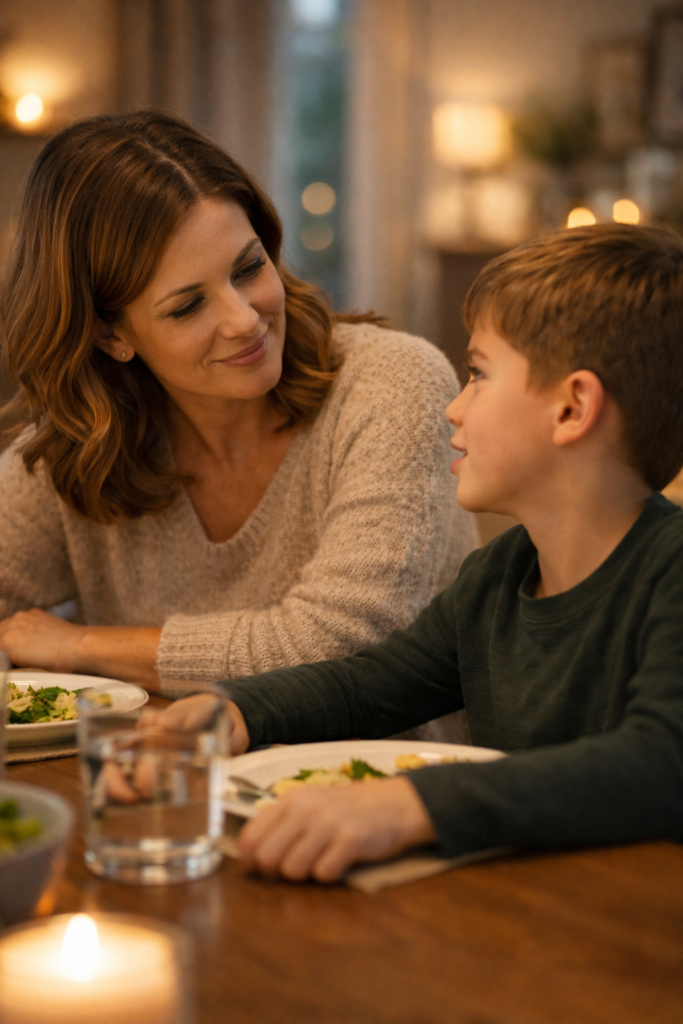
One of the smartest things a parent can do is talk with their child daily without distraction. This does not always need to be a deep talk. It can happen at breakfast, during a walk, after school, or before bedtime.
Ask open-ended questions like, “What made you smile today?” or “Was anything hard for you?” Questions like these invite more than a one-word answer. They help children understand their feelings and know their thoughts matter.
Real conversations also reduce emotional distance. If children only hear from parents when they are being corrected, they may begin to associate communication with criticism. But when conversations happen regularly, children are more likely to open up during difficult times too.
If home life feels busy and overwhelming, resources about parenting hacks for surviving at home with kids can support better routines and more meaningful time together.
4. Set Clear Rules of parents to their child

Every family needs boundaries. The important part is making sure the Rules of parents to their child are clear, fair, and age-appropriate. Rules should not exist just to control children. They should teach safety, responsibility, and respect.
For example, a rule about screen time teaches balance. A rule about speaking respectfully teaches healthy communication. A rule about homework before entertainment teaches discipline and priorities.
Keep rules simple enough for your child to remember. Too many rules can feel overwhelming and may lead to constant power struggles. A few strong household expectations are often more effective than a long list no one follows.
It also helps to explain the reason behind a rule. Children respond better when they understand the purpose. Saying, “We put toys away so the house stays safe and organized,” is more helpful than simply saying, “Because I said so.”
The goal is not to raise children who obey out of fear. It is to raise children who understand responsibility and make wise choices even when no one is watching.
5. Teach Responsibility Through Daily Tasks
Children feel more capable when they are trusted with small responsibilities. Age-appropriate chores and routines help them develop confidence, independence, and accountability.
A younger child can put toys back in a basket, place clothes in the hamper, or help set the table. Older children can pack their school bag, fold laundry, help with meals, or manage parts of their own schedule.
These daily tasks teach an important lesson: being part of a family means contributing to it. Children who help at home often understand teamwork more naturally.
Responsibility also grows when parents avoid doing everything for their child. It may take longer to let them try on their own, but that effort helps them build real-life skills. A child who learns to solve small problems early becomes more prepared for bigger challenges later.
For parents trying to create more order at home, articles on easy organization hacks for everyday life can also inspire smoother family routines.
6. Give Parents advice to their child That Builds Confidence

The best Parents advice to their child is not always long or dramatic. Often, the most powerful advice is simple, repeated, and lived out through example.
Tell your child things like: be honest even when it is hard, treat others with respect, keep trying when something feels difficult, and do not be afraid to ask for help. These ideas shape character over time.
Advice becomes even more effective when it matches your own behavior. If you tell your child to stay calm but often shout under stress, the message becomes mixed. Children follow what they observe.
Try offering advice in everyday situations instead of only during lectures. A conversation after a disagreement, a quiet moment after school, or a short reminder before a big event can feel more natural and less overwhelming.
Advice should also be encouraging, not only corrective. Children need reminders of what they are doing right. When parents notice effort, honesty, kindness, or progress, children become more motivated to keep growing.
7. Correct Behavior Without Shaming the Child

Discipline should teach, not humiliate. A child who feels constantly shamed may become secretive, defensive, or insecure rather than truly learning from mistakes.
When discipline is needed, stay calm and specific. Focus on the behavior and the consequence. Instead of using labels like “lazy” or “naughty,” describe what happened and what should happen next. For example: “You left your books on the floor. Please pick them up now and put them where they belong.”
Natural consequences can be especially helpful. If a child forgets their homework, the discomfort of explaining that at school can sometimes teach more than a long lecture at home. Of course, parents still need to guide and support, but not every mistake needs a dramatic response.
Children also need chances to repair mistakes. Saying sorry, helping fix a problem, or trying again teaches responsibility in a healthy way. This approach helps children understand that mistakes are part of learning, not proof that they are failures.
8. Notice Effort More Than Perfection
Many children grow up feeling pressure to always be the best, the smartest, or the fastest. But smart parenting teaches children to value effort, growth, and resilience more than perfection.
Praise should be meaningful. Instead of only saying, “You are so smart,” say, “I can tell you worked really hard on that.” This teaches children that progress comes from effort, not just natural talent.
When children believe effort matters, they are more likely to keep going after setbacks. They learn that mistakes are not the end of the story. They are simply part of learning.
This mindset also helps reduce fear. Children who are overly focused on perfection may avoid challenges because they do not want to fail. But children who are praised for trying become more willing to learn new things and keep improving.
9. Protect Emotional Safety at Home
A child’s home should feel emotionally safe. That means they can express feelings, ask questions, admit mistakes, and share worries without being mocked or dismissed.
Emotional safety does not mean children always get their way. It means they know their emotions will be handled with care. A child can be upset and still be guided. They can disagree and still be respected.
Parents can build this safety by listening fully before reacting, avoiding harsh comparisons with siblings or other children, and taking their concerns seriously. What seems small to an adult may feel huge to a child.
This is especially important in the early years. Children who feel emotionally safe often develop stronger self-worth and better communication skills later in life.
10. Prepare Your Children for Life, Not Just Childhood
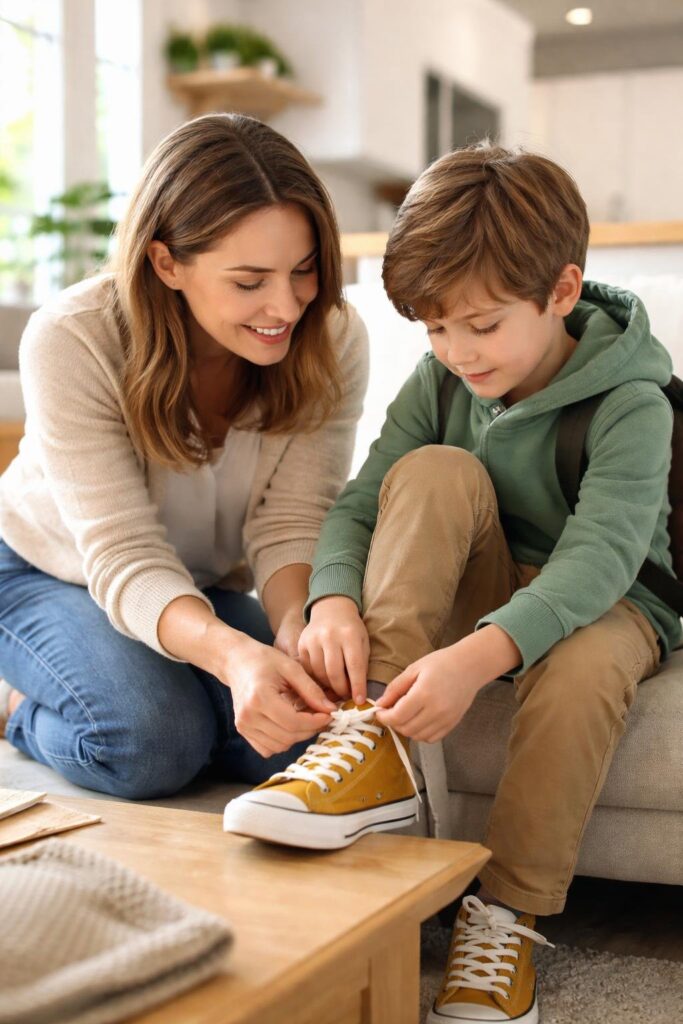
The purpose of parenting is not only to manage children today. It is to prepare them for adulthood tomorrow. That means teaching practical skills, emotional maturity, and moral values over time.
Teach children how to manage disappointment, apologize sincerely, respect others, solve problems, and make thoughtful decisions. Show them how to be helpful, honest, and dependable. These traits matter just as much as school success.
Let your child make age-appropriate choices so they can build judgment. Give them room to think, try, fail, and try again. Children do not become responsible overnight. They grow into it when parents guide them patiently and consistently.
In the end, smart parenting is about planting seeds. You may not see the full result right away, but the lessons you repeat today become the character your child carries into the future.
Final Thoughts
Parenting can feel overwhelming, but it does not require perfection. What children need most are parents who show love, set healthy boundaries, listen carefully, and guide them with wisdom. The strongest parenting often happens in ordinary moments: a calm correction, a kind conversation, a consistent rule, or a word of encouragement at the right time.
By practicing patience, modeling good values, and using thoughtful parenting tips for kids: in daily life, you create a strong foundation for your child’s future. And while no parent gets everything right, a loving and steady approach can make all the difference.
For more family-friendly ideas and practical home routines, readers may also find helpful inspiration in kindergarten marker hacks for parents and simple life hacks that make life easier.