14 Smart Minimalist Bedroom Ideas to Try This Weekend
Minimalist bedrooms get a bad reputation. People picture cold white walls, one sad chair, and a room that feels more like a showroom than a place to sleep. The good version looks nothing like that.
A minimalist bedroom done right still feels warm. It just holds fewer things, and every one of them earns its spot. Soft linen instead of six throw pillows. One plant instead of a shelf full of clutter. Walls that breathe a little. The whole point is calm, not emptiness.
The ideas ahead lean into that warmer side of the look. Some are five-minute swaps, like a single stem in a glass jar or a fresh coat of paint that changes how morning light lands. Others go a step further with fabric, color, and wall art that pull a room together without crowding it.
None of it needs a renovation or a big budget. Just smaller, smarter choices that make the room easier to wake up in.
1. Add Plants

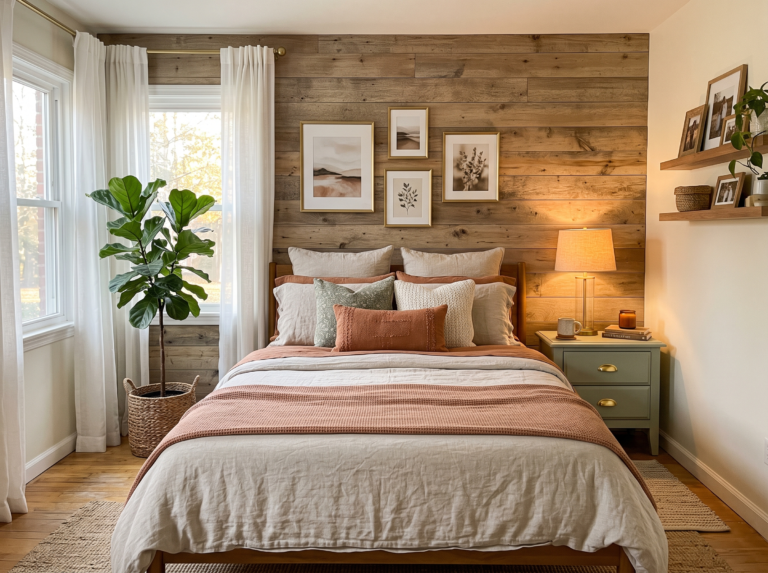
One green plant does more for a bare bedroom than a whole shelf of decor ever will. A trailing pothos on a low dresser, or a fiddle leaf fig sitting near the window, softens all the straight lines a minimalist room is built from.
Stick to one or two, not a jungle. That restraint is what keeps the look clean, and it’s also why the plant reads as a design choice instead of clutter. Terracotta pots work better than plastic here because the warm clay tone breaks up all that white and gray. There’s something about waking up to a bit of living green that makes the first walk to the coffee maker feel less rushed.
The whole room feels lighter with almost no effort.
2. Peach-colored Accents

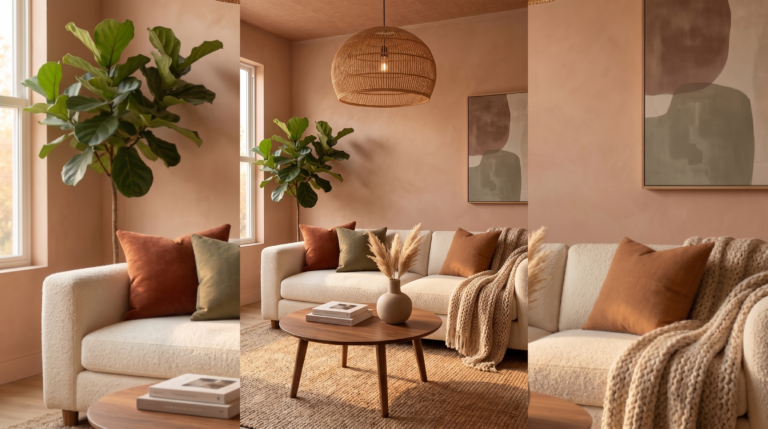
Keep that soft, living warmth going and swap green for something even gentler. Peach is the color that makes a minimalist bedroom stop feeling like a hotel room. It sits somewhere between blush and cream, so it warms up white walls without shouting for attention.
The best part is that nobody has to repaint anything. A peach throw folded at the foot of the bed, a ceramic vase on the nightstand, maybe one pillowcase in that shade. That’s it. The reason this works is that peach pulls warmth from natural light, so the room glows a little in the late afternoon instead of going flat and cold. It’s a nice thing to notice while folding laundry on a slow Saturday.
The colors stay interesting from morning to night.
💡 Pro Tip: Keep peach to three touchpoints max, spread across different heights in the room (bed, nightstand, and one spot on the wall or floor). Scattered evenly, it reads intentional. Clustered in one corner, it looks accidental.
3. Create A Privacy Feeling
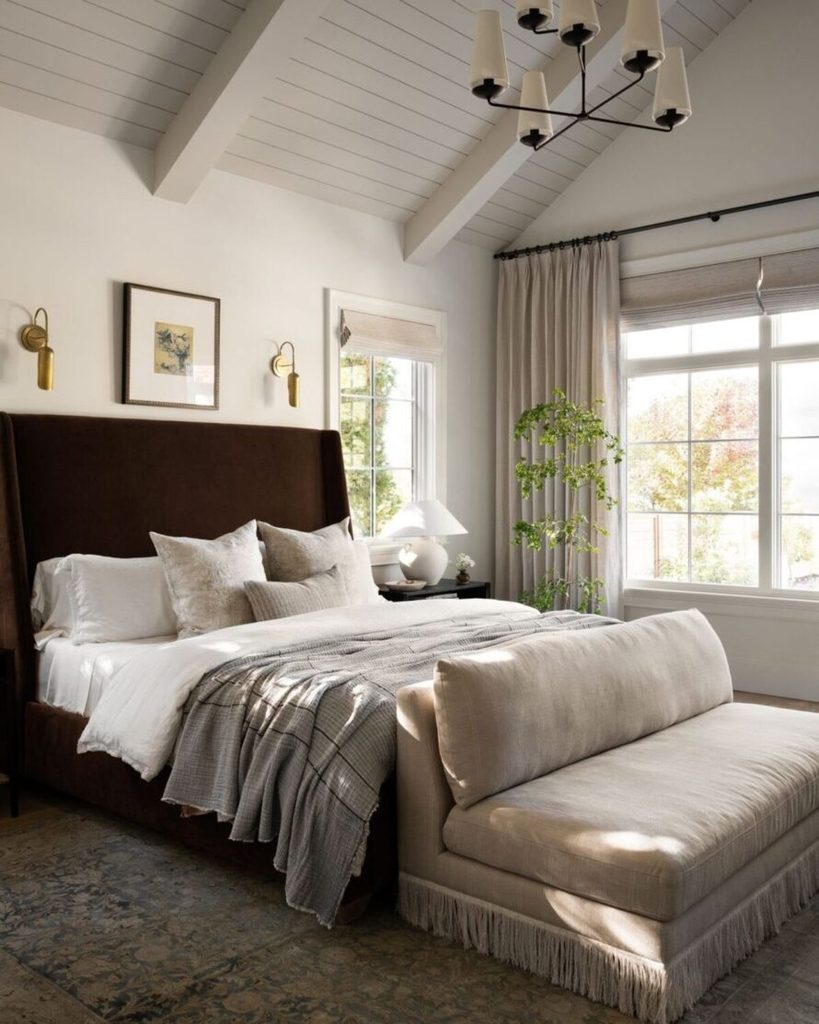
Where color warms a room up, restraint is what makes it feel like yours alone. A bedroom that reads as private has less on display, not more. Smooth bed linen, a clear surface or two, and only the things that actually belong in a room meant for sleeping.
That’s the quiet secret behind couples’ bedrooms that feel calm instead of chaotic. When the mail, the chargers, and the half-read magazines live somewhere else, the room stops competing for attention. Heavier curtains help too, and so does angling the bed away from the door if the layout allows it. The difference shows up around ten at night, when the room finally feels like it belongs to the two people in it.
A reminder that good design starts with how a space feels.
4. Gray Bedroom

Once a room feels closed off from the rest of the house, color choice matters more than people expect. Gray gets called boring, but the right gray does something white can’t. It holds shadow, so the walls look soft instead of blank.
The mistake is picking a gray with blue in it. Cool grays turn a bedroom chilly the second the sun drops. Warm grays with a hint of brown or greige stay comfortable in every light, which is why they work in north-facing rooms that never get much sun. Layer in oatmeal linen bedding, a pale oak nightstand, and a few yellow bedroom accents for a gentle lift, and the whole thing reads calm rather than gloomy. Rainy afternoons are when this room earns its keep.
Best suited for bedrooms that get uneven light through the day.
💡 Pro Tip: Test gray paint on two walls, not one. A shade that looks perfect on the sunny wall can turn purple or blue on the wall opposite the window, and that’s the wall people see from bed.
5. A Bouquet Of Fresh Summer Blooms

All that soft gray needs one bright thing to push against. A small bouquet on the nightstand does it faster than any decor purchase, and it costs almost nothing.
Keep the arrangement loose and low. Three or four stems in a clear glass jar beat a full florist bundle, because a tight little bouquet fits the scale of a nightstand instead of swallowing it. White ranunculus, cream roses, or a few sprigs of eucalyptus all sit well against neutral walls. The reason this works is that flowers bring in movement and scent, two things a minimalist room usually goes without. And there’s the small pleasure of changing the water on a Sunday, which quietly resets the whole room for the week ahead.
Proof that small choices carry the biggest weight.
👉 Suggestion: Look for single-variety stems in soft cream, white, or pale peach, paired with one textural filler like eucalyptus or dried grass. Clear glass or plain ceramic vases keep the focus on the flowers instead of the container.
6. Upgrade The Accent Wall
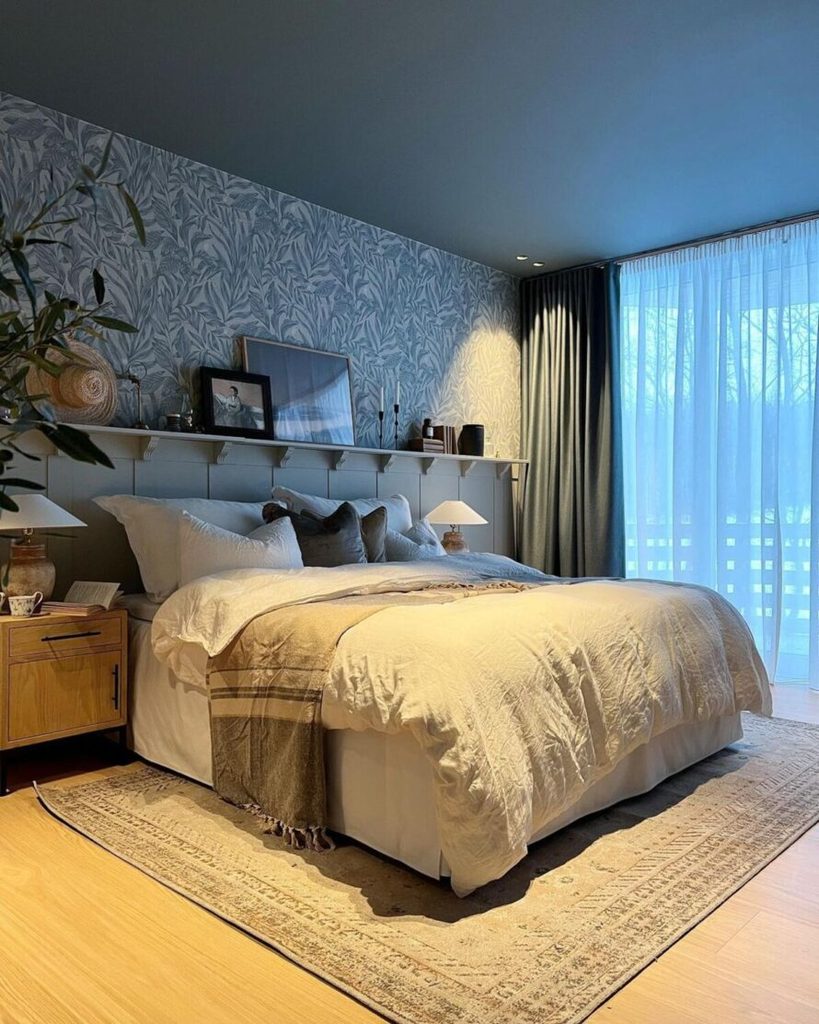
Flowers change a corner. The wall behind the bed changes the entire room. It’s the first thing anyone sees walking in, and in a minimalist bedroom it’s usually the only surface with room to do something interesting.
Textured plaster, a limewash finish, or a single roll of subtle wallpaper all work here. The key is keeping the pattern quiet, since a busy wall fights everything the rest of the room is trying to do. Soft leaf prints, thin vertical lines, or a plain color shift two shades deeper than the other walls give the bed a proper backdrop without adding a single object. Renters can get the same effect with a peel-and-stick panel that comes down clean at move-out.
One of those setups where every piece earns its place.
7. White Suits All Seasons

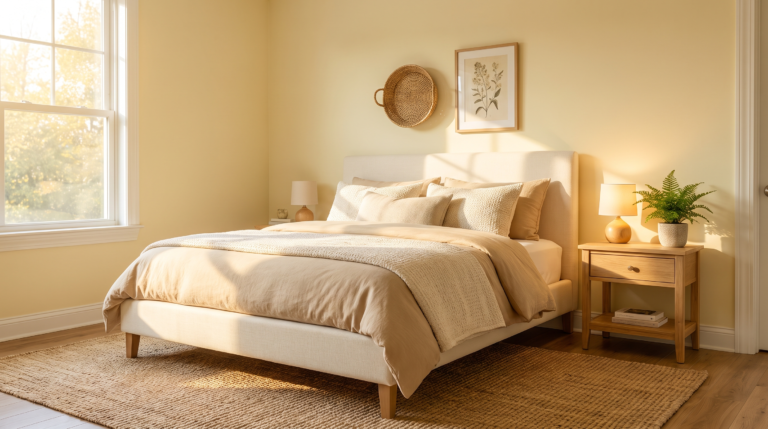
Not every wall needs a statement. White stays on the list year after year because it does the one thing no other color manages, which is disappearing so everything else can breathe.
The trick is picking a white with warmth in it. Bright, cool whites make a bedroom feel like a waiting room, but a soft white with a drop of cream or beige holds light gently and stays comfortable in July and January alike. Layer it with different textures rather than different colors. Waffle cotton, washed linen, a chunky knit throw. That texture mix is what keeps an all-white bed from looking flat in photos and in person. It also means swapping one blanket is enough to shift the room from summer to winter.
Easy to decorate around as trends change.
💡 Pro Tip: Use at least three different fabric weaves in a white bedroom, and keep them within two shades of each other. The subtle tone gap is what creates depth, while an exact match reads cheap under natural light.
8. Add A Fun Sign

All that quiet white leaves room for one thing with a bit of personality. A simple sign leaned against the wall or the window ledge gives a minimalist bedroom something to smile at without cluttering a single surface.
Keep it small and keep the lettering plain. A little chalkboard, a thin wood plaque, or a framed word in black on cream all sit comfortably against neutral walls. The reason this works is that minimalist rooms can start feeling anonymous, and one human touch fixes that instantly. Leaning it instead of hanging it keeps the whole thing casual, and it means the message can change whenever the mood does. For an even softer palette, easy beige bedroom ideas offer plenty of warm neutral inspiration. Some people swap the wording every season, which turns into a small ritual nobody planned on enjoying.
The kind of corner that quietly becomes everyone’s favorite.
9. Tropical Leaves On Fabric

Push the personality a little further and let the pattern land on the bed instead of the wall. Leaf prints on bedding bring an easy, breezy feel to a room that’s been living in neutrals.
Big palm or monstera shapes work better than small busy prints, because the scale reads as calm from across the room. Keep the background pale so the pattern stays soft rather than loud. Swapping the duvet cover is usually enough on its own, though lighter curtains help if the current ones lean dark and heavy. Cotton and linen blends make the most sense here since they stay cool through warm nights and only get better after a few washes.
The whole room feels a few degrees cooler, even before the fan goes on.
10. Make It Cozy For Two
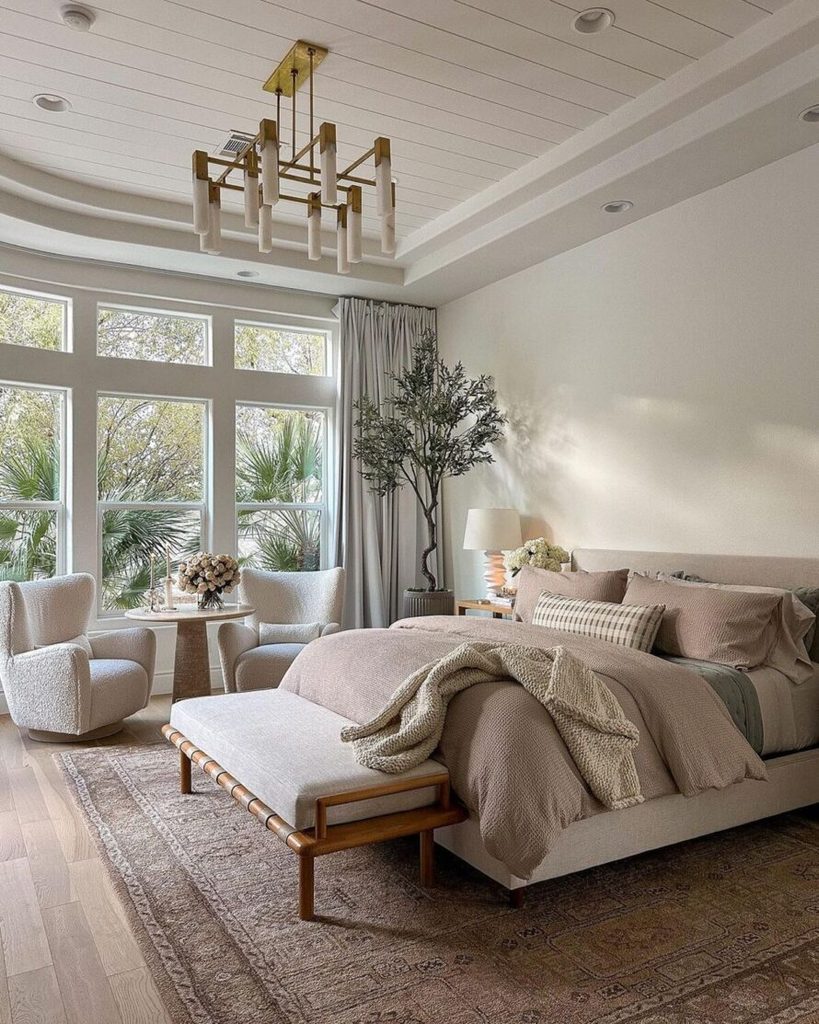
Cool bedding handles the temperature. Comfort for two people takes a little more thought than that.
A bedroom shared by a couple works best when both sides get the same treatment. Matching nightstands, a lamp within reach on each side, and enough space to walk around the bed without turning sideways. That symmetry is what keeps the room feeling fair, and it quietly removes a lot of small daily friction. If the floor plan allows it, a chair and a small side table in the corner give the room a second place to be. It turns into the spot where one person reads while the other falls asleep first, which is most nights in most houses.
A room that gets better the longer you sit in it.
👉 Suggestion: Choose two soft-glow bedside lamps with individual switches or dimmers rather than one overhead light. Warm bulbs around 2700K keep the light gentle enough for late reading without waking the other person.
11. Add A Minimalist Collage Of Paintings
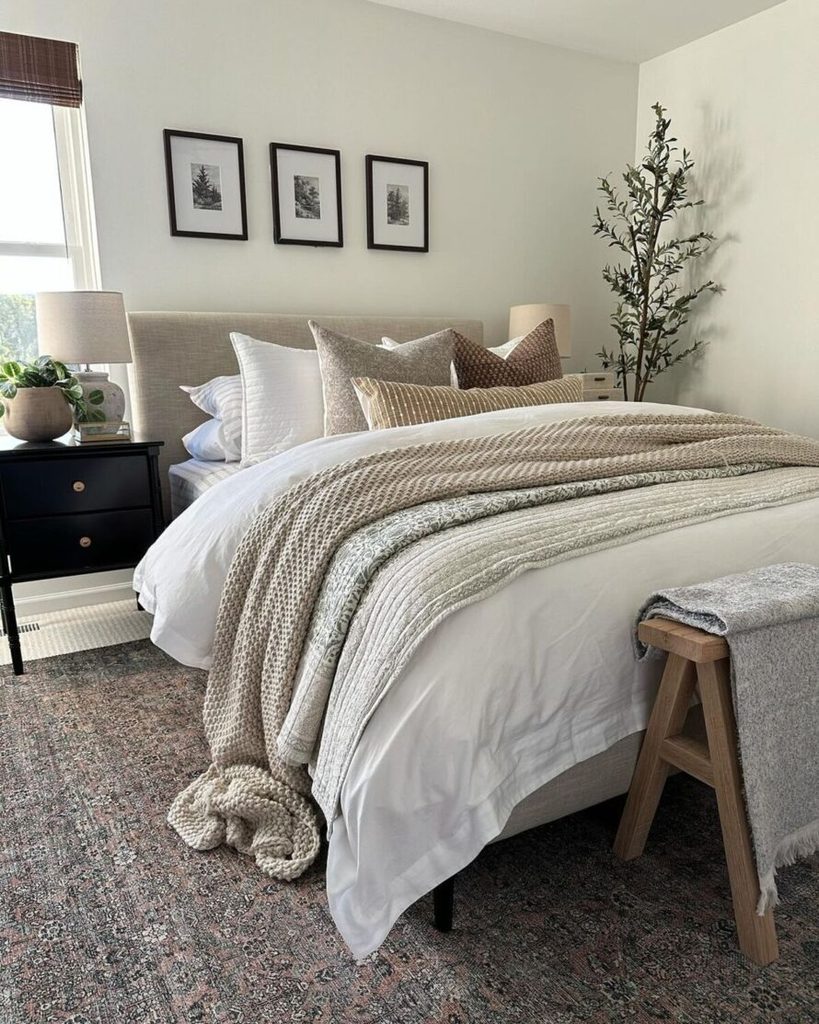
A shared bedroom still needs something on the walls, and this is where most people either overdo it or skip it entirely. A small group of three prints hung together lands right in between.
Thin black frames are the safest choice against neutral walls, since the dark outline does the work of a gallery wall without the visual noise. Keep the artwork simple. Line drawings, single shapes, a bit of empty space inside each print. That restraint is what makes a trio read as one piece instead of three separate decisions. Hang them close together with just a couple of inches between frames so the eye reads the whole group at once. It’s a nice thing to look at while the coffee cools on the nightstand.
Sometimes the quietest details do the loudest work.
12. Make The Room Look Fresh

Art fixes a wall. Sometimes the whole room needs the reset instead. A fresh coat of paint is the one change that resets everything at once, and it’s still the cheapest way to make a bedroom feel brand new.
Pick a shade that reminds you of somewhere relaxing. Soft sand, pale sage, a barely-there blue. Those tones carry a vacation feeling into an ordinary Tuesday, which is exactly why they work better than a plain builder white. Paint alone does most of it, though washing the windows and swapping in lighter curtains on the same weekend makes the difference feel twice as big. The room smells different for a few days too, and somehow that’s part of the whole thing.
The morning routine feels a little calmer.
💡 Pro Tip: Paint the wall opposite the window last and check it at three different times of day before committing to a second coat. That wall reflects the most light back into the room, so it sets the mood more than any other surface.
13. Floral-patterned Fabric

Fresh paint gives a room a clean slate. Floral fabric is what softens it back up again. A small print on pillowcases or a slipcovered headboard brings that easy cottage feeling without turning the room into a garden.
Scale is everything here. Tiny scattered flowers on a cream or pale ground stay quiet enough for a minimalist bedroom, while large bold blooms take over fast. One surface is the limit. Pillowcases or curtains or the headboard, never all three at once. That restraint is what keeps the pattern feeling like a choice rather than a theme. Cotton and linen hold the print best and soften nicely after a few washes, which is when the whole bed starts looking properly lived in. For a warmer floral palette, peach bedroom inspiration can add a soft, sunny touch without overwhelming the room.
Made for anyone who wants a little softness without giving up the clean look.
14. Tropical Bedroom

Trade the cottage garden for something warmer and further from home. A tropical-leaning bedroom leans on one big wallpapered wall behind the bed, and that single move carries the entire room.
Palm or banana leaf prints in muted green work far better than bright jungle colors, because a softer tone keeps the room restful enough to actually sleep in. Everything else stays plain. White bedding, a wood nightstand, maybe one real plant echoing the pattern so the wall doesn’t feel like it came out of nowhere. Light linen curtains finish it, letting the morning sun filter in instead of blocking it out. Waking up to that on a warm day feels like being somewhere else entirely.
A look that stays fresh long after trends move on.
Frequently Asked Questions
How much does it cost to create a minimalist bedroom?
Most people can pull off a minimalist bedroom for under $300, and often less. The savings come from removing things rather than buying them, so the budget usually goes toward one or two quality pieces instead of many cheap ones. Bedding, a simple rug, and one framed print cover the basics. Big-box stores like IKEA or Target carry linen-look duvet sets in the affordable range.
What should you avoid when decorating a minimalist bedroom?
The biggest mistake is stripping the room down until it feels cold. Empty walls and a single white bed read as unfinished, not calm, because there is no texture for the eye to land on. Keep at least three different materials in play, like oak, linen, and wool. Skip matching furniture sets too, since they make a minimalist bedroom look like a showroom floor.
Does minimalist bedroom decor work in small or rented rooms?
Small rooms are where this style performs best. Fewer objects means more visible floor, and visible floor is what makes a room read larger. Renters can get most of the look without touching the walls, using peel-and-stick wallpaper, leaning art instead of hanging it, and swapping bedding for warm neutrals like oatmeal or soft cream. Nothing needs to come out of a security deposit.
How do you keep a minimalist bedroom from getting cluttered again?
Give every item a fixed home, then check surfaces once a week. Clutter builds on flat open spaces, so the nightstand and dresser top are the two places that need a rule. A shallow tray or a small lidded box catches keys, chargers, and jewelry without leaving them on display. A woven basket at the foot of the bed handles the rest.
Where should beginners start with a minimalist bedroom?
Start with the bed, since it takes up the most visual space in the room. Clean white or oatmeal bedding in a soft weave resets the whole look before anything else changes. From there, clear both nightstands completely and add back only what gets used daily. Paint and furniture can wait, because those first two steps show results within an afternoon.
Conclusion
A minimalist bedroom works because of what it leaves out. Fewer things on the nightstand, softer color on the walls, and one or two pieces that actually mean something. That restraint is what makes the room feel calm instead of empty, and it explains why this look keeps coming back season after season. Warm Scandi neutrals, boho texture, or a soft tropical wall behind the bed all fit inside the same simple idea. The style bends to match whoever sleeps there.
Pick one or two ideas from this list, not fourteen. The bed is almost always the smartest starting point, since fresh oatmeal or cream bedding resets the whole room in a single afternoon. Save the favorite idea to a Pinterest board, bookmark this post for the next free weekend, and send it to a friend who keeps saying their bedroom feels cluttered. Calm is easier to build than most people think, and it starts with one small change.