11 Easy Yellow Bedroom Ideas to Try Today
Yellow gets a bad reputation in bedrooms, mostly from people who tried it once in the wrong shade and gave up. The truth is yellow can do more for a mood than almost any other color, especially in a room that only sees a few hours of good light each day.
The trick is picking the right version of it. A soft, buttery yellow calms a room down, while a deeper mustard or gold brings in warmth without ever feeling loud. Pair either one with gray, brown, or plain white, and the color stops fighting for attention and starts working with everything else in the room.
These twelve bedrooms show just how differently yellow can behave, from quiet and pale to bold and sunlit, depending on what surrounds it. Each one leans into the color a little differently, which makes this less of a single formula and more of a real starting point for a room that actually feels good to wake up in.
1. Create a Focal Point
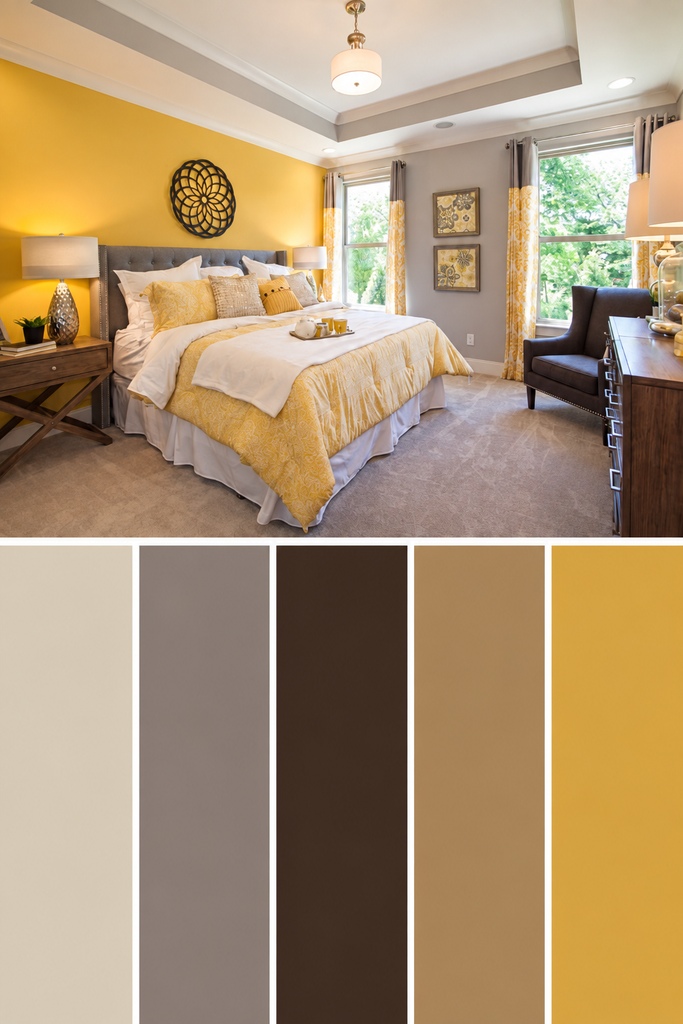
A single yellow wall can carry an entire room if the rest of the space knows how to work with it. One bold accent wall here sets a cheerful backdrop, and the same yellow gets echoed in the pillows, bedding, and curtains so the color feels intentional instead of like an afterthought.
Gray shows up on the bed, area rug, curtains, and ceiling to soften all that brightness, while dark brown on the nightstand, dresser, and chair pulls the whole look back down to earth. That balance keeps a vivid color like this from feeling like too much the second the lights come on.
Small changes create most of the impact.
2. Consider Rustic-Inspired Spaces

Take that same warm pairing and let it spread through the whole room instead of staying on one wall. Yellow, brown, and gray all share the same warm undertones, which is exactly why they blend so easily in a room built around exposed wood.
Massive ceiling beams and a wood floor bring in real texture and warmth, giving the space an old, settled feeling that paint alone could never fake. The angled ceiling stays white overhead, which keeps the room from feeling boxed in under all that wood. A gray half-wall, a white bedspread, and a few velvet green pillows step in as a quiet break from the yellow, keeping the whole look from tipping too far into busy.
The whole room feels warmer without adding a single new color.
💡 Pro Tip: When mixing exposed wood with a bold wall color, keep at least one large surface (the ceiling, the bedding, or a rug) in a plain neutral. That breathing room is what keeps a wood-heavy space from feeling cluttered.
3. Warm it Up with Gray
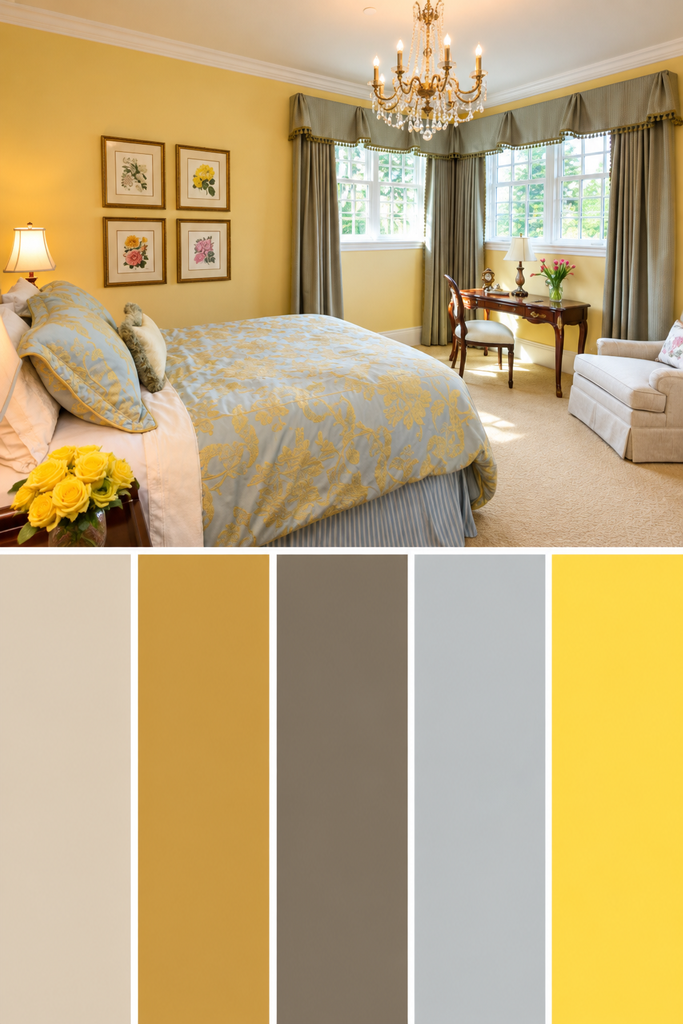
Not every yellow room needs that much texture, though. Sometimes gray alone does the job just as well. A gray valance and matching curtains here soften the yellow walls, cooling things down without taking any of the warmth away.
A floral duvet mixing gray and yellow ties the bed straight back into the window treatments, and the pattern repeats across the pillows so the whole room reads as one connected idea instead of separate choices. Deep brown tones on a desk and chair add one more layer of contrast, giving the space a vintage feel that still holds up today. It is the kind of pairing that proves gray does not always mean cold.
The pattern catches the eye differently depending on where it lands in the room.
4. Refresh Your Morning Routine

Step away from pattern for a moment and think about what this room actually needs to do every single day. A bedroom like this leans on yellow walls specifically to make mornings feel less like a chore, especially in a room that only gets a short window of good light.
Beige and soft gray accents keep the eye moving around the room instead of locking onto one spot, and white on the ceiling, bedding, and curtains stops the yellow from taking over completely. Woven Roman shades add warm brown in small doses, just enough contrast to keep the palette from feeling flat. It is the kind of room that makes getting out of bed feel less like a negotiation.
Waking up here feels a little less like dragging yourself out of bed.
👉 Suggestion: Choose woven wood or bamboo Roman shades over solid fabric ones for a room built around morning light. The texture filters harsh early sun instead of blocking it completely.
5. Keep it Simple

Less about function this time, more about just calming everything down. This bedroom treats yellow almost like a neutral, using pattern and color carefully enough that the whole scheme reads as relaxed rather than bright.
Light gray and brown bring in cool, grounding tones that keep the buttery yellow from feeling too warm or too loud. A patterned duvet pulls double duty, matching some of the pillows directly and blending with the others just enough to capture every color in the room without repeating any one of them too obviously. Nothing here demands attention, which is exactly the point in a bedroom meant for winding down.
Easy to live with no matter how the light changes throughout the year.
6. Add Natural Accents

That same quiet approach still leaves room for a little life. A yellow bedroom like this leans on natural materials instead of extra color, letting jute, rattan, and a few real plants do the work that a second paint color usually would.
A woven jute rug grounds the space underfoot, and a rattan headboard or bench adds texture without fighting the yellow walls for attention. One or two potted plants on a windowsill bring in some green that feels alive rather than decorative, the kind of detail that makes a room feel tended to instead of just styled. Natural materials like this also tend to age well, picking up character instead of just wearing out.
Easy to enjoy every morning without the room ever feeling overdone.
💡 Pro Tip: Choose unfinished or lightly stained rattan and wood pieces over painted ones in a yellow room. The raw, natural tone keeps the material from competing with the wall color.
7. Highlight the Contrast

Flip the mood completely and let contrast do the heavy lifting instead of texture. A geometric wallpaper accent wall here adds real depth, and pairing it against a plain adjacent wall in sunny yellow creates the kind of high-contrast look that catches attention the second someone walks in.
Matching table lamps and silvery nightstands add a little shine, and artwork above the bed pulls its color straight from the bedding. A yellow area rug keeps warmth underfoot even with all that pattern happening at eye level, adding visual texture instead of just repeating the wall color. It is the kind of contrast that makes a small room feel more interesting rather than more crowded.
One of those rooms that photographs just as well as it lives in real life.
8. Country Cheer
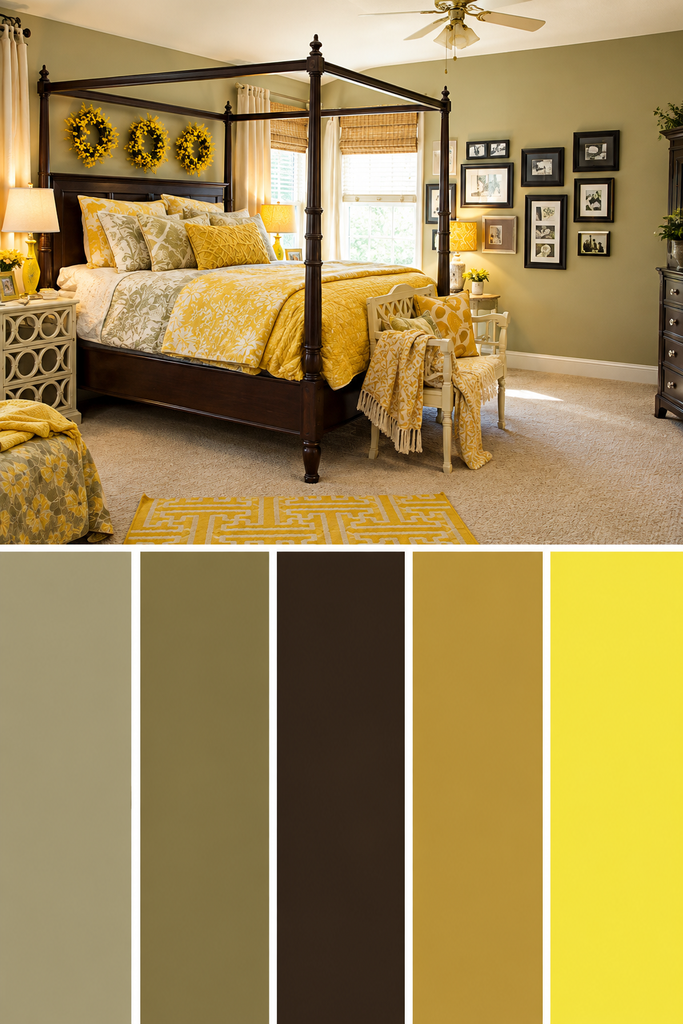
Dial all that boldness back down into something a little more old-fashioned. Gray walls with a hint of green undertone set a soft, traditional backdrop here, giving the room enough lightness to keep a heavy, dark four-poster bed from feeling stuffy.
That bed anchors the whole room in rich brown, and it needs a little relief, which is exactly what a quilted yellow throw and a few matching pillows provide. A trio of wreaths on the wall carries that same bright color up and out, turning a traditional detail into something with a bit of personality. It never tips into loud, just cheerful enough to notice.
A little yellow goes a long way when the rest of the room stays quiet.
9. Establish a Strong Foundation
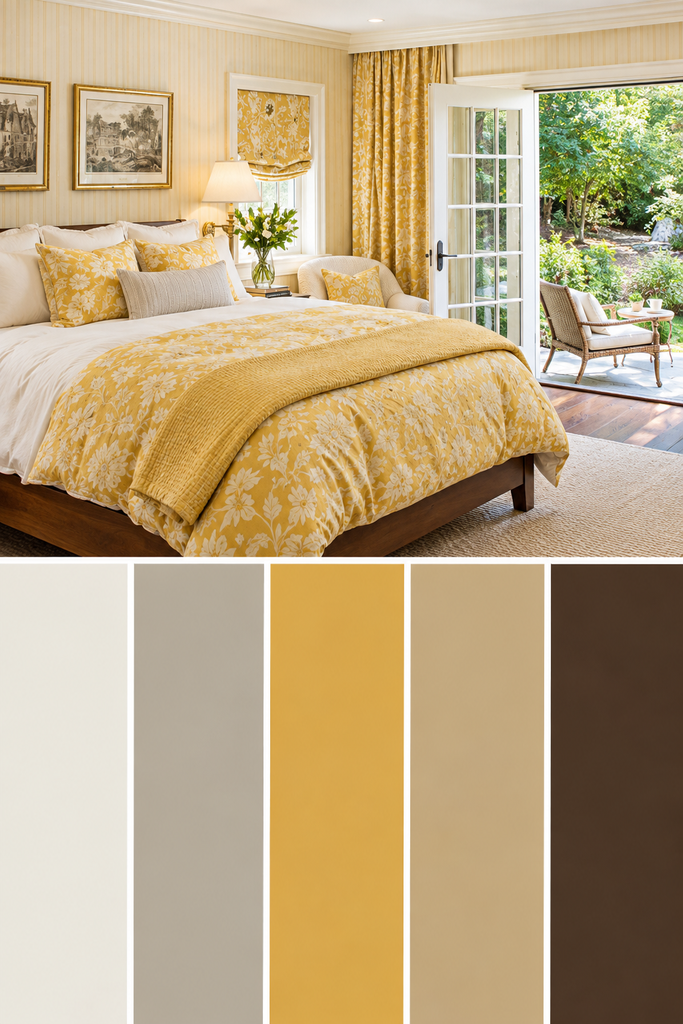
Take that same idea of restraint and push it even further back. Paneled off-white walls do most of the quiet work in this bedroom, creating a neutral base that keeps a small, cottage-style room from ever feeling cramped.
A mustard yellow duvet, window shade, and curtains give that neutral base something worth looking at, while a single blue door adds one unexpected note of color near the entry. Crisp white bedding and ceiling keep the whole scheme soft, which is what lets the yellow accents actually stand out instead of blending into a busier palette. A brown bed frame and dark wood flooring ground the room and stop it from feeling too pale.
A smart pick for a small or awkwardly shaped cottage-style room.
💡 Pro Tip: Paint walls, trim, and ceiling in the same off-white shade before adding color through fabric. That blank, unified backdrop is what lets even a small amount of yellow read as a real design choice instead of clutter.
10. Make it Calming

Push that same restraint even further and yellow stops feeling bold at all. A pale, buttery yellow with soft pastel undertones covers the walls here, proving this color can create a quiet, relaxing room just as easily as a vibrant one.
That same pale yellow spreads across the bedding, a chair, a Roman shade, and the curtains, so the whole scheme feels consolidated instead of scattered across a few random pieces. A white wall-to-wall carpet, along with white furniture and trim, adds just enough contrast to keep the room from washing out completely. Nothing here competes for attention, which is exactly why it works so well for winding down at night.
The whole room settles into something much quieter.
👉 Suggestion: Look for a matte or chalky paint finish rather than a glossy one when working with pale, pastel yellow. The flatter finish keeps the color looking soft instead of reflective and stark under overhead light.
11. Mix it Up
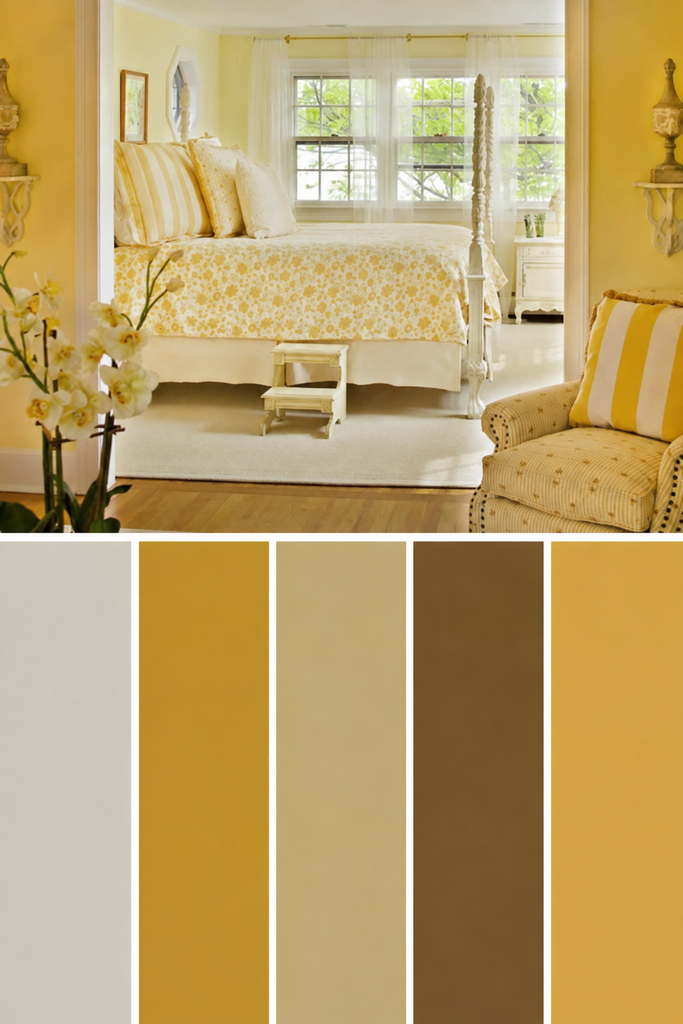
Take that same idea of varying one color, but push it further by mixing in a few different shades of yellow entirely. Pale yellow walls set a soft stage in this farmhouse-inspired bedroom, echoing the sunlight that pours in through barely-dressed windows.
Brighter yellow shows up on the bedding and spills into the decor of the room next door, so the color feels connected rather than boxed into one space. A white four-poster bed, a step stool, and a rustic console keep the whole look grounded in simple farmhouse charm. A white area rug meets the ceiling in the same tone, giving the room a contrast that balances out all that yellow without needing a third color.
A look that stays fresh long after trends move on.
💡 Pro Tip: When mixing multiple yellow shades in one room, keep the lightest version on the largest surface, usually the walls, and save the brightest shade for smaller accents like bedding or a single chair. That order keeps the room from feeling mismatched instead of intentional.
You Might Also Love These Ideas
- 17 Easy Beige Bedroom Ideas. Discover soft neutral layers and gentle warmth for a bedroom that feels calm, timeless, and effortlessly cozy.
- 11 Peach Bedroom Ideas. Explore rosy peach tones, glowing light, and cheerful warmth that create a dreamy bedroom atmosphere with inviting character.
- 16 Sage Green Bedroom Ideas. Find soothing sage shades, earthy textures, and a peaceful mood that makes every bedroom feel naturally restful.
Frequently Asked Questions
What’s the best shade of yellow for a bedroom?
Look for a soft, buttery yellow with warm undertones rather than a neon or acid yellow, since warm-toned yellow reads as calming instead of overwhelming. A muted shade also pairs more easily with gray, brown, or white without clashing. Paint brands often label these tones as butter, wheat, or ochre on sample strips. Testing a sample pot at different times of day helps avoid a shade that looks too bright once it dries on the wall.
What’s the biggest mistake people make with a yellow bedroom?
The biggest mistake is choosing a yellow that is too bright or too saturated for the whole room. A bold, high-intensity yellow on every wall can feel overwhelming fast, especially in a room with a lot of natural light. Using a muted or pastel yellow on the walls, then saving the brighter shade for pillows or a throw blanket, keeps the color from taking over. Testing a sample on more than one wall catches this problem before painting the whole room.
Does yellow work in a small bedroom or rental?
Yellow works well in small bedrooms and rentals because a soft, pale yellow reflects light and can make a room feel brighter and more open. Renters can get the same effect without painting by adding yellow through curtains, a bedspread, or a large piece of wall art instead. Sticking to one lighter yellow tone throughout the room, rather than several competing shades, also helps a small space feel calmer. This works especially well for studio apartments and shared rentals.
How much does it cost to add yellow to a bedroom?
A yellow bedroom refresh can stay under $150 for anyone starting with accessories instead of paint. A gallon of paint for an accent wall typically runs in the affordable to mid-range price bracket at most hardware or paint stores. Adding yellow through a throw blanket, pillow covers, or a lamp costs even less and can be swapped out easily later. This makes it an easy color to test before committing to a full room.
Where can you find yellow bedroom decor and furniture?
Big-box retailers like Target, IKEA, or Walmart carry yellow bedroom decor such as bedding, curtains, and accent pillows in most seasons. Home decor chains and online retailers such as Wayfair or Amazon expand the options further, especially for yellow rugs and lamps. Thrift stores and marketplace apps are worth checking too, since vintage furniture sometimes already comes in warm mustard or gold tones. Mixing new and secondhand pieces keeps the room from feeling too matched.
Conclusion
Yellow has a way of making a room feel awake before the coffee even kicks in. This color holds warmth and cheer the way few others can, and it flexes into rustic, farmhouse, and quietly traditional looks without ever feeling loud or overdone. Pair it with gray, brown, or crisp white, and it still reads as calm rather than childish. Texture and a muted shade end up doing most of the real work, turning one sunny color into a bedroom that actually feels finished.
Picking just one or two ideas instead of everything at once makes the whole project feel manageable. Start with the walls or the bedding, then build outward over a weekend instead of trying to finish the whole room in one trip. Save a favorite look to a Pinterest board, bookmark this page for later, and send it to a friend planning their own refresh. A little yellow goes a long way toward a bedroom that finally feels awake.