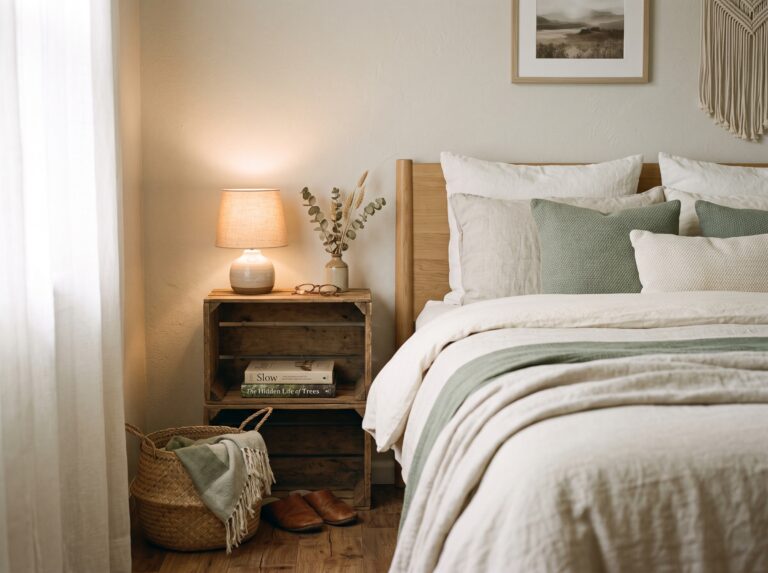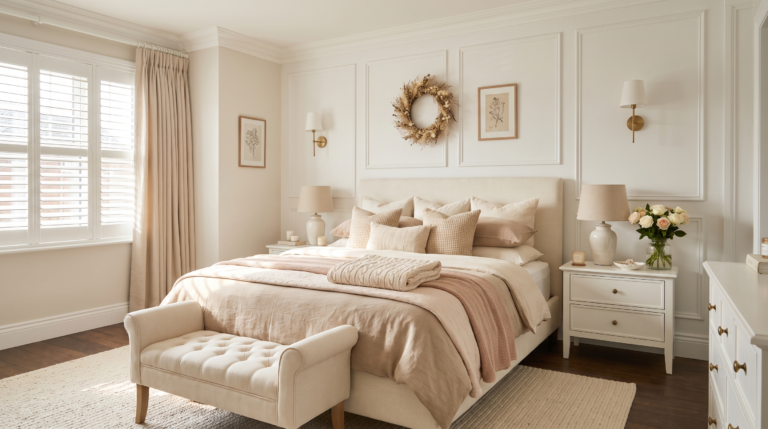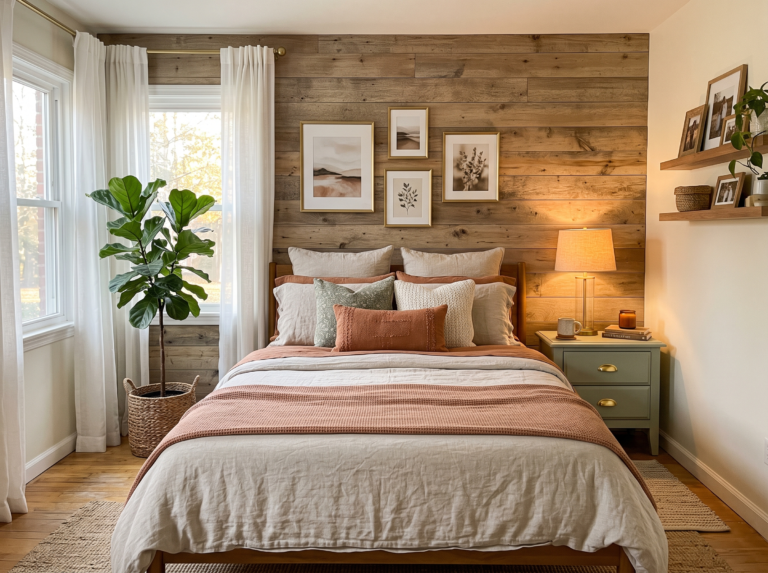
25 Modern Minimalist Bedroom Ideas for a Calm Space
Minimalism gets misread as emptiness. People picture a white box with one chair in it and decide the whole idea isn’t for them, which is fair enough, because that version of it isn’t very nice to sleep in.
The good version looks different. A minimalist bedroom still has warmth, texture, and things worth looking at. It just holds fewer of them, and every one has a reason to be there. Wood against white. Linen instead of six throw pillows. Storage that hides what nobody needs to see. The room feels calm because there’s less competing for attention, not because there’s nothing in it.
The other half of it is storage, and that’s the part most guides skip. A room only stays clear if everything has somewhere to go.
The ideas ahead cover both sides. Some are about what to add, from earthy tones and one good mirror to a single dark accent wall. Others are about what to build in, hide, or take away entirely.
1. Free Space with Built-In Storage
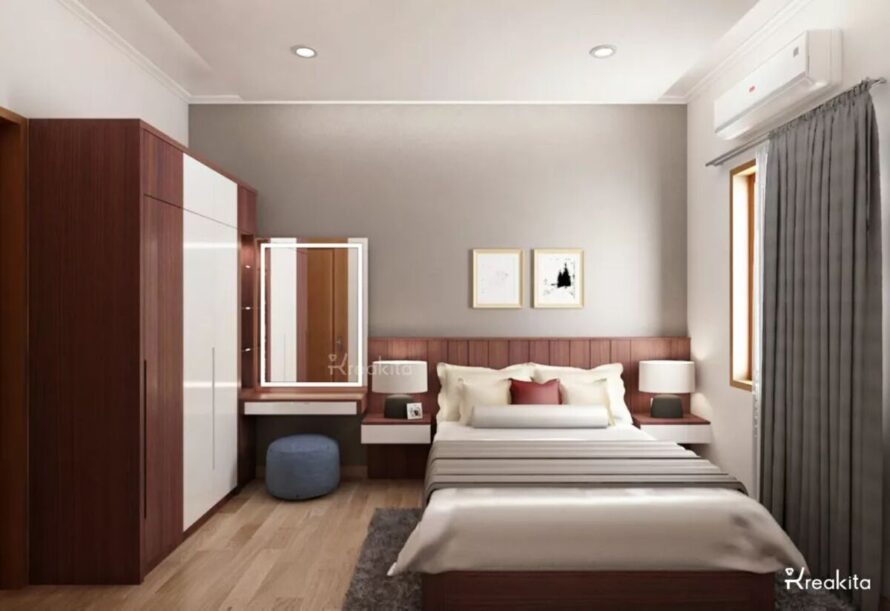
Built-in cabinets are the quiet workhorse of a minimalist bedroom. They sit flush with the wall and finish in the same tone as the paint, so the storage stops reading as furniture and starts reading as architecture.
That disappearing act is the whole point. A freestanding wardrobe announces itself from every angle, while a built-in run gives the eye a clean, unbroken line to travel along. Floating bedside tables do the same job on a smaller scale, keeping the floor visible underneath. Match the cabinet fronts to the wall color and the room instantly feels bigger than it measures. It also means the pile of things that usually lives on a chair finally has somewhere to go.
Best suited for small bedrooms where floor space is the real constraint.
2. Go for a Natural Look

Once the storage disappears, the materials left on show have to carry the room. Raw wood and natural fabric do that better than anything painted, because the grain and weave give the eye something to rest on without adding a single object.
Boho minimalism is where this lands most comfortably. A simple wooden bed frame, a woven rug, and linen bedding cover almost everything the room needs, and the slight irregularity in natural materials is what stops a spare room feeling clinical. Plenty of daylight helps too, since natural light picks up texture that artificial light flattens. A plant or two finishes it without cluttering anything. Rooms like this feel calm rather than empty.
That rare balance of relaxed and put-together.
3. Explore Earthy Tones

Natural materials bring their own colors with them, and leaning into those tones is the easiest way to keep a minimalist bedroom warm. Clay, sand, taupe, and soft olive all sit quietly together because they come from the same place.
Earthy shades work because none of them fight for attention. The eye moves across the room without stopping, which is exactly the effect a bedroom wants at the end of a long day. Pairing those tones with white keeps the palette from going heavy, and roller blinds instead of curtains save space at the window while letting the wall color stay the focus. A darker accent somewhere stops it going flat. Rooms like this are noticeably easier to switch off in.
The space carries a quieter mood.
💡 Pro Tip: Pull your earthy palette from a single natural object, like a piece of stone, a length of linen, or a wood sample. Colors that occur together in nature already share undertones, which removes most of the guesswork.
4. Mix White and Wood

Strip the palette back to two things and this is the pairing that never fails. White walls with dark wood furniture is the most reliable combination in minimalist design, and the reason is simple contrast.
Wood is warm and white is neutral, so each one makes the other look better. The dark grain stands out clearly against a pale wall, which gives a spare room definition without adding clutter or color. Keep the bed frame simple and let the material do the talking. Hanging bedside lamps instead of table lamps free up the surfaces entirely, and one vase with a few stems is all the decoration needed. Waking up in a room this clean makes the day feel more organized than it probably is.
One of those combinations people rarely regret choosing.
5. Embrace Symmetry
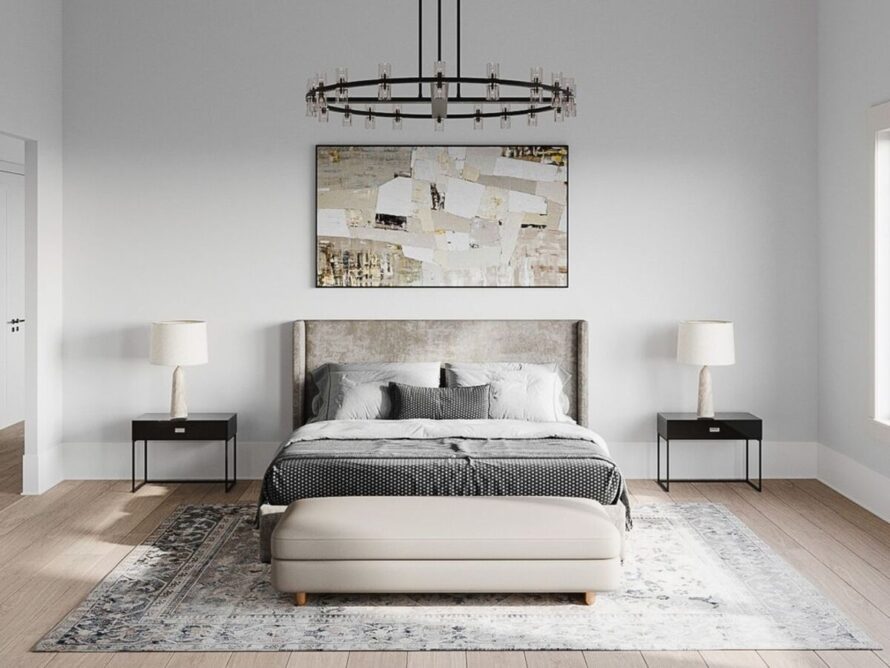
Once the clutter is gone and the materials are settled, arrangement becomes the last thing standing between a room and a finished look. Symmetry does that job faster than anything else.
Matching side tables on either side of the bed with one large piece of art centered above it reads as calm because the eye finds balance immediately. Nothing is off, nothing needs adjusting, and the brain stops scanning. That instant resolution is why hotel rooms feel restful even when they’re plain. Repeating the lamps as well as the tables strengthens the effect. It also settles the small daily question of which side is whose, since both sides get exactly the same treatment.
Made for shared bedrooms and anyone who finds order genuinely relaxing.
👉 Suggestion: Choose bedside tables with a closed drawer or cabinet front rather than open shelving. Closed fronts keep both sides looking identical even when the contents aren’t, which is what holds the symmetry together day to day.
6. Concealed Storage
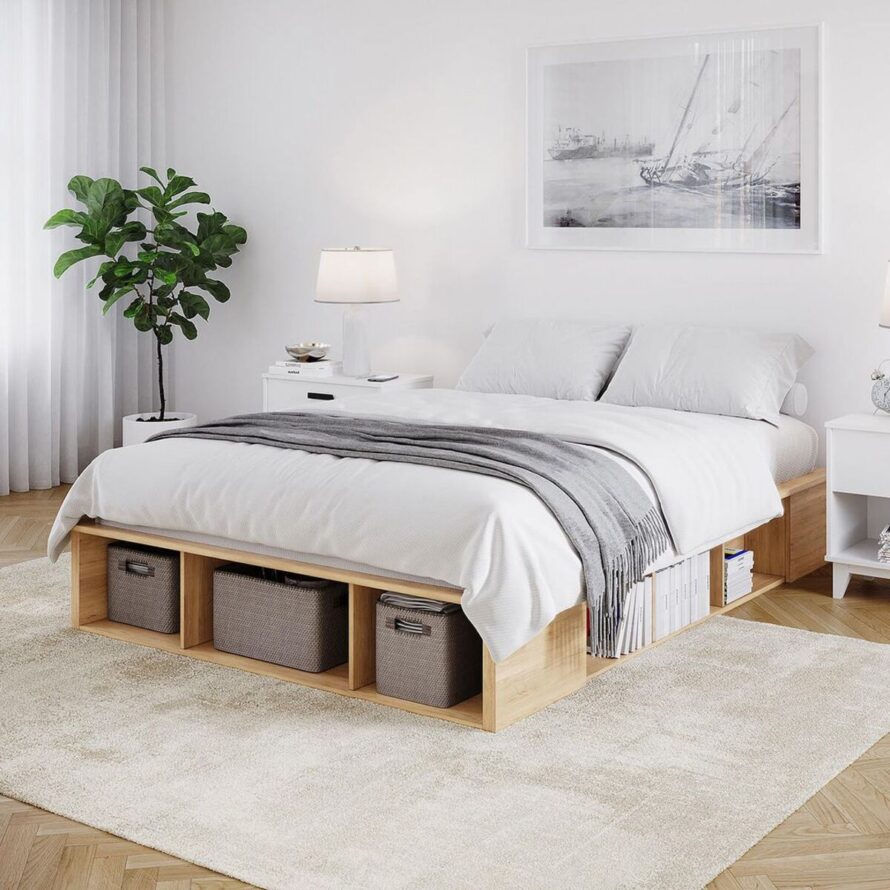
Balance only holds if nothing is spilling out onto the floor, and that’s where most minimalist bedrooms quietly fail. The laundry has to live somewhere, and a nice basket in plain sight is still a basket in plain sight.
Under-bed storage solves it better than anything else in the room. The space is already there, it’s completely hidden once the bed is made, and partitioned compartments mean laundry, books, and spare bedding all stay separated rather than jumbled. Hidden storage works because minimalism was never about owning less, only about seeing less. Nobody has to give up their things to have a calm room. Getting laundry out of sight in ten seconds is the sort of small win that keeps a system going.
Proof that small choices carry the biggest weight.
7. Bring in the Light

With the clutter tucked away, daylight has room to do its work. Natural light is the cheapest thing in any minimalist bedroom and easily the most effective, because an open, bright room reads as uncluttered even before anything gets tidied.
Pale walls are what make it happen. Light colors bounce daylight around instead of soaking it up, so a small room with two windows can feel considerably larger than it measures. Keeping the window itself clear matters just as much, which means nothing on the sill and nothing heavy hanging across it. One small point of color, a patterned rug or a vase of flowers, is enough to stop the brightness feeling stark. Mornings in a room like this start a little easier.
The whole room feels lighter for it.
💡 Pro Tip: Keep at least 12 inches of clear wall on either side of a window when arranging furniture. Crowding the edges blocks the angled light that spreads across a room, which is what actually makes the space feel open.
8. Go for a Monochromatic Look

Take all that brightness and commit to it fully. A room built almost entirely from white sounds like the coldest possible version of minimalism, and it lands warmer than expected when the material mix is right.
Sticking to one color makes clutter obvious the moment it appears, which is a useful thing in a room meant to stay clear. Everything else has to work through texture instead: a woven throw, crisp cotton bedding, a linen lampshade. Leaving the wooden bed frame unpainted gives the whole scheme somewhere warm to land, and a small touch of black on a lamp base adds the contrast the room needs. Making the bed in a room like this takes about a minute, and it looks finished every time.
A room that gets better the longer you sit in it.
9. Add Easy-to-Maintain Houseplants

A room this pared back has room for something living. One or two plants bring movement and a bit of green into a space built from flat surfaces, and they do it without adding clutter.
Choosing the low-maintenance ones matters more than choosing the pretty ones. A snake plant, a pothos, or a ZZ plant will forgive a forgotten watering, which means the corner stays green instead of turning into a slow disappointment. Plenty of daylight makes them easier to keep alive too. Setting a few framed prints on the floor rather than hanging them adds interest at a different height without putting anything else on a surface. Watering on a Sunday becomes a small habit worth keeping.
A room that gets better the longer you sit in it.
10. Add Visual Interest with Unique Patterns
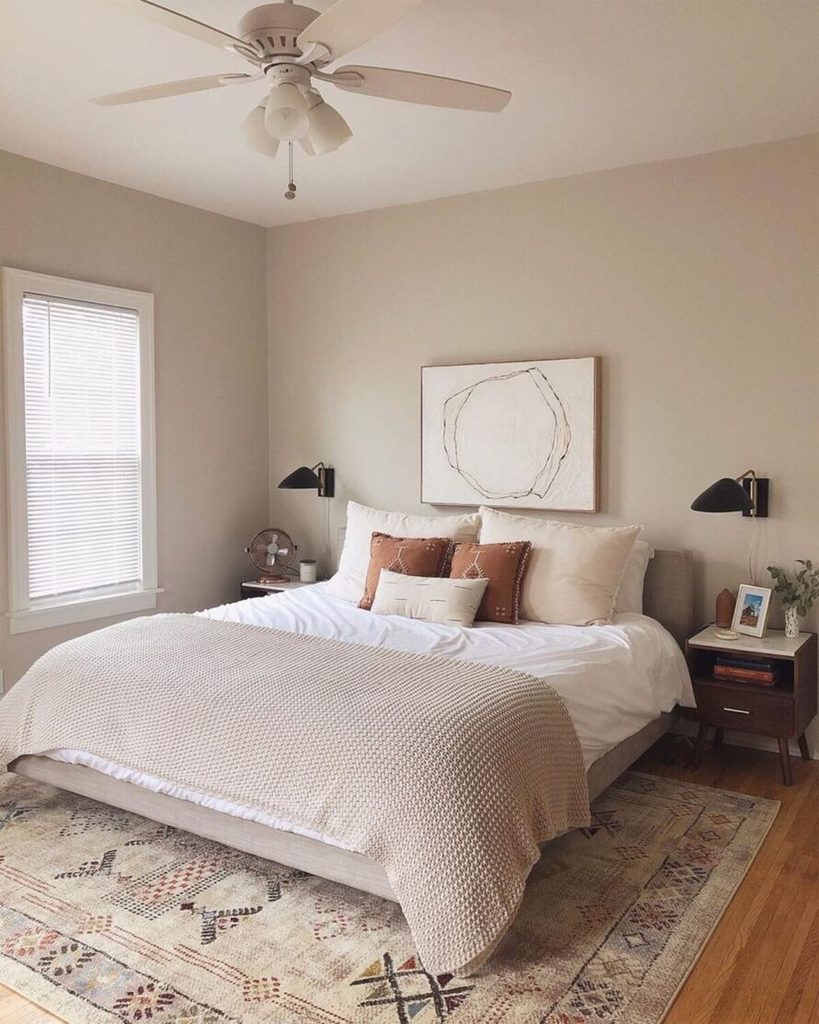
Plain surfaces are only one version of minimalism. Pattern belongs here too, as long as it stays in one place and doesn’t have to compete with anything else in the room.
A rug carrying a cultural or woven pattern is the strongest way to bring it in, since the floor holds detail without crowding eye level. Echoing that same pattern in two throw pillows ties the room together, and stopping there is what keeps it minimal. Neutral earthy walls around it are doing the real work, because a quiet background is what lets a pattern read as the focal point rather than as noise. Keeping the furniture arrangement even helps too. Rooms like this have something to look at from the bed.
The kind of space that shows how much mood matters.
💡 Pro Tip: Let the pattern appear in exactly two places, never three. A rug plus pillows reads as intentional repetition, while a third patterned surface tips the room from minimal into busy almost immediately.
11. Balance Warm and Neutral Tones

Pattern gives a room something to look at. Temperature gives it something to feel, and mixing warm shades with neutral ones is how a minimalist bedroom avoids going cold.
Warm brown alongside white and one deeper green is a combination worth stealing. The brown brings heat, the white keeps everything open, and the green stops the whole thing reading as beige. Each shade looks better in that company than it would on its own, which is the point of a balanced palette rather than a matched one. Keeping the greens dark rather than bright is what holds the calm. It’s the sort of room that feels good to walk into on a gray afternoon.
The colors stay interesting from morning to night.
12. Combine Brown and White Accents
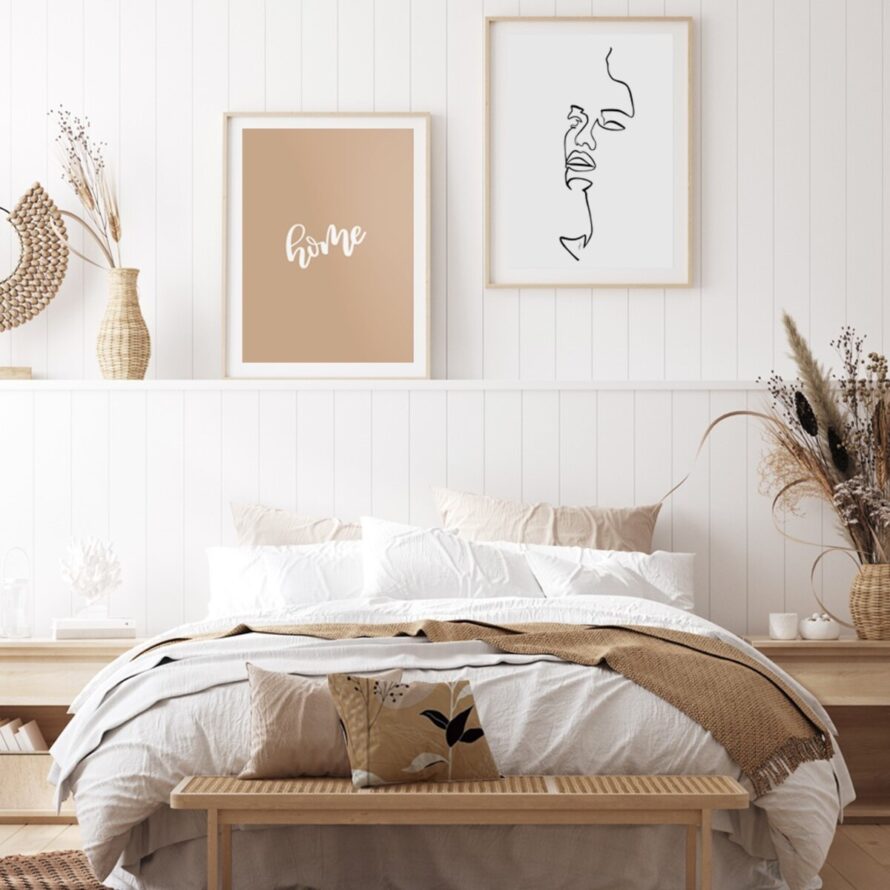
Take that same warmth and drop the third color entirely. Brown and white on their own make a bedroom feel settled, because neither one is loud enough to take over.
Brown furniture against white linen bedding is the whole scheme, and it works precisely because both shades are neutral. There’s no clash to manage and no accent color to keep repeating, so the room stays calm without any effort. Adding a woven basket or a jute rug pushes it gently toward boho without breaking the palette. The other advantage is longevity, since nothing here will look dated in three years. A bed made up in white linen against dark wood looks good even when it’s made in a hurry.
Easy to decorate around as tastes change.
👉 Suggestion: Look for washed or stonewashed linen in true white or soft ivory rather than bright optical white. Softer whites sit more comfortably against brown wood, while bright white can read cold and slightly clinical beside warm grain.
13. Use a Mirror

One large mirror does more for a small minimalist bedroom than any piece of art. It bounces daylight deeper into the room and doubles whatever it reflects, which is why the trick has never gone out of use.
Placement is what separates a good mirror from a decorative one. Hanging it opposite or beside a window sends light back across the space instead of into a corner, so the room reads brighter through the whole afternoon. One big mirror also beats several small ones, since a single clean shape suits a spare room better than a cluster. Pair it with closed shelving nearby and the wall does two jobs at once. Getting ready in front of a full-length mirror beats guessing every morning.
A smart pick for small bedrooms and rooms with only one window.
14. Try some Warm Finishes

Reflected light is useful, but it’s still cool light. Warm finishes are what give a minimalist bedroom actual heat, and the difference shows up most in the evening.
Warm brown paired with white linen is the reliable version. The brown holds warmth even under artificial light, while the linen keeps everything soft rather than heavy, and that balance is what makes a spare room feel comfortable instead of unfinished. Floor-to-ceiling curtains in a light fabric help too, letting daylight through while framing the window properly. Warm bulbs finish the job after dark. Rooms like this feel noticeably better at nine at night than they do at noon, which is when a bedroom actually matters.
A setup that turns any evening into a slow one.
💡 Pro Tip: Use bulbs around 2700K throughout the room and skip anything labeled daylight or cool white. Warm bulbs bring out the brown and beige tones in wood and linen, while cool ones drain the color and make neutrals look gray.
15. Think Boho Aesthetics

Push that warmth a little further and boho takes over. It sounds like the opposite of minimalism, and it isn’t, because both styles care more about natural materials than about filling a room.
The overlap lives in the fabrics. Linen, voile, and loosely woven cotton all have something to touch, and that tactile quality is what keeps a pared-back room from feeling bare. A woven rug underfoot, natural wood on a bench and a small drawer unit, and light-colored bedding cover most of the look. Keeping the colors neutral is what stops boho tipping into clutter. One or two plants finish it. Rooms like this feel welcoming without anyone having tried very hard.
The kind of corner that quietly becomes everyone’s favorite.
👉 Suggestion: Choose loosely woven natural fibers like slubbed linen, cotton voile, or open-weave jute rather than tight synthetic weaves. Loose weaves catch light and shadow, which is what creates texture in a room with very few objects in it.
16. Dark Shades Work Too
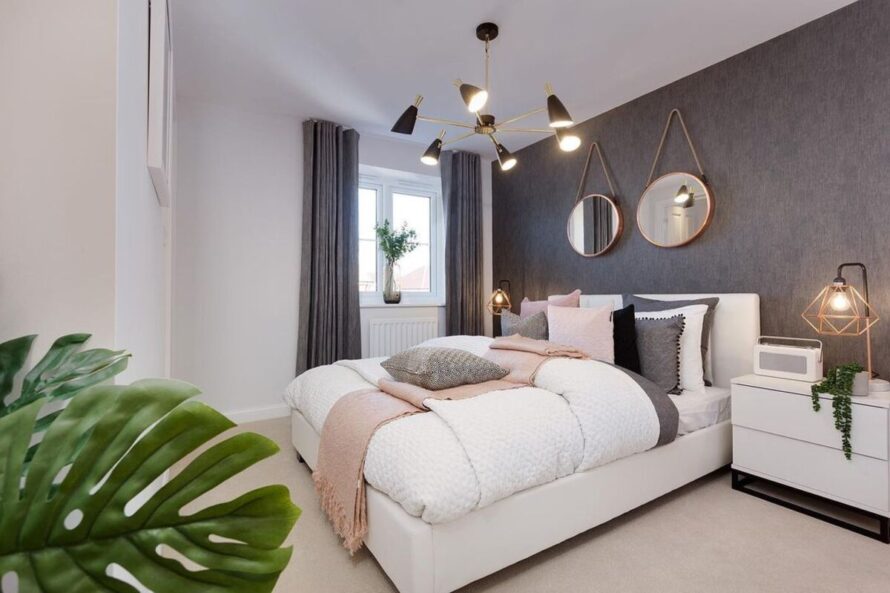
Light tones get all the attention in minimalist bedrooms, and for good reason. Push it too far, though, and a room can end up looking stark rather than calm, which is where a single dark wall earns its place.
Deep gray behind the bed gives the eye somewhere to settle. Everything pale in the room reads brighter against it, so the contrast actually makes the light colors work harder rather than dimming them. Hanging mirrors on that dark wall pulls double duty, adding shape while bouncing light back across the room. Keeping the dark to one surface is what stops it swallowing the space. It’s the wall people notice from the doorway without quite knowing why.
The contrast keeps the room balanced.
17. Create Graphic Accents

An accent doesn’t have to mean a whole wall in a different color. Painted graphic lines do the same job with far less commitment, and they suit a minimalist room precisely because they add shape rather than clutter.
Bold darker lines across a light gray wall give the room structure the way a piece of art would, except nothing is hanging and nothing needs dusting. Matching those lines to something already in the room, usually the headboard, is what makes them look designed rather than random. Keeping the shapes simple matters too, since straight lines and arcs sit comfortably in a spare room while busy shapes fight it. One hanging plant nearby softens all that geometry. Rooms like this get remembered.
Sometimes the quietest details do the loudest work.
💡 Pro Tip: Mark out graphic lines with low-tack painter’s tape and live with the layout for a day before painting. Shapes that look balanced on paper often sit wrong once furniture is in the room, and tape costs nothing to move.
18. Add Storage Drawers

Painted walls handle how a room looks. Drawers handle whether it stays that way, and a bed base fitted with them is the most useful piece of furniture a minimalist bedroom can have.
The advantage over baskets or boxes is access. Drawers pull straight out, which means the things inside actually get used and put back rather than buried at the bottom of a container nobody wants to unpack. Clothes, books, and spare bedding all fit, and none of it is visible once the drawer is closed. A room stays clutter-free when putting things away takes less effort than leaving them out. That’s the difference between a system that lasts and one that collapses by Thursday.
Ideal for rooms with no closet or very little wardrobe space.
👉 Suggestion: Look for bed bases with soft-close runners and full-extension drawers rather than shallow pull-outs. Full extension means the back of the drawer stays reachable, which is where storage usually goes to die.
19. Try a Classical Look

Some rooms don’t need a modern edge at all. White, beige, and natural wood have been working together for a very long time, and a classical minimalist bedroom leans on that history rather than fighting it.
The reason it holds up is that nothing in the palette belongs to a particular decade. Beige walls, wooden furniture, and white bedding looked right forty years ago and will look right in another forty, which makes it a sensible choice for anyone who doesn’t want to redecorate again soon. Houseplants add life, and daylight does the rest. Wall art in the same colors as the room keeps the walls from looking bare without introducing anything new. Small rooms suit this treatment particularly well.
A look that stays fresh long after trends move on.
20. Use Subtle Patterns
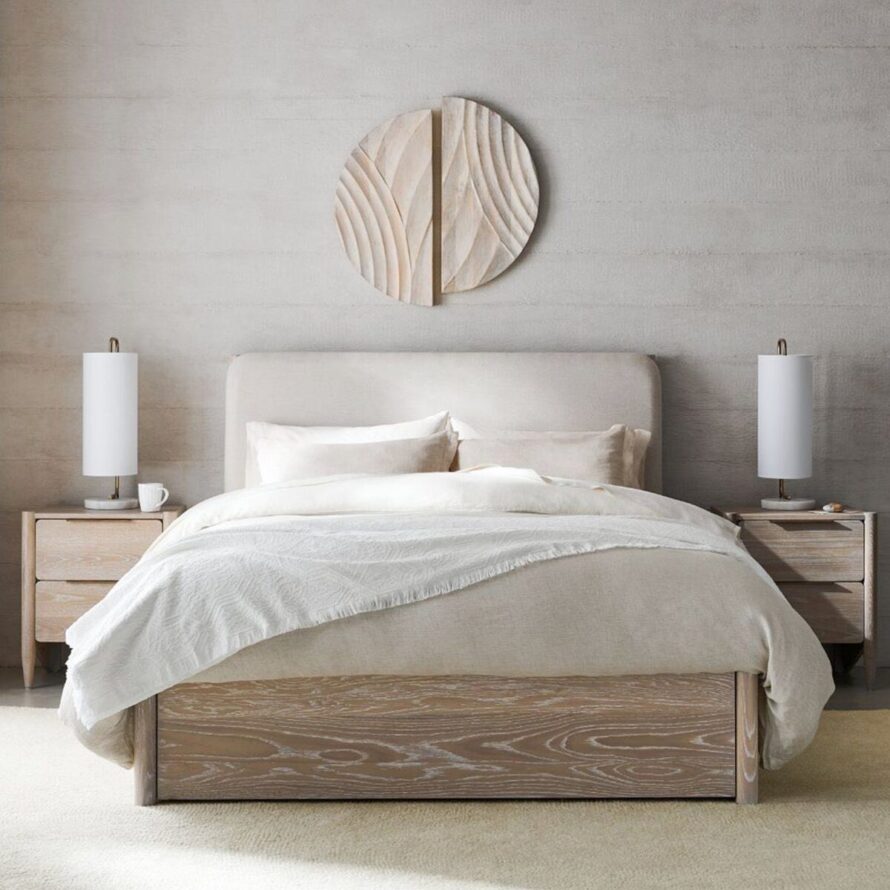
Plain walls and plain fabric can start to feel flat after a while. Subtle pattern fixes that without breaking a minimalist scheme, as long as the pattern comes from the material itself rather than being printed on top.
Marble veining, wood grain, and a fine weave in a throw all count. These read as texture from across the room and only resolve into pattern up close, which is why they add depth without adding noise. A headboard with visible grain or a quietly patterned wall piece gives the room a focal point that still belongs to the palette. Contrast between smooth and textured surfaces is what makes the difference. There’s something satisfying about a room that reveals more the longer you look at it.
The finishes catch light differently through the day.
💡 Pro Tip: Keep subtle patterns within one or two shades of the surrounding color. Low-contrast pattern reads as texture, while the same design in a contrasting shade jumps forward and behaves like a bold print instead.
21. Adopt a Floating Design
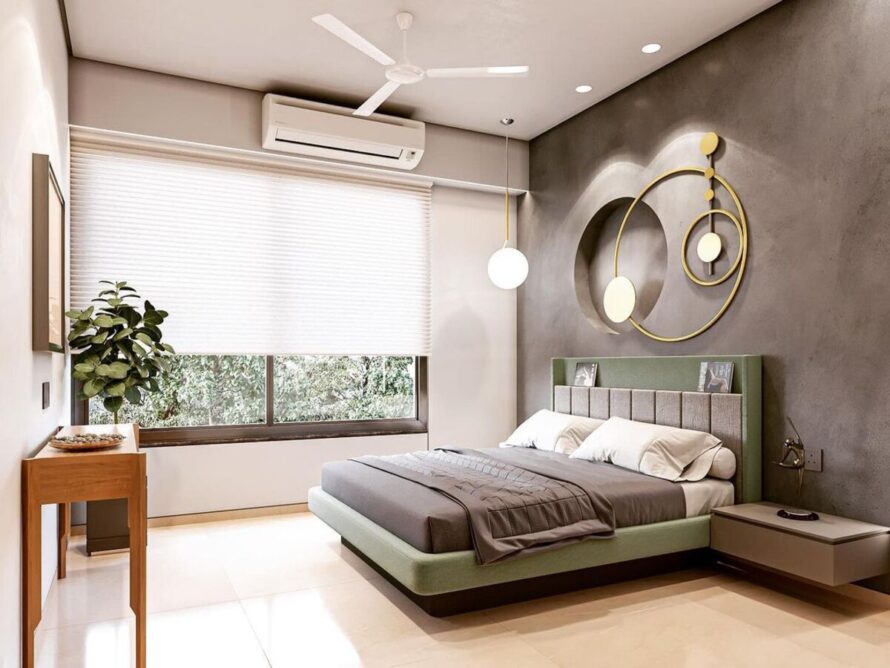
Look down for a moment, because visible floor is what makes a room feel open. Floating furniture delivers exactly that, and it’s the reason wall-mounted beds and nightstands keep appearing in modern minimalist rooms.
The effect comes down to sightlines. When furniture doesn’t meet the floor, the eye reads the surface as continuous and the room measures bigger than it is. A floating bed and matching bedside tables give a bedroom that lift without changing anything else. Earthy tones keep it warm, and daylight across an uninterrupted floor finishes the illusion. There’s a practical bonus too, since cleaning under floating pieces takes seconds rather than requiring furniture to be shoved around.
Made for small modern bedrooms that need to feel bigger than they are.
22. Be Frugal with Décor

Clear floors deserve equally clear surfaces. The rule underneath every minimalist bedroom is that less really is more, and the fastest way to break it is by owning too many small nice things.
One statement piece beats six little ones every time. A single large wall artwork holds the room together, and because nothing sits beside it competing for attention, the eye reads it properly instead of skimming past. Choosing something with actual meaning matters more than choosing something that matches, since one piece is going to carry the personality of the whole space. Soft ambient lighting nearby is all the support it needs. Dusting a room like this takes about a minute.
A reminder that good design starts with how a space feels.
💡 Pro Tip: Hang a single statement piece so its center sits about 57 to 60 inches from the floor, or 6 to 8 inches above the headboard. Most people hang art too high, which leaves it floating instead of anchoring the bed.
23. Try a Soft Approach

Minimalism doesn’t have to mean sharp edges and straight lines. A softer version keeps the restraint and drops the severity, which suits a bedroom far better than showroom sleekness ever does.
Curved shapes do most of the work. A rounded headboard, a soft-edged bedside lamp, or a bench with gentle lines all read as welcoming rather than austere, and that’s what makes the room feel like somewhere to sleep instead of somewhere to be photographed. Beige on the walls keeps everything calm, while warm bedside lamps add a glow that hard white light would ruin. Nothing about it feels strict. Rooms like this are the ones people actually relax in rather than tiptoe around.
Best suited for anyone who likes the idea of minimalism but not the cold version.
24. Thoughtful Additions

Softness makes a room welcoming. What actually goes in it decides whether the room stays that way, and the rule is simple enough: everything has to earn its place.
Books, framed photographs, and a couple of plants pass that test easily because they do two jobs at once. They look good and they mean something, which is more than most decorative objects manage. Choosing natural woven baskets for the plants rather than plastic pots keeps the materials consistent, and that consistency is what makes a small collection of things read as deliberate rather than accumulated. The test worth applying is honest: would this be missed if it disappeared tomorrow? A shelf of books someone has actually read says more about a room than any styled arrangement.
One of those setups where every piece earns its place.
👉 Suggestion: Look for undyed woven baskets in seagrass, rattan, or jute with a visible weave rather than smooth painted planters. Natural fiber echoes the wood and linen already in the room, which keeps a plant from looking like an afterthought.
25. Organized Chaos

Nobody actually owns twelve things. The honest version of a minimalist bedroom holds plenty of stuff, and the reason it still looks calm is that every item has a fixed place to live.
Shelves and cabinets are what make that possible. Once everything has an assigned spot, tidying stops being a decision and becomes a reflex, which is the only way a clear room survives past the first week. Well-chosen storage pieces also work as part of the look rather than fighting it, so a simple wooden shelf unit earns its keep twice over. The trick is deciding where things go before the clutter appears, not after. A room like this bounces back from a messy week in about five minutes.
Easy to keep up with in real life, not just in photos.
19 Easy Seasonal Bedroom Ideas Discover warm layers, fresh accents, and inviting details that make your bedroom feel cozy through every season.
14 Bedroom Color Schemes Explore soothing palettes and soft tones that create a calm, beautifully balanced bedroom atmosphere.
7 Pink Bedroom Ideas Find dreamy pink touches, plush textures, and gentle hues for a romantic, welcoming bedroom retreat.
Frequently Asked Questions
What is a minimalist bedroom?
A minimalist bedroom is a room where every item has a clear purpose and nothing sits out without a reason. It focuses on open floor space, a tight color palette, and closed storage rather than owning as little as possible. Natural materials like oak, linen, and jute do the decorating instead of accessories. The goal is calm, not emptiness.
How do you make a minimalist bedroom feel warm instead of cold?
Layer textures rather than colors. A room with only smooth painted surfaces reads clinical, but the same room with linen bedding, a jute rug, and a wooden bed frame feels comfortable immediately. Keep the whites warm (cream or ivory rather than bright optical white) and use bulbs around 2700K. Three different materials is the minimum worth aiming for.
How many decor pieces should a minimalist bedroom have?
Aim for three to five decorative items in the whole room. One larger piece of wall art, one or two plants, and one meaningful object on a surface covers it comfortably. Fewer, larger pieces always read better than many small ones because each one gets seen properly. Anything beyond five starts competing for attention.
How do you keep a minimalist bedroom tidy long-term?
Give every item a fixed home before the room is finished, not after. A tidy room stays tidy when putting something away takes less effort than leaving it out, which is why closed drawers beat open baskets. Doing one two-minute surface sweep each evening prevents almost all of it. Anything that never finds a permanent spot probably shouldn’t stay.
What colors work best in a minimalist bedroom?
Warm neutrals lead, with white, cream, oatmeal, taupe, and soft gray covering most schemes. These shades reflect light and stay quiet enough that texture becomes the interesting part. Natural wood counts as a color here and adds most of the warmth. One deeper shade like charcoal, olive, or clay works well as a single accent.
Conclusion
A minimalist bedroom works because of what it leaves out, not what it adds. Fewer things on the surfaces, storage that hides the rest, and a palette quiet enough that texture becomes the interesting part. That restraint is what makes the room feel calm instead of bare. Warm boho layers with woven rugs and linen, a soft classical mix of white and wood, or one deep accent wall against pale walls. There’s a version here for almost any room and any tolerance for color.
Pick one idea, not twenty-five. Clearing the nightstands and the dresser top is the smartest first move, because it costs nothing and shows results within an hour. Save your favorite to a Pinterest board, bookmark this for the next free weekend, and send it to a friend who keeps saying their bedroom feels cluttered. Calm is easier to build than most people expect, and it starts with an empty surface.