13 Eco-Friendly Bedroom Ideas for a Cozy Green Space
Going green in the bedroom doesn’t have to mean giving up the look people actually want. It’s easy to picture eco-friendly decor as bare and beige, but the best sustainable bedrooms lean on the same things that make any room feel good: warmth, texture, and pieces with a little history behind them.
That’s really the whole idea here. A vintage nightstand found at a flea market, curtains passed down from a grandmother, a rug that’s been dyed instead of tossed out. Each choice cuts down on waste while giving the room something a brand new furniture set never could, a bit of character and story.
These thirteen ideas cover the small swaps that add up, from furniture and fabric to lighting and storage. Some take an afternoon, others just mean shopping secondhand before buying new, but every one of them proves a greener bedroom can still feel like the coziest room in the house.
1. Natural Lighting to Lower Energy Consumption

Sunlight is the easiest eco upgrade in the whole house, and most bedrooms barely use what they already have. Moving the bed or a reading chair closer to the window means the lamps can stay off for most of the day.
That shift does two things at once. It cuts down on electricity, and it changes how the room feels, since natural light tends to look softer and warmer than anything from a bulb. Opening the curtains first thing in the morning instead of reaching for a switch becomes a small habit that saves more than people expect.
Small changes create most of the impact.
2. Reuse Vintage Furniture for a Timeless Aesthetic

That same instinct to use what’s already there carries over into furniture too. A secondhand dresser or an old wooden side table often has more character than anything off a showroom floor, and it skips the waste that comes with buying new.
Look for solid wood pieces with good bones, even if the finish looks dated. A little sanding and a fresh coat of oil can bring back the grain and turn a forgotten piece into the thing everyone asks about. That mix of old and new is what makes a room feel collected instead of bought all at once.
The kind of piece that quietly makes a room feel more grown-up.
3. Creative Night Stand for an Environment-Friendly Home Space

That same appreciation for character keeps going once the eye lands on the nightstand, which is one of the easiest spots to get creative without spending much. An old trunk, a repurposed stool, or a vintage crate all work just as well as anything bought new.
Flea markets and estate sales are good places to start, since the goal is finding something with a story rather than matching a set. Even in a more polished, luxurious bedroom look, one unexpected piece like this keeps the room from feeling too staged. That first cup of coffee set down on something with real history feels different than setting it on particleboard.
Proof that small choices carry the biggest weight.
4. Vintage Bed Sheets for a Sustainable Design

That same one-of-a-kind feeling carries right onto the bed once old fabric gets a second life. Vintage sheets, especially the kind with bold florals or retro stripes, bring in color and pattern that new bedding rarely matches.
Check family linen closets or secondhand shops before buying anything new, since older cotton often feels softer after years of washing. Mix a patterned vintage sheet with plain modern pillowcases so the look feels pulled together instead of mismatched. That first slide under broken-in cotton at the end of the day is a small comfort new sheets take years to earn.
Getting into bed at night feels a little more special with something that actually has a past.
💡 Pro Tip: Wash vintage sheets in cold water with a scent-free detergent before use, and check the seams for thinning fabric first, since older cotton can tear along old fold lines.
5. Open Clothing Rack as a Sustainable Storage Solution

Once the bed is dressed in something with real character, the rest of the room can follow that same lead, starting with how clothes get stored. An open rack built from reclaimed wood skips the plastic and particleboard that most closet systems are made from.
A simple frame with a horizontal bar does the job without anything fancy, and hanging clothes out in the open actually makes getting dressed faster. Add a wooden crate or two underneath for shoes or folded items so the setup stays organized instead of looking like a pile. Visible clothes also get worn more often, the same way a favorite jacket on a hook gets more use than one buried in a closet.
Works well in small bedrooms where a full closet system just isn’t an option.
6. Be Eco-Friendly by Bringing an Old Rug Back to Life

With the closet sorted out, the floor is the next place worth a second look, and an old rug rarely needs to be replaced as often as people think. A rug with a few worn spots or a dated pattern can usually be saved instead of sent to the curb.
A simple dye job in a deep, warm tone covers stains and gives faded fibers a new look. For rugs with real damage, a patched section using scrap fabric in a similar weight adds visible character instead of looking like a repair. Stepping onto something familiar underfoot still carries that broken-in comfort a brand new rug doesn’t have yet.
The finishes catch light differently once the color changes.
👉 Suggestion: Look for a fabric dye made for natural fibers like wool or cotton rather than a synthetic-blend formula, since natural fiber rugs take color more evenly and hold it longer.
7. A Wicker Tray for Reducing Environmental Impact

That same eye for small, meaningful details carries over to the little things sitting on top of the dresser, and a wicker tray might be the easiest eco swap on this whole list. Made from natural, renewable material, it replaces plastic organizers without costing much at all.
Use it to corral jewelry, a candle, or a stack of rings by the bed so surfaces stay tidy. The woven texture adds warmth that plastic trays never quite manage, which is part of why it shows up so often in neutral minimalist bedroom styling. That first place jewelry lands after a long day finally has somewhere better to go than the edge of the dresser.
A smart pick for anyone trying to cut down on plastic one small swap at a time.
8. Reused Rocking Chair for a Touch of Nostalgia

That same small, meaningful detail on the dresser can grow into something bigger with the right piece of furniture, and an old rocking chair carries more warmth than almost anything else in a bedroom. Pulled out of a garage or inherited from a grandparent, it brings history into a room that new furniture just can’t fake.
A light sanding and a fresh coat of oil or paint brings the wood back to life without erasing the years of wear that give it character. Set it near the window instead of a corner, since a rocking chair works best with natural light to read by. That gentle back and forth motion turns a few quiet minutes into the best part of the morning.
Easy to enjoy every day without feeling overly designed.
9. Makeshift Desk Working Space to Promote Longevity

That same reclaimed wood approach that works for a chair applies just as well to a small desk, especially in a bedroom that doubles as a home office. Building one from leftover boards or an old door laid across two sawhorses keeps a genuinely useful piece out of the landfill.
Sand the surface smooth and finish it with a natural oil so it holds up to daily use without much upkeep. Pair it with a chair built the same way, or bring back the rocking chair from the last idea once the workday is done. A desk built to last outlasts anything flat-packed and disposable.
One of those pieces people end up keeping for years without ever needing to replace it.
10. Small Night Stands to Embrace a Minimalistic Lifestyle

After a desk built to last, the nightstand is a good reminder that not every piece needs to do more. Going smaller here isn’t about giving something up, it’s about keeping only what actually gets used within arm’s reach of the bed.
A narrow stool or a small vintage table holds a lamp and a book without wasting the space a bigger nightstand would. Skip the drawers if the goal is less clutter, since an open surface naturally limits what ends up piled there. That extra floor space around the bed makes the whole room feel less crowded.
The whole room feels lighter with one less oversized piece to work around.
💡 Pro Tip: Keep the nightstand surface no wider than 16 inches if the room is small, and stick to just a lamp and one small object so the open layout reads as intentional instead of empty.
11. Innovative Woven Basket-Style Planter for Sustainability

With the nightstand cleared off, there’s finally room to add the one thing most bedrooms are missing: something alive. A woven basket planter holds a plant without the plastic pot showing, and it does it using materials that break down instead of sitting in a landfill for centuries.
Wicker or seagrass baskets work well here, especially with a plastic liner tucked inside to catch water and protect the weave. A trailing plant like pothos looks especially good spilling over the edge, softening the whole corner. Natural material on the outside with something green growing out of it is what makes the setup feel intentional instead of thrown together.
Easy to decorate around as the plant grows and the seasons change.
12. Stylish Curtains Passed Down in the Family for a Sentimental Value
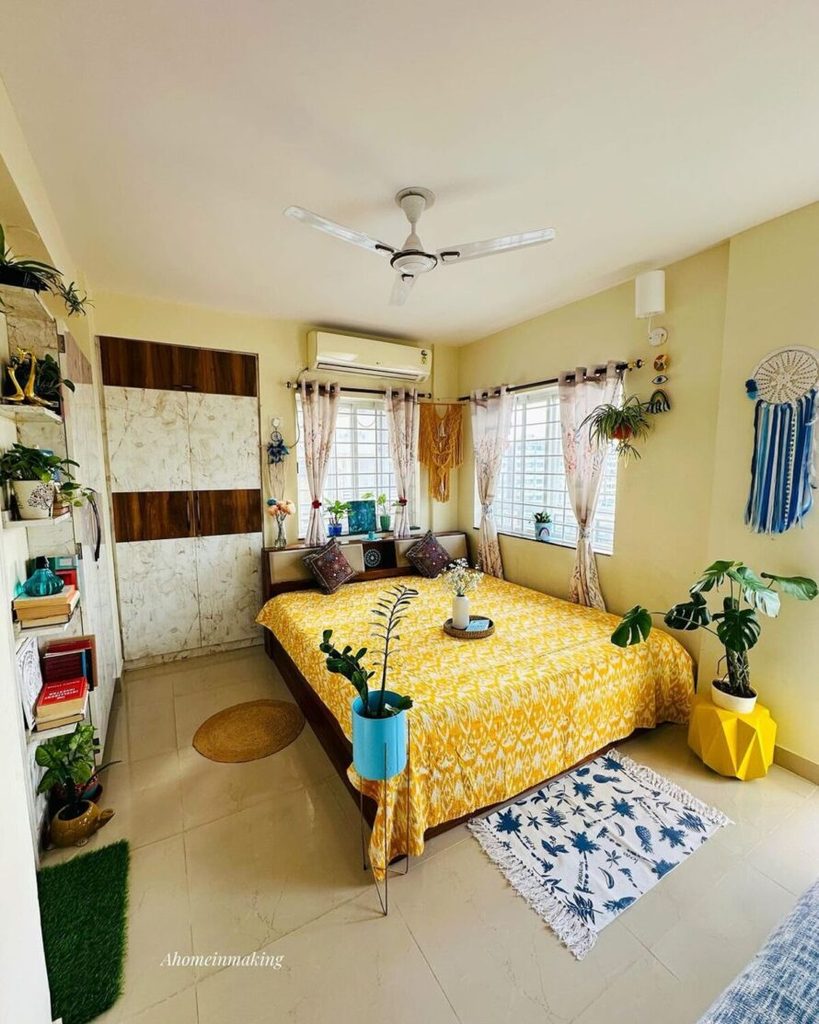
That same plant softening the corner pairs naturally with fabric doing the same thing at the window, and curtains passed down through a family carry a value new ones never will. A grandmother’s old drapes might not match everything else in the room, and that’s actually part of the appeal.
Hem them if they run long, or update the curtain rings to modernize the hanging style without touching the fabric itself. Wash gently and air dry to keep older fibers from weakening in a hot dryer. Pulling curtains that someone else once pulled, in a different house, makes the room feel connected to more than just this one year.
The colors stay interesting from morning to night in a way new fabric rarely manages.
👉 Suggestion: Look for a lightweight cotton or linen curtain from the original set, since natural fibers hold up better to a fresh wash than older synthetic blends, which can yellow or grow brittle with age.
13. Eco-Friendly Makeshift Wooden Storage Containers

With the windows dressed in something that already has history, the last detail worth solving is where the smaller everyday items actually go. Old wine crates or fruit boxes, cleaned up and stacked, make surprisingly good storage without buying a single new container.
Sand down any rough edges and add a coat of natural oil, then stack two or three at different heights for books, folded clothes, or spare blankets. Even a room styled after a luxurious master bedroom look benefits from one humble, handmade piece like this, since it keeps the space from feeling too polished or staged. That habit of using what’s already in the garage before buying something new is really the thread running through this whole list.
A smart pick for anyone who would rather build character into a room than buy it.
Frequently Asked Questions
How much does an eco-friendly bedroom makeover cost?
An eco-friendly bedroom makeover can stay under $150 if the focus is on reusing and thrifting rather than buying new. Most of the savings come from sourcing furniture and textiles secondhand instead of retail, since a solid wood dresser or nightstand at a thrift store often costs a fraction of a new one. Paint, natural fiber rugs, and a few plants round out the budget-friendly upgrades. Best for anyone who wants a greener bedroom without a big spend.
What’s the biggest mistake people make with an eco-friendly bedroom?
The most common mistake is assuming eco-friendly decor has to look bare or beige to count. A sustainable bedroom can still use color and pattern, especially through vintage textiles, dyed rugs, or painted furniture. Skipping style entirely in the name of sustainability usually just means people give up on the idea halfway through. Focus on character over minimalism if the beige look doesn’t feel like home.
Does an eco-friendly bedroom work for renters?
Yes, renters actually have some of the easiest access to eco-friendly upgrades since most of the ideas involve furniture instead of permanent changes. Woven baskets, secondhand nightstands, and vintage curtains all move with a renter from one apartment to the next. Skip anything that requires painting walls or altering fixtures unless a landlord allows it. Ideal for apartment dwellers who want a greener space without losing a security deposit.
Should you DIY eco-friendly bedroom decor or buy it ready-made?
DIY makes the most sense for anything involving fabric or wood, like dyeing a rug or building a simple desk from reclaimed boards, since the materials are often already sitting around unused. Buying ready-made secondhand works better for larger furniture pieces that require tools or skills most people don’t have on hand, like reupholstering a chair. A mix of both usually gets the best result without eating up an entire weekend. Beginners should start with one small DIY project before taking on anything bigger.
Where can you find materials for an eco-friendly bedroom on a budget?
Thrift stores, estate sales, and local buy-nothing groups are the best starting points for eco-friendly bedroom ideas, since furniture and textiles there are already secondhand. Facebook Marketplace and curbside finds are worth checking too, especially for solid wood pieces someone is giving away for free. For new sustainable materials like natural fiber rugs or organic sheets, retailers like Target or Wayfair carry affordable options in the budget-friendly range. Best for anyone building a greener bedroom slowly instead of all at once.
Conclusion
A greener bedroom doesn’t ask for much, just a willingness to look twice at what’s already around before buying something new. Every idea here leans on that same instinct: a secondhand dresser, a family curtain, a basket instead of plastic. Some lean vintage and full of character, others stay quiet and minimal, and a few just bring in a little more green from a plant in the corner. The room ends up feeling more personal precisely because so little of it came from a store shelf.
Pick one or two ideas instead of trying all thirteen this weekend. A secondhand nightstand or a rug refresh is an easy place to start, and both cost very little to try. Save the favorite idea to a Pinterest board, bookmark this list for a slower Saturday, and pass it along to a friend who’s been eyeing their own bedroom refresh. A little resourcefulness goes a long way toward a room that actually feels like home.