7 Pink Bedroom Ideas That Look Grown-Up, Not Girly
Pink has a reputation problem in bedrooms. People still associate it with nurseries and teenage rooms, so they rule it out before really looking at it. That’s a shame, because pink is one of the few colors that makes a room feel genuinely warm without going dark.
The trick is picking the right one. Pink covers an enormous range, from pale salmon and dusty rose through to deep mauve and pinks with so much tan in them they read as neutral. The soft, muted, slightly grayed shades are the ones that look grown-up. Bright bubblegum is where the childish feeling comes from, not pink itself.
What sits next to it matters just as much. Gray, wood tones, and cream all pull pink toward something calm and mature, while gold keeps it soft and warm. The ideas ahead cover full pink walls, single accent walls, and versions where the walls stay neutral and the color arrives through a headboard or a set of curtains instead.
1. Go for an Earthy Look

The easiest pink to live with is the one that barely reads as pink at all. Shades with tan or brown mixed in sit much closer to a neutral, so the walls feel warm without announcing a color choice to everyone who walks in.
That tan base is doing the work. It keeps the pink from going sweet, which is the exact thing that makes people nervous about the color in the first place. Gray and white on the bedding, a bolster pillow, and a simple nightstand sharpen the palette and stop it turning muddy. The payoff shows up on gray afternoons, when a room like this still feels warm while a plain white one would look flat and cold.
A smart pick for anyone unsure about committing to real color.
2. Opt for a Soft Pink Hue
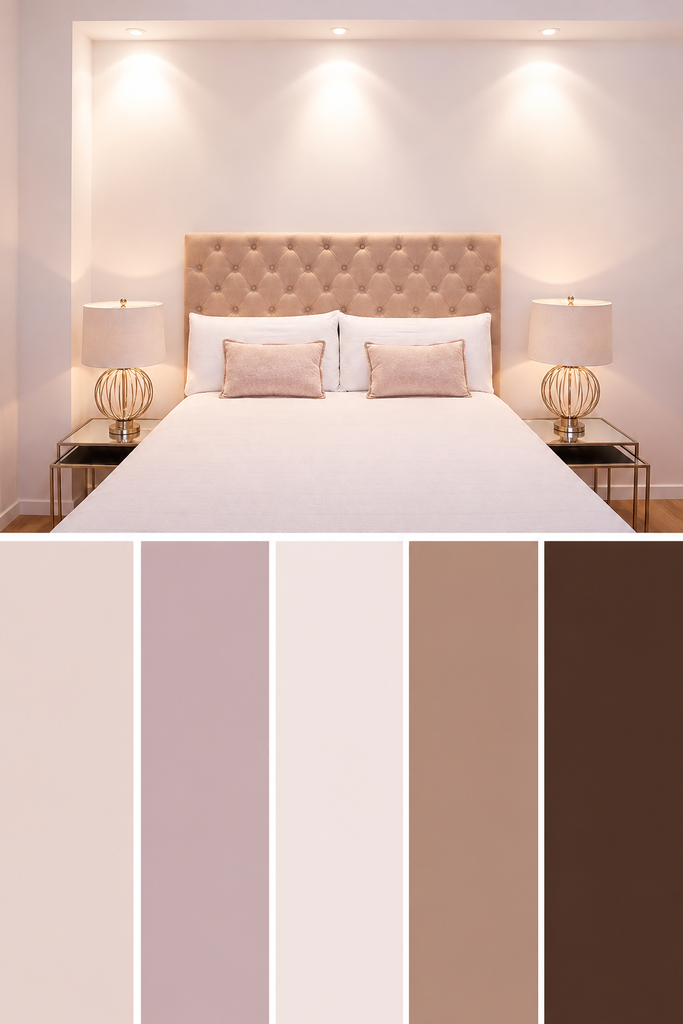
Push the color a little further and let the bed carry it. A tufted peach pink headboard against almost-white pink walls gives a bedroom real softness without tipping into anything childish.
The reason this works is the small gap between the two shades. The headboard sits a few steps deeper than the wall, so it stands out clearly while still belonging to the same family. Tufting adds shadow across the surface, which gives the pink depth instead of leaving it flat. Layering pillows in similar tones on top builds the look further. A matching pair of table lamps on either side keeps everything even, and that symmetry is what makes the room feel calm rather than fussy.
The space carries a quieter mood.
💡 Pro Tip: Choose a headboard shade two to three steps deeper than the wall on the same paint strip. Any closer and it disappears, any further and the two pinks stop looking related.
3. Add Hints of Blue

Now for something bolder. Deep pink walls with pops of blue scattered through the room sounds risky on paper, but blue is the color that calms pink down fastest.
Blue and pink sit opposite each other in temperature, so the cool notes hold the warm ones in check. Bringing it in through a floral headboard, a chair, wall art, and a few pillows spreads it around instead of parking it in one corner. Pastel pink drapes against the darker walls add contrast without adding another color. White and cream on the bedding, lamp, and nightstands keep everything fresh. Rooms this cheerful are the ones that make a Monday morning feel less like a Monday.
The colors stay interesting from morning to night.
4. Use Pink Accents

Leave the walls alone entirely and the color can still lead the room. A floral headboard against neutral paint brings in pink and pattern at once, which is about the fastest way to give a plain bedroom a point of view.
Accent-only schemes work because a neutral backdrop makes every colored piece look deliberate. Nothing competes, so the headboard reads as a real design choice rather than one more thing in a busy room. Repeating the same coral pink in a Roman shade, a throw blanket, and a couple of pillows ties it together, and one lavender pillow gives the eye something unexpected to land on. This is also the version that survives a house move, since none of it is painted on.
Made for renters and anyone who redecorates often.
👉 Suggestion: Look for a floral print with a cream or oatmeal background rather than a white one. Warm backgrounds keep the pink looking soft and grown-up, while stark white makes the same print read brighter and more juvenile.
5. Pair with Gray
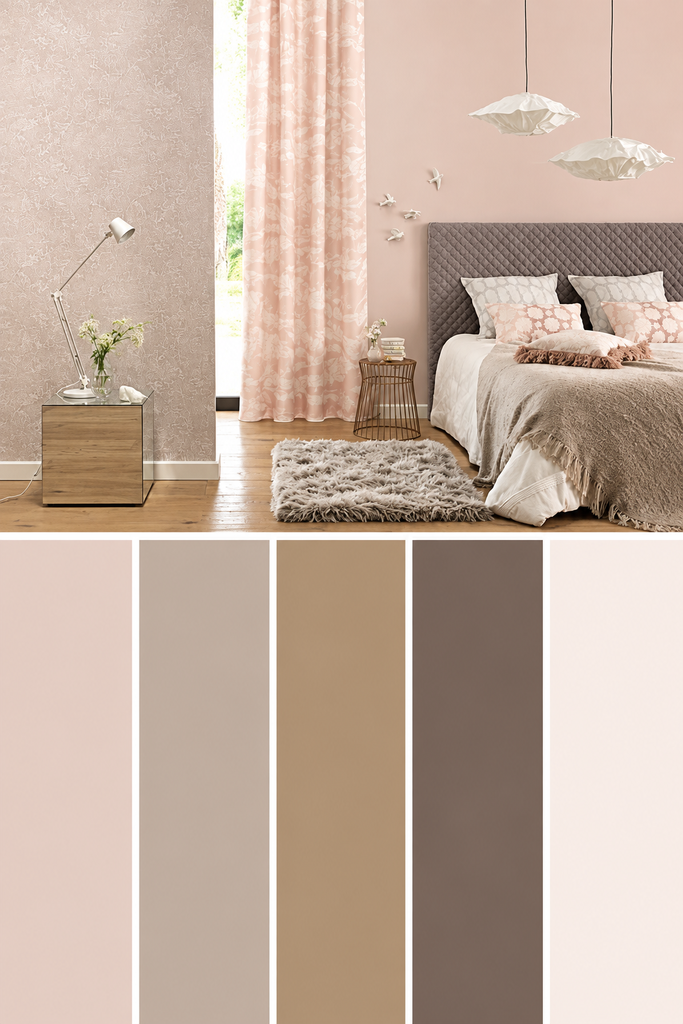
Bring the color back to the wall, but only one of them. A single pink accent wall behind the bed, balanced by gray and wood everywhere else, is the combination that finally makes pink feel like an adult decision.
Gray is what does the maturing here. It has no warmth of its own, so it cools the pink down and stops the room reading sweet, which is exactly the problem most people are trying to avoid. A gray headboard against that pink wall creates clean contrast right where the eye lands. Wooden floors and simple nightstands add warmth back at ground level, and patterned pink curtains matched to the wall pull the color across the room. Nobody walks in and thinks nursery.
That rare balance of relaxed and put-together.
6. Make it Eclectic
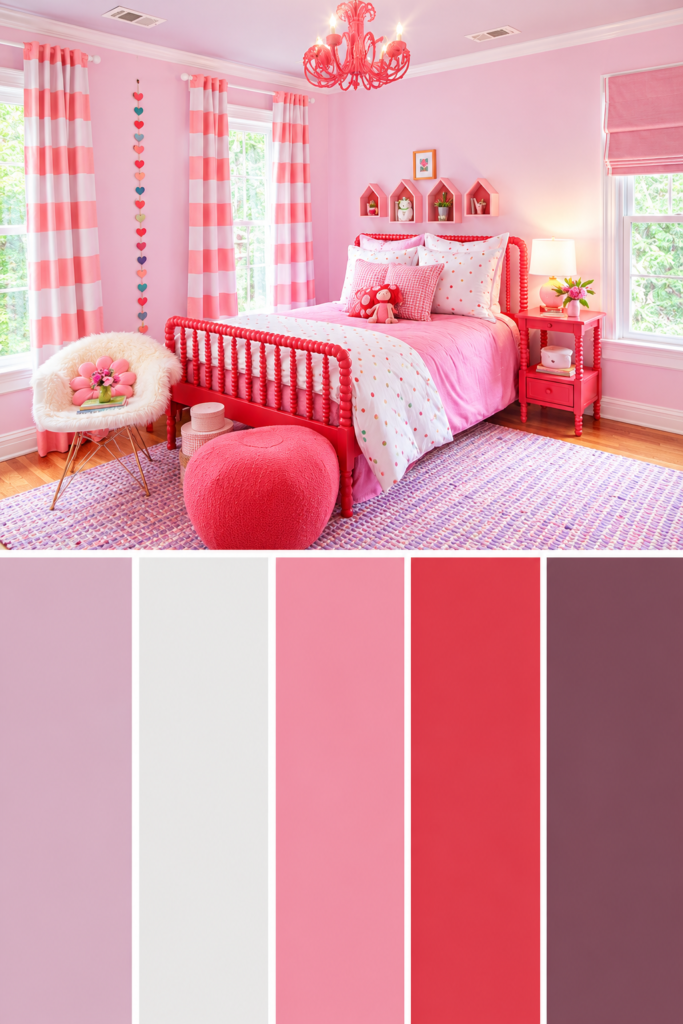
Throw out the restraint and pink gets a lot more fun. Lavender pink walls with pink furniture, pink shelving, and a red bed frame sounds like too much, and it absolutely works.
Eclectic rooms hold together when the colors stay in the same warm family. Pink, lavender, and red all lean warm, so the eye reads them as one bold idea rather than three arguments. A pink ottoman, nightstand, and area rug keep the tone consistent close to the floor, while striped pink and lavender curtains carry it up to the window. The red frame and chandelier are what stop it feeling soft and dated. Rooms like this take confidence, and they reward it every time someone opens the door.
The kind of space that shows how much mood matters.
💡 Pro Tip: Let one piece be the loudest and keep everything else a step quieter. In an eclectic room, a single high-contrast item like a red bed frame anchors the palette, while two or three competing statements just read as chaos.
7. Keep it Subtle

Pull all that energy back out and the opposite approach lands just as well. A pale salmon pink used on nearly everything, in shades so close they almost match, gives a bedroom a quiet, finished look that never tires.
Monochrome schemes work because there’s no contrast for the eye to catch on. Walls, shades, and pillows in nearly identical tones read as one continuous surface, which makes even a small room feel calm and considered. Soft gold accents are the finishing touch, since warm metal against pale pink adds a little shine without breaking the mood. Pink patterns on a Roman shade and a few pillows keep it from going too flat. Rooms this settled are easy to keep tidy, because nothing looks out of place.
Easy to live with every day without feeling overly designed.
You Might Also Love These Ideas
- 7 Black and Gold Bedroom Ideas. Rich golden light and deep tones create a glamorous retreat with luxurious warmth and inviting nighttime ambiance.
- 16 Boujee Bedroom Ideas. Plush textures and a soft glow bring an indulgent atmosphere, creating a dreamy bedroom that feels effortlessly elegant.
- 17 Navy Blue Bedroom Ideas. Moody navy shades add calming depth and a cozy atmosphere, turning the bedroom into a soothing, sophisticated retreat.
Frequently Asked Questions
How do you make a pink bedroom look grown-up?
Pick a muted, slightly grayed pink and pair it with something serious. Dusty rose, mauve, and pinks with tan in them read as neutrals, while clear bright pinks are what create the childish feeling. Gray, charcoal, warm wood, and black all mature the palette fast. Keeping the room mostly neutral with pink as the main color rather than one of five does the rest.
What is the difference between warm and cool pink?
Warm pinks have yellow or orange in them and lean toward peach, coral, and terracotta. Cool pinks carry blue or purple and lean toward mauve, rose, and lilac-pink. Mixing the two in one room is what makes a pink scheme look off without anyone being able to say why. Checking two samples side by side in daylight makes the difference obvious.
Does pink work in a shared or couple’s bedroom?
Yes, as long as the pink stays muted and something structural balances it. Dusty rose or a pink with brown in it reads as a warm neutral rather than a statement, which is usually the sticking point. Adding charcoal, black hardware, or dark wood gives the room weight. Keeping bedding cream or gray instead of pink also helps a lot.
Does pink make a small bedroom look bigger?
Pale pink does, and often better than white. Soft pink reflects light almost as well as white but carries warmth, so a small room feels open without feeling stark or cold. Deeper pinks work too if all four walls are painted rather than just one, since a single accent wall visually chops a small space. Keep the ceiling a shade lighter.
Does pink work in a north-facing bedroom?
Yes, but the undertone matters more than usual. North-facing rooms get cool, flat light that pulls blue-based pinks toward gray and can make them look dingy. Warm pinks with peach, coral, or tan in them hold their color much better in weak daylight. Warm bulbs around 2700K keep the room looking right after dark.
Can renters do a pink bedroom without painting?
Yes, and pink is one of the easier colors to bring in through textiles. An upholstered headboard, curtains, bedding, a rug, and a few pillows cover most of the look. Peel-and-stick wallpaper in a soft floral handles the wall and comes off cleanly. Big-box stores like IKEA or Target carry blush and rose options at affordable prices.
Conclusion
Pink deserves better than its reputation. The right shade brings warmth into a bedroom that no neutral can match, and the muted versions read closer to beige than to anything from a nursery. That range is what makes it worth trying. An earthy pink that barely announces itself, a soft tonal room with gold accents, a bold eclectic mix, or one accent wall balanced by gray and wood. There’s a version here for almost any room and any comfort level with color.
Pick one idea, not seven. A single accent wall behind the bed is the smartest starting point, because it brings in real color while leaving three walls neutral if the shade turns out to be wrong. Save your favorite to a Pinterest board, bookmark this for the next free weekend, and send it to a friend who keeps saying pink is only for kids. The right pink grows up beautifully, and it starts with one wall.