10 Sage Green Bedroom Ideas for a Calm Retreat
There’s a reason sage green keeps showing up in bedroom after bedroom lately. It sits somewhere between green and gray, calm enough to fall asleep in but interesting enough to actually notice, and it works with almost anything already sitting in the room.
Some people go all in with sage on every wall. Others just add a throw pillow or a painted nightstand and let the color do its quiet work from there. Either way, the results tend to feel warm, grounded, and a little more put together than plain white walls ever could.
This list rounds up ten different ways to bring sage green into a bedroom, from bold accent walls to soft, subtle touches through bedding and decor. Some ideas take a full weekend. Others take twenty minutes and a can of paint.
Grab a coffee and start scrolling. One of these is probably about to become the next favorite corner of the room.
1. Keep it Flowing
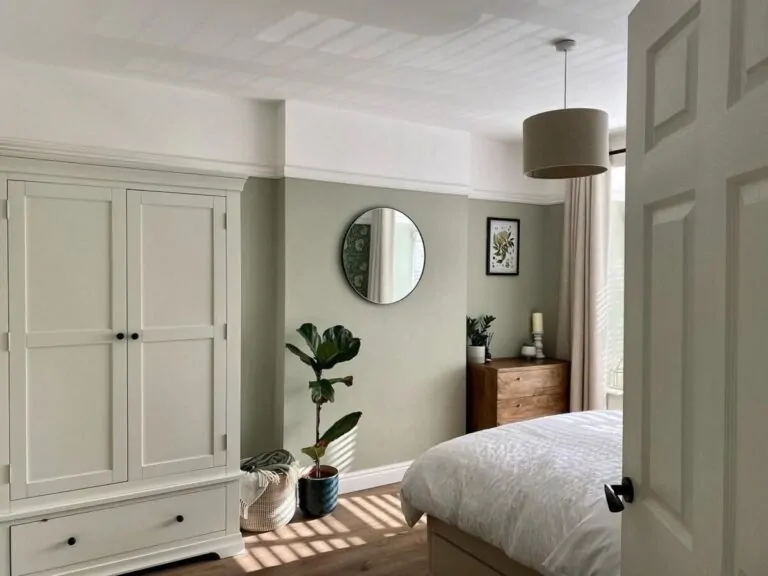
There’s a certain kind of calm that only shows up when a color stops fighting with itself. Painting the walls, the wardrobe, and even the door in the same shade of sage turns the whole room into one smooth, continuous space instead of a patchwork of painted and unpainted parts.
Letting the color wrap around every surface gives the wood floor and dresser something steady to stand against, so nothing in the room competes for attention. A mirror or a piece of framed art gets to be the star instead of fighting the walls for it. It’s the kind of setup that makes a small bedroom feel bigger than it actually is, the way a room looks different the moment nothing is left plain white and unfinished.
That rare balance of relaxed and put-together.
2. Take a Bold Approach

Where the last look kept things soft and continuous, this one turns the volume up. A deep, dark sage green on the walls pulls a small bedroom in instead of pushing it out, which is exactly what makes it feel more like a cozy hideaway than an ordinary room.
Covering about three quarters of the wall, rather than the whole thing, tricks the eye into reading the ceiling as taller than it is. Warm wood tones on the bed and nightstands keep the darker sage from feeling heavy, and a few fall-inspired touches, like a rattan lampshade or a small stack of firewood by a fireplace, add the kind of coziness that makes a room hard to leave on a cold night. That mix of dark and warm is what keeps the whole thing from tipping into gloomy.
Proof that small choices carry the biggest weight.
3. Bring Height with Curtains

That moody, dark sage room proved how much a bold choice can change a space. This next move works with a softer version of sage and focuses on something most people overlook entirely, which is exactly where the ceiling meets the wall.
Sage walls act as a near-neutral background here, which means warm beige curtains can hang without clashing against them. Hanging the curtain rod just below the ceiling instead of right above the window frame tricks the eye into reading the walls as taller, and a few metallic touches, like a mirror frame or wall sconce, keep the palette from feeling flat. It’s the kind of small fix that changes how a whole room reads at first glance, the moment someone walks in and the ceiling suddenly feels higher.
💡 Pro Tip: Hang curtain rods 4 to 6 inches above the window frame and let the panels graze the floor. That extra height is what tricks the eye, not the fabric itself.
A smart pick for low-ceiling bedrooms and older homes.
4. Incorporate a Gallery Wall

Taller-feeling walls give a room more presence, and that extra breathing room is the perfect setup for something to actually hang on them. A gallery wall pulls double duty here, since it adds both color and story to a space that might otherwise feel like it’s missing something personal.
Mixing sage green with black frames, and letting one piece hang without a frame at all, keeps the whole arrangement from looking too matched or too planned. Hanging pieces at slightly different heights above a headboard or beadboard panel adds movement, the same way a bookshelf looks better once it stops being perfectly straight. That little bit of imperfection is usually what makes people stop and actually look at a wall instead of walking past it.
One of those combinations people rarely regret choosing.
5. Accent with Wood

A gallery wall gives the eyes something to explore, and wood tones are what ground that same wall once the art comes down to the surfaces around it. Sage green has a funny way of looking almost neutral next to the right wood finish, which is exactly why this pairing works so well.
Olive-toned pillows echo the sage on the walls and nightstands, while matching wood finishes across the bed frame, nightstands, and any beadboard paneling keep the whole room reading as one cohesive space instead of separate pieces pushed together. White trim and bedding brighten things up so the wood and sage don’t pull the room too dark. It’s the same trick a good living room rug pulls off, tying furniture together that would otherwise feel scattered.
👉 Suggestion: Look for warm, medium-toned wood finishes like oak or walnut rather than anything too orange or yellow-toned. Cooler, honey-brown woods sit best against sage without fighting the green.
Ideal for bedrooms that already lean warm and traditional.
6. Try Whimsical

If that last pairing felt warm and grounded, this one leans fresh and a little playful instead. A lighter, mintier shade of sage brings an almost energizing quality to the walls, the kind of green that feels more like the start of spring than a quiet retreat.
Wood tones stick around here too, but a mix of potted plants does most of the heavy lifting, echoing the green on the walls and making the whole room feel like it’s pulling color straight from outside. White trim, bedding, and a few subtle hints of blue keep the palette light instead of letting it turn too saturated. Waking up in a room like this tends to feel a little easier, the kind of morning where getting out of bed doesn’t take three snoozes first.
7. Utilize a Feature Wall

That fresh, minty energy works well spread across a whole room, but sometimes the better move is pulling all that attention into just one wall. Board and batten paneling in a softer, grayer sage does exactly that, giving the room a single, textured focal point instead of four flat walls doing the same thing.
Natural light hitting the panel during the day keeps the wall feeling fresh and alive, while a couple of wall pendants take over once the sun goes down and the mood shifts to something quieter. A wood and rattan headboard nearby ties the whole thing back to nature, and leaf prints scattered across pillows and framed art echo the green without repeating it outright. White accents throughout keep the texture from feeling heavy or closed in.
💡 Pro Tip: Space vertical battens 12 to 16 inches apart for a balanced, custom-built look instead of a busy, overcrowded one. Wider spacing usually reads as more intentional and less DIY.
8. Excel with Your Boho Style
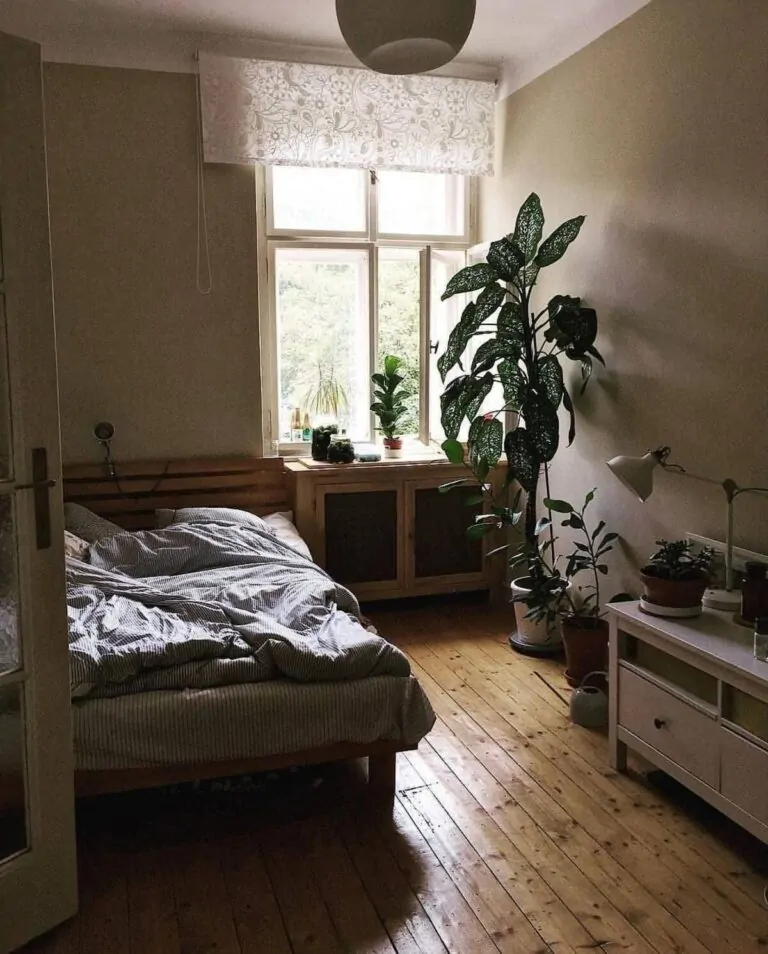
That single feature wall proved how much one textured surface can do, but boho style takes the opposite approach and lets the whole room relax a little. Warm sage green takes the chill off a room that runs a bit cool, which makes it a natural fit for anyone chasing that loose, lived-in boho feel.
A minimalist headboard actually looks taller and more intentional against warm sage walls, while rich wood tones on the bed frame, floor, and nightstands ground the space without weighing it down. Gray tones woven through the bedding soften things further, and a handful of potted plants scattered around the room pull the eye back to the green on the walls. That layered, slightly imperfect mix is what boho spaces do best, the kind of room where nothing matches exactly but everything still feels like it belongs.
9. Add a Wreath

@jesslifeandhome
Boho leans into imperfection, but this next idea swings back toward something more structured and symmetrical. Sage green painted on wainscoting creates an instant backdrop for the bed, and a simple wreath hung against it becomes the kind of small detail that pulls the whole eye of the room toward one spot.
A gray headboard keeps things calm underneath all that green, while beige cushions, a soft throw, and a green duvet cover echo the wall color without overwhelming it. A jute rug and a couple of wooden chests add warmth at floor level, and matching table lamps or planter vases on either side of the bed give the whole setup a balanced, almost mirror-image feel. That kind of symmetry is what makes a room feel finished the second someone walks in, the same calm a perfectly made bed gives a whole space.
👉 Suggestion: Choose a wreath made from dried eucalyptus, preserved greenery, or woven grapevine rather than anything glossy or artificial-looking. Natural, matte textures blend into a sage palette instead of standing out against it.
10. Make Use of an Accent Wall
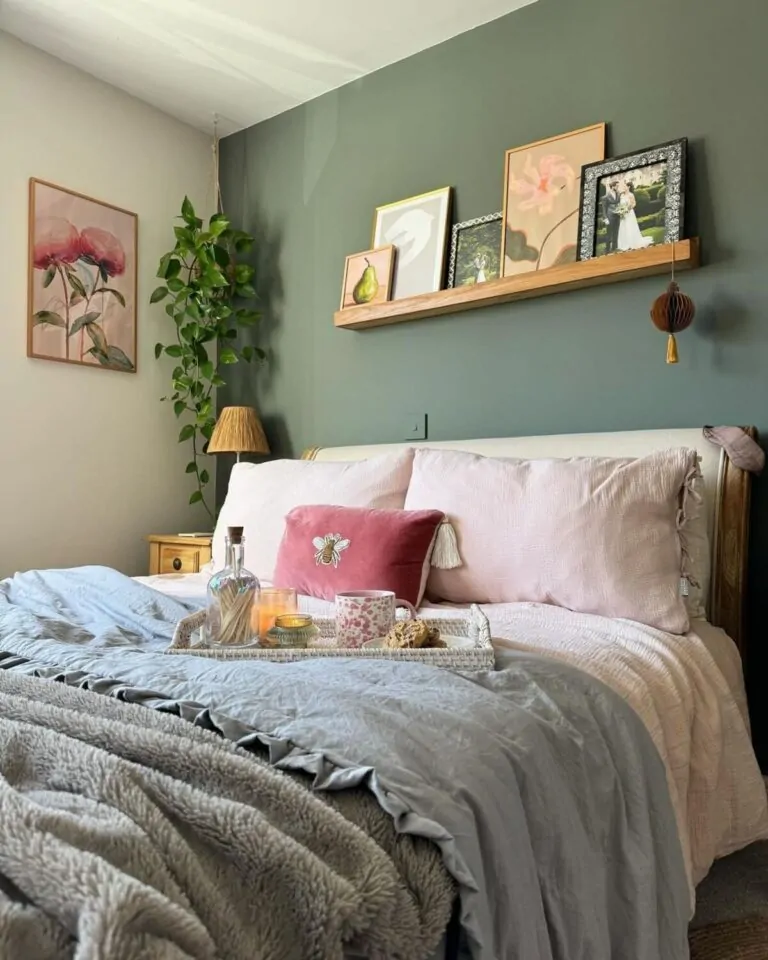
That wreath and its matching lamps showed how well symmetry works, and a darker accent wall takes that same calm structure and adds a little drama to it. A deeper shade of sage on just one wall turns it into a bold, dramatic base without asking every wall in the room to go dark.
Muted, pastel pink accents on pillows and artwork pair surprisingly well against that darker green, softening it just enough to keep the room from feeling too moody. Gray tones on the throw and duvet ground the whole palette further, striking that balance between drama and calm that makes a bedroom feel intentional instead of overdone. It’s the kind of combination that photographs beautifully but still feels peaceful enough to fall asleep in every night.
💡 Pro Tip: Keep the pink accents to two or three small pieces, like a pillow and a piece of art, instead of spreading it across the whole bed. A little pink goes a long way against dark sage.
Frequently Asked Questions
What colors go best with a sage green bedroom?
Warm neutrals like beige, oatmeal, and cream are the easiest pairing for a sage green bedroom because they keep the palette calm instead of cold. Wood tones, black accents, and soft pink also work well depending on the mood, from cozy and grounded to bright and playful. Blush pink adds a chic, romantic feel, while charcoal or black brings more drama. Best for anyone unsure where to start pulling a full color scheme together.
Does sage green work in a small bedroom?
Yes, sage green actually works especially well in small bedrooms when used thoughtfully. A lighter or grayer sage shade keeps a tight space feeling open, while covering only part of a wall (instead of floor to ceiling) can trick the eye into reading the room as taller. Pairing the walls with a similar-toned ceiling also removes visual breaks that make small rooms feel boxed in. Ideal for apartments, guest rooms, and cozy starter bedrooms.
How do you choose the right shade of sage green?
The right shade depends on how much natural light the bedroom gets and the mood being aimed for. Rooms with plenty of daylight can handle a deeper, more saturated sage without feeling dark, while dimmer rooms usually look better with a lighter, grayer tone. Testing a sample patch on the wall at different times of day is the most reliable way to judge how a shade will actually read. A gray-leaning sage tends to be the safest starting point for first-time painters.
What lighting works best in a sage green bedroom?
Warm, soft lighting brings out the best in sage green, since cooler bulbs can make the color read more gray or washed out. Table lamps and dimmable fixtures let the room shift from bright and fresh during the day to warm and relaxed at night. Brass or wood-finished light fixtures also complement sage without competing with it. Best paired with warm white bulbs rather than daylight or cool white tones.
How do you keep a sage green bedroom from feeling too cold?
Layering in warm materials is the simplest fix for sage green reading cold or clinical. Wood furniture, woven baskets, linen bedding, and brass or gold hardware all add warmth that balances the coolness of the green. Sticking to warm-toned whites and beiges, rather than stark bright white, also helps soften the overall look. A useful tip for anyone who tested a sage swatch and found it felt sterile instead of cozy.
Conclusion
Sage green has a quiet way of changing a whole room without asking for much. One accent wall, one painted headboard, or one wreath against a soft green backdrop can shift the entire mood of a bedroom into something calmer and more grounded. Every version on this list carries its own personality, which is why sage rarely looks the same twice. Whether the goal leans bold and moody, soft and boho, or bright and whimsical, there’s a shade and a style here that fits.
The smartest move is picking one or two ideas instead of trying all ten at once. Start with whatever fits the weekend and the wall that gets noticed most, whether that’s a full accent wall or something as simple as new bedding. Save the favorite idea to a Pinterest board, bookmark it for the next free Saturday, and share the post with a friend who keeps saying their bedroom needs something new. Sometimes one good shade of green is all it takes.