23 Small Master Bedroom Ideas to Maximize Style
Small master bedrooms have a way of testing every decorating instinct at once. There’s a bed to fit, a dresser that somehow never has a good spot, and a corner that keeps collecting laundry instead of turning into anything useful. The good news is that square footage was never really the problem. The right color choices, smart storage, and a little lighting magic can make a tight bedroom feel calm and pulled together instead of cramped.
This list rounds up 23 small master bedroom ideas that actually work in real rooms, not just in photos. Some lean moody and dramatic, others keep things soft and airy, but each one solves a real small-space headache while still looking like something worth pinning. Whether the goal is more storage, more style, or just a room that finally feels like a place to unwind, there’s an idea here that fits.
1. Make Your Headboard Work
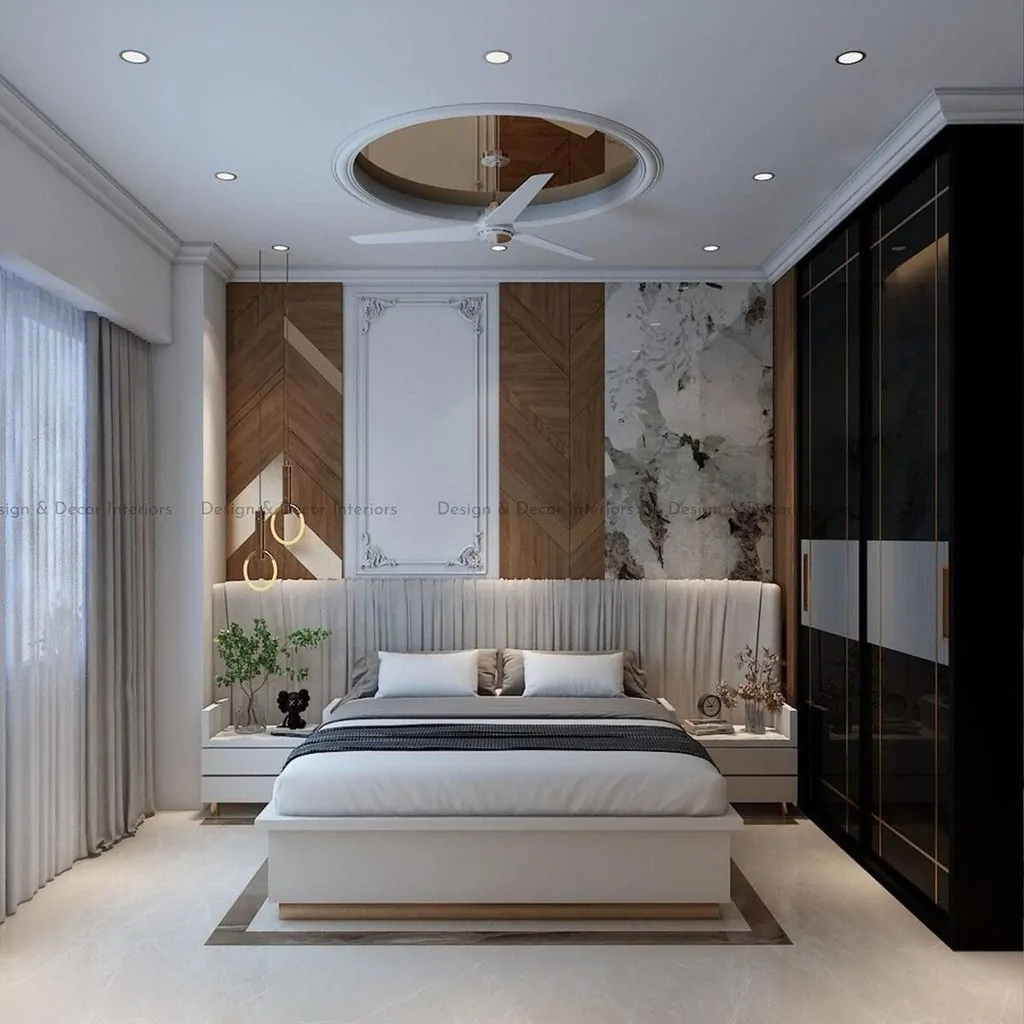
A regular headboard leans against the wall and calls it a day. A wall-to-wall version does more than that, stretching from corner to corner and turning one flat wall into a built-in feature instead of an afterthought.
Built-in nightstands on either side keep the whole thing looking planned instead of pieced together, and warm wood paneling in oak or walnut adds just enough texture without crowding the room. That’s the part that actually solves the small-bedroom problem. No dead gap between the bed and the side tables means nothing gets wasted, and reaching for a phone charger at midnight doesn’t mean leaning halfway off the mattress.
Proof that small choices carry the biggest weight.
2. Go for an Eclectic Look

If that felt too buttoned-up, this one leans looser. An eclectic bedroom pulls in shapes, colors, and eras that shouldn’t get along on paper, and somehow they do, which is exactly why the look keeps showing up on Pinterest boards.
Think gold-yellow throws against cool gray bedding, black table lamps with a little vintage attitude, and a colorful vase planter that looks like it wandered in from a completely different room. None of it matches on purpose, and that’s the point. It’s the kind of room where a mismatched lamp picked up on a whim becomes the piece everyone asks about.
A reminder that good design starts with how a space feels.
3. Prioritize LED Strip Lights
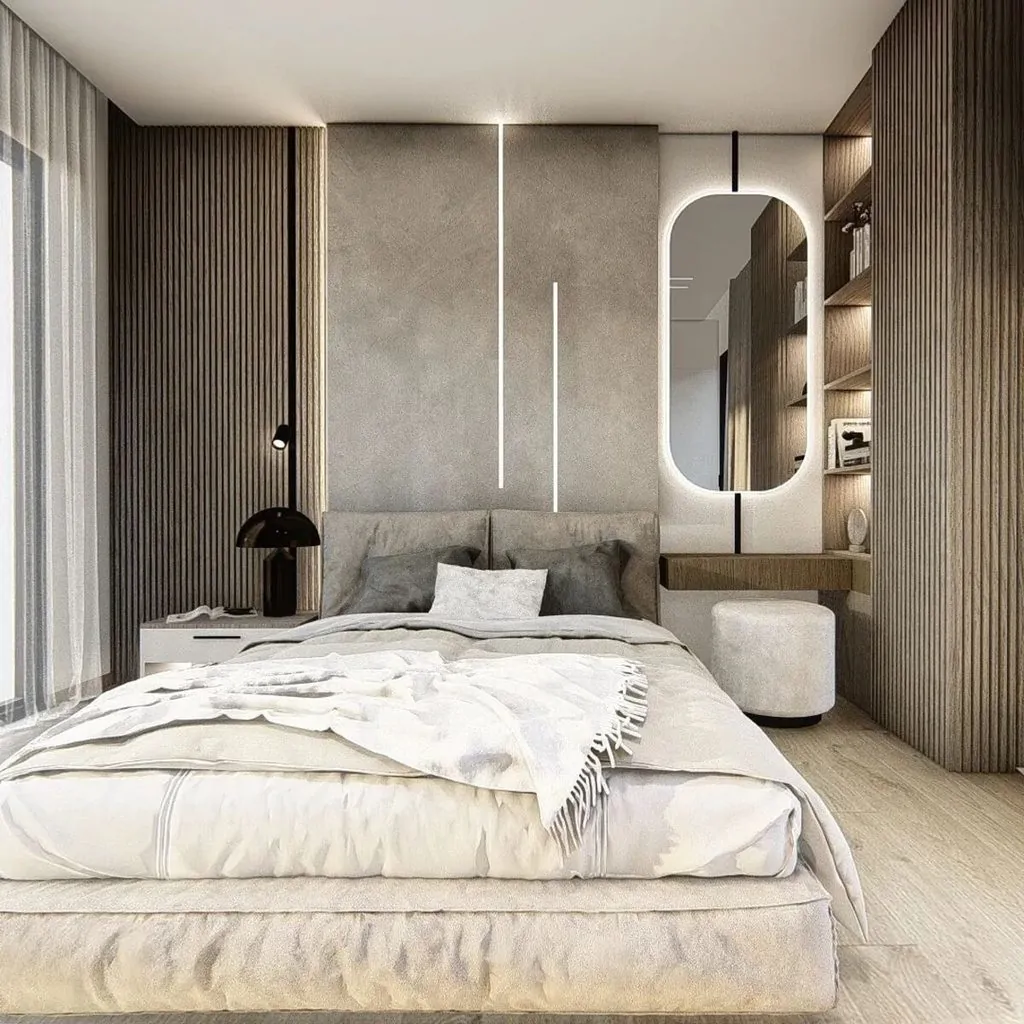
Dial back the color chaos for a second and let light do the talking instead. Thin LED strips tucked along an accent wall pick out the room’s architectural lines without adding a single extra object, which matters a lot when floor space is already tight.
A frameless oval mirror with built-in LED backlighting bounces that glow even further, making a floating nightstand look like it’s hovering in its own soft halo. Sheer floor-to-ceiling curtains take the edge off so the light spreads instead of glaring. It’s the kind of detail that turns a plain wall into the first thing people notice when they walk in.
The finishes catch light differently through the day.
💡 Pro Tip: Stick to warm white LEDs around 2700K to 3000K, not cool white. Warm tones read as cozy in a bedroom, while cooler temperatures can make the space feel more like an office.
4. Bring In a Seat

There’s another way to make a small bedroom feel considered, and it has nothing to do with lighting at all. A bed, a dresser, and two nightstands aren’t the only furniture worth fitting into the room. One well-placed chair changes how the whole space gets used.
A patterned gray upholstered chair tucked into a corner, paired with a matching throw and curtains, keeps the room’s palette tight while adding somewhere to actually sit that isn’t the mattress. A black wall sconce mounted just above gives it its own little reading spot without eating up floor space for a lamp. Suddenly there’s a place to pull on socks or lace up shoes without perching on the edge of the bed.
Best suited for anyone who wants their bedroom to feel like a room, not just a place to sleep.
5. Use a Mural

Shift the focus from furniture to the wall standing behind it. Instead of repainting every wall in the room, one mural on a single accent wall can carry the whole design without turning the project into a weekend-long ordeal.
Muted, earthy tones in the mural tie back to a brown bed throw and pillows, so the color feels intentional instead of random. A Sputnik chandelier and a footboard bench lean into a mid-century mood that the mural’s frame quietly echoes. Waking up to that wall every morning does more for the room’s personality than any amount of extra furniture could.
A look that stays fresh long after trends move on.
👉 Suggestion: Look for a peel-and-stick mural in a matte, textured finish rather than glossy vinyl. Soft botanical or abstract landscape designs in muted, low-contrast colors tend to feel calming instead of overwhelming in a small room.
6. Try a Dark Palette
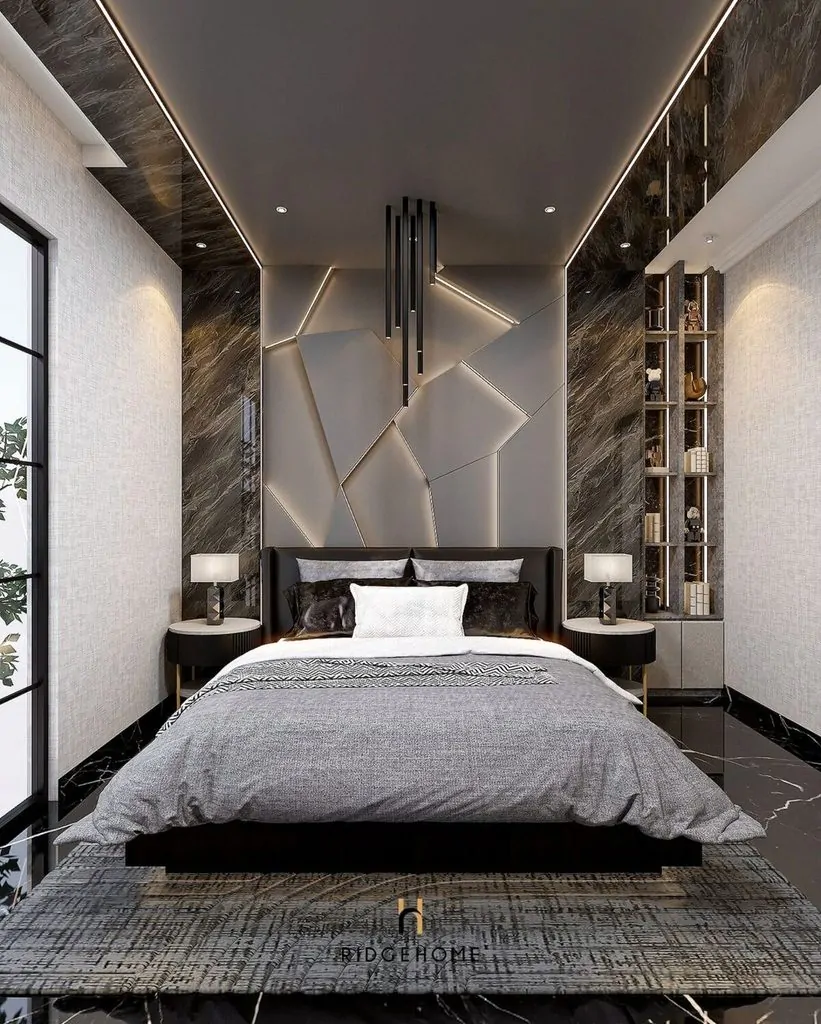
If that felt soft and easygoing, this one leans straight into drama. Painting an entire bedroom black rarely works, but decorative black marble tiles on one wall and the floor can pull off the same moody effect without swallowing the room whole.
Geometric detailing on the tile breaks up the dark surface so it reads as intentional, not heavy, and a gray duvet with crisp white pillows keeps things from tipping into gloomy. The trick is lighting it properly, since dark surfaces need more glow, not less, to feel upscale instead of cave-like. Switch off the overhead light in the evening and the whole room settles into something closer to a boutique hotel suite.
The space carries a quieter mood once the sun goes down.
7. Consider Bespoke Built-In Storage
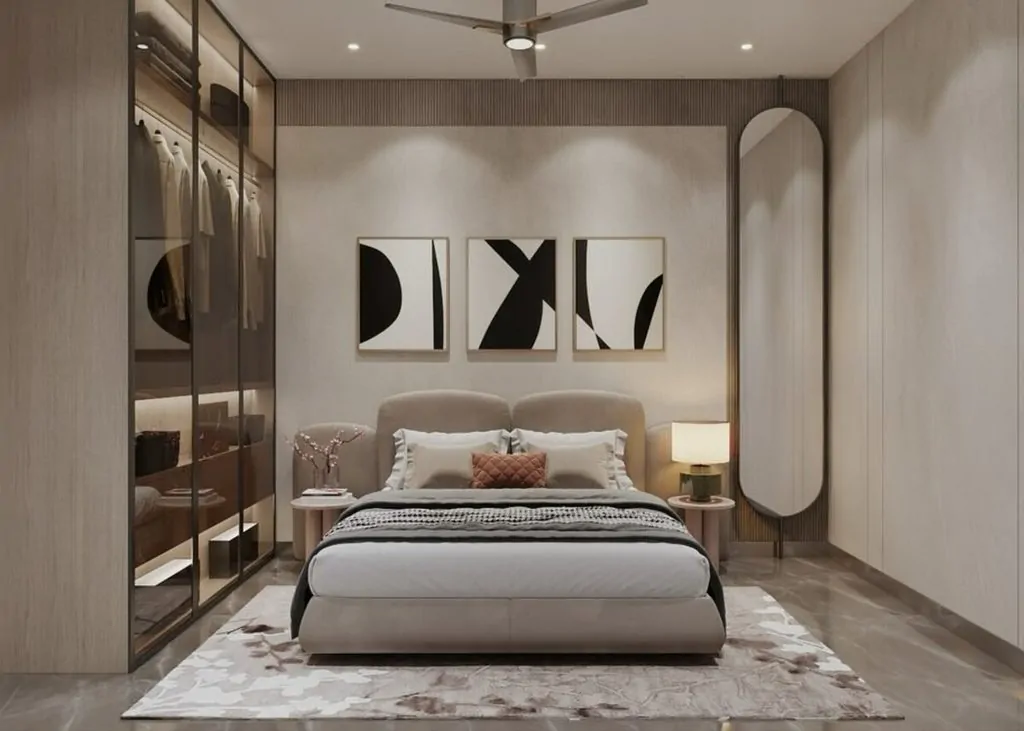
There’s another way to make a small bedroom feel bigger, and it has nothing to do with color. A floor-to-ceiling built-in beside the bed uses vertical space a regular dresser would never touch, and that’s exactly what a tight room needs most.
Glass-fronted closet doors keep the unit from feeling bulky, while warm beige walls and a curvy brown upholstered headboard soften all that structure. A triptych hung above the bed fills the space that would otherwise sit blank and boring. Finally having a real home for everything, instead of a chair buried under yesterday’s outfit, changes how the whole room functions day to day.
Works beautifully whether the rest of the room leans modern or classic.
RELATED:
EASY WAYS TO DECORATE AN ECO-FRIENDLY BEDROOM SUSTAINABLY
8. Freshen Up with Greenery
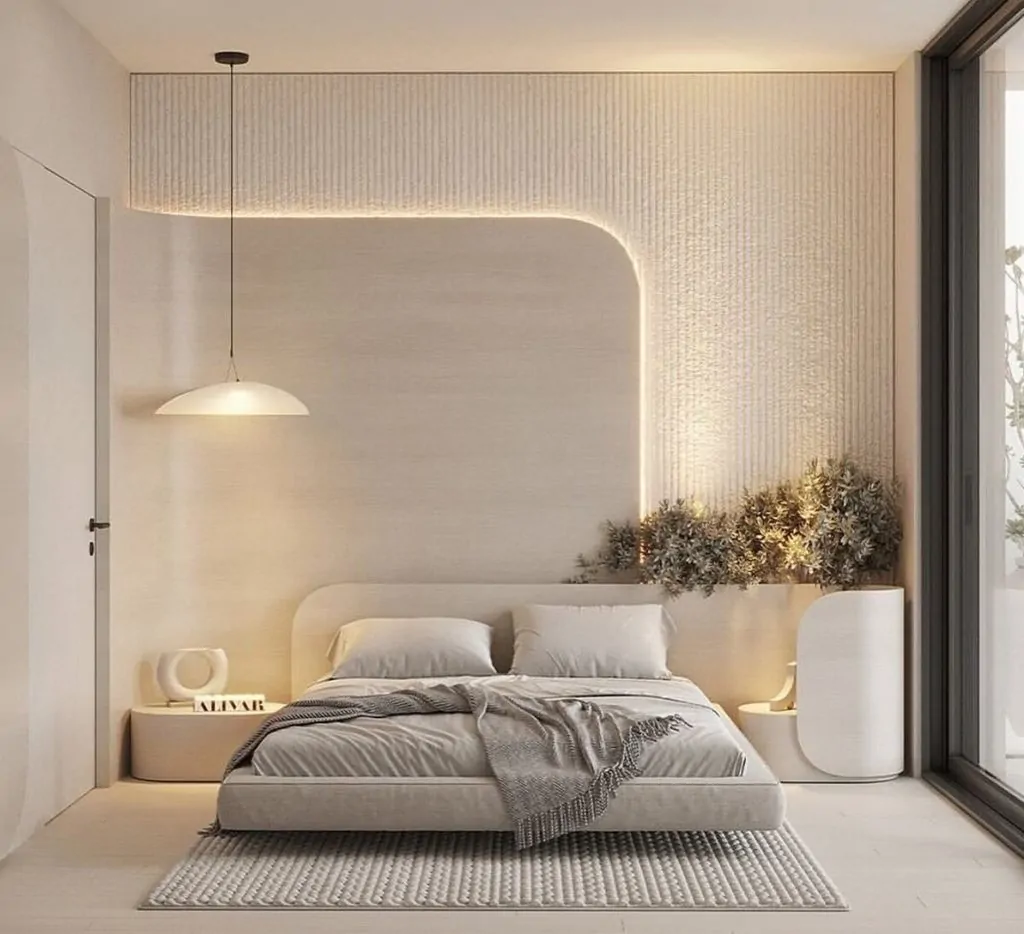
Swap all that structure for something that actually grows and breathes. Plants and fresh flowers do something built-in storage never can, bringing life and softness into a room that might otherwise feel a little too planned.
A bespoke headboard that folds in one floating nightstand keeps the layout minimal, so a trailing plant on that ledge becomes the one thing in the room that changes week to week. A lit feature wall behind the bed adds warmth without competing with the greenery for attention. Watering that plant on the way out the door each morning turns into a small, steady habit that makes the room feel lived-in instead of staged.
Easy to enjoy every day without feeling overly designed.
💡 Pro Tip: Choose low-light, low-maintenance plants like pothos, snake plant, or ZZ plant for a bedroom, since most bedrooms don’t get direct sun. Water only when the top inch of soil feels dry to avoid overwatering.
9. Embrace Symmetry

Trade that loose, growing energy for something more precise. Balance does a lot of quiet work in a small bedroom, and lining up matching pieces on either side of the bed is one of the easiest ways to make a room feel calm the second you walk in.
Matching artwork, pillows, lamps, and accent chairs on both sides keep the eye moving evenly instead of snagging on one busy corner. Navy blue on the bedding, pillows, and lampshades adds a shot of color without breaking that balance, since the same shade shows up on both sides. Two matching nightstands also mean each side of the bed gets its own lamp, so nobody’s stuck reaching across the mattress in the dark.
The contrast keeps the room balanced.
10. Play with Texture
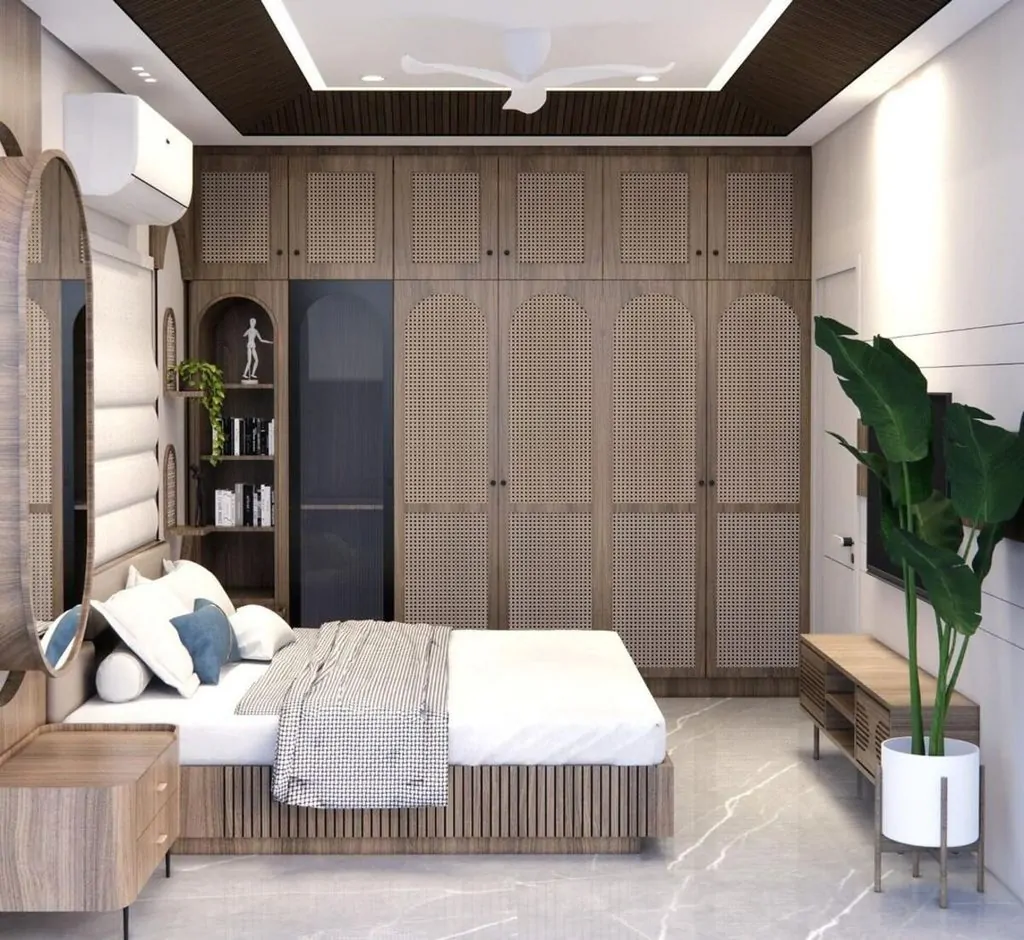
Keep that same balanced feeling, but layer in something you can actually feel with your hands. Texture does the job color usually gets credit for, adding interest to a room without piling on more stuff or more visual noise.
Cane webbing across a floor-to-ceiling storage unit brings warmth and movement to what would otherwise be a flat wall of doors. Crisp white bedding keeps things from feeling busy, while a gray tile floor and warm wood tones sit at opposite ends of the texture spectrum on purpose. Potted and trailing plants soften every hard edge in the room, and running a hand along that woven cane on the way to bed becomes one of those small, satisfying habits.
The finishes catch light differently through the day.
👉 Suggestion: Mix at least three textures per room, something woven like rattan or cane, something soft like a nubby wool throw, and something smooth like matte ceramic or glass, to keep the space feeling layered instead of flat.
11. Design a Multifunctional Space
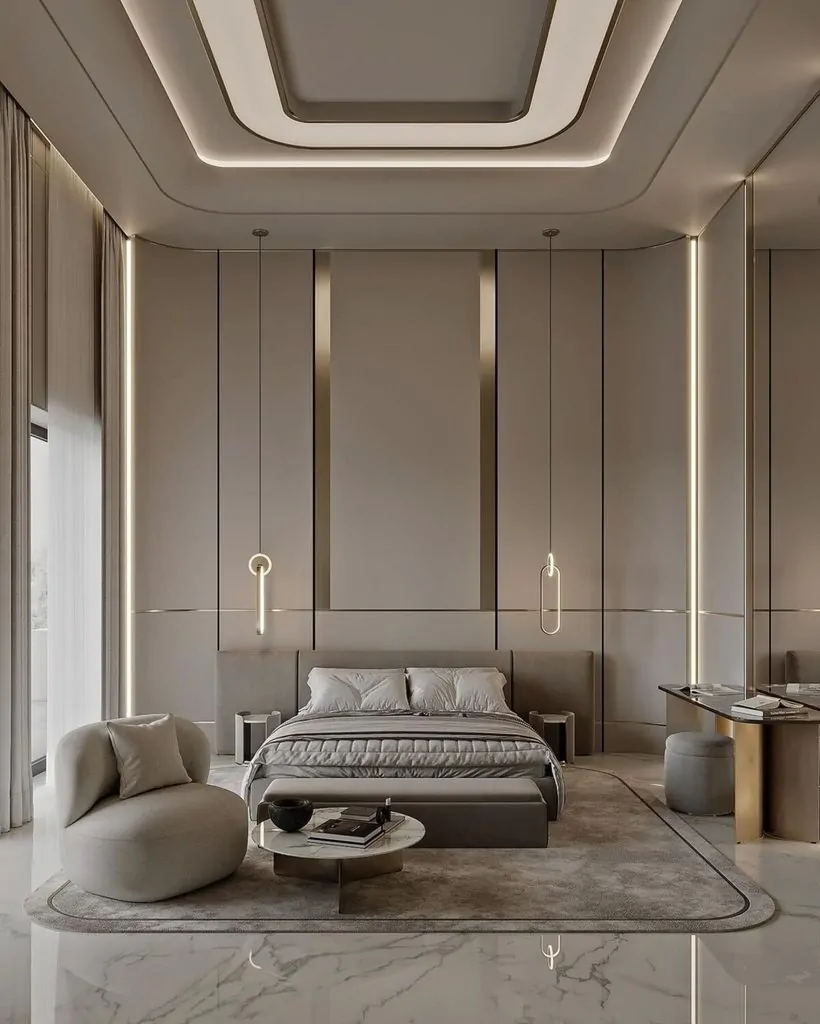
There’s another way to stretch a small bedroom, and it has nothing to do with materials at all. Floor-to-ceiling curtains that match the wall color can section off a reading nook or a home office corner, closing to signal the day is actually done.
A gray area rug with soft, rounded edges anchors a small seating spot near the end of the bed, just enough room for a lounge chair and a low coffee table for evening reading. On the opposite wall, a compact desk and ottoman turn an unused corner into a real workspace during the day. That reading chair at night and that desk in the morning both live in the same square footage without ever feeling in each other’s way.
Getting through a full day no longer means fighting the room for space.
12. Add Interest with a Paneled Wall

If that felt like a lot of moving parts, this idea does its work with just one wall. Warm browns and cool grays, softened by a touch of white and some ambient lighting, can carry a whole room’s mood without a single extra piece of furniture.
A patterned area rug paired with the wood floor grounds the space, while decorative slatted panels behind the headboard do the real heavy lifting. The panels catch shadow differently depending on the time of day, so the wall never quite looks the same twice. That shifting light across the slats in the late afternoon is the kind of detail that makes a small room feel considered rather than plain.
Works beautifully with modern and vintage furniture alike.
13. Keep It Airy

Flip all that warm shadow for something bright and wide open. Shades of white, off-white, and pale gray do more for a small bedroom’s mood than almost anything else, giving the whole space a soft, glowing quality instead of a closed-in one.
Artwork above the headboard picks up the same gray tones as the bedding, so the color carries straight through to the walls without any hard breaks. A fluffy area rug marks off a cozy little zone near the seating without needing a wall to do it. On a bright morning, sitting up in bed already feels like the room woke up before you did, no lamp required.
The whole room feels lighter.
💡 Pro Tip: Paint the walls, trim, and ceiling in the same soft white or greige tone to erase visual breaks between surfaces. Fewer color transitions make the room’s edges harder to spot, which tricks the eye into reading it as larger.
14. Frame Your Art
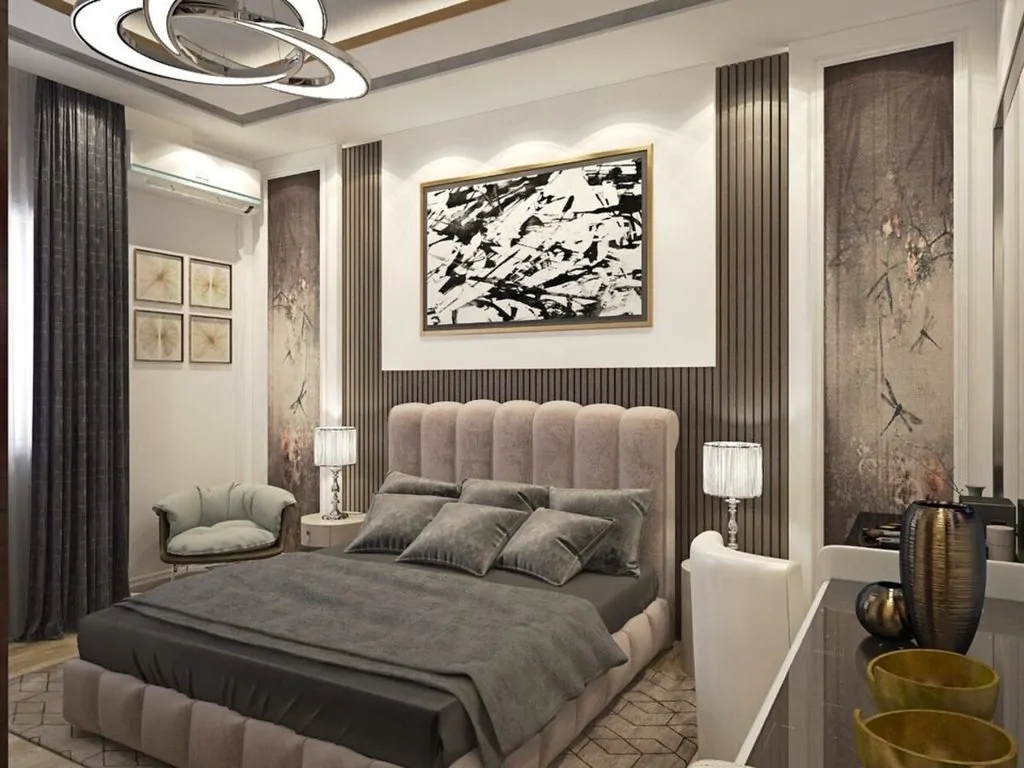
Bring a little more color back into the mix. A small bedroom can handle plenty of pattern and texture as long as there’s a neutral base underneath to keep it from feeling loud.
Brown, gray, and gold show up across the area rug, bedding, wall panels, and framed artwork, while soft white walls give all that color somewhere calm to land. Ceramic accents pick up the same gold tones, so nothing feels randomly placed even with this much going on. Waking up to a favorite framed piece across the room, instead of a blank wall, ends up being the small detail people notice first.
One of those setups where every piece earns its place.
RELATED:
STYLE YOUR MASTER BEDROOM WITH LUXURIOUS DECOR IDEAS
15. Opt for a Natural Look
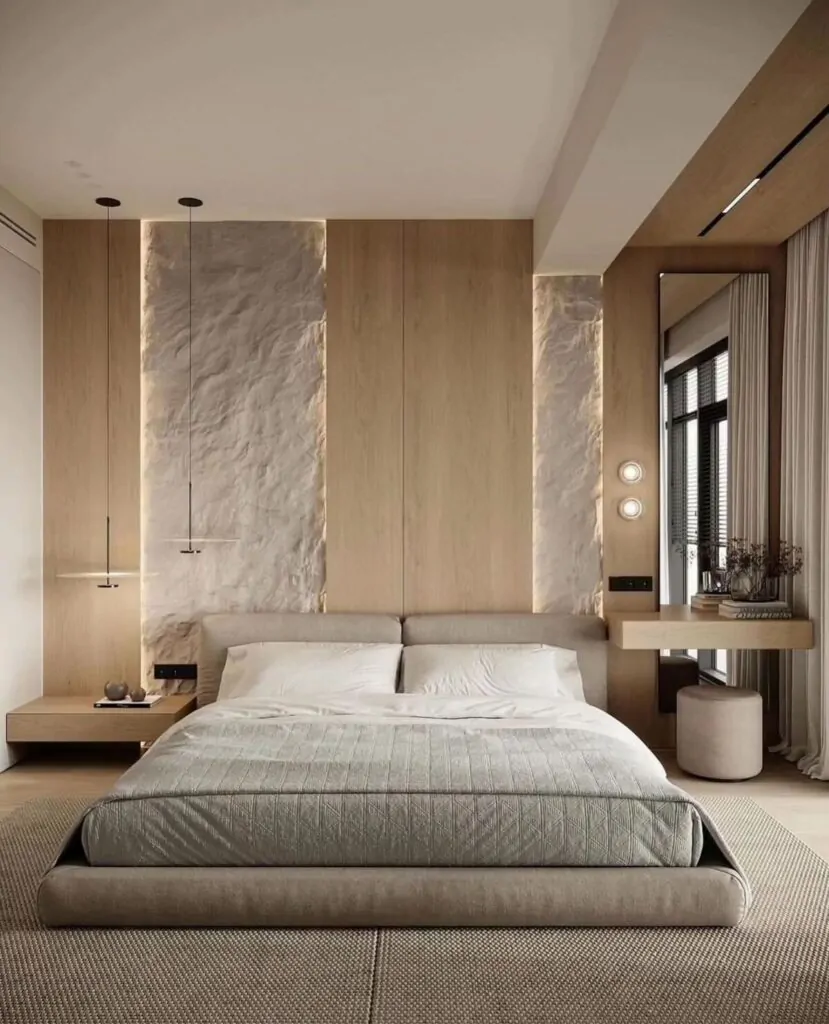
Strip all that pattern back and let raw materials do the talking instead. Rustic, unearthed textures bring their own kind of interest to a room, no artwork or gold accents required.
A rugged stone and wood accent wall gives the space real character while everything else stays simple and calm around it. Floating nightstands on either side of the bed add a little variety without crowding the floor, so each side of the bed gets its own personality. Contemporary pendant lights hang low and airy above them, and a warm wood floor with a gray area rug keeps everything grounded. Natural materials age well, which is exactly why this look never really goes out of style.
Small changes create most of the impact.
👉 Suggestion: Look for natural stone veneer panels or reclaimed white oak in a matte, unsealed-looking finish rather than anything glossy. Raw, textured finishes read as timeless, while shiny surfaces tend to feel more trend-driven and date faster.
16. Make a Statement with 3D Wall Panels
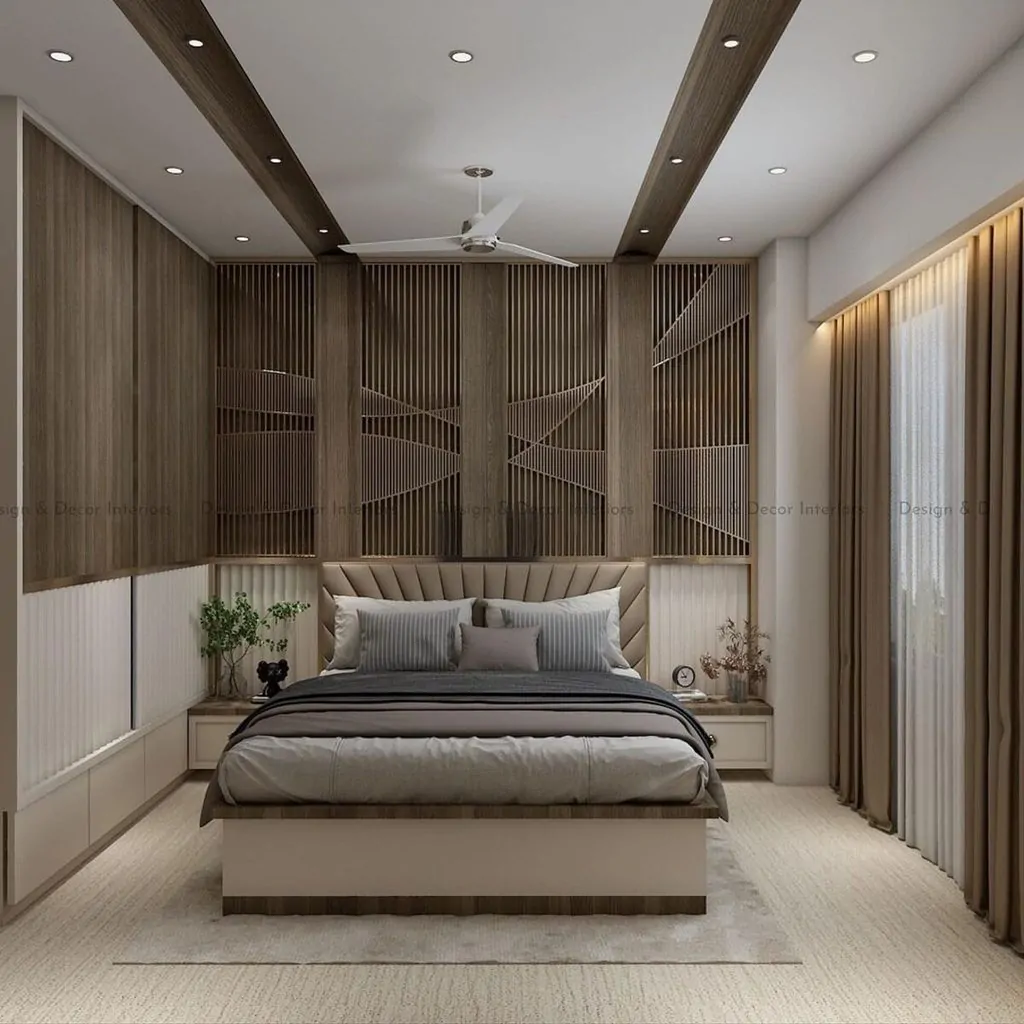
There’s another way to bring texture into the room, and this one goes big. Dimensional 3D wall panels behind the bed pair naturally with the headboard, creating a rich, layered look that a flat coat of paint just can’t match.
Brown carried onto the adjacent wall and drapes keeps the design flowing in one direction instead of feeling chopped up. Swatches of white and cream on the ceiling, nightstands, trim, and rug balance out all that moody brown so the room stays bright instead of heavy. Lamp light hitting the raised ridges of the panels throws small shadows across the wall by evening, and that shifting texture is what gives the room its expensive feel.
The colors stay interesting from morning to night.
17. Designate a Space for Your Desk
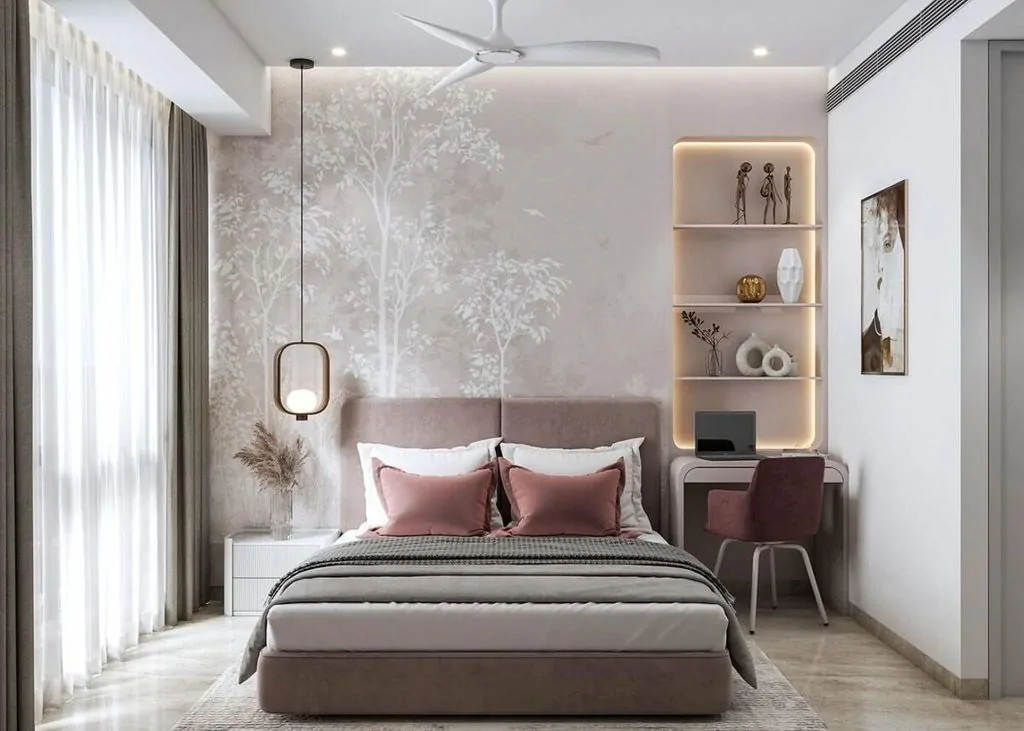
Shift the focus from the wall behind the bed to a corner that actually gets used every day. A bedroom doesn’t have to be just for sleeping, and setting aside a small desk area keeps work from spilling across the whole room.
In a bedroom done up in soft white, gray, and muted purple, a chic writing desk and chair fit neatly to one side of the bed without disrupting the calm palette. Floating shelves above the desk hold a few personal items, lit softly by strip lighting so the corner doesn’t need its own overhead fixture. A soft white tree motif on the lavender accent wall behind the bed adds quiet texture without pulling focus from the desk setup. Answering one last email or jotting a quick note before lights-out finally has a spot that isn’t the edge of the mattress.
A smart pick for anyone working from home in a small space.
18. Try Monochrome
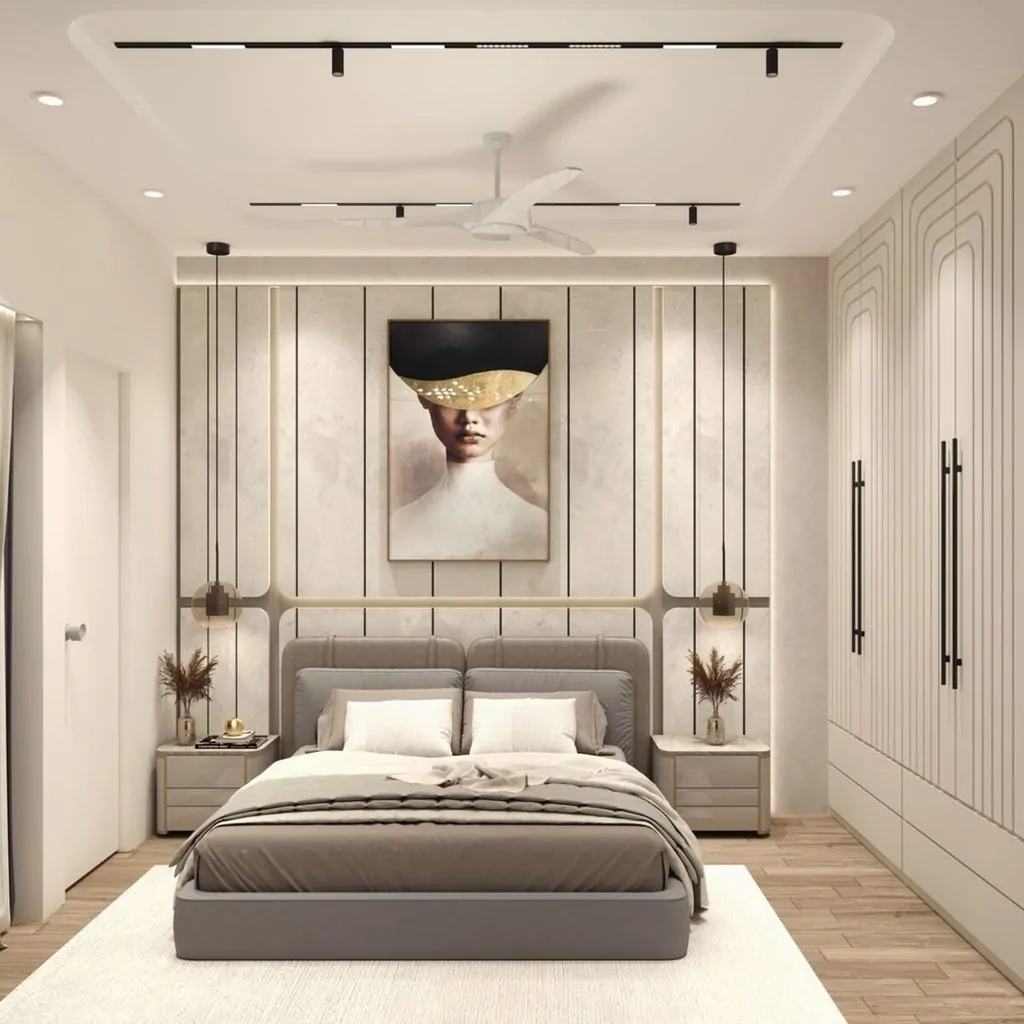
Step away from that functional corner and back into pure color strategy. Sticking to one tonal palette is one of the simplest ways to make a small bedroom feel bigger than it actually is.
Shades of white cover the walls, the floor-to-ceiling closets, the bedding, and the area rug, creating a monochrome effect that reads as calm rather than cold. Grays on the headboard, throw blanket, and bed frame add just enough contrast to keep things from feeling flat. The wood floor grain still shows through, giving the eye something to catch without breaking the color story. A room built this way ends up feeling like a blank canvas, easy to shift with nothing more than one new throw pillow.
The space carries a quieter mood.
💡 Pro Tip: Stay within one color family, but mix at least three value levels (light, medium, dark) and vary the finishes between matte and slightly textured. That contrast in tone and texture keeps a monochrome room from reading as flat or boring.
19. Install Molding

Keep that same restrained palette, but add one architectural detail that changes everything. Picture frame molding sounds like a bigger project than it is, and one accent wall is all it takes to pull off the effect.
Ivory picture frame molding turns a plain wall into something that looks custom-built, especially with a piece of art hung inside one of the panels for a little extra flair. An upholstered wrap-around headboard complements the paneling behind it, setting a neutral stage for the bedding, walls, and artwork to sit against. Black window shades add a shot of contrast against all that ivory trim. Getting dressed in the morning light, those clean molding lines catching the sun, is the kind of small detail that makes a rented or builder-grade room feel custom.
Small changes create most of the impact.
20. Focus on Lighting
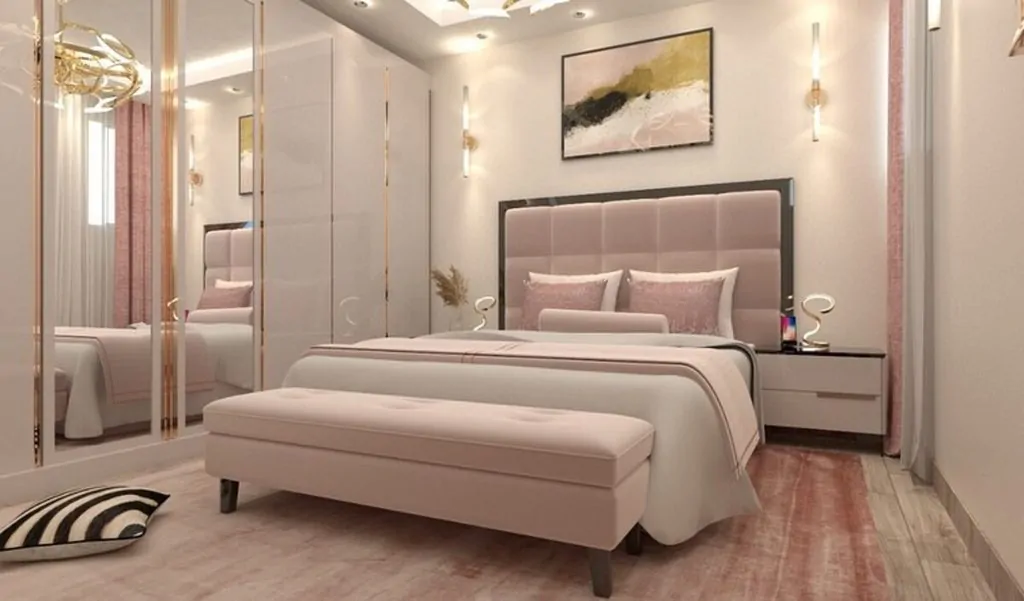
Move from architectural detail to something that changes the room’s whole mood without touching a single wall. Lighting does more heavy lifting in a small bedroom than most people give it credit for.
Tonal pinks and light creams stay consistent throughout the room, giving it a serene, boutique-hotel kind of feel. Sculptural table lamps and minimalist wall sconces flood the space with soft light while doubling as design pieces in their own right. Mirrored wall sections bounce that light even further, which is what makes the compact room read as more open than it actually is. Switching on just the table lamp instead of the overhead light in the evening turns the whole room into a slower, quieter place to land.
The kind of corner that quietly becomes everyone’s favorite.
👉 Suggestion: Layer at least three light sources per room, a table lamp, a wall sconce, and one ambient source like a floor lamp or pendant, and hang a mirror across from the main light source so it reflects and spreads the glow.
21. Put a Couch at the End of Your Bed
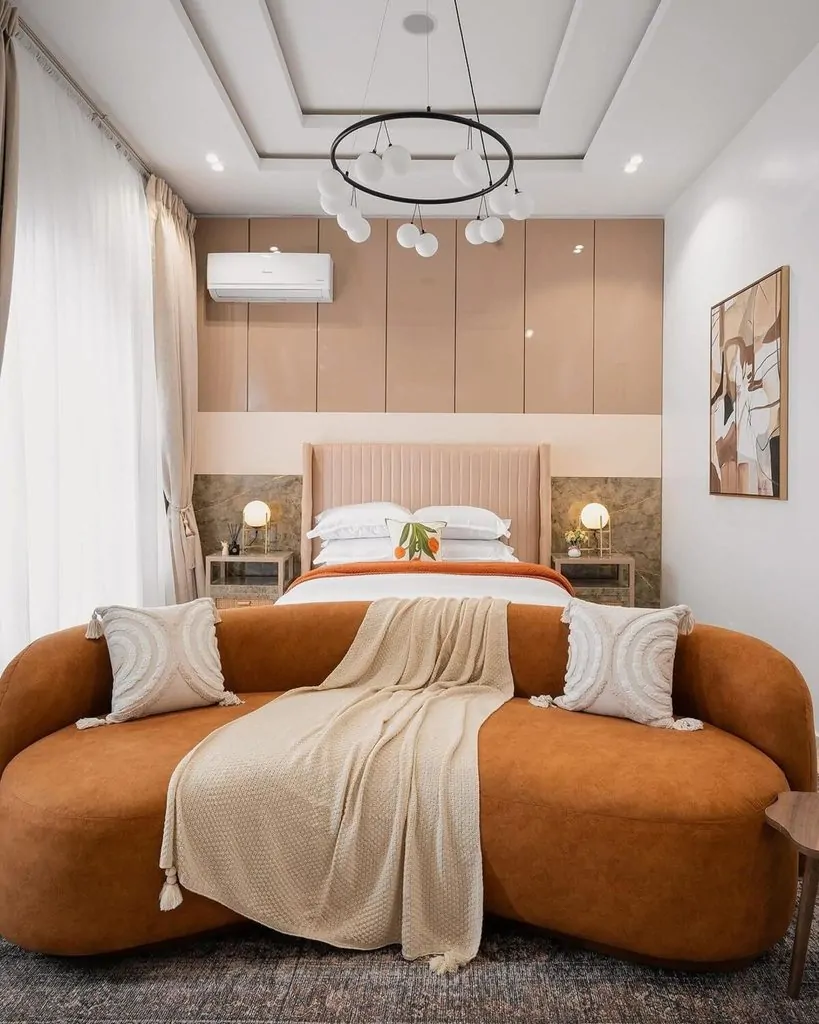
There’s another furniture move worth trying, and it doesn’t involve a single lamp. A couch at the foot of the bed gives the room a place to sit and rest that isn’t the mattress itself, which matters more than it sounds like in a small space.
A burnt orange couch anchors this end-of-bed spot, and an orange throw on the bedding ties the two pieces together without them feeling like separate ideas. White on the ceiling, walls, and drapes keeps the whole pink-and-orange palette from feeling too loud. The pink headboard, set against gray marble on the lower wall, carries that same warm tone up through the throw pillows on the sofa and into the artwork nearby. Sitting there to pull on shoes, instead of perching on the edge of the mattress, becomes the new normal fast.
Easy to enjoy every day without feeling overly designed.
RELATED:
CREATE A CALM BEDROOM WITH NEUTRAL MINIMALIST DECOR IDEAS
22. Make it Playful

Keep that same willingness to have fun, and push it even further. A bedroom doesn’t have to choose between elegant and personal, and this room proves both can live in the same space at once.
A plush upholstered velvet headboard, set against an arched window and black shades, keeps things looking polished and timeless. Purple across the walls, bed frame, area rug, and trim gives the room a rich, wrapped-in feel, while cool grays and whites keep it from tipping into too much color. A backlit wall mirror adds depth, and a playful mural with a few decals scattered nearby is what stops the room from feeling too serious. Catching that little mural first thing in the morning is the kind of detail that makes getting up a bit more fun.
Getting ready no longer feels like just another routine.
💡 Pro Tip: Use removable wall decals or peel-and-stick mural panels for the playful element so it can be swapped out easily as tastes change, without touching the paint or the rest of the room’s finishes.
23. Personalize with Wall Art

Stay with that same personal spirit, but bring it to the walls in a different way. Wall decor, especially art, can make or break a bedroom, and since it’s the room spending the most time with, it’s worth choosing something that actually feels like it belongs to the people who sleep there.
A simple framed piece above the headboard creates a focal point without competing with anything else in the room, giving eyes somewhere to land the moment you wake up. An upholstered purple headboard, duvet, and bed frame bring in color, while a window seat nearby keeps the whole look soft and uncluttered. Glancing at that one piece of art while getting dressed ends up setting the tone for the rest of the morning.
The whole room feels lighter for it.
Frequently Asked Questions
How much does it cost to decorate a small master bedroom?
A full refresh for a small master bedroom usually falls under $500 for most homeowners working with what they already have. Bedding, a rug, and lighting swaps deliver the most visual change for the least money. Big-box stores like IKEA, Target, or Wayfair carry linen-look duvets and woven rugs at affordable prices. Best for anyone wanting real results without a full renovation budget.
What’s the biggest mistake people make when decorating a small master bedroom?
The biggest mistake is filling the room with too much furniture instead of the right furniture. A dresser, two nightstands, and a bulky bench can eat up walking space fast in a small master bedroom. Swapping one piece for a floating shelf or wall-mounted nightstand frees up floor space instantly. Skipping heavy, dark curtains that block window light also helps the room breathe.
Where should someone start if they’re new to decorating a small master bedroom?
Start with the bed and lighting before touching anything else, since those two elements set the tone for the whole room. Choosing a headboard style and a warm, layered lighting plan gives every other decision, from rug to art, something to build around. From there, add one accent wall or texture element like wood paneling or a mural. Best for first-time decorators who feel overwhelmed by too many options at once.
Where can you find affordable furniture for a small master bedroom?
Big-box retailers like IKEA, Target, and Wayfair carry space-saving beds, floating nightstands, and slim dressers built for small rooms at budget-friendly prices. Facebook Marketplace and local thrift stores are worth checking for solid wood pieces or a vintage accent chair at a fraction of retail cost. Measuring the room before shopping avoids buying furniture that’s too deep or too wide for the space. Best for anyone furnishing a small master bedroom on a tight timeline and budget.
How fast can you update a small master bedroom?
A noticeable small master bedroom update can happen in a single weekend by focusing on just a few changes, like swapping bedding, adding a mirror, and layering in new lighting. Bigger projects like molding or a mural accent wall usually take one to two days including drying or setting time. Starting with the bed, since it’s the room’s focal point, gives the fastest visual payoff. Best for anyone short on time but ready for a real difference.
Conclusion
Small master bedrooms hold more personality than their square footage lets on. From a moody marble accent wall to a soft, monochrome retreat built entirely in shades of white, every idea on this list proves that a tight floor plan never has to mean a boring one. Eclectic color pairings, natural wood textures, and playful mural walls all sit side by side here, giving every kind of homeowner and renter something worth trying.
Picking just one or two ideas from this list, rather than trying everything at once, is the fastest way to see real change in a small master bedroom. Start with whatever bothers the space most, whether that’s flat lighting, empty walls, or a headboard doing nothing. Save the favorite picks to a Pinterest board, bookmark this list for the next free weekend, and pass it along to a friend planning their own small bedroom refresh. A little intention goes a long way in a small room.