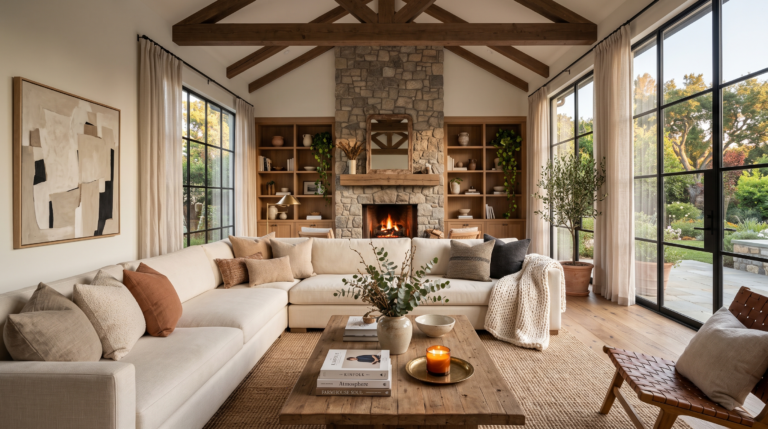
20 Beach Themed Living Room Ideas for a Coastal Look
Coastal living rooms have a way of making a house feel lighter the second you walk in. Not because of palm prints or seashell frames, but because of what they do with light, texture, and color. Soft whites, sandy tans, and every shade of blue between sky and deep water. Add linen that wrinkles, rattan that shows its weave, and wood that looks a little sun-faded, and suddenly the room breathes.
The best part is how forgiving the look is. A beach theme works in a rented apartment three states from the ocean just as well as it does in an actual shore house. It also handles real life well. Kids, dogs, sandy feet, and that one throw blanket everyone reaches for during movie night.
The 20 ideas below cover every angle. Budget swaps, all-white rooms with sandy accents, navy punches, farmhouse crossovers, and quiet turquoise touches that never feel loud. Some are weekend projects. Others are single-afternoon changes that shift the whole mood of a space.
1. Family-Friendly Coastal Living Room
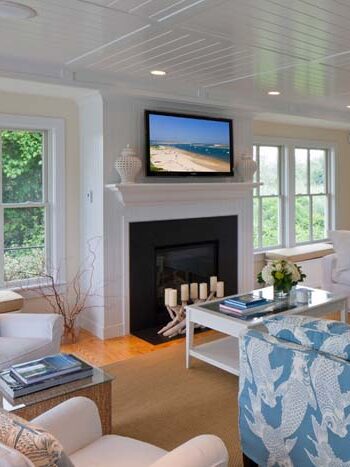
A coastal living room that can handle juice spills, sandy feet, and a dog who thinks the sofa belongs to him. That’s the version most families actually need, and it starts with fabric choices instead of color choices. Performance linen in oatmeal or soft white looks just as breezy as the real thing, but wipes clean in seconds.
Ground the space with a flat-weave jute rug that hides crumbs between vacuum days. Keep the coffee table wood and low, with rounded corners so nobody bumps a shin. Woven baskets tucked under the console swallow blankets, remotes, and half the toy collection in one sweep. That’s the reason this look survives real life. Everything hides mess instead of fighting it.
Best suited for busy households that want the beach feel without babysitting their furniture.
2. Sandy Neutral With Blue Accents

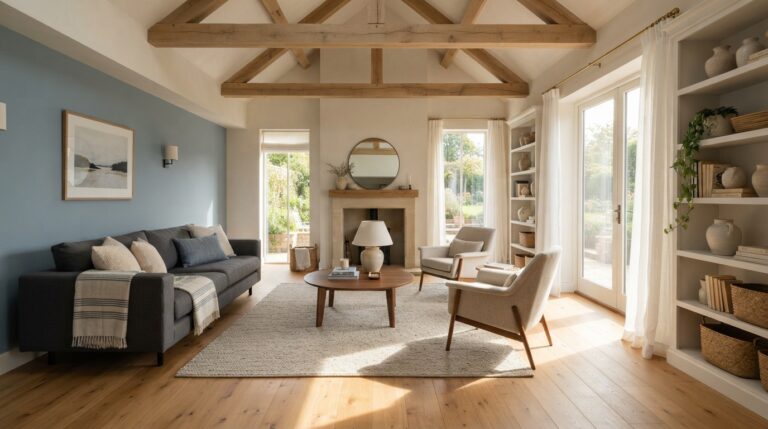
Start with sand and the rest gets easy. Warm beige walls, a greige sofa, oat-colored curtains that puddle slightly at the floor, and the room already feels like late afternoon on the dunes. Blue comes in later, and only in small doses.
Two cushions in a washed denim shade. One ceramic vase the color of shallow water. Maybe a framed print with a thin blue line running through it. That’s genuinely all it takes, because neutrals make color read louder than it actually is. A single blue object in a beige room pulls the eye harder than five blue objects in a blue room.
Keep textures rough so the neutrals don’t flatten out. Nubby wool, raw linen, unfinished wood grain.
3. Blue Hues With Coast-Inspired Decoration
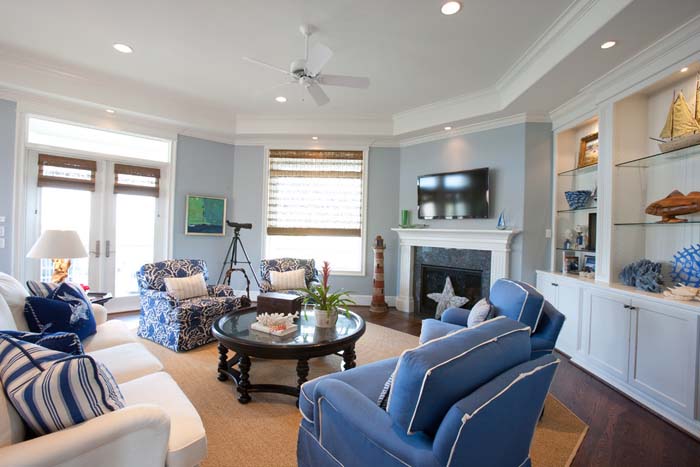
Here’s where blue stops being an accent and becomes the whole point. Layer three or four shades in one room and it reads like water at different depths. Pale sky on the walls, mid-tone chambray on the sofa, deeper slate in the rug, and something almost inky in a small lamp base or picture frame.
The trick is spacing them out. Blues stacked side by side start to look like a paint sample strip, so let neutrals sit between them. White trim, natural wood, a jute basket.
Then the decoration does the storytelling. Coral shapes in ceramic, a rope-wrapped mirror, driftwood on the mantel, glass jars with a slight green tint.
Someone will walk in, pause, and say it smells like vacation even though nothing in the room has a scent.
4. Beach Themed Living Room On A Budget
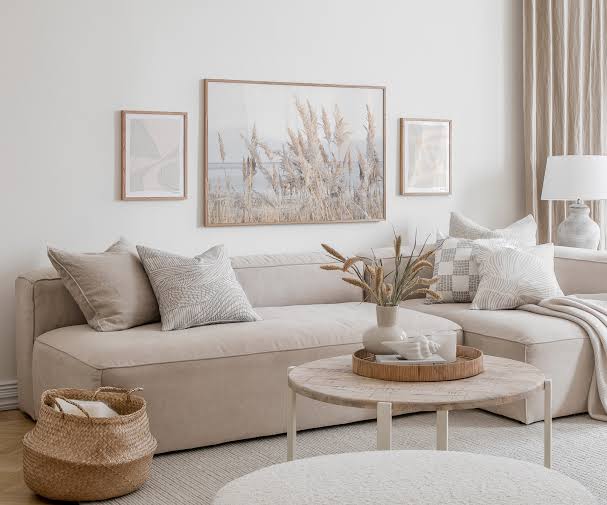
Nobody needs a renovation budget for this one. The coastal look is mostly about light colors and natural texture, and both are cheap to fake convincingly. A white cotton slipcover thrown over a dated sofa does more than most furniture purchases. Swap heavy drapes for plain white panels and the whole room gains a foot of height.
Then shop your own house. That glass bowl in the back of a cabinet becomes a spot for shells. Wooden crates flip into side tables. Thrift stores are full of blue and white ceramics for a couple dollars each, and mismatched ones look better together anyway.
Paint is the biggest lever. One coat of soft white on a dark accent wall changes everything.
Pro Tip: Collect sand-colored rocks or driftwood on your next beach trip and fill a shallow tray. Free decor that nobody can tell you didn’t buy.
5. Navy Blue As Accent In The White Living Room
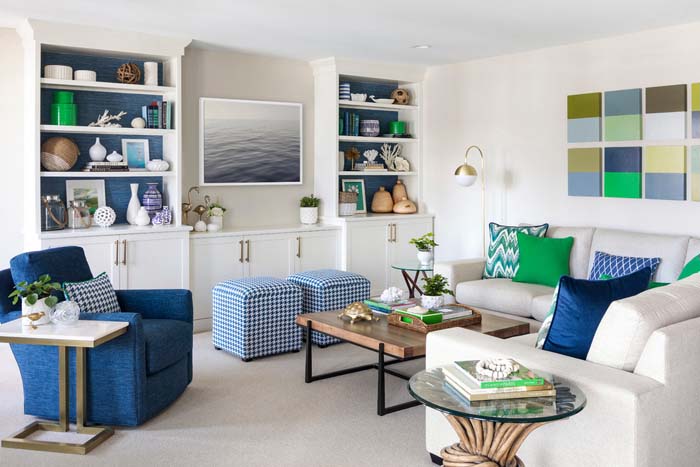
Navy is the grown-up version of coastal blue. Drop it into a white room and everything sharpens instantly, the way a dark frame makes a photo look more expensive than it is. White walls, white sofa, white trim, and then navy shows up in maybe four places total.
A striped lumbar pillow. One armchair. The rug border. A stack of hardcover books with dark spines. That restraint is exactly why it works, since navy is heavy enough to anchor a room but overwhelming the moment it spreads too far.
Cost stays low too, because navy accents turn up constantly in secondhand shops and among the best IKEA finds worth buying if you know what to grab.
Guests always assume a designer picked the palette. It was really just two cushions and a chair.
6. Add Elegant Coastal Style With New Slipcovers

Slipcovers are the quietest upgrade in this entire list. A sofa that felt dated on Friday looks breezy and expensive by Sunday, and nothing got thrown away. Go with washed cotton or linen in white, bone, or the palest gray, and let it wrinkle. Crisp tailoring fights the whole coastal idea.
The reason this works better than reupholstering is practical. Covers come off. They go in the machine after a spill and come back looking fine, which means light colors stop being a risk.
Suggestion: Buy two sets in the same shade. One stays on while the other washes, so the room never sits in an awkward half-naked state.
There’s a small satisfaction in pulling a fresh cover over a cushion and watching a tired room straighten up.
7. Rustic Living Room With Green, Yellow And Blue Accents
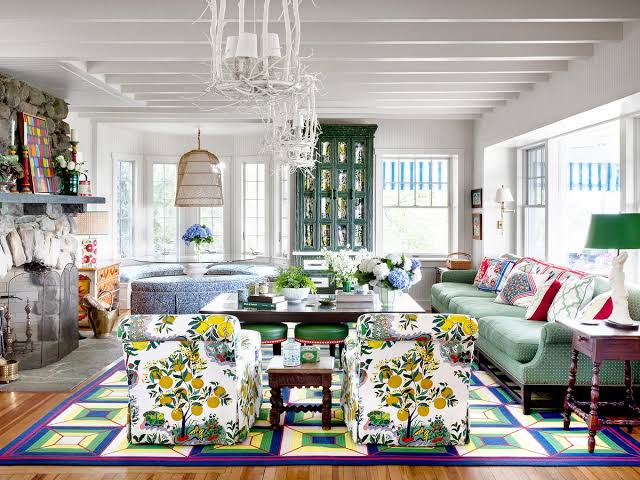
This is the coastal look with dirt under its fingernails. Think weathered beams, a chunky reclaimed wood table, and walls in a chalky off-white that isn’t trying to be perfect. Then the colors arrive from a garden rather than a gift shop.
Sage green in a cushion or two. Soft mustard yellow in a throw. Faded blue in a striped runner or an old enamel pitcher. Those three shades pull from sea grass, sun, and water, which is why they never clash even though they’d look busy on paper.
Skip anything shiny. Matte ceramics, iron hardware, unpolished wood.
Rain hits harder in a room like this, and that’s honestly half the appeal.
8. Subtle Turquoise For A Delicate Coastal Decor
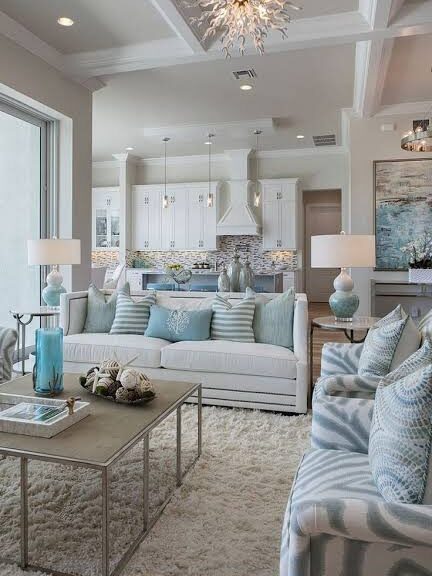
Turquoise gets loud fast, so the whole game here is dilution. Pick the washed-out version, the one that looks like it spent a summer in direct sunlight, and use it in maybe three spots across the entire room.
A glass vase catching afternoon light. The thinnest stripe in an otherwise neutral pillow. A small painted tray on the coffee table. Everything else stays white, sand, and pale wood, which is precisely what keeps the turquoise feeling delicate instead of tropical. Color reads as intentional when it’s rare and accidental when it’s everywhere.
Glass matters more than paint here, since light passes through it and the shade shifts all day.
By evening the same vase looks almost gray, and the room quietly changes mood without anyone touching a thing.
9. All White Living Room With Sandy Colored Accents

An all-white room sounds intimidating until you break the white into layers. Warm white on the walls, cooler white in the sofa, cream in the curtains, chalky white in a ceramic lamp. Four whites in one room read as depth, not blankness.
Sand does the softening. A jute rug, oak side table, woven pendant shade, and a couple of pillows in that pale biscuit tone stop the space from feeling clinical.
Upkeep is the real question everyone asks, and it’s less work than expected once you know a few tricks. Fabric refreshers help, and there are surprisingly clever ways to reuse dryer sheets for dusting baseboards and keeping upholstery from clinging to pet hair.
Morning light in a room like this is almost unfair. Everything glows for about an hour and you’ll start planning your coffee around it.
10. Use Your Hobby Accessories To Bring Beach Indoors

Surfboards, paddles, fishing rods, snorkel gear. If you already own beach things, stop hiding them in the garage. A longboard leaned against a wall says more about coastal living than any store-bought sign ever will, and it costs nothing because it’s already yours.
Wall-mount an old paddle above the sofa. Hang a canvas tote of swim gear on a hook by the door. Stack surf magazines on the coffee table instead of decor books.
The reason this beats generic beach decor is honesty. These objects carry actual salt water history, so the room tells your story rather than a catalog’s.
Pro Tip: Rinse anything that’s been in the ocean and let it dry fully for a week before bringing it inside. Salt residue attracts moisture and can stain walls over time.
11. Laguna Living Room Design
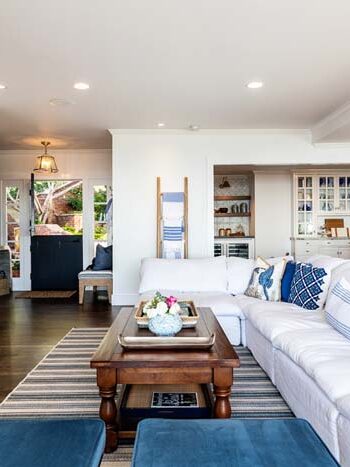
Laguna style borrows from California canyons more than open shoreline. Warmer, drier, a little more sun-bleached than classic beach decor. Terracotta creeps in beside the blues, and the whole palette shifts toward dusty rather than crisp.
Picture a low-slung sofa in warm oatmeal, a coffee table in chunky pale wood, and a rug with faded rust and washed indigo running through it. Add a hanging chair or a floor cushion or two, because Laguna rooms always feel slightly casual, like people actually sit on the ground here.
Plants matter more in this version. Olive trees, cacti, anything that looks like it survives on neglect.
The combination of warm earth tones and cool blue is what makes the room feel like late afternoon regardless of the hour.
12. Deep Ocean Living Room Accent

Most beach rooms stay shallow, all pale blues and bright whites. This one goes under. Deep teal, ink navy, that almost-black green you see in cold water, used with real confidence instead of caution.
One wall painted deep works best. Behind the sofa, or the wall your TV sits on, since dark paint makes a screen disappear. Everything else stays light so the room doesn’t close in. White ceiling, sand rug, pale wood legs on every piece of furniture.
Brass or aged gold accents matter here. Dark blue swallows light, and metal gives it somewhere to bounce.
Evenings hit differently in a room this deep. Lamps on, everything soft, the walls pulling in shadow like water at dusk.
13. Farmhouse Meets Beach In A Cozy Living Room

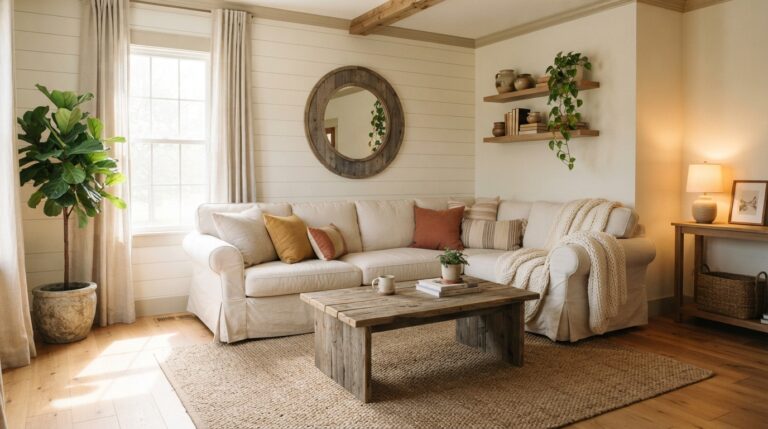
Farmhouse and coastal share more DNA than people expect. Both love white shiplap, worn wood, and furniture that looks handed down. The mashup works because you’re not blending two styles so much as removing the parts that don’t fit.
Drop the roosters and the rusty signs. Keep the plank walls, the spindle-back chairs, the linen slipcovers. Then swap barn reds for pale blue and gray, and switch heavy plaid for ticking stripe.
A woven basket by the fireplace holding blankets does double duty in both styles, which is why baskets show up everywhere in these rooms.
White surfaces in a farmhouse-coastal room get touched constantly, though a bowl of citrus on the table earns its keep twice over since there are dozens of smart lemon cleaning hacks for wiping down painted wood and cutting grease off trim.
Sunday afternoons stretch out longer in a room like this. Nobody’s in a hurry to leave the couch.
14. Blue Accents Revitalize The Living Room
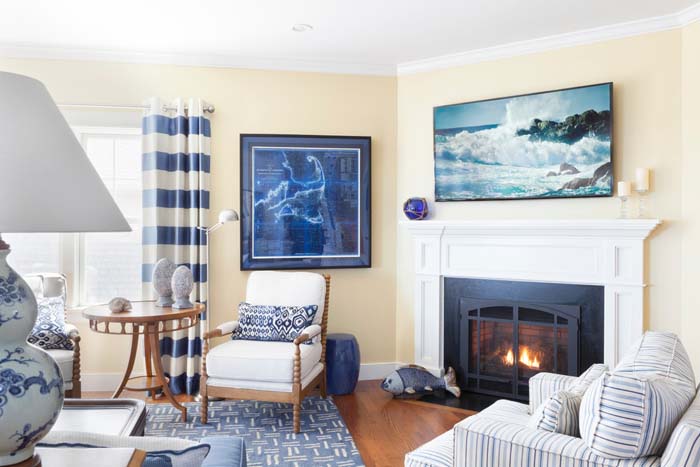
Some rooms aren’t ugly, just tired. Beige everything, nothing wrong with it, nothing memorable either. Blue is the fastest fix because it’s the one color that reads as fresh air without needing anything else to change.
Start with three items and stop there. A pair of cushions, a folded throw over the sofa arm, and one larger piece like a rug or a piece of wall art. Placing them in a rough triangle across the room keeps the eye moving instead of parking in one corner.
Pick a shade with a little gray in it if the room gets weak light. Pure bright blue turns dull under gray skies.
The whole change takes twenty minutes, and you’ll notice it every time you walk past the doorway for a week.
15. An Impacting Focal Point To Introduce The Beach Theme
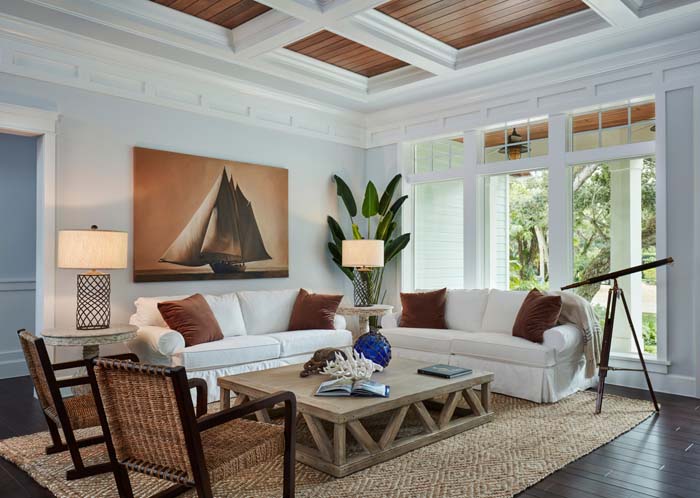
One bold piece can carry an entire theme, which saves you from decorating every surface. A huge ocean photograph above the sofa. A round mirror wrapped in thick rope. A wall of vertical white paneling behind the TV. Something big enough that the eye lands there first.
This works because rooms need a hierarchy. When everything shouts equally, the brain reads clutter, but one dominant piece lets the rest of the space stay plain and quiet.
Scale is where most people hesitate. Go larger than feels comfortable, roughly two-thirds the width of whatever sits beneath it.
Best suited for smaller rooms or renters who can’t repaint but still want the theme to land immediately.
16. Cheerful Beach House Living Room With Coral Color Accents
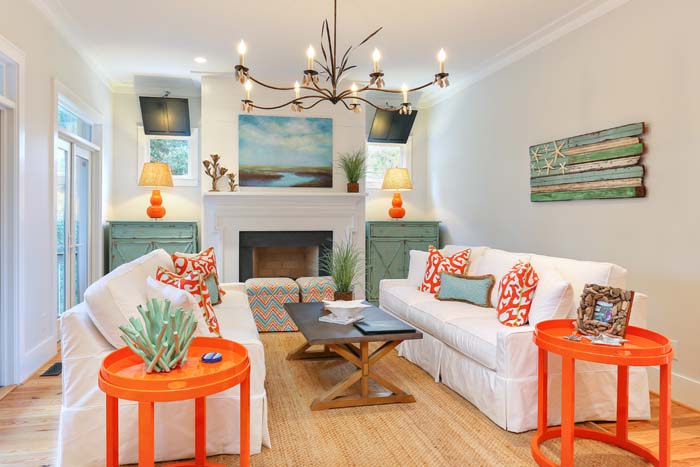
Coral is the warm hit most beach rooms forget. Blue and white can drift toward cold, especially in a north-facing room, and a few coral touches fix that without dragging the palette off course.
Go with the muted version, closer to dusty salmon than neon orange. Two pillows, a ceramic bowl, maybe a bunch of dried stems in that shade. Coral sits opposite blue on the color wheel, which is exactly why it makes the blues look bluer instead of competing with them.
Keep it to under ten percent of the room. Coral is a spice, not a base.
Pro Tip: Test a coral fabric swatch against your existing blue at both noon and 8pm. Warm tones shift dramatically under lamplight and what looked soft at midday can go loud after dark.
17. Light Blue Living Room With Natural Textures
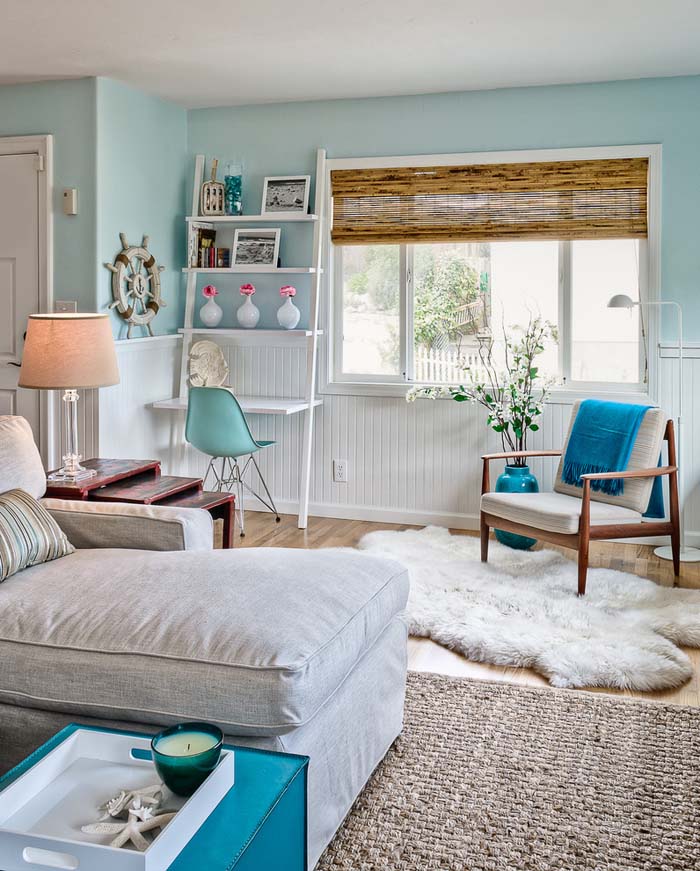
Light blue on its own can feel a little flat, almost nursery-like. Texture is what saves it. Pair pale blue walls with rattan, seagrass, raw linen, and unfinished wood, and the color suddenly has something to push against.
Layer it thick. A jute rug under a cotton flat-weave. A rattan chair beside a linen sofa. Woven trays, a wooden bowl, curtains with visible slub in the weave. Rough surfaces catch shadow, and shadow is what gives a soft color depth.
Greenery seals the whole look, and people who enjoy growing their own tips for growing napa cabbage already understand how much life a few leafy pots bring to a space.
Run your hand along a seagrass basket in a room like this and the texture registers before the color does.
18. Natural Materials Help Incorporate The Coastal Vibe

You can skip blue entirely and still land the coastal feel, as long as the materials are right. Wood, stone, rope, clay, cotton, wool. Nothing synthetic, nothing high-gloss.
The logic is simple. Coastal style is really about weathering, and natural materials are the only things that age well. Wood lightens, rope softens, clay picks up small chips. Plastic just looks worn out.
Mix at least four different materials in one room so nothing feels matched. A stone lamp base, a wooden stool, a rope-handled basket, a wool throw.
Suggestion: Leave one wood surface unsealed if you can, like a side table or a shelf. It’ll grow a soft patina over a year or two and start looking genuinely old rather than styled.
19. Zoned Living Room With Delicate Beach Themed Accents
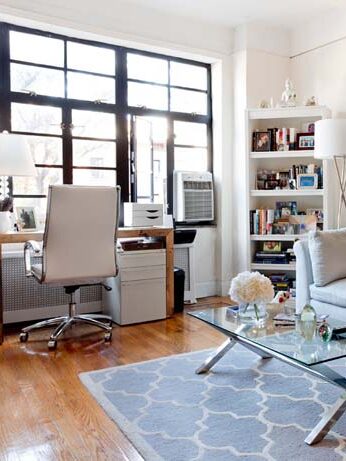
Big open rooms lose their coastal softness fast because there’s nothing to break up the space. Zoning fixes that. Pull the sofa off the wall, float a rug under it, and suddenly there’s a lounge area with edges instead of furniture floating in a void.
Give each zone its own quiet nod to the theme. Shells in a glass bowl on the reading side. A rope-framed mirror above the console. A single blue-striped cushion in the corner chair.
Keeping the accents small is the point, since scattered little touches read as a whole house theme rather than a decorated corner.
The room ends up with two or three good spots to sit, and everyone finds their favorite within a week.
20. Elegant Living Room With Water Blue Accents
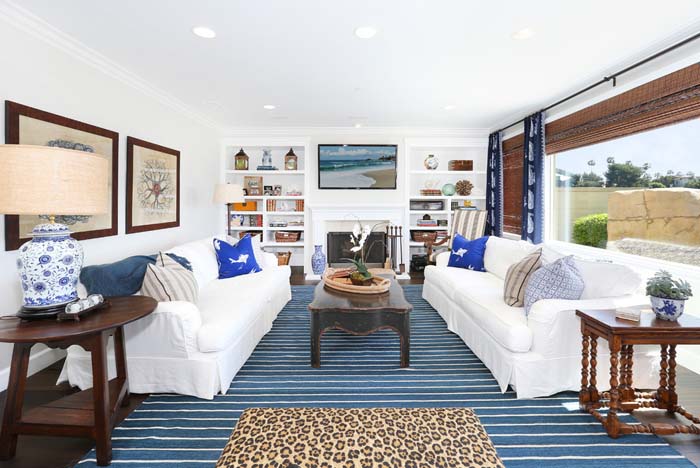
Water blue is the polished end of this list. Not sky, not navy, but that clear glassy blue with a hint of green in it. Used sparingly against a refined base, it lifts a room without ever looking casual.
Build the foundation in soft gray and ivory, then bring water blue in through silk cushions, a glass lamp, or a velvet ottoman. Sheen is what separates elegant from breezy here, because reflective surfaces make the same shade look considerably more expensive than matte cotton would.
Keep lines clean and clutter low. One large arrangement of white stems beats five small trinkets.
This is the version that still looks right when the good glasses come out and everyone’s dressed for dinner.
Frequently Asked Questions
Can I do a coastal living room if I don’t live near the ocean?
Absolutely, and honestly most people who use this style don’t. Coastal decorating is really just light colors, natural texture, and open space, and none of that depends on your zip code. A third-floor apartment in Ohio can pull it off with white slipcovers, a jute rug, and a few blue cushions.
The only thing to adjust is how literal you get. Skip anything that screams souvenir shop, like anchor signs or fish nets on the wall. Focus on materials and color instead of theme objects, and the room reads breezy rather than costume-y.
What colors work best for a beach themed living room?
Start with a neutral base and let one or two blues do the accent work. Warm white, sand, and pale greige on the big surfaces, then bring in whatever blue suits your light. Rooms with weak natural light do better with grayish blues, while bright rooms can handle clearer, cleaner shades.
Beyond that, coral, sage green, and soft mustard all sit comfortably in the palette. The mistake is using every one of them at once. Pick a base, one main accent, and one secondary hit. Three colors total, four at the very most.
Is white furniture practical with kids and pets?
More practical than it sounds, as long as the fabric is right. Performance weaves and washable slipcovers changed the math completely. White cotton covers come off, go in the machine, and come back looking fine, which is something you genuinely cannot do with a dark upholstered sofa.
Buying two sets of covers in the same shade helps a lot. One stays on while the other washes. Light colors also hide dust and pet hair far better than navy or charcoal, so day-to-day the room actually looks cleaner between deep cleans.
How much does it cost to redo a living room in coastal style?
It depends entirely on whether you’re replacing furniture or just changing what sits on it. If your sofa stays, you can shift the whole mood for the price of paint, white curtain panels, a jute rug, and a handful of cushions. That’s a weekend and a fairly modest spend.
Thrift stores and secondhand marketplaces are full of blue and white ceramics, wooden bowls, and woven baskets for a couple of dollars each. Mismatched pieces look better together in this style anyway, so there’s no pressure to buy matching sets.
What’s the difference between coastal and nautical decor?
Coastal is about atmosphere. Light, texture, air, the general feeling of being near water. Nautical is about objects and symbols, so think anchors, ship wheels, rope knots, and red and navy stripes.
Nautical tends to date faster because it leans on recognizable motifs, and motifs go in and out of fashion. Coastal survives longer since it’s built on materials and color relationships instead. Most people who say they want a beach room actually want coastal, not nautical, and realize it once they see the difference laid out.
Can coastal style work in a small living room?
It works especially well in small rooms. Pale colors bounce light around, and white walls with white trim blur the edges of a room so the boundaries feel further away than they are.
A few specifics help. Choose furniture with visible legs so the floor keeps running underneath. Hang curtains high and wide, close to the ceiling. Use one large piece of art rather than a gallery of small frames, since scattered items make a small wall feel busier and tighter than it needs to.
How do I keep a coastal room from looking cold or sterile?
Texture and warm tones. That’s the whole answer. An all-white room with smooth surfaces will feel clinical every time, but the same room with a nubby wool throw, a rattan chair, and an oak table reads soft and lived-in.
Add warmth through sand, oatmeal, and pale wood rather than more white. A few coral or dusty terracotta accents help too, especially in rooms that don’t get much direct sun. Lighting matters as well, so warm bulbs over cool ones, and lamps at different heights rather than one overhead fixture.
CONCLUSION
Coastal style sticks around because it isn’t really a trend. It’s a set of decisions about light, texture, and restraint, and those hold up long after specific colors go out of fashion. That’s why a room built this way in 2015 still looks fine today.
If you take one thing from this list, make it the restraint. Almost every idea here works because something was left out rather than added. Three colors instead of six. One focal point instead of five. A few blue accents instead of a blue room.
Start with whatever costs least. White curtain panels, a jute rug, a slipcover, a fresh coat of soft white on one wall. Those four changes alone will shift a room more than a furniture purchase would.
Then live in it for a week before adding anything else. Rooms tell you what they’re missing if you give them a little time.