25 TV and Fireplace Ideas That Actually Work Together
Figuring out where the TV goes when a fireplace already owns the room is one of those decorating puzzles almost every homeowner runs into. Both want attention. Both pull the furniture toward them. And when they end up fighting for the same wall, the whole living room feels a little off, even if every piece in it is beautiful.
The good news is that there are dozens of smart ways to make the two live together. Some setups stack them, some split them across walls, and some hide the screen behind wood, art, or a sliding panel until movie night rolls around. Others skip the wall battle completely and let seating do the work instead.
What follows is a collection of 25 real, workable ideas covering stone walls, built-in bookcases, corner fireplaces, recessed screens, and layouts that finally make conversation easy again. Each one comes with the reasoning behind it, so the choice feels obvious instead of overwhelming.
1. TV Installed in Bookcase
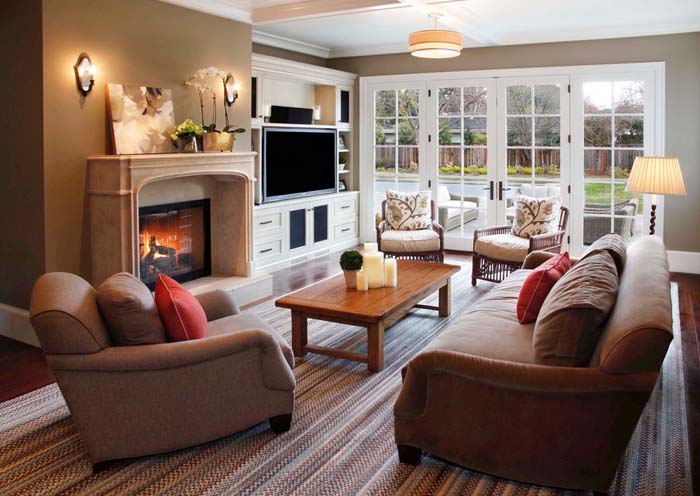
A flat screen tucked between shelves of books stops looking like a screen and starts looking like part of the room. That’s the whole point of building the TV into a bookcase. Surrounded by spines, baskets, and a few ceramic pieces, the black rectangle loses its grip on the space.
Painted shelving in a soft greige or deep charcoal helps even more, because the darker backdrop lets the screen blend instead of glare. Leave breathing room around the set so it doesn’t look wedged in, and mix closed storage below for remotes and game controllers that always end up scattered. Books stacked horizontally beside the screen break up the straight lines and keep the shelves from feeling stiff.
2. Stone Wall Warmth
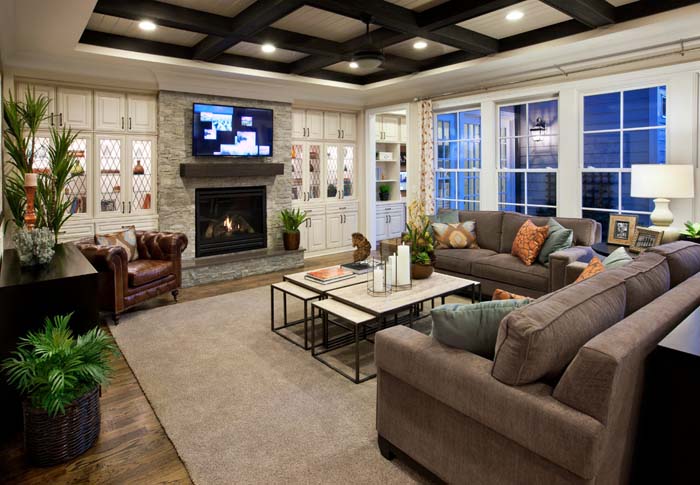
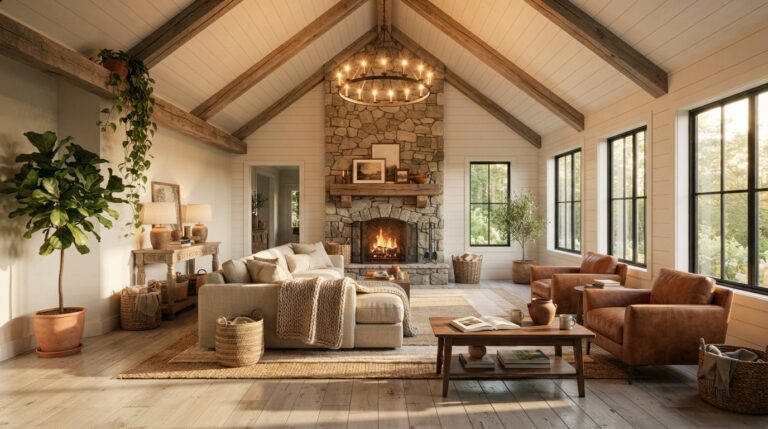
Stacked stone brings something a painted wall never quite manages: texture you can feel from across the room. Run it floor to ceiling behind the fireplace and the TV suddenly has a backdrop with depth, so the screen reads as one element in a bigger composition rather than a black hole floating in drywall.
Warmer stone tones do the heavy lifting here. Sandy browns, soft grays, and hints of rust catch lamplight in the evening and keep the whole corner from going cold once the fire is out. Mount the TV above a chunky wood mantel and let a few uneven stones stay uneven, because that irregularity is exactly what makes the wall feel built rather than installed.
Guests notice the wall first, then wonder where the TV went.
3. Create a Room Divider
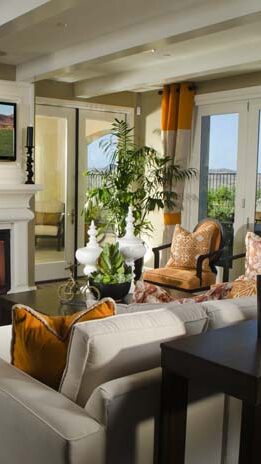
Open floor plans have a habit of leaving the living area without edges, and a double-sided fireplace with a mounted TV solves that in one move. The structure becomes a wall that doesn’t feel like a wall. Flames face the dining side, the screen faces the sofa, and nobody loses the airy layout they paid for.
Keep the divider slimmer than a full partition so light still travels between zones. A floating hearth or a raised base helps the whole thing look intentional rather than dropped in place. Low seating on the TV side keeps sightlines clear over the top.
Suddenly the dinner conversation and the football game can happen at the same time without anyone shouting across the room.
4. Frame it in Wood
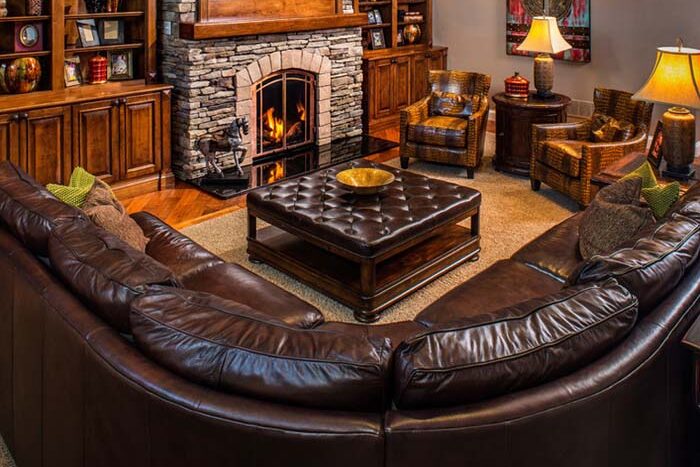
Wrapping the TV in a wood frame changes how the eye reads it. Instead of a screen stuck on a wall, you get something closer to a hung panel, and that small shift makes the fireplace below feel like part of a matched set rather than a competing feature.
White oak, walnut, or reclaimed planks all work, though the trick is repeating that same wood somewhere else in the room. A floating shelf, the mantel itself, or the legs of a nearby chair will do it. Repetition is what convinces the eye that the frame belongs.
Slat paneling around the frame adds one more layer, casting soft shadow lines that shift as the afternoon light moves across.
Warm wood beats bare drywall every single time.
5. Over an Electric Fireplace

Electric units open up placement options that a real firebox never will. No flue, no clearance headaches, no chimney chase eating into the room. That freedom is exactly why mounting a TV directly above one has become such a common setup in modern homes.
Slim linear models sit low in the wall and throw a long ribbon of flame beneath the screen, which balances the horizontal shape of the TV nicely. Because the heat output stays gentle and most units vent forward, the screen above stays safe at a comfortable viewing height instead of getting pushed up near the ceiling.
Run the same finish across both, matte black surround, dark stone, or a painted panel, and the pair reads as one designed wall.
💡 Pro Tip: Mount the fireplace insert first, then measure your seat height from the sofa before drilling anything for the TV. Eye level while seated should land near the bottom third of the screen. Most people mount too high and end up with a stiff neck by the second episode.
6. Focus on Discussion
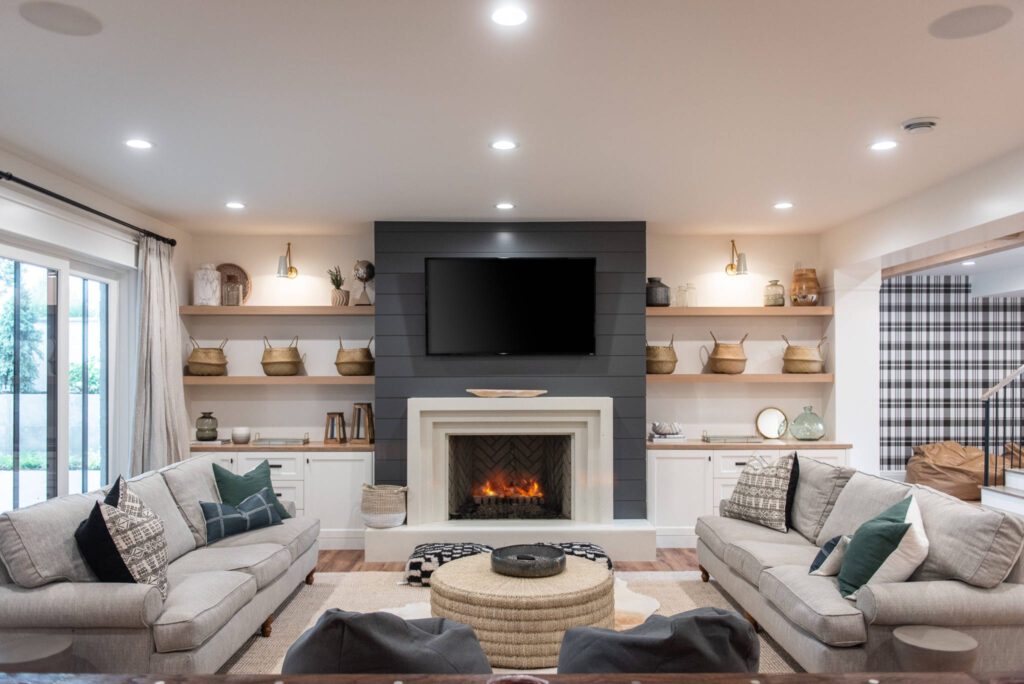
Not every living room needs the TV to be the star. Some households genuinely use the space for talking, coffee, card games, and the kind of evenings where nobody reaches for the remote at all. Arranging furniture around the fireplace and pushing the screen off to a side wall respects that.
Two sofas facing each other across a low table, with the hearth anchoring one end, creates a natural circle for conversation. The TV still gets watched, just from a slight turn of the head rather than a locked forward stare. Swivel chairs make that shift effortless when someone does want to catch the game.
Rooms built around people instead of screens tend to be the ones guests linger in longest.
✨ Suggestion: Try placing a pair of swivel armchairs opposite the sofa rather than a second couch. They pivot toward the fire during conversation and toward the screen during movies, so one arrangement quietly handles both jobs without ever needing to be rearranged.
7. Wide Wall Fireplace Idea
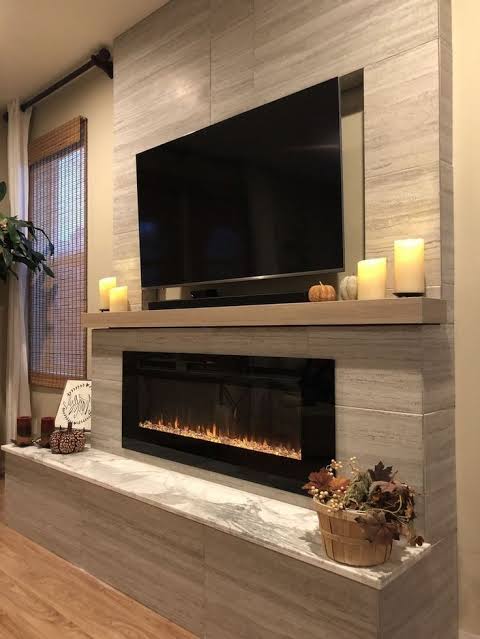
A long, low fireplace stretched across a wide wall gives the TV somewhere generous to sit. When the firebox runs several feet horizontally, the screen above stops looking oversized, because there’s finally something beneath it with matching proportions.
This works especially well in rooms with high ceilings, where a standard-sized fireplace tends to look undersized and lost. Extending the surround wall to wall, floor to ceiling, in plaster, limestone, or large-format tile, turns the whole plane into a feature. The TV becomes one element within it instead of an object hanging on top.
Keep the mantel shallow or skip it entirely. On a wide wall, a heavy shelf interrupts the horizontal sweep that makes the design work.
The room reads calmer, even when everything is switched on.
8. Framed TV Matches Fireplace Wall
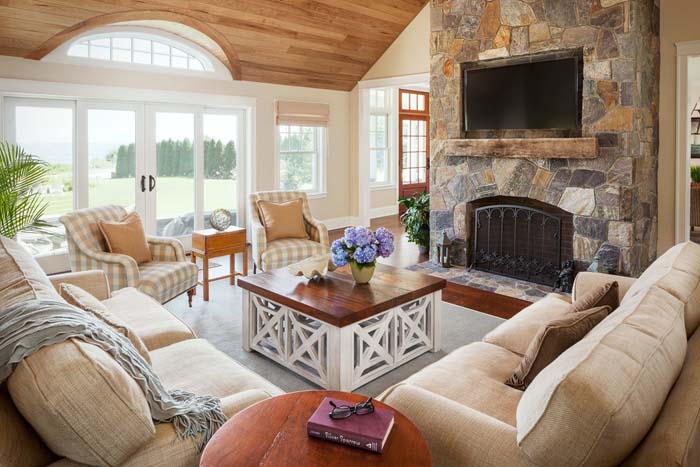
Art-style televisions solve an old problem in a very direct way. When the screen is off, it displays a painting or photograph inside a real frame, and the wall above the fireplace finally gets to look finished instead of interrupted.
The detail that separates a good version from a great one is finish matching. Choose a frame color pulled from the fireplace surround, whether that’s warm brass, weathered oak, or flat black, and the two pieces stop reading as separate purchases. Some people go further and paint the entire wall a single deep shade so the frame floats against it the way art would in a gallery.
You get a display wall that earns its spot every hour of the day, not just during a show.
9. Go Lengthwise
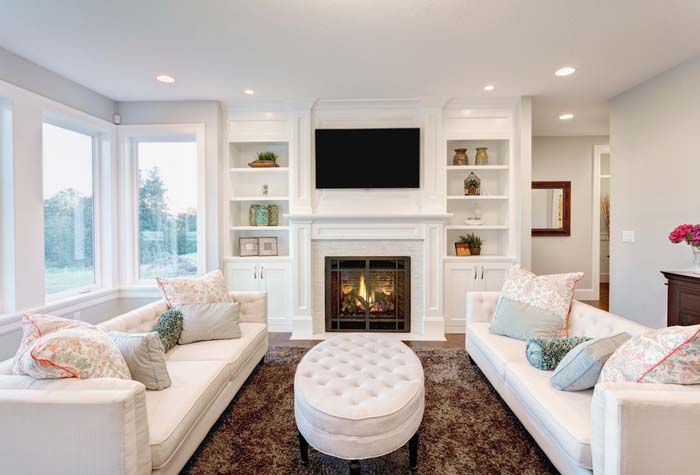
Long, narrow living rooms create a specific headache. The short walls are too tight for both a fireplace and a TV, and the long wall feels like too much real estate to leave empty. Running the layout lengthwise fixes it by spreading the two features apart along that same long stretch.
Place the fireplace toward one end and the TV toward the other, then float the sofa in the middle facing them. Each anchor gets its own pocket of the room, and the walkway behind the seating stays clear.
An area rug under the seating group is what holds the arrangement together, otherwise the furniture drifts and the room starts feeling like a hallway with cushions in it.
Mornings by the fire, evenings in front of the screen, same sofa either way.
10. Mount a TV on the Wall
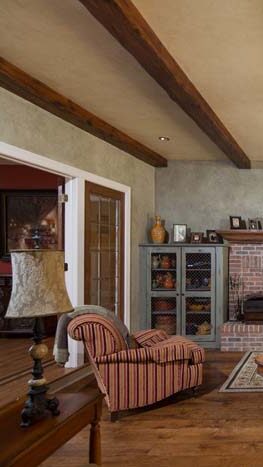
Wall mounting frees up the floor, and in a room already giving space to a fireplace, that matters more than it sounds. No console, no cabinet, no bulky legs crowding the hearth. Just a clean plane with the screen sitting flush against it.
The part people skip is cable management. Nothing undoes a tidy install faster than three cords dangling down a painted wall. Running them through an in-wall conduit takes an afternoon and makes the difference between looking mounted and looking finished.
Full-motion brackets are worth considering too. Being able to tilt the screen a few degrees toward the sofa fixes glare from windows and afternoon sun without redesigning anything.
Suddenly the whole wall looks lighter, like the room gained a foot of breathing space it never actually had.
11. Super Sized Fireplace
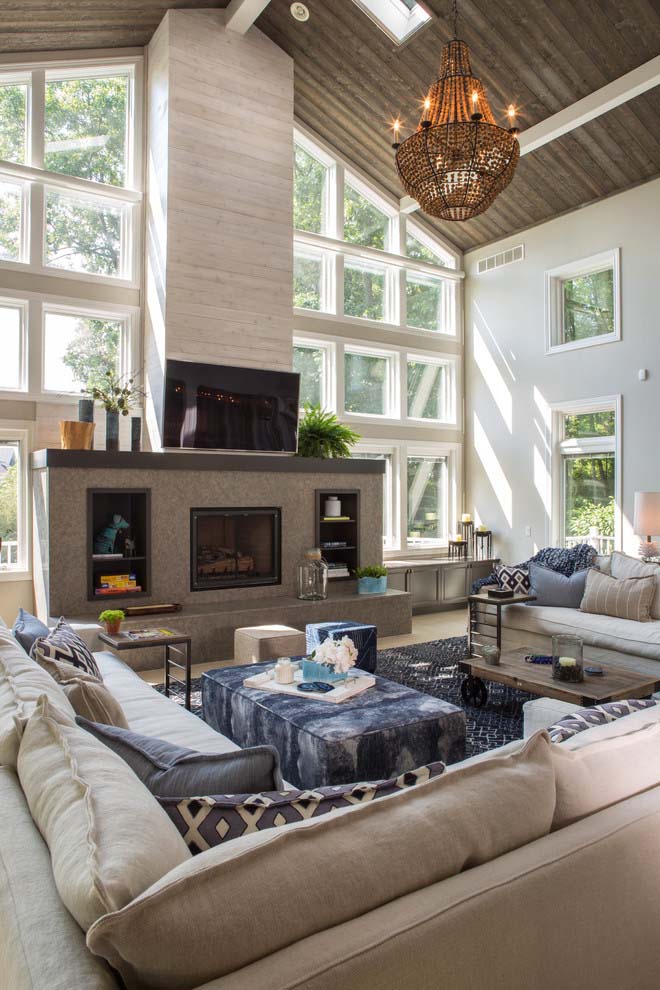
Some rooms can carry a fireplace that goes big, and when the ceiling is tall enough, an oversized firebox changes the entire balance. A hearth that runs six feet wide gives the TV above it something substantial to sit on top of, so the screen never looks like the largest object in sight.
Scale is the whole idea here. Massive fireplaces need equally confident materials, so think large-format stone slabs, poured concrete, or hand-troweled plaster instead of small tile that fights the proportions. Keep the surrounding décor minimal, because a feature this size already says plenty on its own.
The mistake is going big on the fireplace and then filling the room with small furniture that suddenly looks flimsy beside it.
💡 Pro Tip: Before committing, tape the full outline of the fireplace surround onto your wall with painter’s tape and live with it for a few days. Oversized features look very different at actual size than they do in a showroom photo, and the tape test costs nothing to undo.
12. Overmantel with a Secret Hiding Place
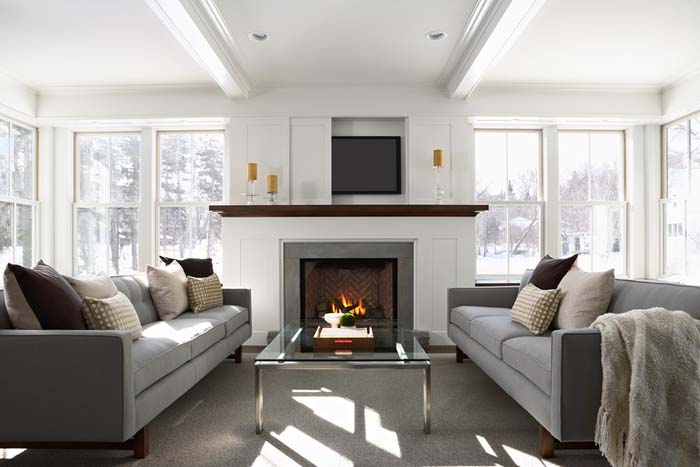
Building a cavity above the mantel and closing it off gives you a TV that appears only when you want it. Doors swing open, a panel slides sideways, or a piece of art lifts on a track, and the screen is right there. Shut it again and the fireplace goes back to being the only thing in the room.
Older homes with traditional millwork benefit most from this. A mounted flat screen tends to fight period detail, while a paneled overmantel that matches existing trim keeps everything speaking the same language.
Depth is the detail worth planning carefully. Allow a few extra inches behind the screen for cables and airflow so nothing gets pinched when the doors close.
Something about opening those panels before a movie makes the evening feel like a small occasion.
✨ Suggestion: If full cabinet doors feel too heavy for your space, look into a sliding barn-style panel that runs on a slim top track. It hides the screen just as effectively but needs almost no clearance to operate, which helps in rooms where seating sits close to the wall.
13. Angle the TV
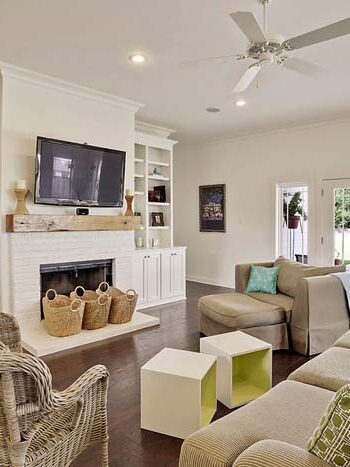
Setting the screen at a slight angle instead of flat against the wall solves a problem that mounting height alone never fixes. When the fireplace claims the prime wall, the TV often ends up somewhere the sofa doesn’t quite face, and a small pivot brings the picture back to where people actually sit.
Corner brackets and articulating arms both handle this. The arm version pulls out and swings, then folds back nearly flush when the room isn’t in use, which keeps things looking neat during the day.
Angling also cuts glare from a window that would otherwise wash out half the screen every afternoon.
Nobody has to crane sideways or claim the good cushion anymore.
14. Reclaimed Brick Fireplace
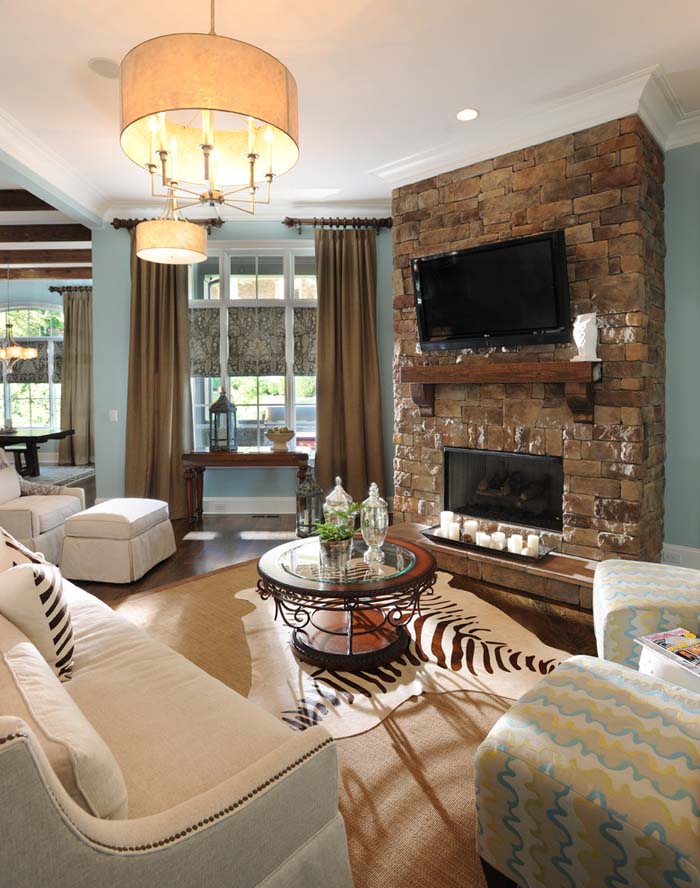
Old brick carries marks that new material simply cannot fake. Mortar smears, uneven color, chipped corners, and the occasional darker brick where a fire once burned hotter. Set a modern flat screen against that backdrop and the contrast does something surprisingly good for both.
Warm red and clay-toned brick softens the coolness of a black screen, while the screen’s clean lines keep the brick from tipping into farmhouse cliché. A whitewash or German schmear finish is worth considering if the original red feels too heavy for the room.
Pair it with a rough-cut timber mantel and a couple of iron fireplace tools resting nearby.
Old brick with new tech is the kind of mismatch that somehow always works.
RELATED:
WHAT ORAL ALLERGY SYNDROME IS AND WHICH FOODS TRIGGER IT
15. TV and Fireplace on Adjacent Walls
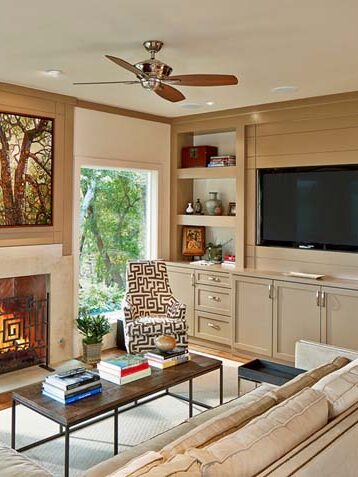
Splitting the two across neighboring walls removes the competition entirely. The fireplace holds one corner of the room, the TV holds the other, and neither one has to stack awkwardly above the other or fight for the same square footage.
Sectional sofas were practically made for this arrangement. The L-shape faces both directions at once, so whoever is on the long side gets the screen and whoever is on the short side gets the fire, and neither person has to move.
Keep the two features roughly the same visual weight so one side of the room doesn’t feel heavier. A tall built-in beside the TV can balance a chunky stone surround across the way.
It’s the layout that finally ends the debate about which wall the sofa should face.
16. Build Along the Long Walls
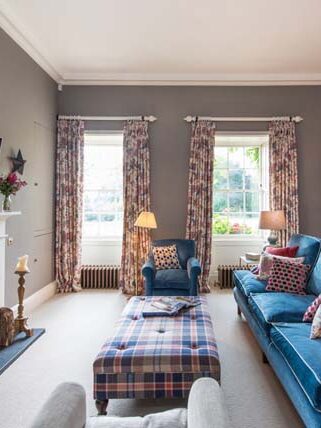
Running built-ins down both long walls turns a plain rectangle into a room with structure. One side carries the fireplace and the screen, the other carries shelving, cabinets, or a window seat, and the whole space suddenly feels designed rather than furnished.
Symmetry is what sells it. Matching heights, matching trim profiles, and matching paint across both sides let the eye read the room as balanced even though the two walls hold completely different things.
Storage is the quiet win here. Blankets, board games, and the endless pile of chargers all get somewhere to live, which keeps the surfaces around the hearth clear.
Everything finally has a home, and the room stops looking cluttered by six o’clock.
17. Magnificent Modern TV & Fireplace Idea
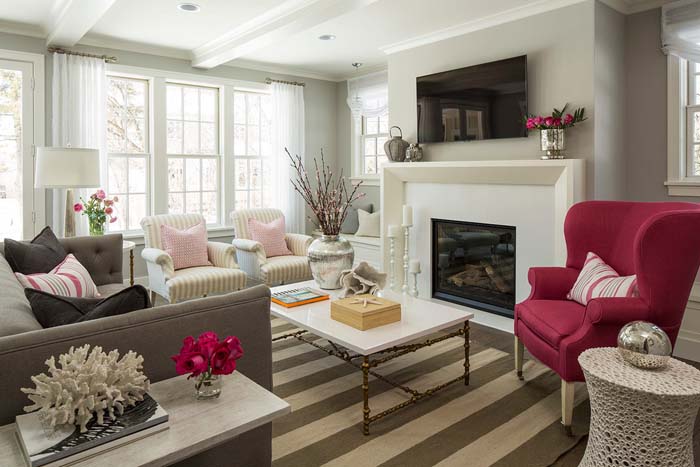
Modern setups strip everything down to the essentials. A frameless linear firebox, a floating shelf in one continuous slab, and a screen sitting flush against a smooth panel above. No mantel corbels, no decorative molding, no visible hardware anywhere.
That restraint is precisely what makes it work. When there’s nothing extra to look at, the eye settles on proportion and material instead, so the quality of the plaster or the grain direction on a wood panel starts carrying the whole design.
Monochrome palettes keep it cohesive. Charcoal on charcoal, or warm white on pale oak, with a single low-profile bench beneath for the media box.
Contemporary rooms reward the things you choose to leave out.
18. A Fireplace in the Corner
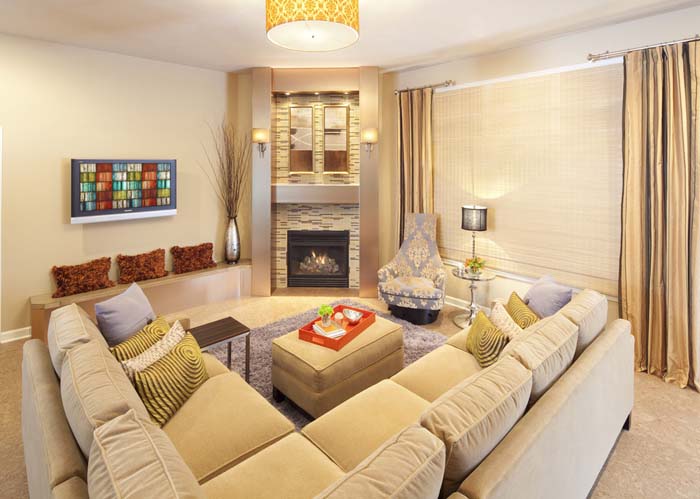
Corner fireplaces take up space that usually goes to waste, which immediately opens the main walls for the television. That trade is the whole appeal. The fire gets tucked into a spot nobody was using, and the biggest uninterrupted wall stays free for the screen.
Diagonal placement also changes how the room reads. A corner hearth pulls the eye across the space at an angle rather than straight ahead, which makes square rooms feel less boxy than they actually are.
Furniture wants to follow that diagonal. Angle one chair toward the fire and keep the sofa square to the TV wall, and both features stay in comfortable view without anyone twisting around.
💡 Pro Tip: Run a rug that sits on the diagonal too, matching the angle of the fireplace rather than the walls. It sounds fussy, but that single alignment choice is what stops a corner setup from looking like the fireplace was an afterthought squeezed in later.
19. Install a Flat Screen TV

Thin panels changed what’s possible above a fireplace. A screen only a couple inches deep sits close enough to the wall that it stops projecting into the room, which matters when the mantel below is already claiming depth.
Size is where most people go wrong. Bigger is not automatically better above a hearth, because a screen wider than the fireplace surround creates a top-heavy look that no amount of styling can rescue. Matching or slightly undershooting the surround width keeps the proportions honest.
Bezel color counts too. A slim black edge disappears against a dark painted wall, while the same screen on white drywall reads as a hard rectangle from every angle.
Walk in and the wall looks composed, not like a TV was added to it later.
20. Horseshoe-Shaped Furniture Arrangement
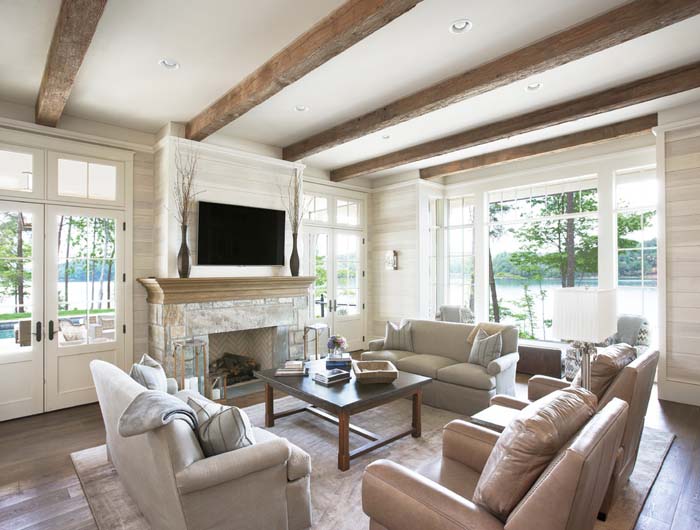
Wrapping seating into a U shape gives both the fireplace and the TV a fair share of the room. A sofa across the back with chairs down each side creates an open end that can face either feature, depending on which one the room is built around.
The open side should point toward whatever gets used most. Movie households aim it at the screen, while people who host a lot aim it at the fire and let the TV sit off to one side.
Leave enough gap between pieces for people to get in and out without a shuffle.
Everyone gets a decent seat, which is honestly the hardest thing to pull off in a living room.
21. Define the Space
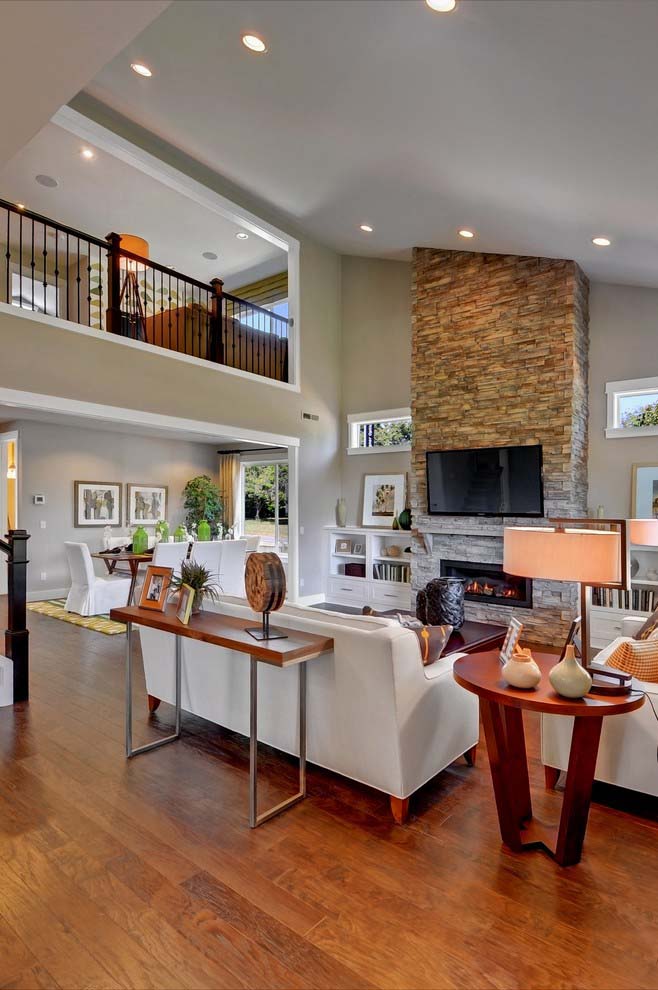
Large rooms have a way of leaving the fireplace and TV floating in a sea of floor. Defining a clear zone around them pulls everything back together, and the simplest tool for that is a rug sized properly for the seating group.
Front legs of every piece should land on it. That single rule instantly makes the arrangement look deliberate instead of scattered, and it draws a visible boundary around the area where watching and gathering actually happen.
Lighting reinforces the edges too. A floor lamp at the outer corner and a pair of sconces flanking the fireplace mark the perimeter after dark, so the zone still holds together once the overheads go off.
The room stops feeling oversized and starts feeling like somewhere you’d settle in for the evening.
💡 Pro Tip: Measure your seating group first, then add roughly two feet on every side before choosing a rug size. Almost every rug that looks wrong in a big room is simply too small, and going one size up fixes the problem more often than rearranging the furniture does.
22. TV Recessed Into the Wall
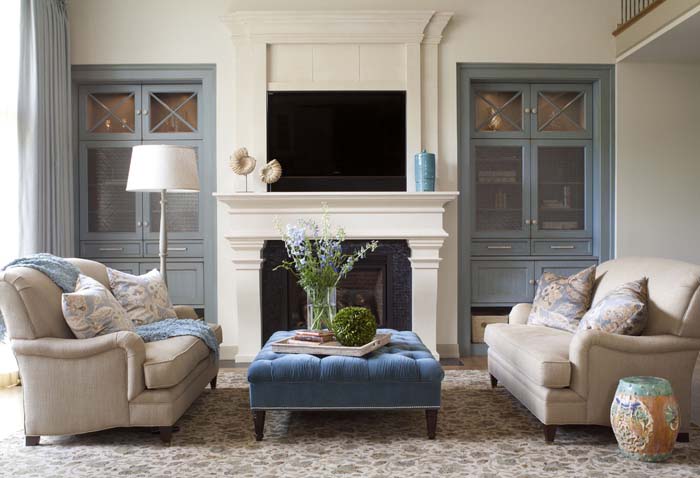
Cutting a niche into the wall lets the screen sit perfectly flush, and that one detail does more for a clean look than any amount of styling around it. No shadow line underneath, no edge catching the light, nothing sticking out over the mantel.
Recessed boxes need planning before drywall goes up, which makes this an easier call during a remodel than after. Frame the opening slightly larger than the screen, allow room for ventilation, and drop an outlet plus conduit inside the cavity so every cable stays hidden.
Painting the interior of the niche a shade darker than the surrounding wall deepens the effect and helps the screen recede even further when it’s off.
Run a hand across the wall and there’s barely a seam to feel.
23. Build a Wall
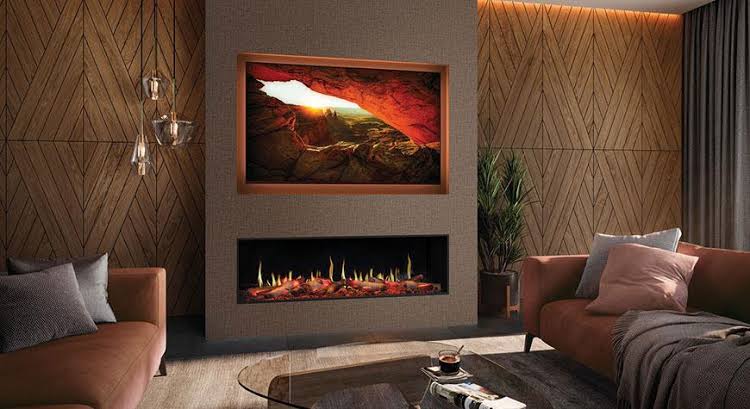
Sometimes the honest answer is that the room doesn’t have a good spot for both, so you build one. A partial partition constructed specifically to hold the fireplace and screen gives the layout a proper anchor where none existed before.
Half-height versions work well in open plans, keeping sightlines to the kitchen while still creating a defined back for the sofa. Full-height builds suit rooms with awkward window placement, where every existing wall is already spoken for.
Wiring goes in during framing, which is the real advantage. Outlets, conduit, and speaker runs all disappear inside before the drywall ever arrives.
A weekend of construction buys back years of shuffling furniture around trying to make the old layout work.
24. Show Off Art

Hanging real artwork above the fireplace and moving the TV elsewhere is the choice designers reach for when a room deserves better than a black rectangle at eye level. The mantel becomes a place to display something meaningful instead of a shelf beneath a screen.
Scale carries this. A single large canvas holds the wall far better than three small frames scattered across it, and leaning an oversized piece against the wall rather than hanging it adds a relaxed, gallery-at-home feeling.
The screen then goes on a side wall, inside a cabinet, or on a slim console where it can do its job without stealing the room’s best surface.
Coming home to art above the fire changes how the whole room greets you.
💡 Pro Tip: Hang artwork so the bottom edge sits about six to eight inches above the mantel, no higher. Pieces floated too far up look disconnected from the fireplace, and that gap is the single most common mistake in mantel styling.
25. Freestanding Corner Fireplace
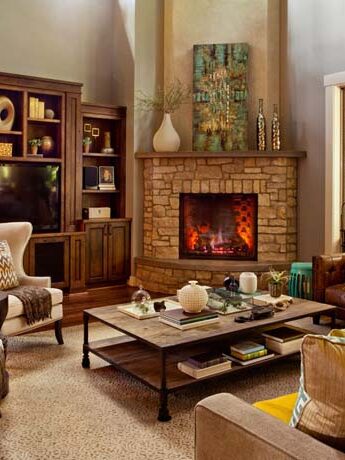
A freestanding unit tucked into the corner needs no chimney breast, no framed chase, and no wall dedicated to it. That’s precisely why it pairs so easily with a television. The fire claims a few square feet of otherwise dead floor, and every wall in the room stays available.
Wood stoves, pellet units, and sculptural gas models all fit this role. Because the piece stands on its own, it reads as furniture rather than architecture, which keeps the TV wall as the room’s clear focal point without any competition.
Give it proper clearance on both sides and set a heat-safe pad underneath. Then let a couple of chairs curve toward it while the sofa stays aimed at the screen.
Two moods in one room, and nothing had to be torn out to get there.
✨ Suggestion: Choose a model with a glass front that wraps around the sides rather than a flat viewing window. Corner placement means people see the unit from multiple angles, and a wraparound view keeps the flames visible from the sofa, the chairs, and even the doorway.
Frequently Asked Questions
Is it bad to mount a TV above a fireplace?
Not automatically, though it depends on the fireplace. Wood-burning and traditional gas units push a lot of heat straight up, which can shorten a screen’s life over time. Electric and linear gas models vent forward or run much cooler, making them far safer choices. Check the manufacturer’s clearance specs before drilling, and hold a hand above the mantel during a long burn to see how warm that spot actually gets.
How high should the TV go above the fireplace?
Lower than most people install it. The bottom third of the screen should sit near eye level while you’re seated, which usually means the base lands around 4 to 6 inches above the mantel. Anything higher forces a constant upward tilt of the head, and that gets uncomfortable within an hour.
Can the TV be wider than the fireplace?
It can, but it rarely looks right. A screen wider than the surround makes the wall feel top-heavy, like the fireplace is holding up something too big for it. Matching the widths, or letting the fireplace run slightly wider, keeps the proportions comfortable.
What if my ceiling is too low to stack them?
Split them up instead. Adjacent walls, opposite ends of a long wall, or a side-wall placement all work beautifully in rooms with standard 8-foot ceilings. Stacking really only succeeds when there’s vertical room to spare.
How do I hide the cables?
In-wall conduit is the cleanest option and takes an afternoon with a drywall saw and a fish tape. If cutting into the wall isn’t possible, a paintable cord channel mounted flush to the surface disappears surprisingly well once it matches the wall color.
Does a corner fireplace really free up wall space?
Yes, and that’s the main reason people choose one. Angling the fire into a corner uses floor area that furniture usually can’t reach anyway, leaving the longest and most usable wall completely open for a screen or built-ins.
Is an art-style TV worth the extra cost?
For a fireplace wall, it often is. That wall stays in view all day, and a blank black rectangle sitting above the mantel is hard to style around. A framed screen displaying artwork solves the problem without needing cabinet doors, sliding panels, or any construction at all.
Conclusion
Fitting a television and a fireplace into the same room stops feeling like a compromise once you decide which one leads. Some homes want the fire front and center, with the screen tucked to a side wall or hidden behind panels. Others watch enough that the TV earns the prime spot, and the fireplace works better low, wide, or angled into a corner beneath it.
Nearly every idea here comes back to the same few things. Keep the screen at a comfortable seated height. Let the two features share a material or a color so they read as one plan. Give the seating a clear job, whether that’s facing the fire, facing the show, or swiveling between both.
Start with how the room actually gets used on an ordinary Tuesday night, not how it might look in a photo. That answer usually points straight at the right layout.
The rest is just measuring twice and picking up a drill.