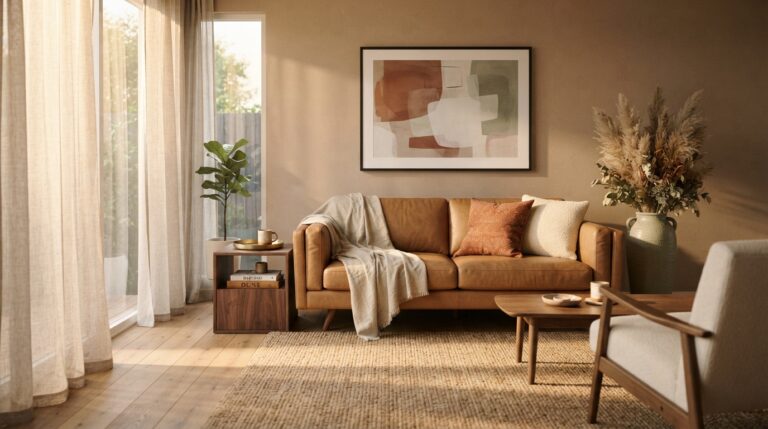
20 Small Living Room Design and Decor Ideas That Actually Make It Feel Bigger
Blank walls have a way of making even a well-furnished living room feel unfinished. Rustic wall décor fixes that faster than almost anything else, because weathered wood, aged metal, and soft-worn finishes bring warmth that paint alone can’t touch.
There’s a reason this look keeps showing up on Pinterest boards year after year. Rustic pieces carry a story. A reclaimed board with visible nail holes, a chippy old shutter, a wooden clock with hand-cut numbers. These things feel lived-in from day one, which means a brand-new house can suddenly feel like it’s been loved for decades.
The best part is how forgiving the style is. Nothing has to match perfectly. Frames can be different sizes, wood tones can clash a little, and the whole arrangement still reads as intentional.
What follows are 20 rustic wall décor ideas that work in real living rooms, not just staged photos. Some take an afternoon, others take ten minutes and a hammer. Every one of them adds character where a bare wall used to be.
1. Rustic Farmhouse Style Overstuffed Sectional Sofa
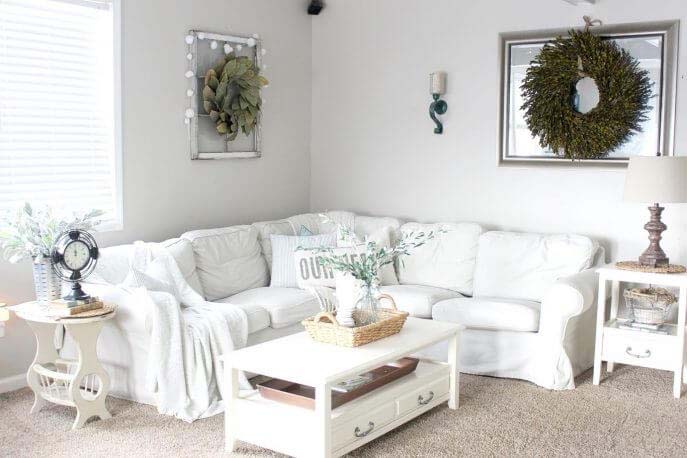
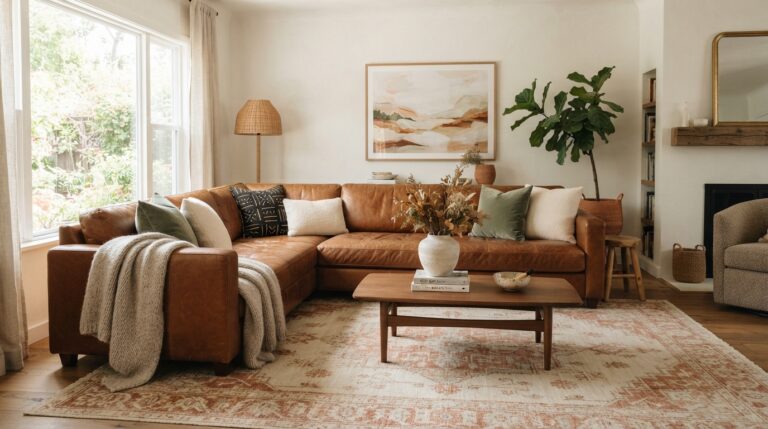
An overstuffed sectional sounds like the wrong call for a smaller living room, but it often works better than two chairs and a loveseat crowding the floor. One big soft piece means fewer legs, fewer gaps, and fewer visual interruptions, so the room reads calmer than it actually is.
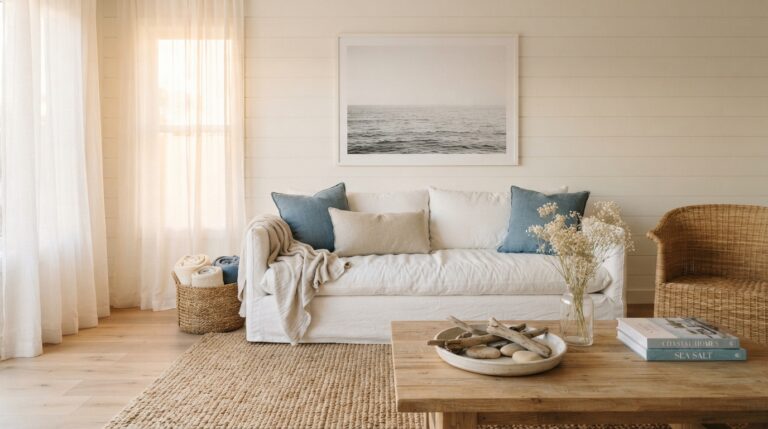
Go with a slipcovered linen in oatmeal or warm white, deep seats, and cushions you can actually sink into. Rolled arms and a low back keep the farmhouse feel without the bulk of a heavy frame. Push it into the corner and let it define the whole seating zone.
Then comes the real test on a Sunday afternoon, when three people, a dog, and a laundry basket all fit without anyone moving.
2. Add Color to a Pale-Painted Room with Decorative Cushions
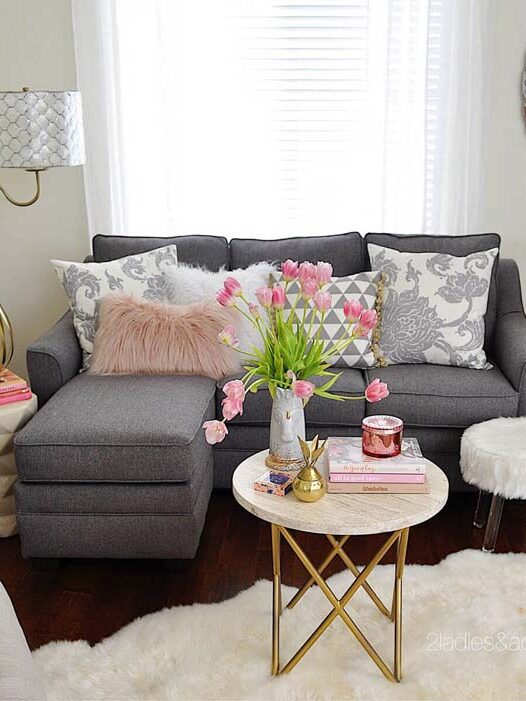
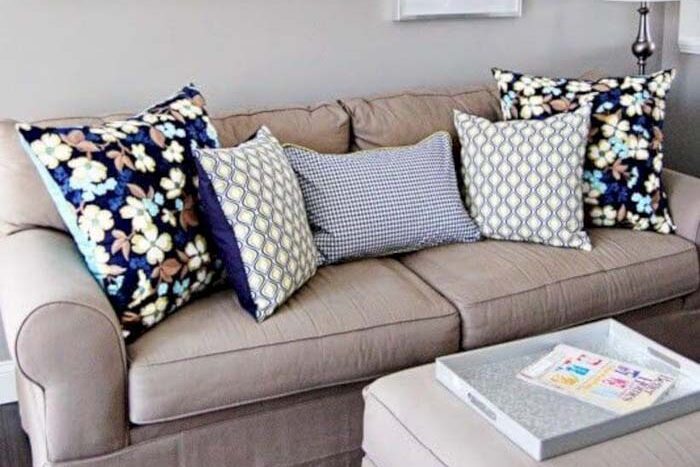
Pale walls give you a clean slate, and cushions are the cheapest way to fill it in. Swap four or five pillows and a greige room suddenly has a personality, no paintbrush required. That flexibility is what makes it smart, because you can change direction in October when the mustard and rust start feeling right again.
Mix the sizes rather than lining up matching squares. A couple of large ones at the back, smaller lumbar pillows in front, then one odd texture like chunky knit or faded velvet to break the pattern.
The room feels warmer within seconds of setting them down, even though nothing structural has changed at all.
3. Maximize Space with High Curtains

Hanging curtain rods just above the window frame is one of the most common mistakes in a small living room. Move that rod up near the ceiling line instead, and the eye follows the fabric upward, which stretches the wall and makes an eight-foot ceiling read closer to ten.
Let the panels fall to the floor with a slight break, and extend the rod wider than the window on both sides. More glass shows, more light gets in, and the window looks generous even when it isn’t. Light linen or unlined cotton in a soft neutral keeps things airy.
4. Refined Living Room Design for Small Spaces
Refined doesn’t mean formal or fussy. In a small room it usually means editing until every piece earns its spot, then keeping the lines low and the palette tight. Two or three neutrals, one wood tone, one metal finish. That restraint is what reads as expensive, because clutter is the thing that makes a room feel cramped, not square footage.
Choose furniture with visible legs so light travels underneath. Skirted sofas and solid bases eat the floor visually, while a slim armchair on tapered legs lets the eye keep moving.
The trick is knowing what to leave out, which is harder than deciding what to bring in.
5. Farmhouse Living Room with Repurposed Table
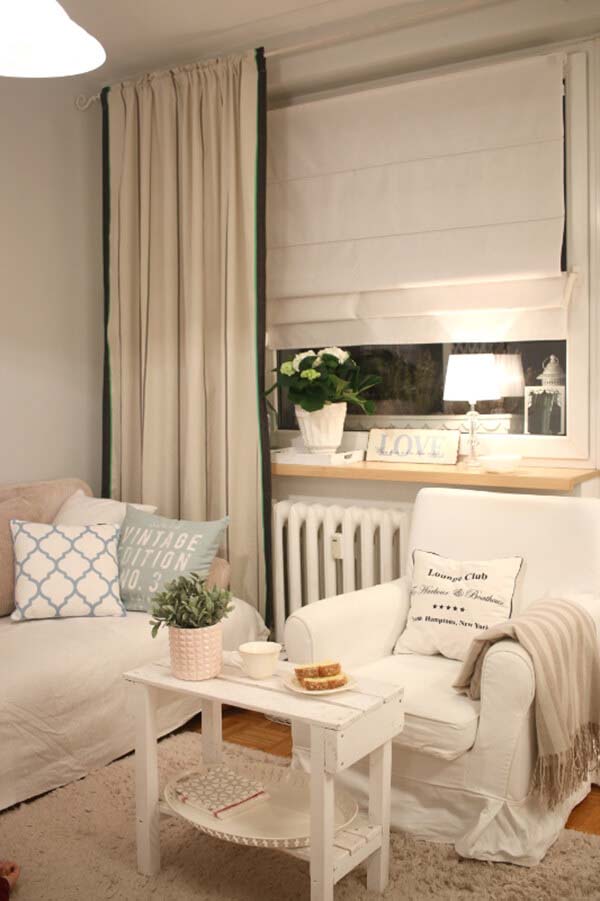
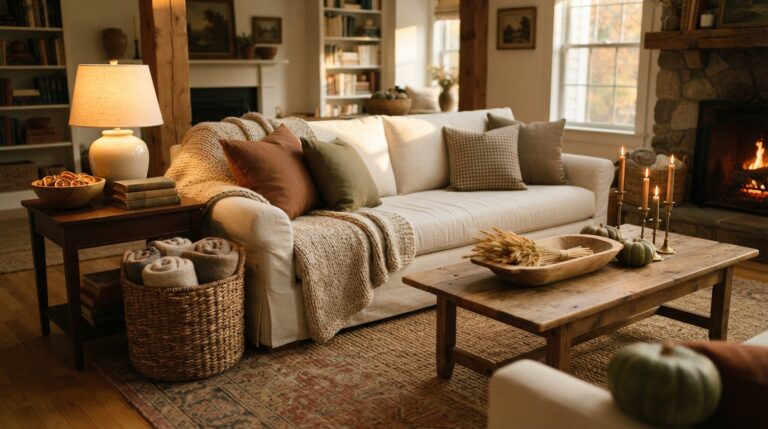
An old table with a second life beats anything off a showroom floor. A weathered workbench cut down to coffee table height, a vintage trunk with brass corners, a section of scaffolding plank on hairpin legs. Repurposed pieces bring texture and history that new furniture spends years trying to fake.
The imperfections do the heavy lifting here. Water rings, dents, mismatched grain, and old paint layers all add character, and they mean nobody panics when a glass gets set down without a coaster. That relaxed quality is the whole reason farmhouse rooms feel welcoming.
Look for solid wood, wobble-free joints, and a height somewhere around sixteen to eighteen inches so it works with a low sofa.
Guests almost always ask where it came from, and the answer is usually better than a store name.
💡 Pro Tip: Before you seal a repurposed piece, wipe it with a damp cloth to see how the grain looks wet. That preview shows you exactly what a clear matte finish will bring out, so you can decide whether to seal it, or leave the dry, chalky patina exactly as it is.
6. Design a Small Room with Natural Light and Lush Accents

Light and greenery are the two things that make a small room feel bigger without moving a single wall. Pull the heavy furniture away from the window, keep the sills clear, and let daylight hit the back wall instead of stopping at a bookcase.
Then bring in plants at different heights. A tall fiddle leaf in the corner, trailing pothos on a shelf, something small on the side table. Mismatched containers work better than a matching set, and plenty of people lean on clever upcycled planter ideas to get that collected look for almost nothing.
Living greenery also cleans the air a little, which is a nice bonus in a room where everyone gathers.
7. Optimize Small Living Spaces for Maximum Comfort

Comfort in a tight room comes down to circulation. Leave about thirty inches of walking space between the sofa and the coffee table, and keep at least one clear path from the door to the seating. When people aren’t shuffling sideways past furniture, the room feels twice as generous as the tape measure says it is.
Soften everything you can after that. A low-pile rug that reaches under the front legs of the sofa, a floor lamp instead of harsh overhead light, and a basket of throws within arm’s reach.
Sit down and reach for the remote without standing up. If everything you need is close, the layout is working.
🎯 Suggestion: Try a round coffee table instead of a rectangle. No sharp corners means fewer bruised shins, and the curve naturally opens up walking room on the diagonal, which is exactly where small rooms lose the most space.
8. Decorate Your Space with Light Gray and Black Accents
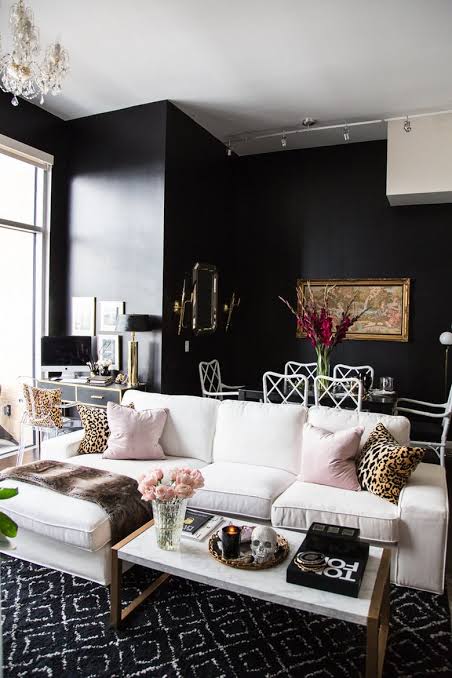
Light gray walls with black accents is a combination that never really goes out of style, mostly because it gives you contrast without color noise. Black picture frames, a matte black floor lamp, dark hardware on a console. Those small hits of black act like punctuation, telling the eye where to stop.
Keep the gray on the warm side so the room doesn’t drift cold, and let texture carry the interest instead. Nubby wool, raw linen, aged oak.
A vase of fresh blooms breaks the gray beautifully, and softer varieties like those pale ice cream tulips look almost sculptural against a dark frame behind them.
Every dark detail pulls its weight in a room this quiet.
9. Small Living Room with Oversized Farmhouse Accents
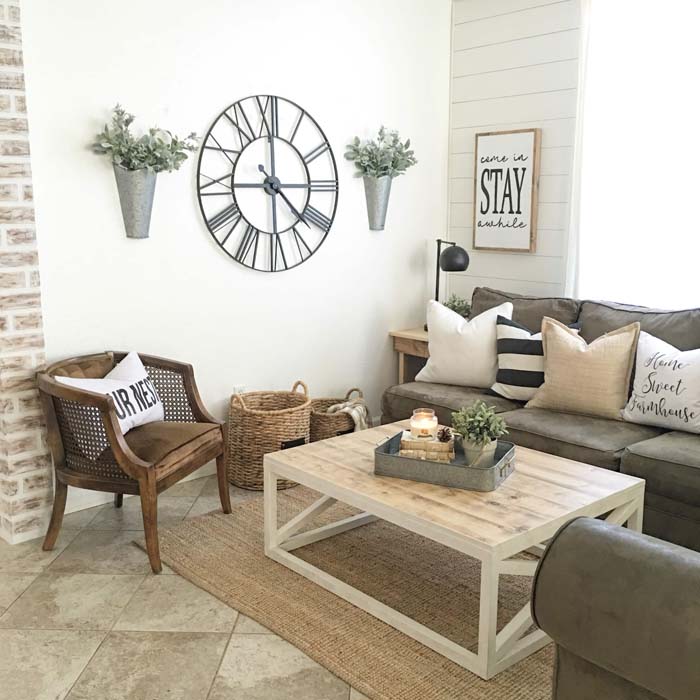
It feels backwards, but one large item in a small room beats five little ones. A wide barn wood mirror, an oversized wall clock, a single deep armchair with real presence. Small rooms filled with small objects just look busy, while one bold piece gives the space a clear anchor.
Pick your hero first, then keep everything around it modest. If the mirror is huge, the side tables stay slim and the shelves stay mostly empty.
That single confident choice is usually what visitors remember about the room, long after they’ve forgotten the paint color.
10. Brighten Up a Small Room With Pale Furniture and Bold Art
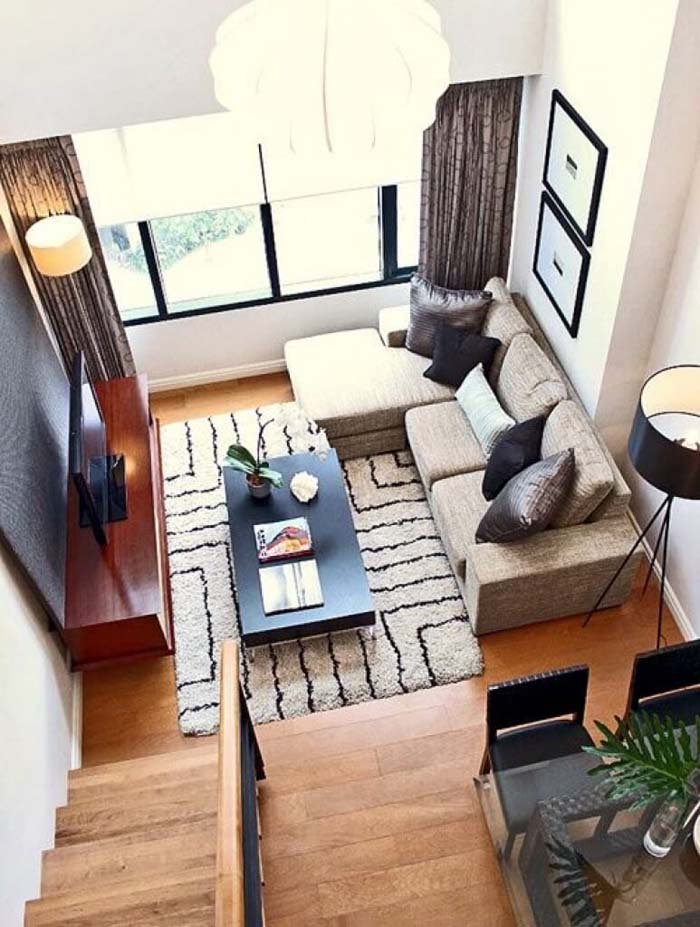
Pale furniture keeps a small room open, but too much of it starts feeling like a waiting room. That’s where one bold piece of art earns its place. A cream sofa, a whitewashed console, then a large canvas above it in deep blues or burnt orange to break the pale streak.
Travel photography works especially well for this, and prints of striking cities worth visiting bring both color and a story you can actually talk about.
Hang it lower than instinct tells you, around fifty-seven inches to the center.
A cup of coffee, morning light on that canvas, and the day starts a little better.
11. Add Depth to Your Small Living Room with a Dark Accent Wall
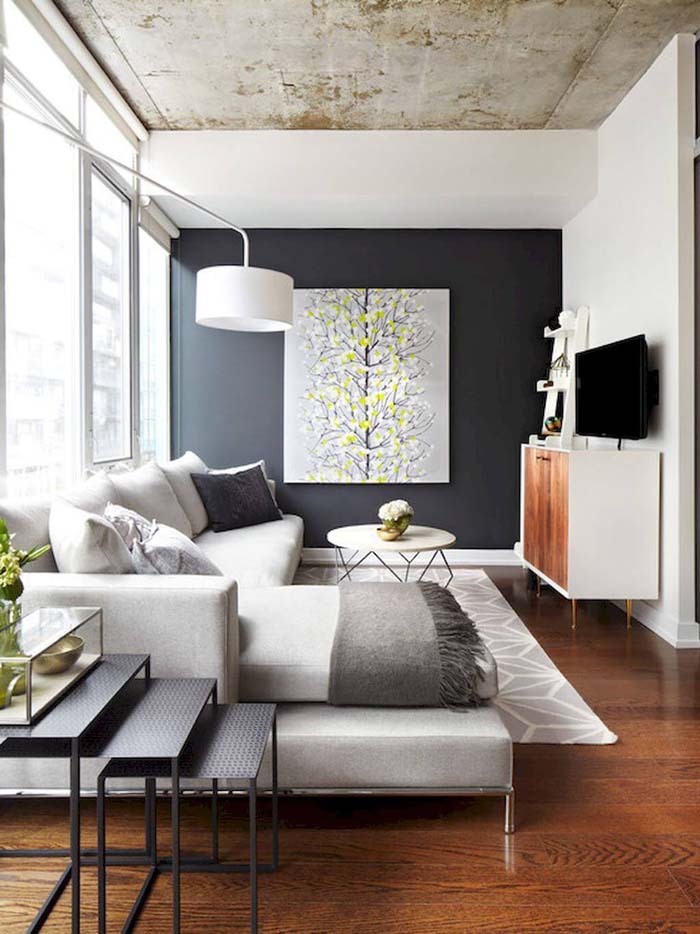
Painting one wall dark in a small room sounds like a mistake, and it isn’t. A charcoal or deep olive wall behind the sofa recedes visually, which makes the room read deeper rather than tighter. The corners blur, the edges soften, and suddenly there’s no clear stopping point for the eye.
Choose the wall without a window so you’re not fighting daylight, and go matte to avoid glare. Keep the other three walls pale.
Evenings are when it really pays off. Lamp light pools against that dark surface and the whole room turns into something closer to a den than a living room.
12. Show Off Your Treasures with Floating Shelves
Floating shelves give you display space without the footprint of a bookcase, which matters when the floor is already full. Two or three staggered boards on one wall hold more than you’d think, and the open air underneath keeps things from feeling heavy.
Group items in odd numbers, leave real gaps between them, and mix heights. Pottery, a stack of books lying flat, one trailing plant. Small edible plants work here too, and a few people use these shelves for space-saving carrot growing tricks when there’s no garden to work with.
Rearranging them on a slow weekend costs nothing and changes the whole wall.
13. Functional Mini Living Room Design with Strategic Lighting
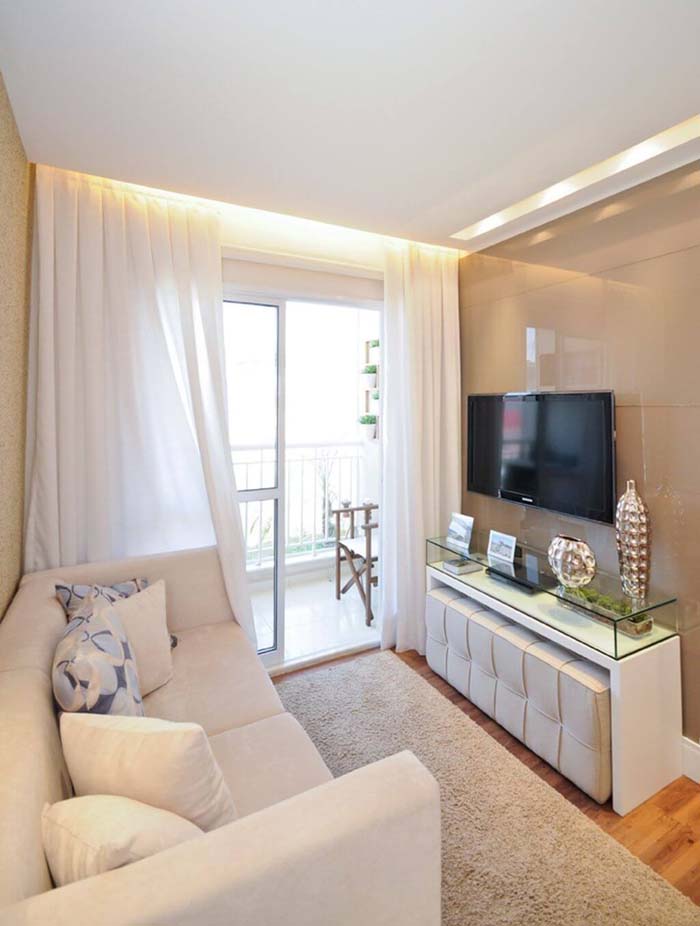
One ceiling fixture doing all the work is what makes a tiny room feel flat. Layer instead. A floor lamp beside the sofa, a small table lamp on the console, and something low like a candle cluster or picture light near the wall. Three sources at three heights create shadow and depth, and depth is what tricks the eye into reading more space.
Put the brightest layer where you actually do things, whether that’s reading, folding laundry, or scrolling at night.
Dimmers help more than most people expect, since the same room can go from bright and functional at ten in the morning to soft and quiet by nine at night.
14. Cozy Farmhouse Design for Small Living Room
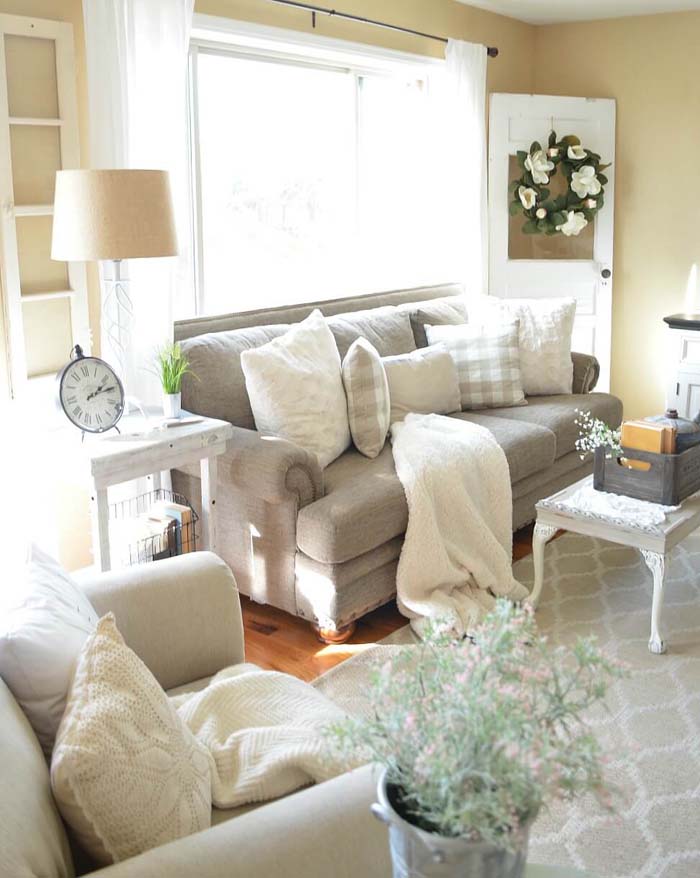
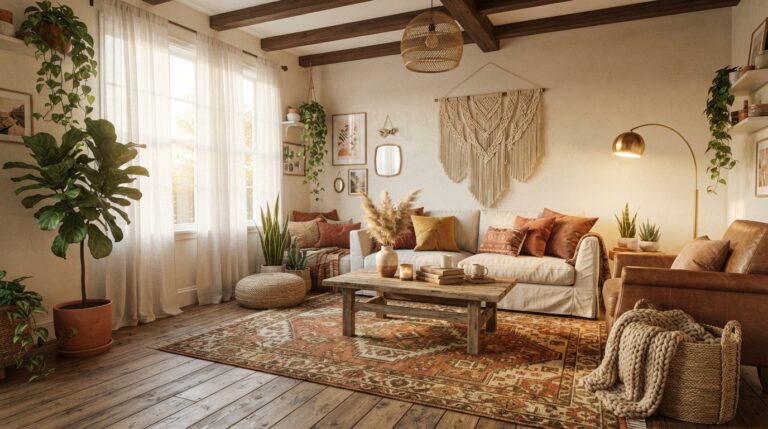
Cozy farmhouse in a small space works best when the textures pile up and the palette stays calm. Warm whites, soft creams, aged wood, and a lot of natural fiber. Jute rug underfoot, cotton slipcover, wool throw over the arm.
Skip the heavy furniture and lean on soft goods to carry the style instead. Bulky pieces eat a small room alive, while a linen curtain and a chunky knit blanket give you the same feeling for a fraction of the visual weight.
There’s a certain satisfaction in a room where everything feels soft to the touch, right down to the basket by the door.
15. Take Advantage of Small Tables to Create More Space
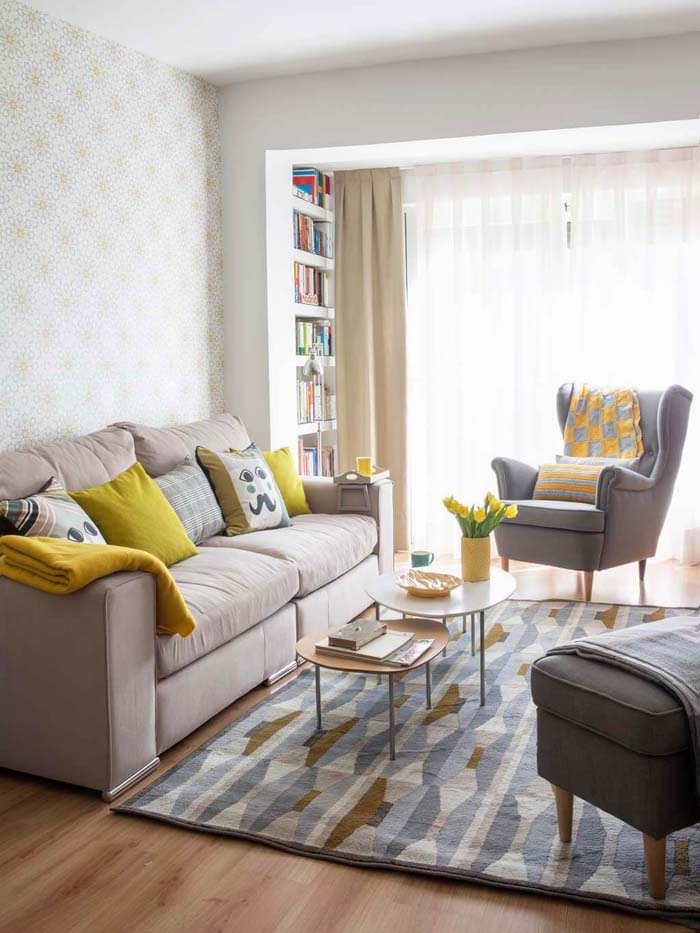
Two or three small tables beat one big coffee table in a tight room, mainly because they move. Nest a pair of side tables together for everyday use, then pull them apart when people come over so everyone has somewhere to set a glass down.
Look for pieces with open bases and slim legs. A round wood pedestal, a metal C-table that slides under the sofa, a stump stool doing double duty as a seat. The lighter the frame looks, the less it crowds the floor.
Sliding a table into place right before guests arrive takes about four seconds, and the room adapts instead of staying stuck.
16. Decorate with a Textured Brick Wall
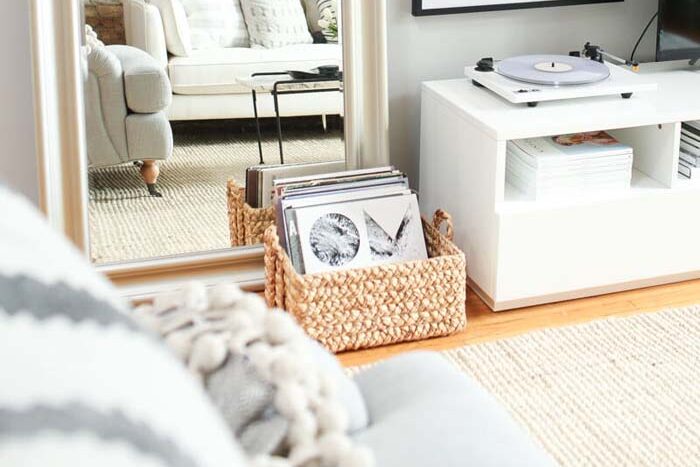
Exposed brick gives a small living room instant character, and if there’s real brick hiding under drywall, uncovering it is worth the mess. No paint color comes close to that mix of red, rust, and mortar gray sitting in the same wall.
For anyone without the real thing, thin brick veneer or German schmear over a slim panel gets remarkably close. Whitewashing it lightly keeps the room bright while the texture still shows through the paint.
Brick reads warm because it looks handmade, and that slight irregularity is exactly why it never feels sterile.
Guests reach out and touch it almost every time, which says more than any before-and-after photo could.
17. Unify Living Room and Kitchen with a Partial Wall
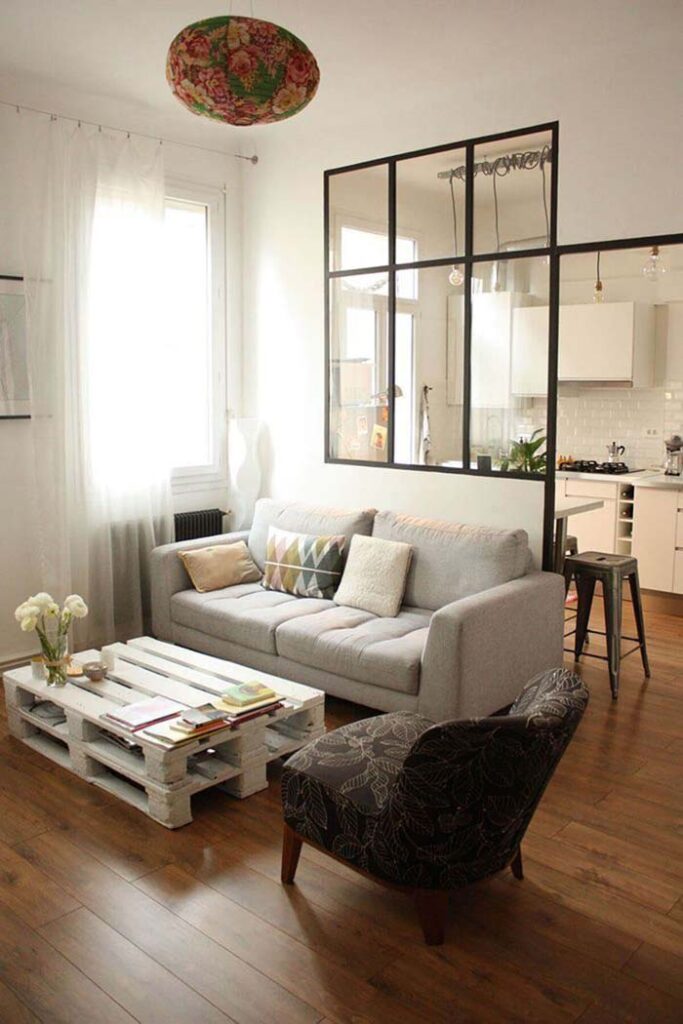
A partial wall between the living room and kitchen splits the space without closing it off. Half height is usually enough, either a knee wall with a wood cap or an open frame with a couple of posts. The eye travels straight through, so both rooms borrow light and square footage from each other.
Cap it with the same wood tone used elsewhere for continuity, and use the top as a landing spot for drinks or serving dishes.
Cooking dinner while still hearing the conversation on the sofa is the real reward here, and nobody feels stuck alone in the kitchen.
18. Maximize Living Space with Multifunctional TV Wall Unit
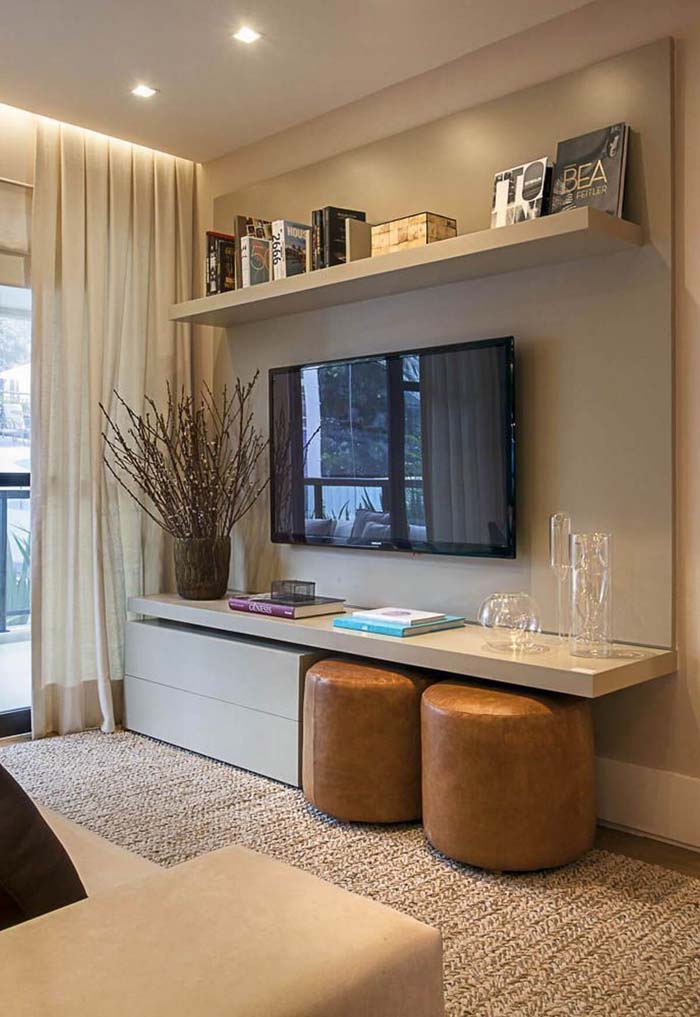
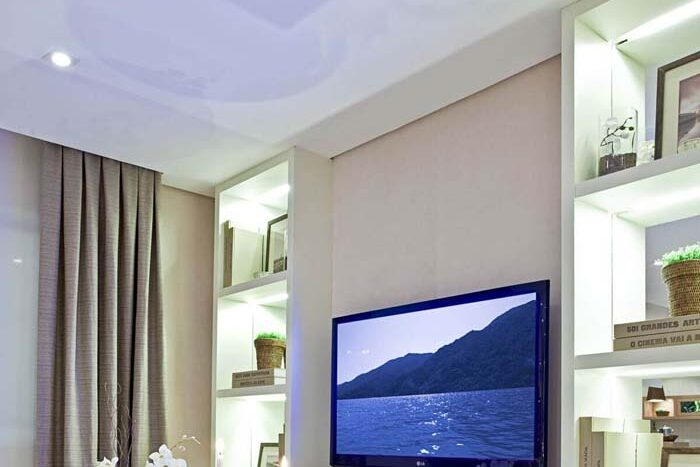
A wall-mounted unit does what a media console can’t, which is get the screen off the floor and put storage in the same footprint. Closed cabinets below hide remotes, cables, and the pile of stuff nobody wants on display. Open cubbies above hold books or a couple of baskets.
Mount the screen at seated eye level rather than high on the wall, then run the cords inside the unit so nothing dangles. A single wood shelf beneath the TV softens all the black rectangle energy.
The floor stays clear, vacuuming takes half the time, and the wall handles three jobs at once instead of one.
19. Bring Color with a White Sofa and Bright Accents

A white sofa is basically a blank canvas, which is exactly why bright accents land so hard against it. Mustard cushions, a terracotta throw, a teal ottoman. None of it competes, because the sofa gives every color room to breathe.
Performance fabric or a washable slipcover makes the whole idea practical instead of stressful. Spills happen, and a cover that goes in the machine turns a white sofa from a risk into a reasonable choice.
Swap the accents seasonally and the room resets for free. Warm rust and amber through the cold months, then something cooler and lighter once spring rolls around.
20. Furniture Selection and Lighting for Small Living Rooms
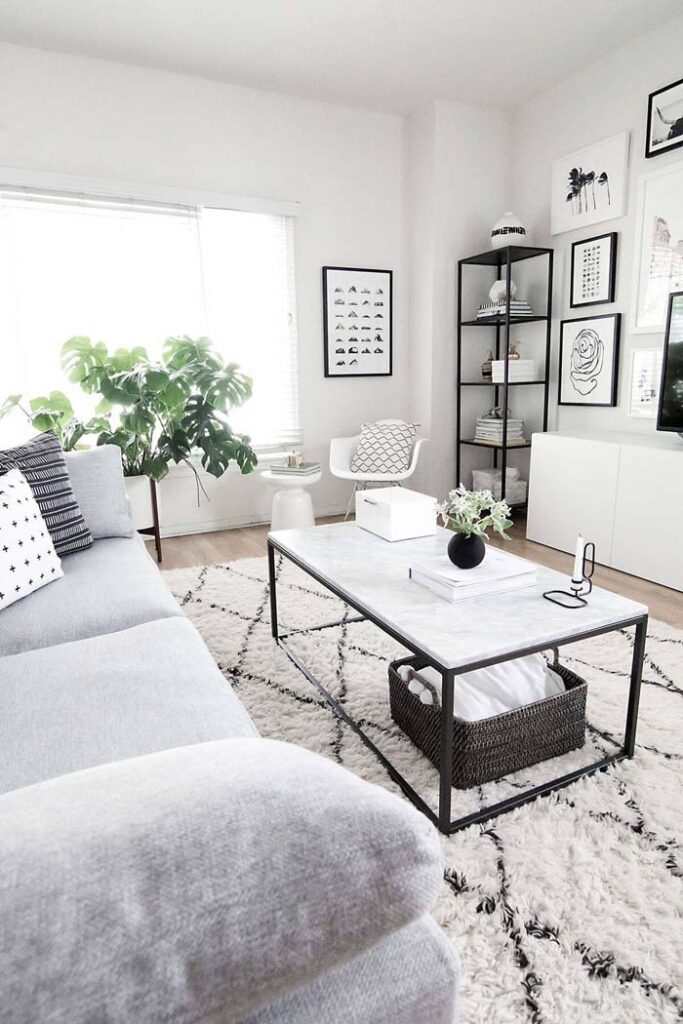
Everything comes back to two decisions in a small room, which is what you sit on and how you light it. Choose furniture with raised legs, low backs, and no unnecessary bulk, then keep the pieces proportional to the space rather than the wishlist.
Lighting handles the rest. Wall sconces free up table surfaces, plug-in versions skip the wiring entirely, and warm bulbs around 2700K keep the mood right in the evening.
Get those two things sorted and the room works whether it’s a Tuesday night alone or a Saturday with six people squeezed in. Nothing else has to be perfect.
Frequently Asked Questions
How do I make a small living room look bigger without knocking down walls?
Three moves do most of the work. Hang curtains near the ceiling instead of the window frame, choose furniture with visible legs so light passes underneath, and add a mirror on the wall opposite your main window. Keeping the floor as clear as possible matters more than anything you put on the walls, because open pathways are what the eye reads as space.
What colors work best in a small living room?
Warm neutrals give you the most flexibility. Soft white, greige, oatmeal, and pale gray all bounce light around without feeling clinical. Dark colors still work, just limit them to one accent wall or smaller pieces like frames and lamp bases. The real trick is keeping the palette tight, because three or four colors total looks calm while eight looks cluttered.
Can I use a large sectional in a small living room?
Yes, and it often works better than several smaller pieces. One sectional means fewer legs, fewer gaps, and less visual chopping up of the room. Measure carefully first, leave around thirty inches for walkways, and look for a low-back design with slim arms so it doesn’t swallow the space.
How high should I hang wall décor above a sofa?
Aim for six to eight inches above the back of the sofa, with the center of the piece landing around fifty-seven inches from the floor. Anything higher starts to float and disconnects from the furniture. Your artwork or arrangement should also span roughly two-thirds of the sofa width for the proportions to feel right.
What’s the cheapest way to update a living room?
Cushions, throws, and lighting. New pillow covers cost a fraction of new furniture and change the mood instantly. Swapping harsh overhead light for two or three lamps at different heights makes an even bigger difference. Rearranging what you already own is free, and it usually reveals a better layout than the one you settled on originally.
Do I need a rug in a small living room?
A rug helps more than it hurts, as long as it’s large enough. Too-small rugs make a room feel chopped up, so choose one wide enough that the front legs of your sofa and chairs sit on it. Low pile in a light or neutral tone keeps things visually quiet while still defining the seating area.
How many plants are too many for a small space?
There’s no fixed number, but vary the heights and avoid lining them up in a row. One tall floor plant, one or two on shelves, and something small on a side table usually hits the right balance. If you’re squeezing past leaves to reach the sofa, that’s your signal to relocate one.
What lighting temperature should I use in a living room?
Warm white around 2700K to 3000K suits living rooms best, since it feels relaxed rather than clinical. Save cooler daylight bulbs for kitchens and workspaces. Dimmable options are worth the small extra cost, because the same room needs bright light in the afternoon and something much softer at night.
Conclusion
Small living rooms don’t need more square footage, they need better decisions. Almost everything on this list comes down to the same few principles: lift the eye upward, keep the floor clear, layer the light, and let one confident piece carry the room instead of a dozen small ones fighting for attention.
Start with whatever bothers you most. If the room feels dark, move the curtain rod up and add a second lamp. If it feels cramped, pull the furniture off the walls and swap the rectangular coffee table for a round one. If it feels flat, paint one wall deep and see what happens after sunset.
None of this has to happen in a single weekend. Rooms that feel genuinely lived in usually come together slowly, one repurposed table or thrifted mirror at a time, and that gradual layering is exactly what gives a space character.
The best small living room isn’t the one that photographs well. It’s the one where six people somehow fit on a Saturday night and nobody notices the size.