20 Cozy Cottage Bedroom Ideas That Feel Warm and Inviting
Some bedrooms just feel good the second you walk in. The light lands softly, the bed looks like it’s asking you to sit down, and the whole room seems to slow your breathing without trying. That feeling rarely comes from expensive furniture. It usually comes from small, smart choices layered over time.
Cozy cottage bedrooms have quietly taken over Pinterest boards for a reason. They mix soft textures, warm color, and a little bit of old-house charm, and they work just as well in a rented apartment as they do in a 1920s farmhouse. Think chunky knit throws, painted beadboard, sheer curtains that move with the breeze, and one dark wall that makes the bedding glow.
The 20 ideas below cover everything from wallpaper and window treatments to lighting tricks and blanket layering. Some are weekend projects. Others take twenty minutes and a trip to the linen closet.
Pick the ones that match your space, and the room will start feeling like the best spot in the house.
1. Play with Symmetry
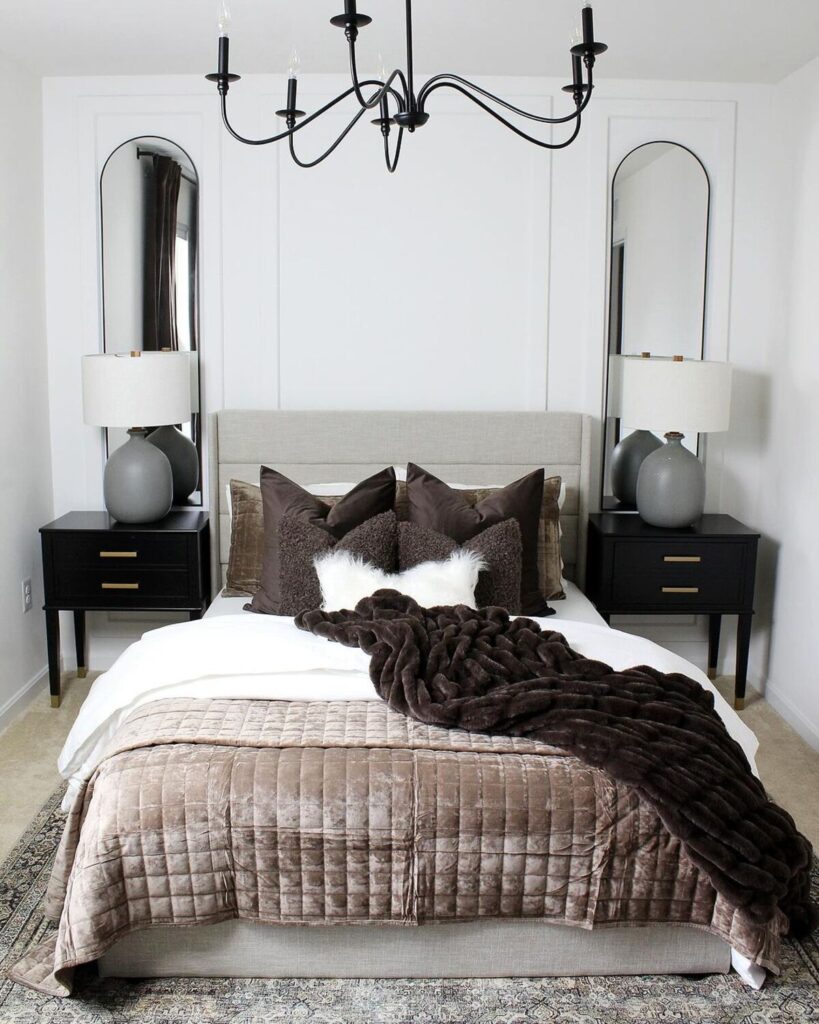
Two matching nightstands, two little lamps, two pillows stacked the same way on each side. Nothing fancy, but the room instantly looks pulled together, and that’s the whole point of symmetry in a small cottage bedroom.
Balanced pairs give the eye a place to rest, which is why hotel rooms almost always use them. In a cottage setting, keep it soft instead of stiff. Aged brass lamps, a pair of vintage wooden stools instead of proper nightstands, or two small oil paintings hung at the same height above the bed. The slight mismatch in wood tones or lampshade wear keeps it from feeling like a showroom. It’s the kind of setup where you stop noticing the clutter because your eye finally has somewhere to land.
Proof that small choices carry the biggest weight.
💡 Pro Tip: Center the bed on the wall first, then measure out from the middle so both nightstands sit an equal 2 to 3 inches from the bed frame. Uneven gaps are what make symmetry read as sloppy instead of calm.
2. Apply Wallpaper
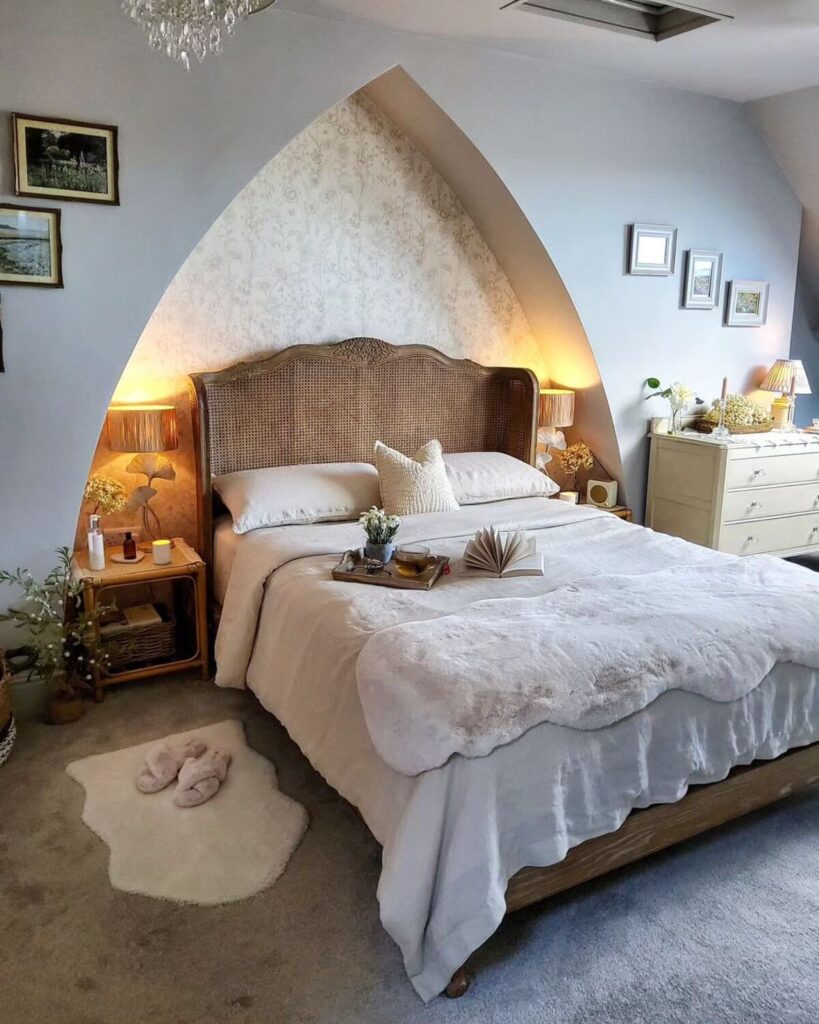
There’s a moment right after the first strip goes up where the whole room changes character. Bare drywall becomes a room with an opinion. Small florals, faded stripes, or a soft botanical print pull cottage style together faster than any other single change.
The reason it works so well in bedrooms is scale. You spend most of your time lying down, looking at walls from a low angle, so pattern gets noticed instead of ignored. Peel-and-stick versions handle rentals fine, and a single accent wall behind the headboard gives you the effect without committing the entire room. Ditsy prints in muted tones read cozy, while big bold patterns can start to feel loud in a space meant for sleeping.
Suddenly the bed looks intentional, like it was chosen for that wall specifically.
3. Warm Up Your Room
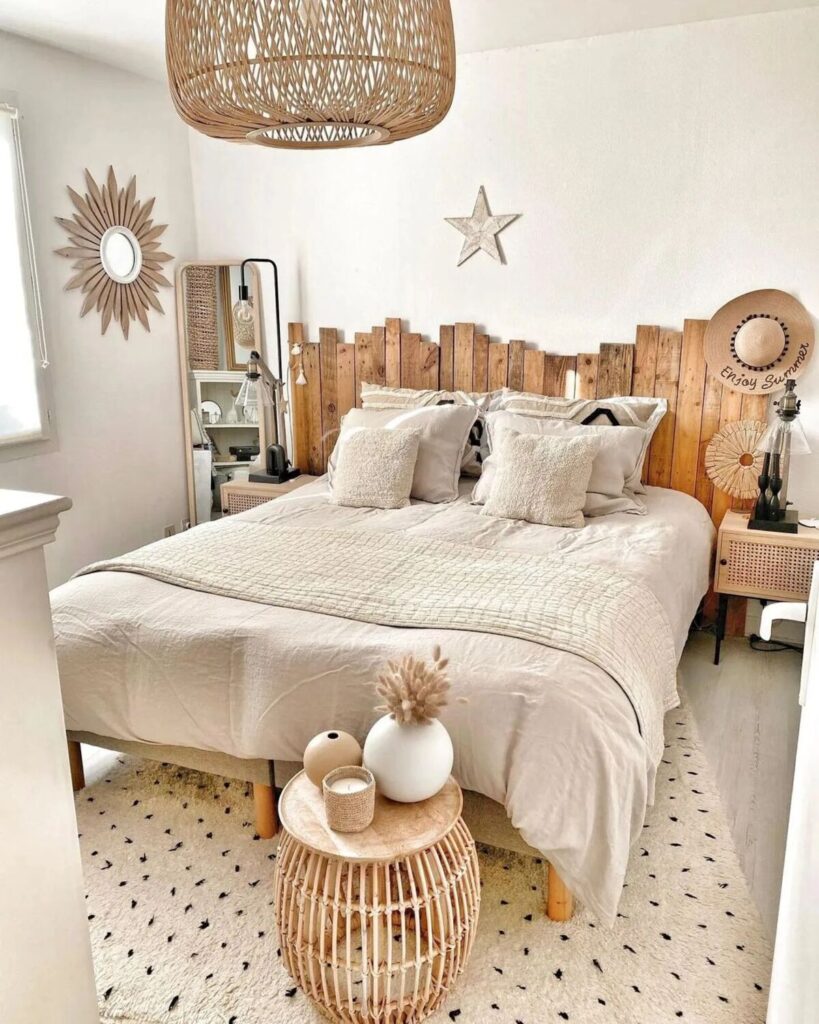
Cold rooms aren’t always about temperature. A bedroom can be perfectly heated and still feel chilly if everything in it is white, gray, and smooth.
Warmth comes from color temperature and texture working together. Swap cool-toned bulbs for something in the 2700K range, add a wool rug that your feet actually want to touch, and bring in one or two things made of real wood with visible grain. Cream and oatmeal instead of stark white. Terracotta, honey, or dusty rose in the pillows. These tones bounce light differently than gray does, which is why the same room can feel ten degrees warmer without touching the thermostat.
Getting out of bed on a January morning stops feeling like punishment.
4. Utilize Neutral Patterns
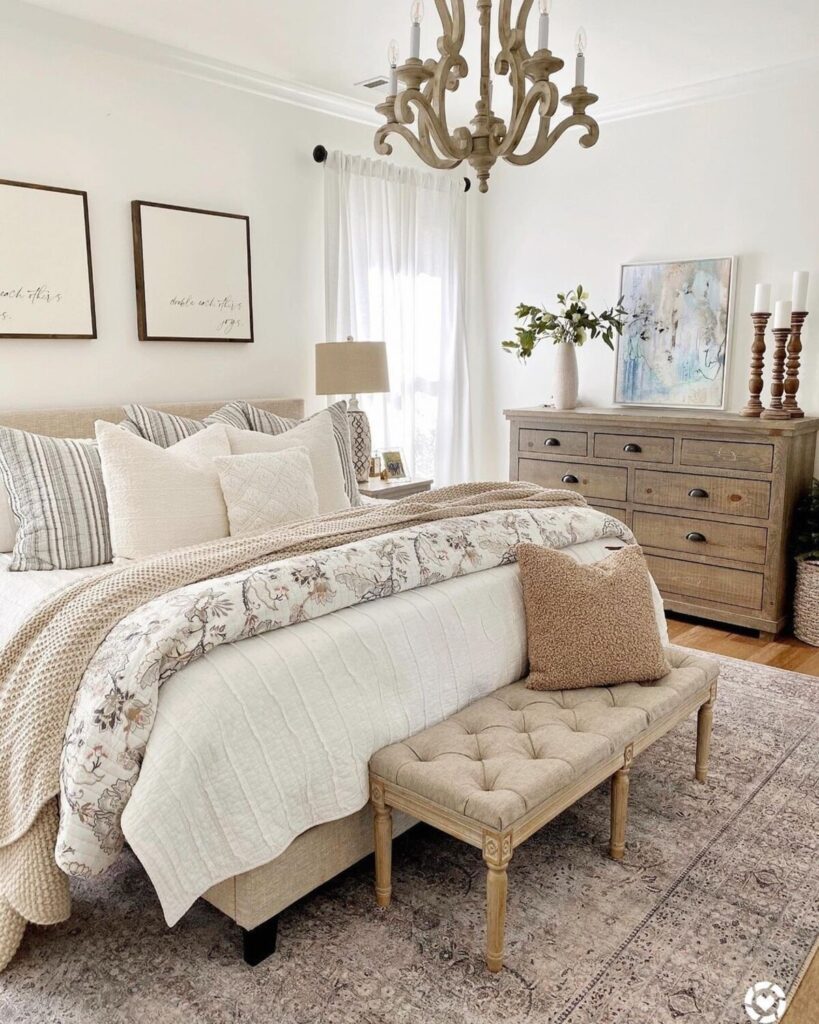
Pattern doesn’t have to shout. Ticking stripe, small gingham, faded toile in beige and cream, subtle waffle weave on a coverlet. All pattern, zero noise.
This is the trick for anyone who loves a calm room but finds pure solids a little flat. Neutral patterns give the eye something to notice without adding color chaos, so the room stays restful while still looking layered and considered. A tan checked pillow next to a linen duvet reads richer than two plain pillows ever will. Keep the scale varied, one small print and one slightly larger, and let the tones stay within a few shades of each other so nothing fights for attention.
The result feels quiet in the best way, like the room is already exhaling before you do.
📌 Suggestion: Try mixing three neutral patterns at different scales, a tiny stripe on the sheets, a medium check on the pillows, and a chunky woven texture on the throw. Same color family, different rhythm, and the bed instantly looks styled without a single bright accent.
5. Try a Modern Aesthetic
@housetipster
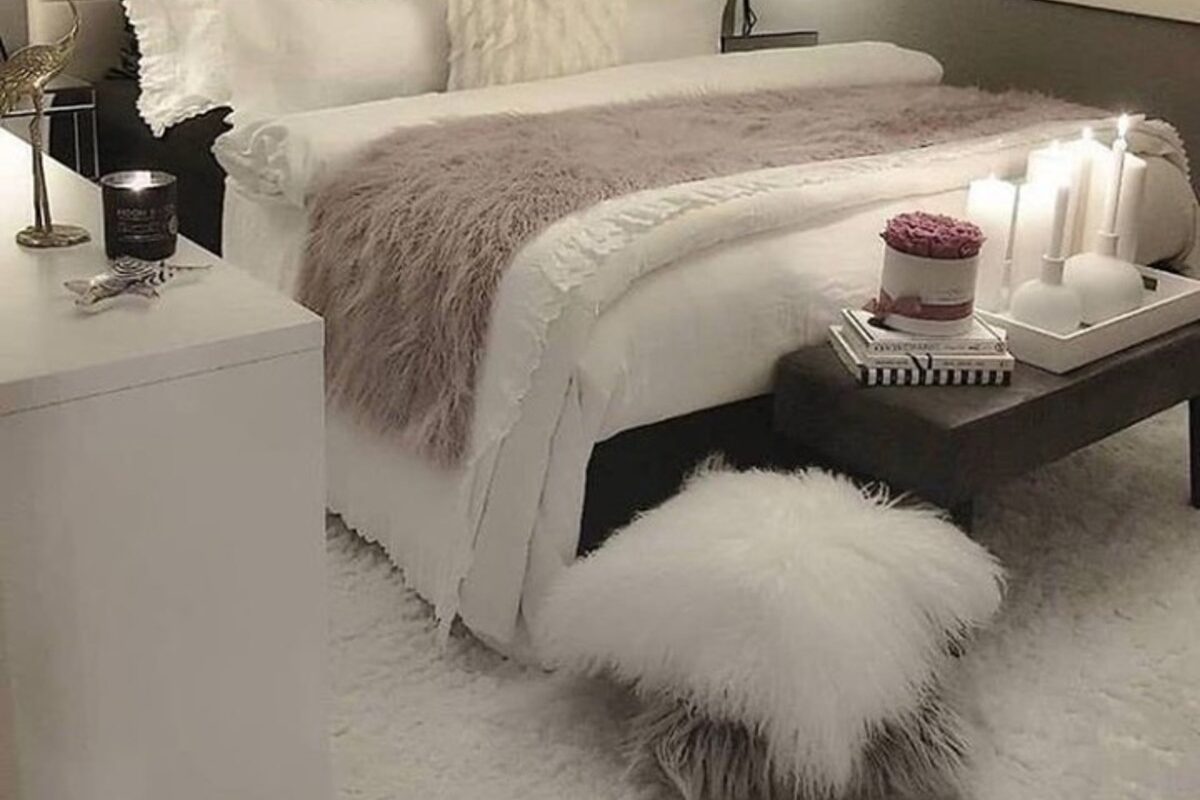
Cottage doesn’t have to mean ruffles and rooster prints. Some of the best versions right now lean clean, with straight lines, plain walls, and just enough softness to keep it from feeling like an office.
The mix works because modern shapes give cottage textures room to breathe. A simple platform bed in pale oak, a flat-front dresser, one long linen curtain panel instead of layers. Then you add the cottage part back in through material, not shape. Nubby throws, a stoneware lamp base, unpainted wood. The contrast is what makes it feel current instead of costume-like, and it photographs beautifully because nothing competes.
People who say they don’t like cottage style usually just haven’t seen this version of it.
6. Focus on Accents
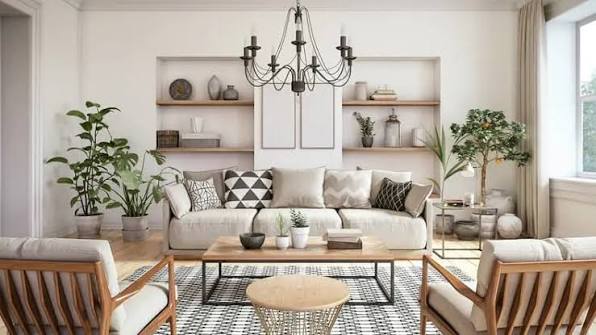
Sometimes the bones of a room are already fine and the only thing missing is a few small things with personality. That’s where accents earn their keep.
Think of them as the punctuation in a sentence. A ceramic vase with dried eucalyptus, a small stack of worn books on the nightstand, a hand-thrown bowl holding earrings and hair ties. Each one is minor on its own, but together they signal that somebody actually lives here and made choices. The trick is limiting the count. Three to five well-chosen pieces per surface beats twelve, because clutter reads as noise instead of charm.
Little details end up doing the heavy lifting once the big pieces are settled.
7. Bring the Outdoors In
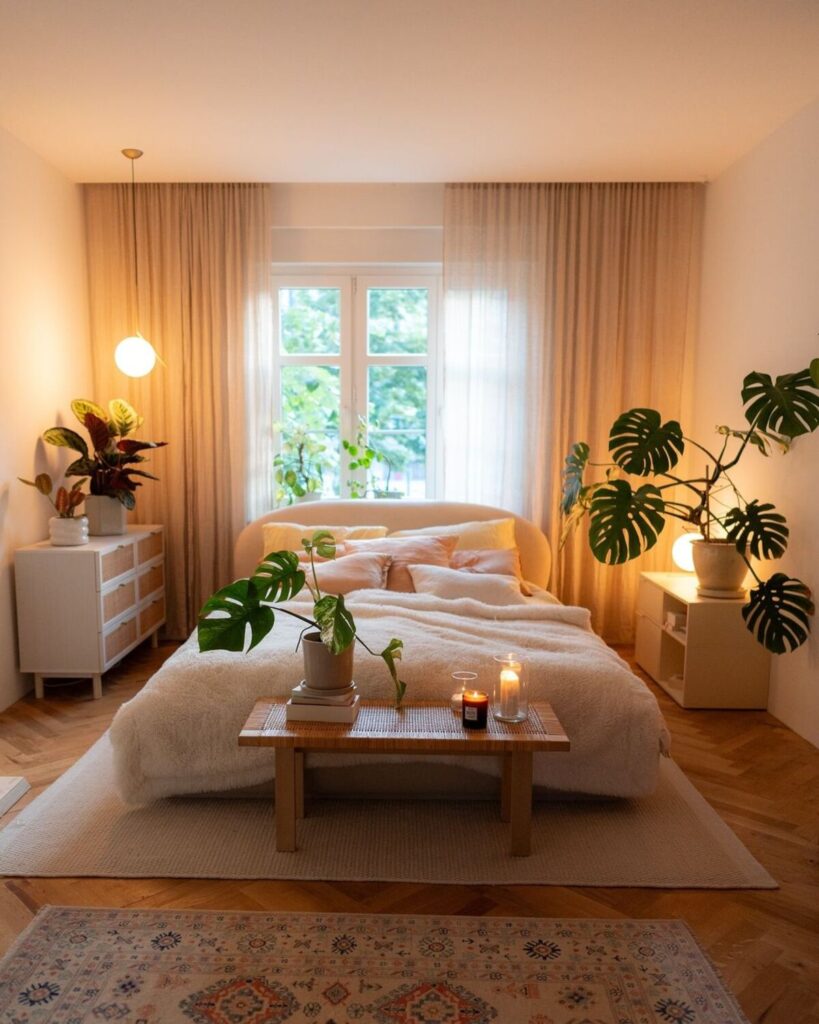
A cottage bedroom without a single living thing in it always feels slightly unfinished. Plants fix that in an afternoon.
Greenery adds the one shape furniture can’t provide, which is something irregular and soft-edged. A trailing pothos on a high shelf, a small fern near the window, branches clipped from the yard sitting in a pitcher. All of it breaks up straight lines and adds that lived-in country feeling instantly. Low-light varieties work best in bedrooms since most sleeping spaces don’t get all-day sun, and dried stems handle the darkest corners without any guilt about watering.
Waking up next to something green changes the mood of the whole morning.
8. Use Double-Duty Furniture
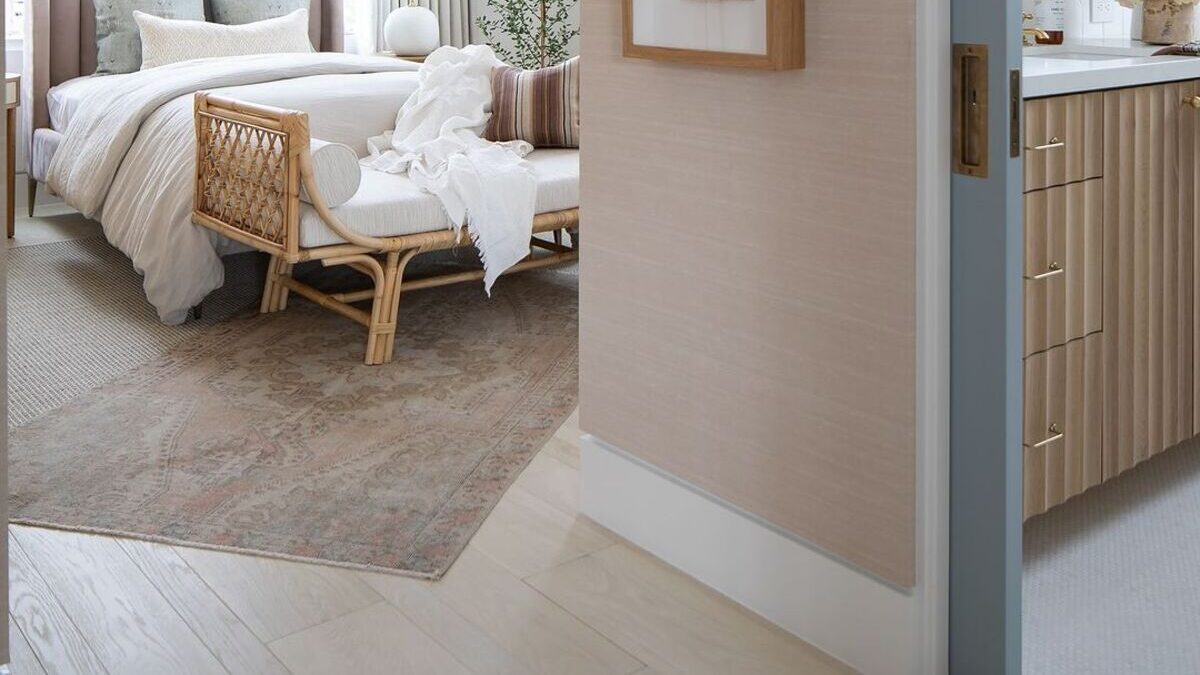
Cottage bedrooms are usually not big. Old houses came with small footprints, and modern apartments aren’t much better, so furniture that only does one job takes up space it hasn’t earned.
A bench at the foot of the bed holds folded quilts inside and gives you somewhere to sit while lacing shoes. A vintage trunk works as a nightstand and stores off-season bedding. Wall-mounted shelves skip the floor entirely. This matters more in cottage style than in other looks because the aesthetic depends on layered textiles, and textiles need somewhere to live. Hidden storage is what keeps a cozy room from turning into a cluttered one.
Every piece pulling double weight means the floor stays clear, and a clear floor is what makes a small room feel generous.
9. Go All Out
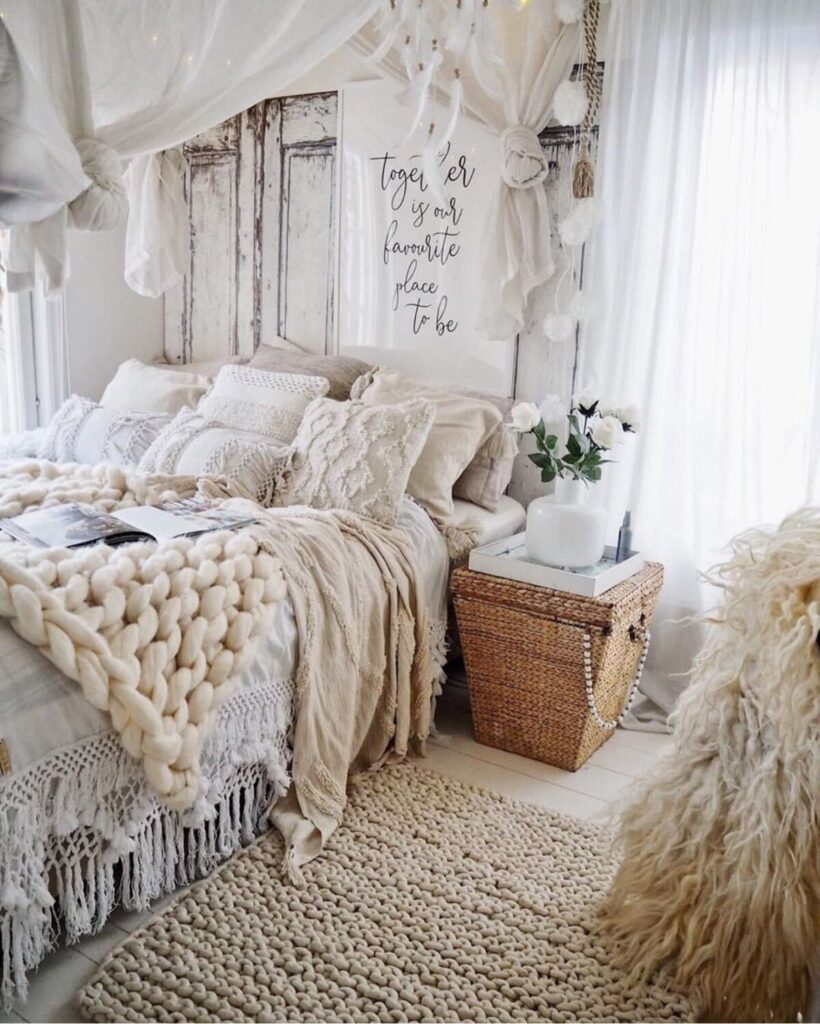
Restraint is great advice right up until you meet someone who doesn’t want it. Maximalist cottage is a real look, and when it’s done with confidence it’s genuinely stunning.
This means floral wallpaper on all four walls, a patterned rug, a quilt that clashes cheerfully with the pillows, framed art stacked from chair rail to ceiling. It works because everything shares a common thread, usually a repeated color or an era, so the eye reads it as collected rather than random. Grandmillennial rooms live here. So do old English cottages that grew one layer at a time across decades.
Walking into a room like that feels like being handed a cup of tea by someone who’s glad you came.
10. Keep It Simple
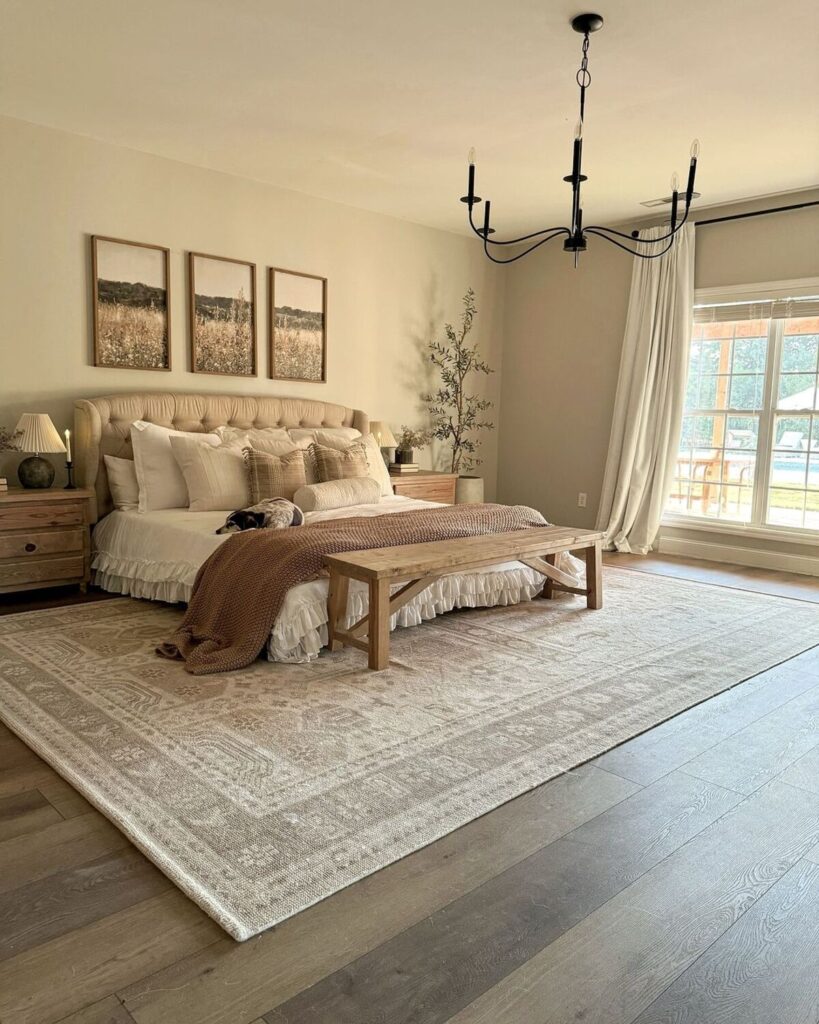
On the other end sits the version with almost nothing in it. White walls, a low wooden bed, one folded quilt, a window with no curtain rings rattling on it.
Simplicity works in cottage bedrooms because the style already carries warmth in its materials. Plaster, linen, aged wood, and wool all have visual softness built in, so you can strip away the extras and the room still won’t feel cold. That’s not true for glass and chrome. Fewer objects also means the light does more of the talking, and morning light across a bare wall is its own kind of decoration.
Some nights you just want a room that asks nothing from you, and this is what that looks like.
11. Consider Lighting
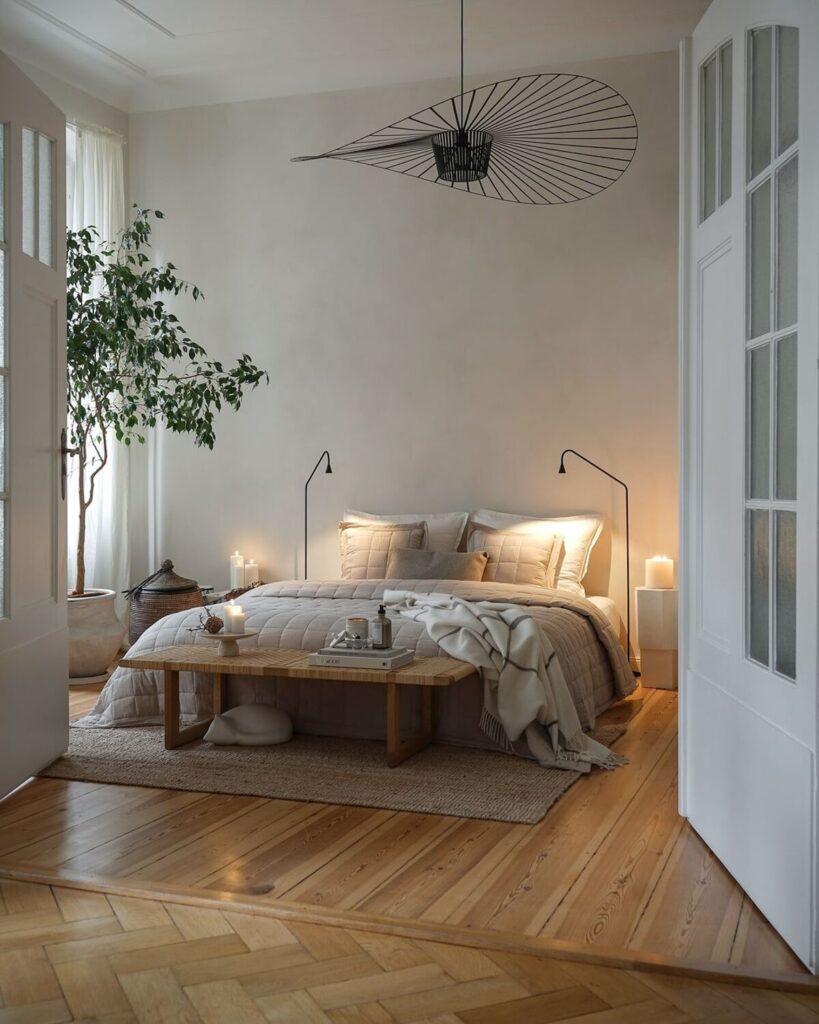
Overhead lights are the fastest way to ruin a cozy bedroom. One bright fixture in the middle of the ceiling flattens everything and puts shadows in all the wrong places.
The fix is spreading light around at different heights. A lamp on each nightstand, a small sconce by the reading chair, maybe a string of warm bulbs along a beam or a picture rail. Three or four low sources beat one strong one every time, because pooled light creates depth and depth is what makes a room feel enveloping. Dimmers help enormously here. So does keeping every bulb in the same warm range, since mixing cool white with soft amber makes a room look accidental.
Flip on two lamps instead of the ceiling light tonight and the difference is immediate.
12. Layer Heavy Blankets
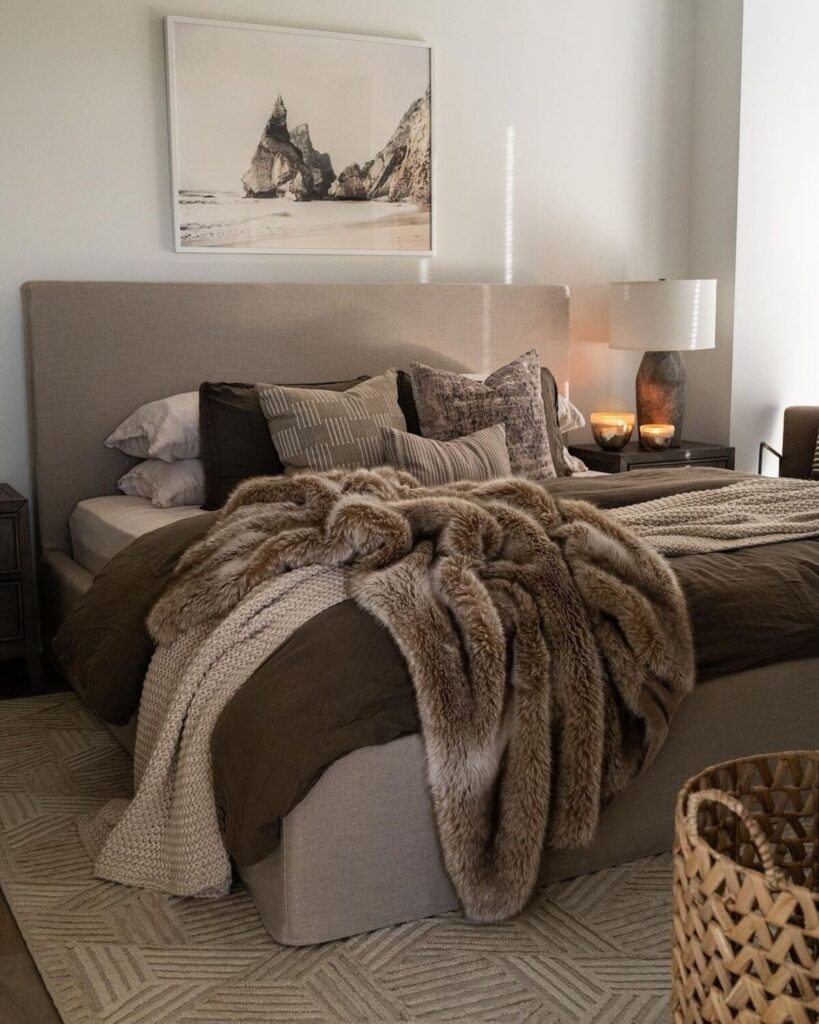
Weight is underrated. A single thin comforter can keep you warm enough and still leave the bed looking unfinished, while two or three substantial layers give it that sunken, inviting shape people notice from the doorway.
Layering does two things at once. Practically, you can peel back a quilt in July and add it again in October without buying new bedding. Visually, the stacked edges create lines across the foot of the bed, and those lines are what make hotel and magazine beds look so deliberate. Try a fitted sheet, a lightweight cotton blanket, a heavier quilt folded in thirds, then a chunky knit throw tossed at an angle. Different weaves reflect light differently, which adds dimension no single duvet can manage.
Half the appeal is that first moment when you pull all of it up to your chin.
📌 Suggestion: Store the heaviest layer inside a bench or trunk at the foot of the bed during warm months. Same room, same look, and swapping seasons takes about four minutes.
13. Use Gray Creatively
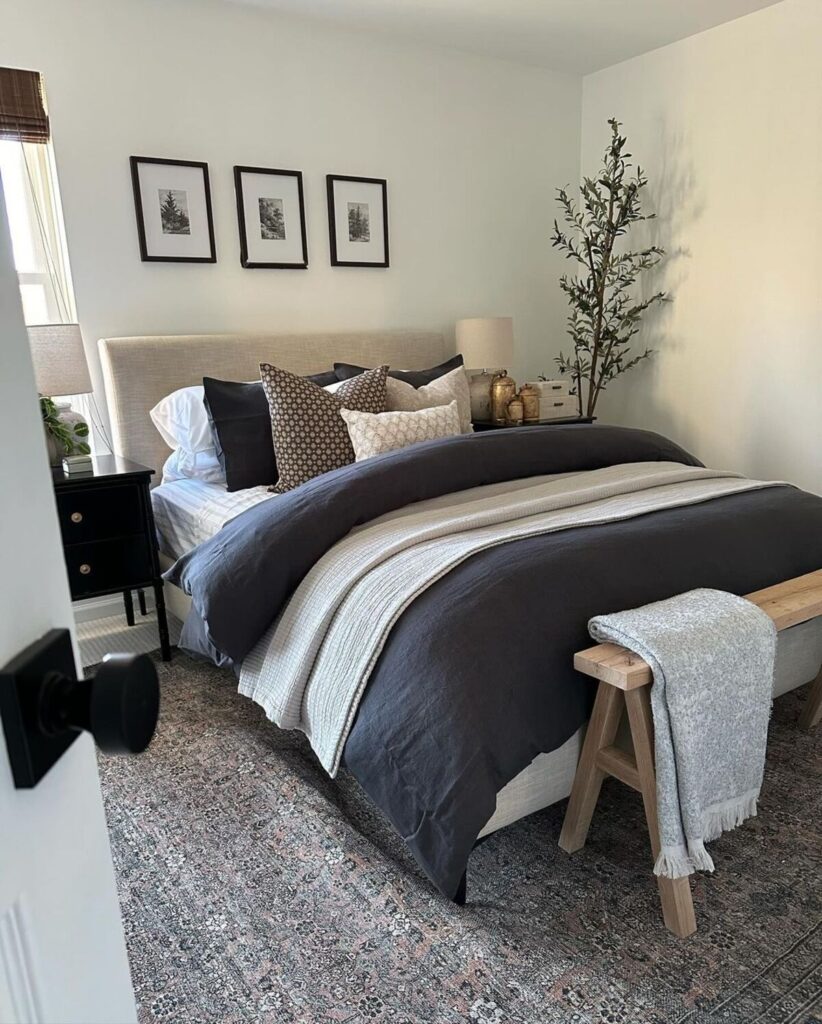
Gray got a bad reputation from a decade of cold, flat renovations. Used properly in a cottage bedroom, it’s one of the most flexible colors there is.
The secret is picking gray with something underneath it. Warm grays carrying a little brown, green, or violet behave completely differently than the blue-based versions that made those old builder rooms feel like waiting areas. Paint a wardrobe soft dove gray against cream walls, or use it on paneling below a chair rail so the top half stays light. Pair it with wood tones and natural linen instead of white and steel, and it starts reading as gentle rather than clinical.
Layer it with texture and gray stops being boring almost immediately.
15. Focus on a Blanket
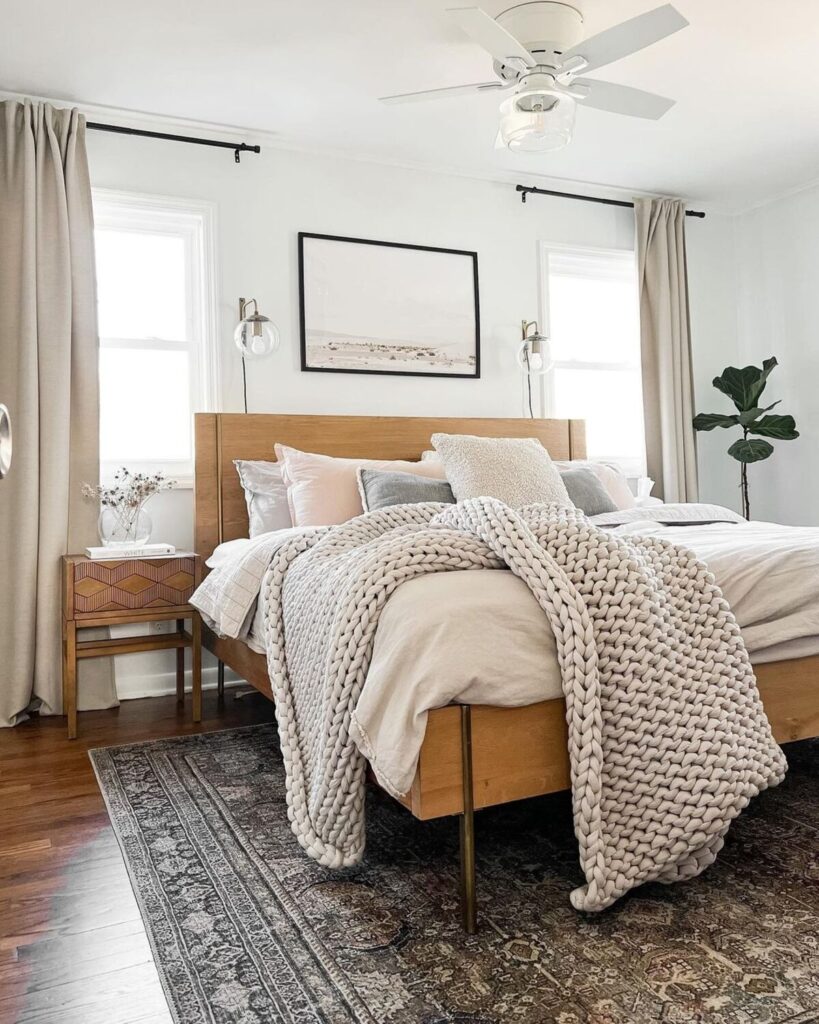
Sometimes one object carries the whole room. Pick a blanket you genuinely love, then build everything else around it.
This works because a blanket is the largest soft surface in a bedroom, so its colors set the tone whether you plan for it or not. An old wedding quilt, a woven wool throw with a striped border, a faded patchwork piece from a flea market. Pull two or three colors out of it for your pillows and lampshade, and the room looks coordinated without any actual planning. It also solves decision fatigue, which is the real reason half-finished bedrooms stay half-finished for years.
16. Mix Patterns and Textures
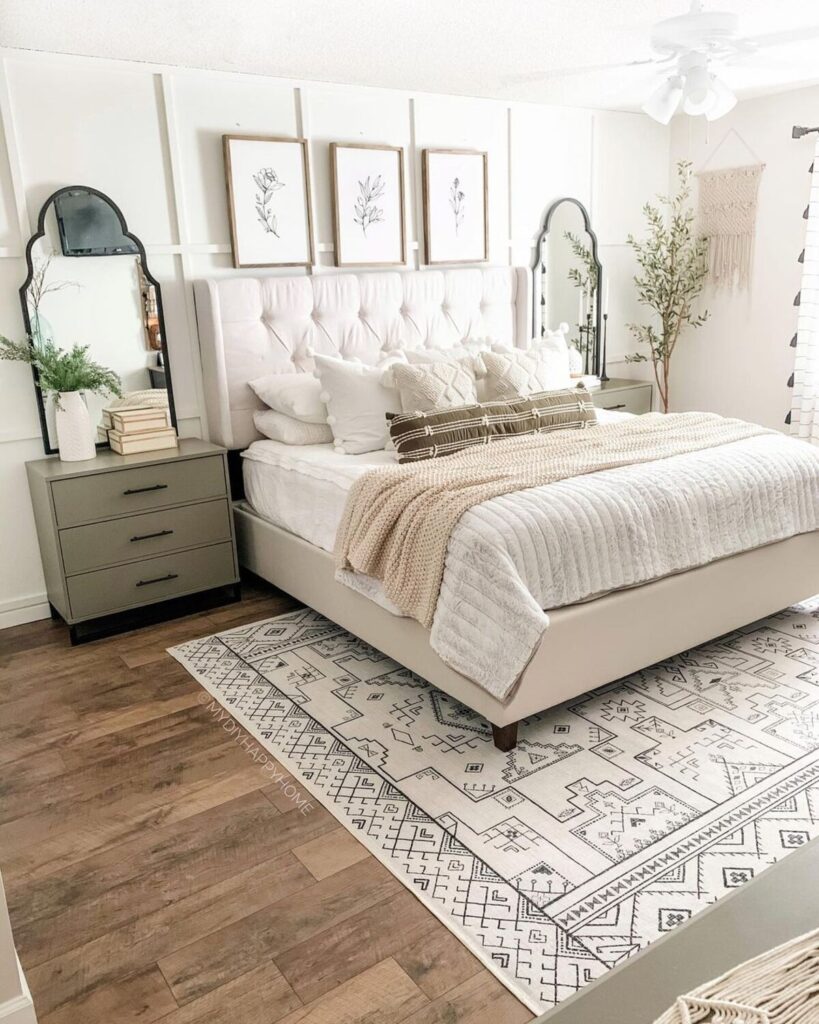
Mixing patterns intimidates people more than it should. There’s a simple rule underneath it, and once you know it the guessing stops.
Vary the scale, keep the palette tight. A large floral, a medium stripe, and a tiny check will sit together happily as long as they share two or three colors. Then add texture so the eye has somewhere to rest between prints. Waffle weave, chunky knit, smooth linen, a jute rug underfoot. Texture reads as neutral even when it’s busy, which is why heavily patterned cottage rooms still feel calm instead of frantic. Solid pieces in between act like breathing room.
Nail this one and the bed starts looking like it belongs in a magazine spread
17. Update Window Treatments
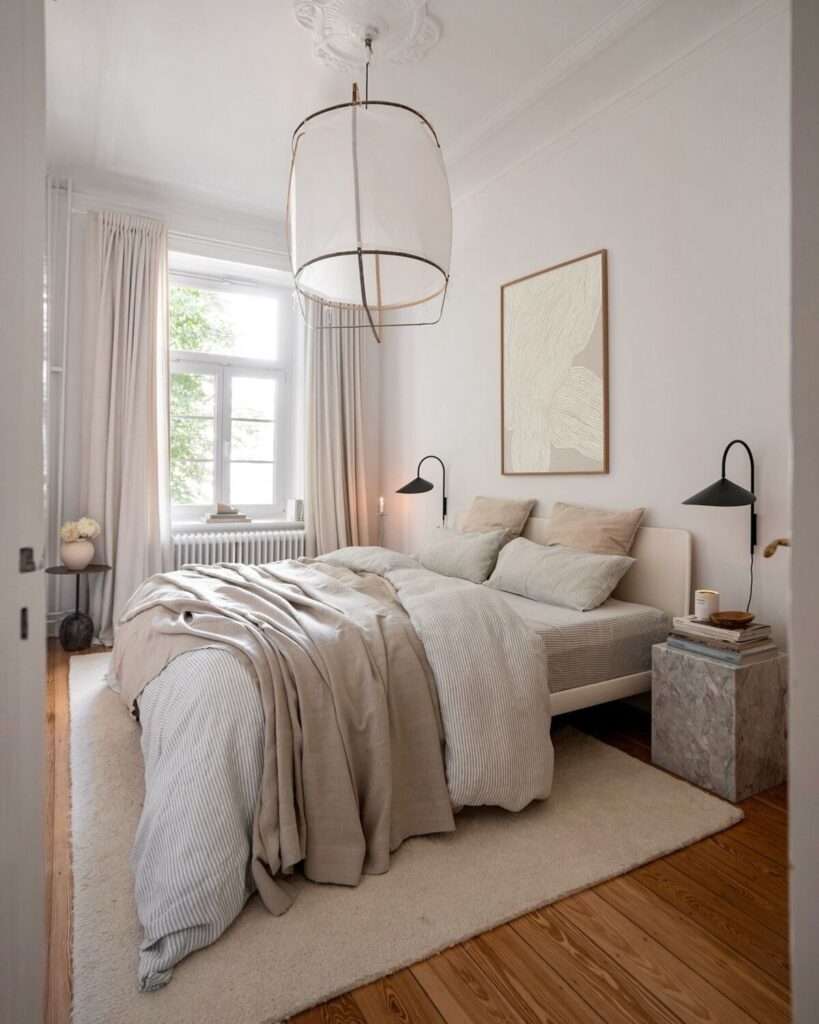
Old vinyl blinds can undo every other good decision in a room. Swapping them is one of those changes that costs little and shifts the entire mood by evening.
Windows control how light enters, which means they control how the room feels at every hour. Unlined linen panels soften harsh afternoon sun into something warm and diffused. A simple Roman shade in a small print adds pattern at eye level without taking floor space. Layering a sheer behind a heavier curtain gives you privacy during the day and darkness at night. Hang the rod a few inches above the frame and let the fabric brush the floor, since short curtains make ceilings look lower than they are.
Morning light coming through fabric instead of plastic slats is a small upgrade that never stops being noticeable.
18. Cozy Up in Style
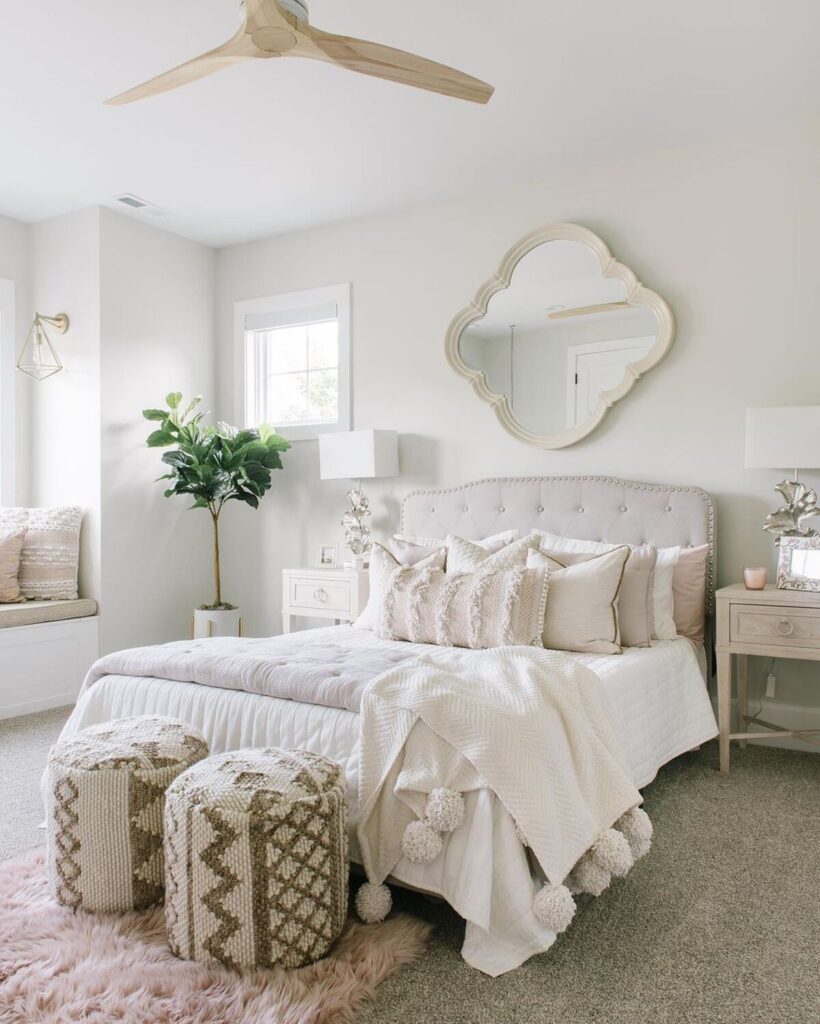
Cozy sometimes gets treated as an excuse to pile things up until the room looks like a laundry basket exploded. It doesn’t have to go that way.
The difference between cozy and messy comes down to intention. Fold the extra throw instead of leaving it in a heap. Keep pillow counts to something you’ll actually move at bedtime, usually four or five. Give the soft things a home, whether that’s a basket in the corner or a bench with a lid. Softness still fills the room, but the edges stay clean enough that your brain reads comfort rather than chaos.
You get the sink-in feeling without that low-grade guilt about tidying up later.
19. Go for a Dark Accent Wall
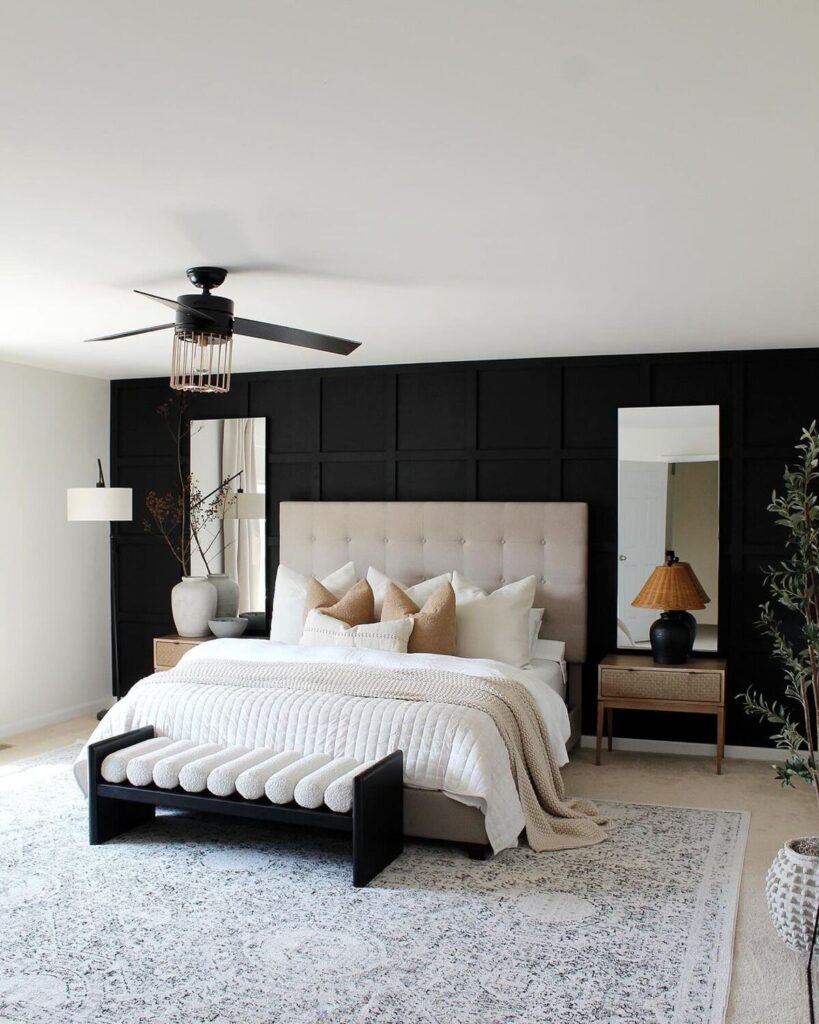
Dark paint in a small bedroom sounds like a mistake until you actually see it done. Then it makes complete sense.
Deep colors absorb light instead of bouncing it, which blurs the corners and makes the walls feel further away rather than closer. Behind the bed, a charcoal, forest green, or muddy navy also works like a backdrop, so pale bedding and light wood practically glow against it. Keep the other three walls soft and neutral so the room doesn’t turn into a cave. Matte or eggshell finishes hide wall imperfections better than anything glossy, which matters in older cottages where nothing is quite flat.
At night with two lamps on, that wall disappears completely and the bed feels like the only thing in the world.
20. Increase Your Knowledge
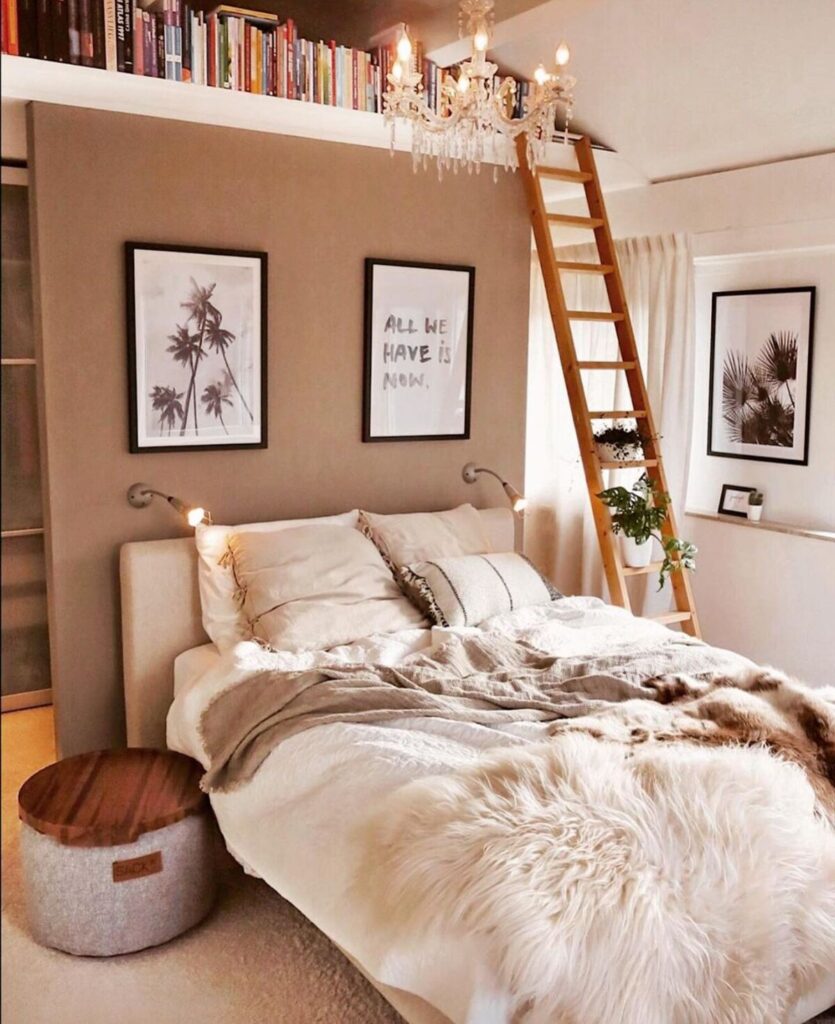
The best cottage bedrooms usually belong to people who spent a while looking before they started buying. That research phase is worth more than any single purchase.
Save the photos that pull you in, then go back and ask why. Nine times out of ten you’ll spot a repeat, maybe you keep choosing rooms with sloped ceilings, or every saved image has the same muted green in it somewhere. That pattern is your actual taste showing itself, and knowing it stops you from hauling home things that looked great in a store and wrong at home. Books on English country houses and old regional farmhouse styles help too, since most modern cottage ideas trace straight back to them.
Once you can name what you like, decorating stops feeling like guesswork and starts feeling like a plan.
💡 Pro Tip: Keep a note on your phone with paint colors, fabric names, and measurements for your room. Being able to check your window width on the spot saves more returns than anything else.
Frequently Asked Questions
What makes a bedroom look cottage style instead of just rustic?
Cottage style leans soft where rustic leans rough. You’ll see painted wood instead of raw beams, small florals instead of animal hides, and lighter colors overall. Rustic rooms celebrate weight and texture, while cottage rooms celebrate comfort and light. The easiest tell is textiles. A cottage bedroom almost always has layered quilts, sheer curtains, and something patterned on the bed. Rustic rooms often skip all three.
Can I get this look in a rental without painting or wallpapering?
Absolutely, and most of these ideas don’t touch the walls at all. Bedding does the heaviest lifting, so start with layered quilts and mixed pillow patterns. Then add peel-and-stick wallpaper on one wall if your lease allows it, swap out any vinyl blinds for curtain panels on a tension rod, and bring in two warm-bulb lamps. Those four changes alone will shift the whole feeling of the room.
What colors work best for a small cottage bedroom?
Warm neutrals give you the most flexibility. Cream, oatmeal, soft putty, and pale sage all keep a small room feeling open while staying far away from that cold builder-white look. If you want depth, put the darker color behind the bed only and leave the rest light. Muted tones with a little brown or green underneath them tend to look better in low light than anything with a blue base.
How many pillows and blankets are too many?
Practically speaking, if you’re moving more than five pillows to get into bed, you’ve crossed the line. Four or five works for most double beds, usually two sleeping pillows, two shams, and one lumbar or accent pillow. Blankets are more forgiving since you can fold them at the foot of the bed. Two or three layers look full without becoming a nightly chore.
Do I need vintage furniture for a cottage bedroom to look authentic?
No, though one older piece helps a lot. A single vintage item, maybe a small dresser, a mirror, or a wooden stool used as a nightstand, gives the room a sense of history that new furniture can’t fake. Everything else can be modern and simple. The mix actually looks more believable than a room where every piece is antique, because real cottages were furnished gradually.
What’s the fastest change with the biggest impact?
Lighting, hands down. Turn off the overhead fixture, put a warm bulb in two lamps at different heights, and the room instantly reads cozier. It takes about ten minutes and costs almost nothing. Second place goes to curtains, since long fabric panels make windows look taller and soften the light coming in during the day.
Conclusion
Cottage bedrooms work because they’re forgiving. There’s no single formula, no required furniture, no rule saying you need original floorboards or a farmhouse in the countryside. A rented apartment with warm bulbs, a good quilt, and one wall of soft floral wallpaper gets you most of the way there.
If you’re not sure where to start, pick the easy wins first. Change your bulbs to something warmer. Swap plastic blinds for fabric. Add a second and third layer to the bed. Those three moves cost very little and change how the room feels the same evening you do them.
Everything else can happen slowly, which is honestly how the best versions of this style come together anyway. Real cottages were never decorated in a weekend. They collected things across years, and that’s exactly why they feel the way they do.