12 Living Room Ideas That Make Any Space Feel Designed
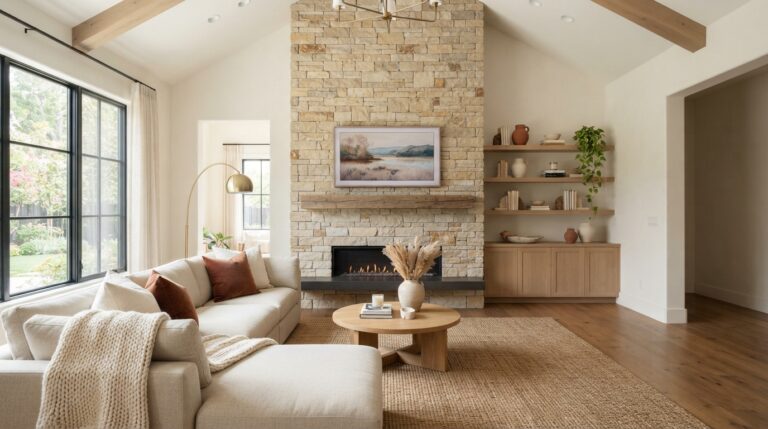
Some living rooms feel finished the second you walk in, and it usually has nothing to do with how much was spent. It comes down to the bones. Exposed beams overhead, floors with real grain running through them, windows left open to the light instead of buried under heavy drapes.
That’s the thread running through every idea ahead. Small architectural moves that make a room feel intentional, whether the space is a wide open great room or a narrow rental living room that has to work harder.
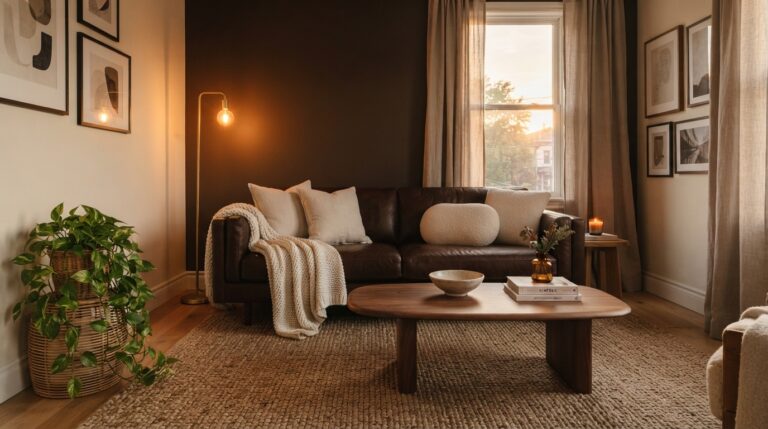
Some of these lean warm and rustic with oak and walnut. Others go quieter with soft blue walls, clean corners, and built-ins that finally give the family photos a home. A few take the bold route, dropping charcoal or deep espresso into an otherwise pale room just to give the eye somewhere to land.
None of it requires knocking down walls. Most of it starts with noticing what a room already has and giving it a little more credit.
Twelve ideas below, each one worth stealing.
1. Bring Definition and Sophistication with Exposed Wood
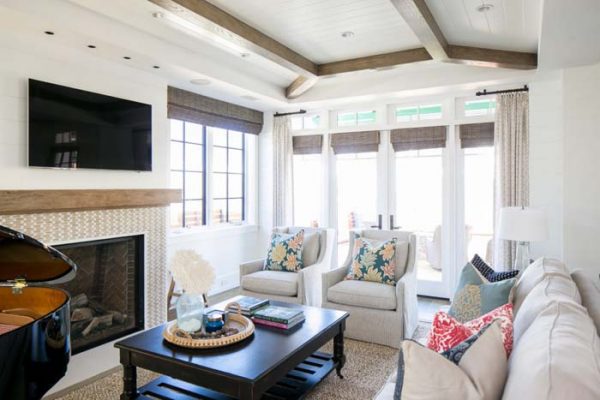
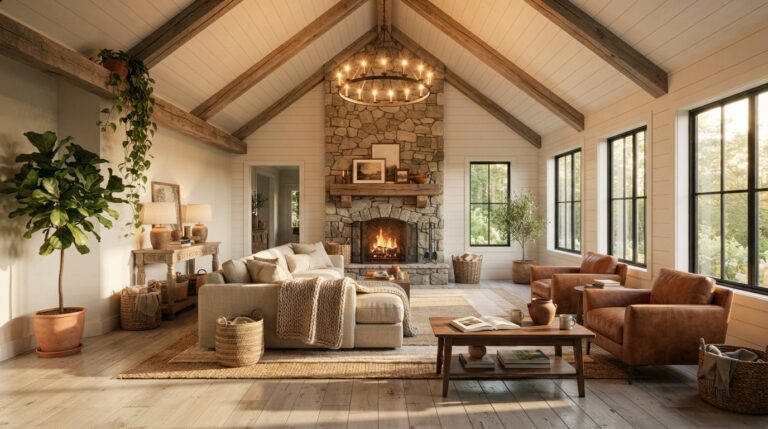
A ceiling with real wood beams running across it changes a room before a single piece of furniture moves in. The eye follows those lines, and suddenly the space has structure instead of just four walls and a light fixture.
Reclaimed oak or rough-sawn pine works best because the imperfections read as history, not decoration. The reason this lands so well is contrast. Warm grain against pale plaster keeps a neutral room from going flat, and the wood picks up whatever light comes through in the late afternoon. It’s the kind of ceiling people quietly look up at when they sit down on the sofa.
One of those setups where every piece earns its place.
2. Create a Cozy Seating Area with Minimal Space

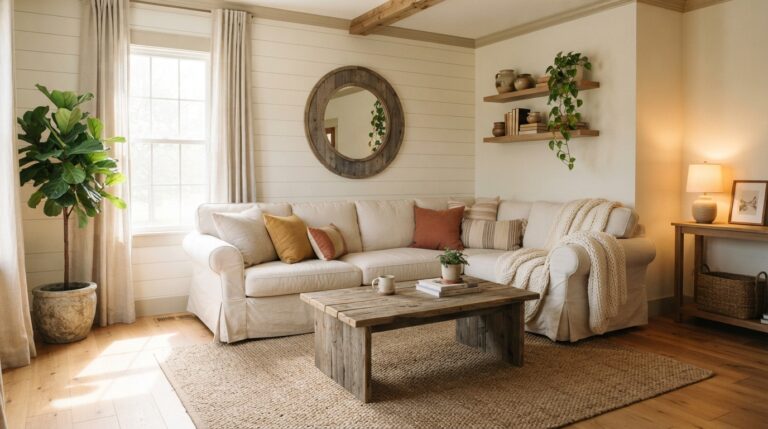
Not every living room has square footage to spare. Sometimes it’s a narrow strip between the front door and the kitchen, and the challenge is fitting real seating without blocking the walkway.
A loveseat pushed to one wall, two slim armchairs angled toward it, and a small round table in the middle is usually enough. Round matters here, because there are no sharp corners catching your hip when you squeeze past. Angling the chairs instead of squaring them off does something subtle too. It signals conversation, so the group feels intentional rather than crammed.
Add a low pile rug underneath to pull the pieces together, and the corner reads as its own room.
💡 Pro Tip: Measure the walkway before you buy anything. You want at least 30 inches of clear path around the seating, otherwise the room feels tight no matter how well the furniture is arranged.
3. Add Architectural Interest to Your Ceiling
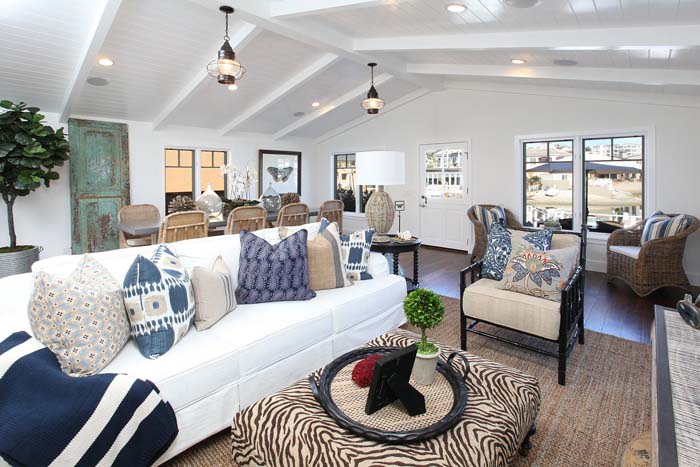
Most people decorate three walls, hang something above the sofa, and never look up. A ceiling left blank is a lot of surface doing nothing.
Coffered panels are the classic fix, but a simple grid of applied molding gets you most of the way there for a fraction of the effort. Planked boards work too, especially painted the same shade as the trim so the texture shows up only when light hits it sideways.
What makes this work is depth. Even half an inch of shadow line tricks the eye into reading the ceiling as built rather than plastered, and the whole room feels taller because of it.
Look up once and the room reads differently.
✨ Suggestion: Paint the ceiling detail a half shade lighter than your walls. The molding stays visible without chopping the room into sections, which matters a lot in spaces under nine feet.
4. Create a Focal Point with Darker Furniture
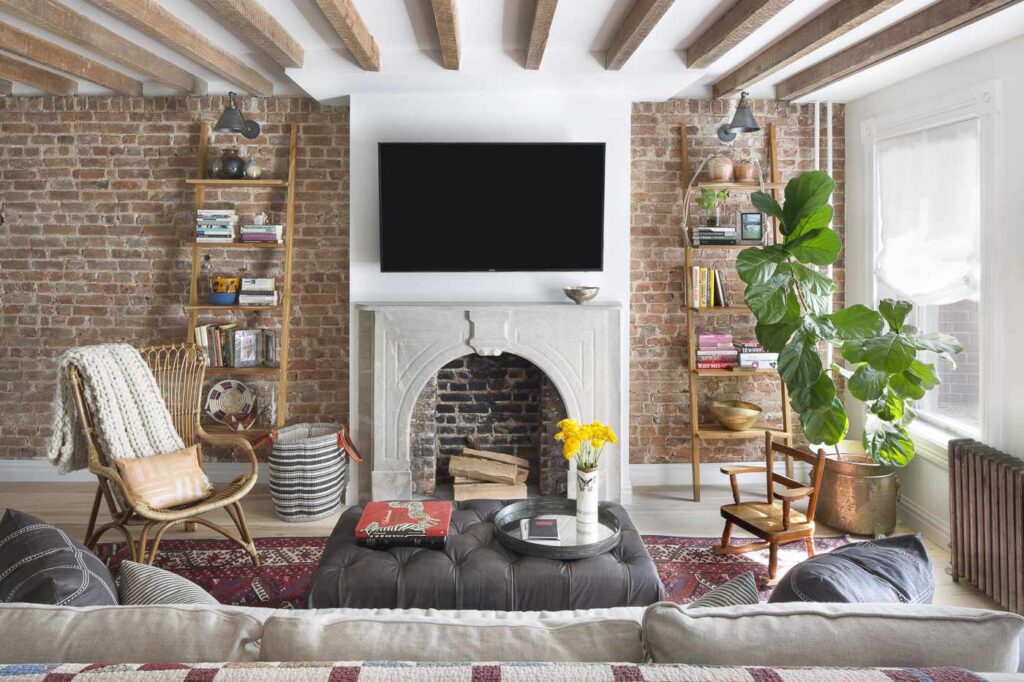
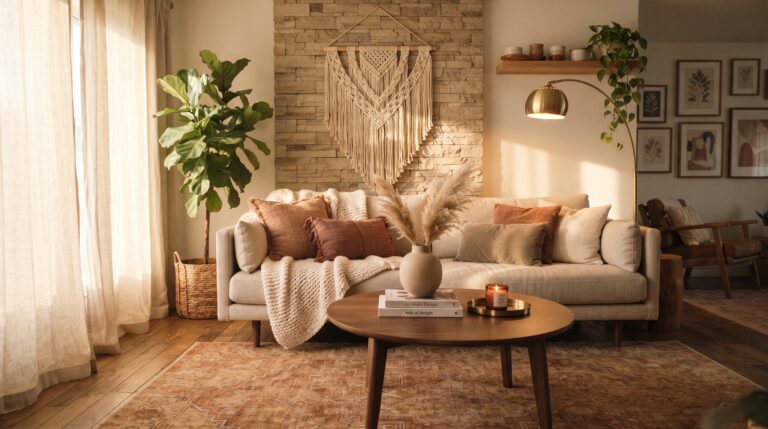
A pale room with pale furniture can drift. Everything blends, nothing holds your attention, and the space ends up feeling unfinished even though it’s technically complete.
Dropping in one dark piece fixes that fast. A walnut sideboard, a charcoal sofa, a coffee table in near-black oak. The eye needs somewhere to land first, and a deeper tone gives it that anchor before it travels around the rest of the room.
Keep it to one or two pieces though. The moment dark furniture spreads across every surface, the contrast disappears and you’re back to a room that reads flat, just heavier this time.
RELATED:
CLEVER WAYS TO TURN EMPTY COFFEE CONTAINERS INTO DECOR
5. Reveal the Charm of Large Windows
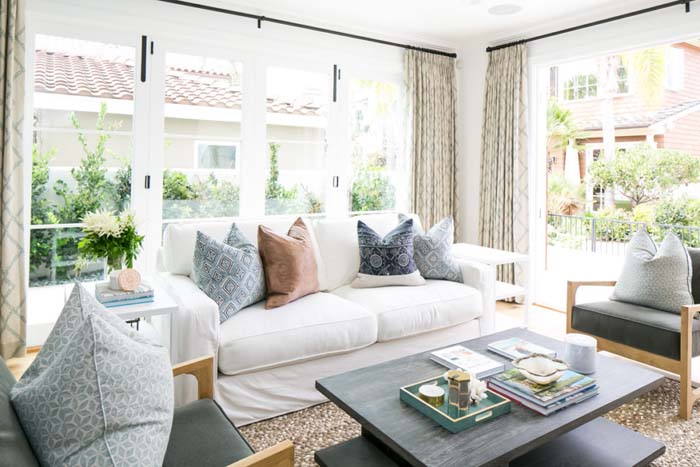
Heavy curtains cover a lot of good architecture. Pull them back and you often find a window frame worth showing, plus a view that was doing nothing behind all that fabric.
Sheer panels hung high and wide keep some privacy without hiding the glass. Or skip fabric entirely on windows that face a garden or a quiet street.
The payoff is light, but it’s also proportion. A tall window left bare stretches the wall upward, and the room borrows depth from whatever sits outside it. Trees, sky, the neighbor’s fence line. Suddenly the living room doesn’t stop at the wall.
Late afternoon light lands on the floor and the room does the rest.
6. Add a Modern Touch with Clean Corners and Lines
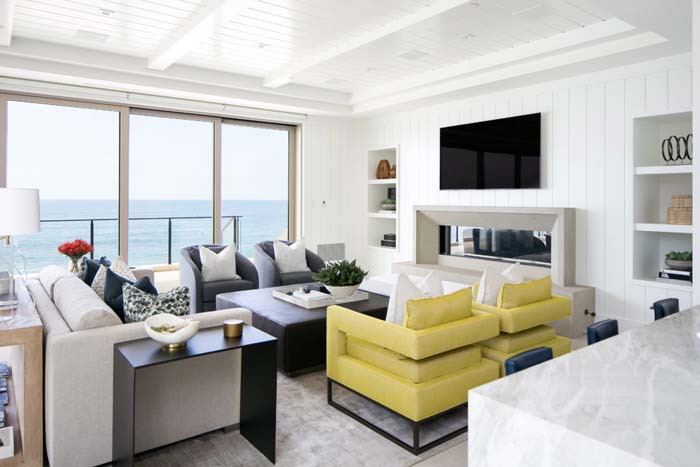
Clutter usually collects in corners. A stack of magazines, a floor lamp with a tangled cord, the chair nobody sits in. Clearing those spots does more for a modern look than buying anything new.
Straight-edged furniture helps here. Sofas with defined arms, tables with square legs, shelving that meets the wall flush instead of floating awkwardly off it. The lines give the room a rhythm, and your eye moves along them instead of stopping at every obstacle.
Why it works comes down to breathing room. Open corners let walls read as full planes, and a room with visible edges always feels larger than one padded out to the baseboards.
Easier to clean, too, which counts for more than people admit.
💡 Pro Tip: Leave at least one corner completely empty. Not a plant, not a basket, nothing. That single gap does more for the modern feel than any piece you could put there.
7. Transform Your Room with Stunning Wood Floors
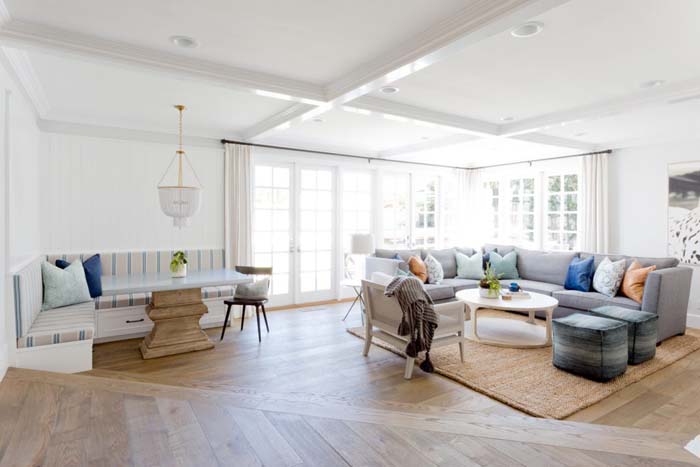
Flooring sets the tone for everything above it. Wide plank oak, warm hickory, or something darker in walnut changes how a room feels the moment you step in, even before you notice the furniture.
Wider boards tend to read calmer because there are fewer seams pulling the eye around. Narrow strips do the opposite and add movement, which suits smaller rooms that need a bit of energy.
Grain matters just as much as color. A floor with visible texture catches light differently through the day, so the room shifts from morning to evening without you touching a thing.
There’s also the sound. Wood underfoot has a warmth to it that no other surface quite matches.
8. Anchor Neutral Spaces with Dark Colors

Beige on beige can float. Nothing wrong with a soft palette, but without a weighted element somewhere, the room drifts and never quite settles.
Dark colors solve this by giving the space a base. A charcoal accent wall behind the sofa, deep espresso built-ins, or even a near-black fireplace surround holds everything else in place. The neutrals suddenly look deliberate instead of accidental.
Place the dark low or on one plane rather than scattering it around. Weight belongs near the ground, the same way a heavy rug grounds a seating group. Spread it too thin and the room loses the calm you were protecting in the first place.
Everything else in the room finally makes sense next to it.
RELATED:
TURNING OLD PLASTIC CHAIRS AND TILES INTO GARDEN PLANTERS
9. Make Your Room Look Bigger with a High-Gloss Ceiling Finish
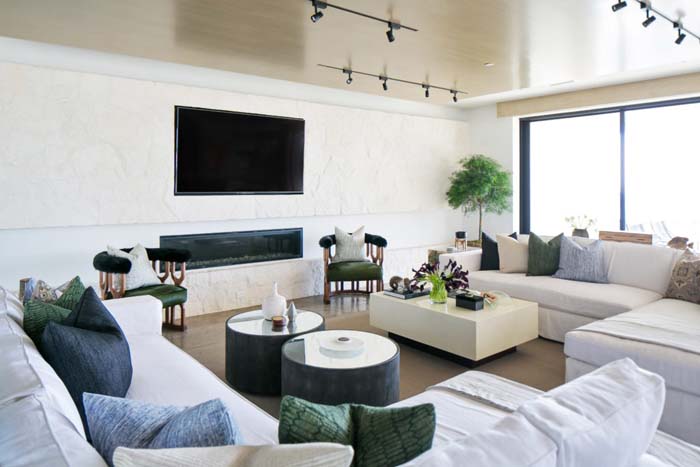
A glossy ceiling sounds like a strange choice until you see one in person. The finish catches whatever light is in the room and bounces it back down, so the space brightens without adding a single fixture.
It also creates a faint reflection of the room below. Not mirror-clear, just enough softness that the ceiling stops feeling like a hard stop overhead. Low ceilings benefit most from this because the boundary blurs.
Prep is everything though. Gloss shows every ripple and patch job, so the surface needs to be genuinely smooth before the paint goes on. Skip that step and you’ll notice the flaws from the sofa every single evening.
10. Add Subtle Elegance with Shades of Blue
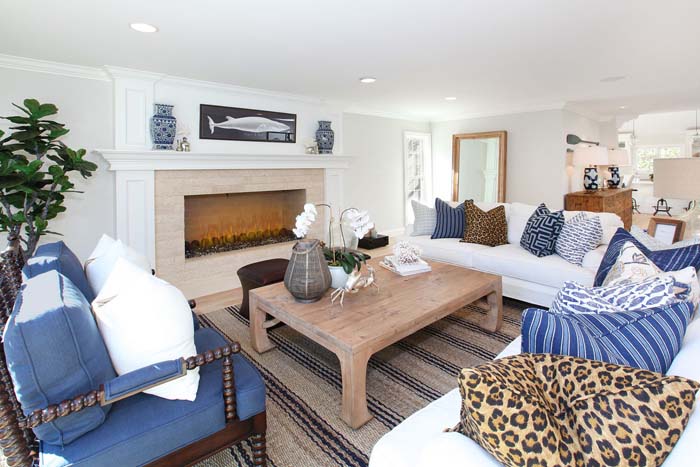
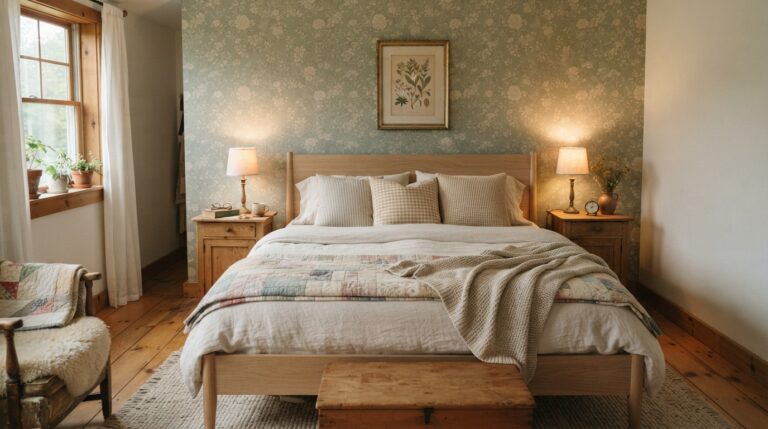
Blue gets treated as a bold color, but the softer end of the range behaves almost like a neutral. Dusty blue, pale slate, that grayish shade that shifts depending on the hour. All of them sit quietly on a wall.
What makes blue work in a living room is temperature. It cools a space that gets harsh afternoon sun, and it pairs cleanly with warm wood without either one fighting for attention. Oak floors under a soft blue wall look intentional every time.
Keep the saturation low and the room stays calm. Push it brighter and you’ve made a statement instead of a backdrop.
There’s a stillness to it that shows up most on quiet evenings.
💡 Pro Tip: Test the color on two walls, not one. Blue shifts hard depending on which direction the light comes from, and a shade that looks perfect by the window can turn cold on the opposite side.
11. Create Visual Interest with Elevated Ceilings
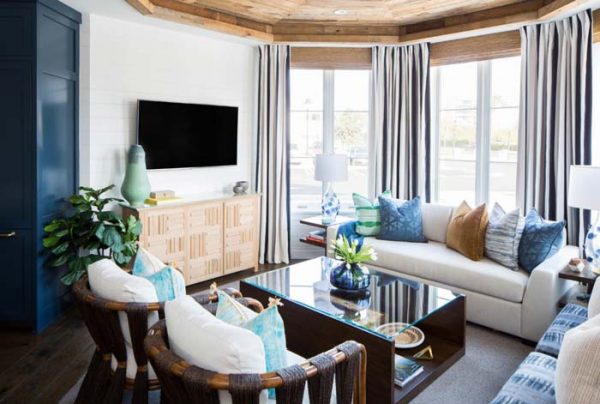
Vaulted or raised ceilings give a room volume that no amount of furniture can replicate. The walls climb, the air feels different, and even a modest floor plan reads generous.
The trick is not leaving all that height empty. Tall windows that follow the slope, a light fixture hung low enough to bring the eye back down, or a wall of paneling that carries the line upward. Without those cues the space can feel cavernous instead of open.
Angles help too. A ceiling that pitches toward one side creates a natural high point, and the room gains a sense of direction it wouldn’t otherwise have.
Sunlight hits the upper wall in the morning and slides down as the day goes.
✨ Suggestion: Run your paint color all the way up the slope instead of stopping at the wall line. Breaking the color mid-climb shortens the room and undoes most of the height you were trying to show off.
12. Make the Most of Large Windows with Crafted Built-Ins
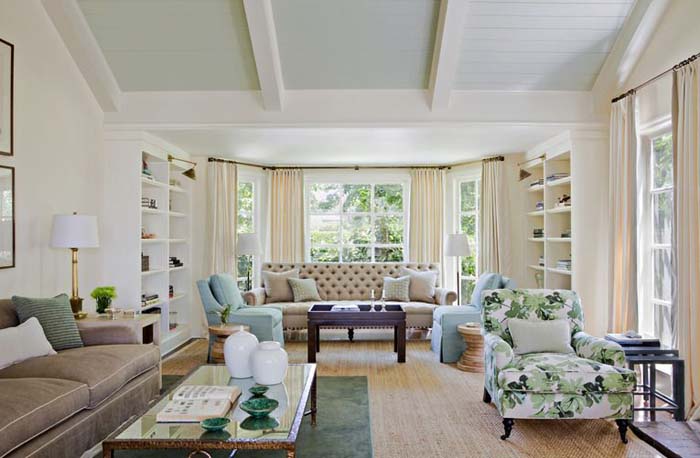
Big windows are great until you realize there’s nowhere left to put anything. The wall is glass, and storage has to go somewhere.
Built-ins framing the window solve both problems at once. Shelving up the sides, a bench or low cabinets running underneath, all of it wrapping the glass instead of competing with it. Books, baskets, the photos that never found a home end up right where you can see them.
The framing effect is the real win here. Cabinetry on either side turns the window into a feature wall, and the view reads like something deliberately displayed rather than a gap in the drywall.
Frequently Asked Questions
Do exposed wood beams work in a small living room?
Yes, as long as the ceiling isn’t too low. Under eight feet, thick beams can press down on the room. Slimmer boxed beams or a lighter stain keep the character without shrinking the space. Painting them a shade close to the ceiling also softens the weight while still showing the texture.
What’s the easiest way to make a living room look bigger?
Clear the corners and let the windows show. Those two changes cost nothing and do more than most furniture swaps. After that, a lighter ceiling finish and floors with fewer seams help the room read as one continuous space instead of a series of small zones.
Can I use dark colors in a room that doesn’t get much light?
You can, but keep the dark low or on a single wall. A charcoal base with pale walls above it still feels grounded without swallowing the light. Trouble starts when dark tones wrap the whole room in a space that never gets direct sun.
Which wood floor color goes best with blue walls?
Warm mid-tones like oak or hickory. Blue leans cool, so a warm floor balances it and keeps the room from feeling chilly. Very dark or very gray floors can push the whole palette toward flat, especially in rooms facing north.
Are built-ins worth it in a rental?
Permanent ones usually aren’t, but freestanding shelving flanking a window gets you close to the same look. Match the shelves to the wall color and add a bench underneath. Same framing effect, and everything comes with you when the lease ends.
How high should I hang curtains on large windows?
Close to the ceiling, and wide enough that the panels sit mostly on the wall when open. That way the glass stays uncovered during the day and the window looks taller than it actually is. Stopping the rod right at the frame is the most common mistake.
Conclusion
Most of these ideas share the same starting point. Look at what the room already has and give it a little more attention than it’s been getting. The ceiling nobody looks at. The window buried under fabric. The corner collecting things that don’t belong there.
You don’t need all twelve. Pick the one that matches the problem your living room actually has. If the space feels flat, add weight with a darker piece or a grounded wall. If it feels cramped, clear the edges and let the light in. If it feels unfinished, look up.
The best rooms usually come together slowly, one honest change at a time.