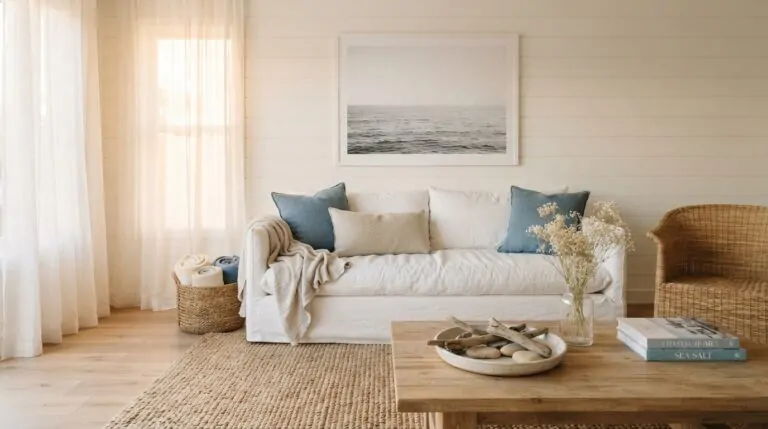
19 Earthy-Toned Living Room Ideas for a Cozy Home
There’s a reason earthy-toned living rooms keep showing up on every Pinterest board this year. They feel calm without being boring, grounded without feeling heavy, and warm in a way that beige alone never quite manages. Think soft clay, warm oatmeal, deep terracotta, mossy green, and that dusty caramel tone that makes a room feel lit from within, even on a gray afternoon.
The best part is how forgiving these colors are. They mix with almost anything, from a boho rug picked up years ago to a modern linen sofa that was supposed to be temporary. Earthy palettes let a living room grow with the people living in it, instead of locking the whole space into one trend.
Below are 19 earthy-toned living room ideas that lean into texture, natural materials, and the kind of quiet warmth that makes people linger a little longer on the couch. Some lean modern, some lean boho, and a few sit somewhere in between.
1. Stone Accent Wall
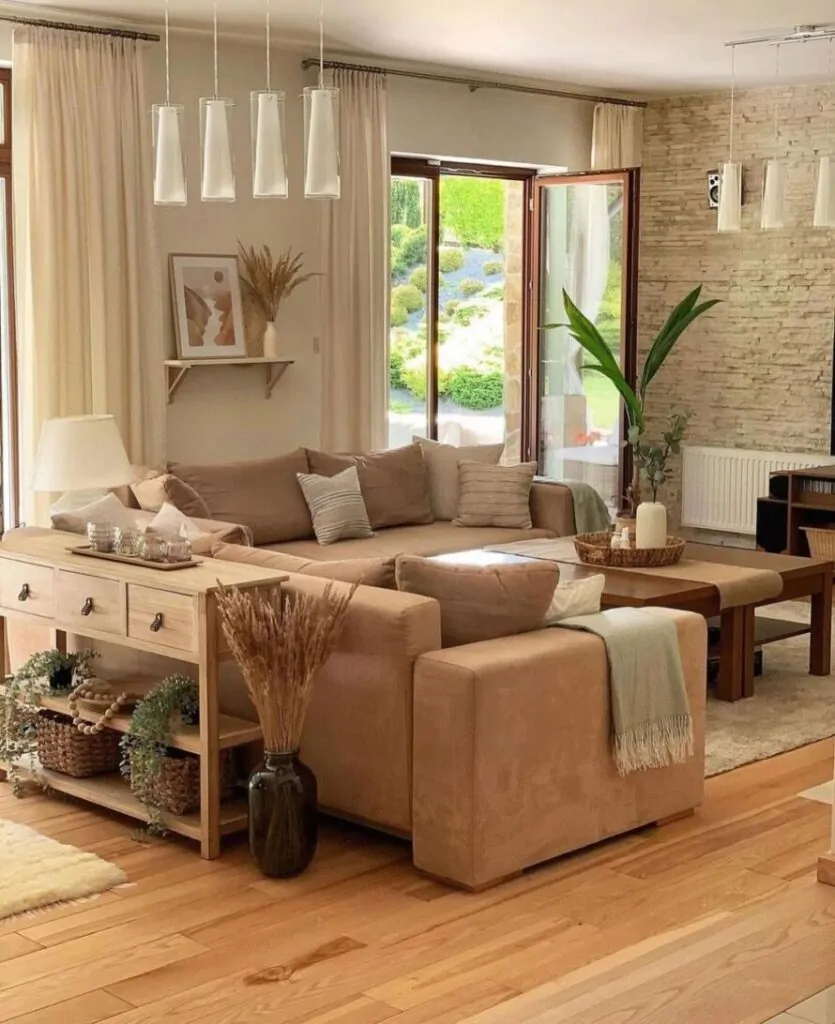
A stacked stone wall sets the tone the second someone walks in. The rough texture catches light in a way flat paint never can, and those natural gray-brown tones instantly warm up the whole room without leaning too rustic or too modern.
The trick here is letting the stone do the heavy lifting. Keep the surrounding furniture simple. A low-profile linen sofa in oatmeal, a chunky wood coffee table, and maybe one leather armchair worn in just right. A few trailing plants soften the hard edges of the stone, and a wool throw folded over the sofa arm makes it feel less like a showroom. It’s the kind of wall that turns a quiet evening with a book into something a little more special.
Best suited for open-concept living rooms that need one strong focal point.
2. Natural Living Room In Beige
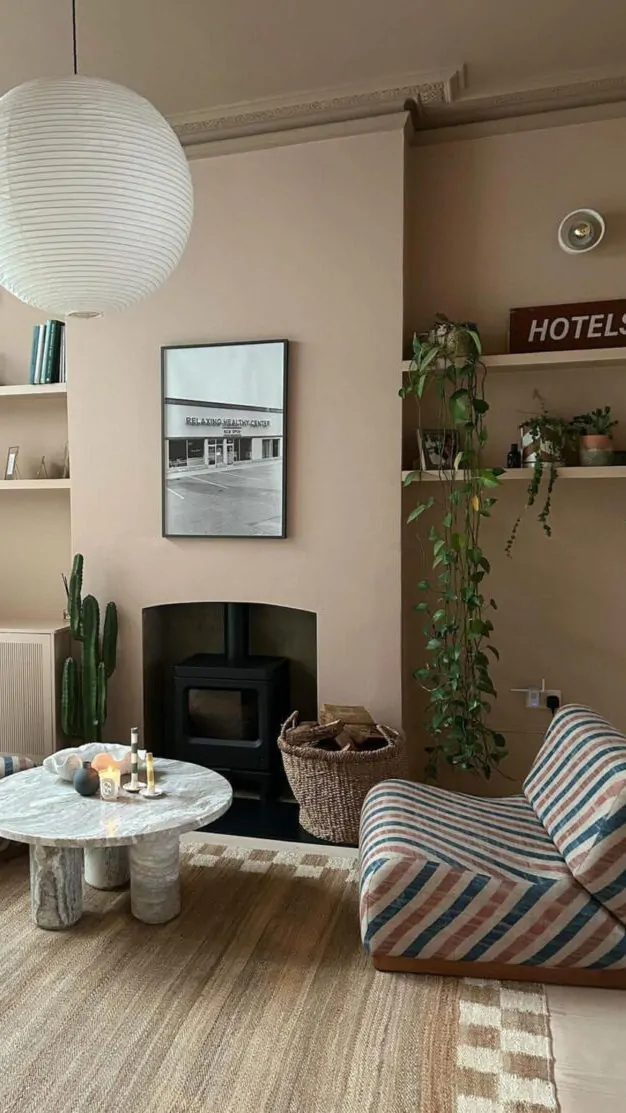
Beige gets a bad reputation for being boring, but layered right, it turns into one of the coziest looks a living room can pull off. The secret is using five or six shades of beige at once. Cream, sand, mushroom, warm ivory, and that soft biscuit tone that sits somewhere between tan and pink.
Texture is what saves an all-beige room from feeling flat. A boucle armchair next to a jute rug, linen curtains brushing a wood floor, a nubby throw tossed over the sofa. Everything reads soft and touchable. Add a few ceramic vases in matte finishes and one or two dried grass arrangements, and the room settles into that quiet, breathe-out kind of calm. Morning light does something magical here, bouncing off all those warm neutrals until the whole space glows.
Works especially well in smaller rooms where color contrast might feel too busy.
3. Match Sofa Colors
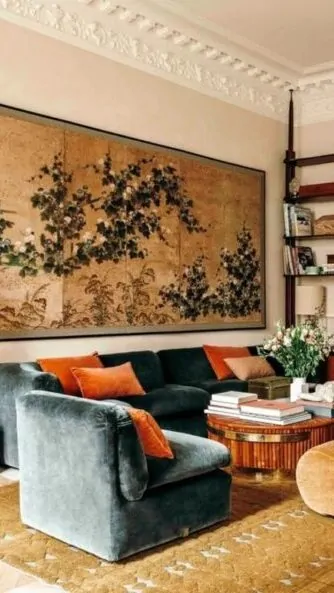
Matching the sofa to the wall color is one of those styling moves that looks intentional without trying too hard. When a warm terracotta sofa sits against a warm terracotta wall, the piece almost dissolves into the room, and suddenly the eye notices the wood, the art, the plants instead.
This approach works best with earthy tones because they’re already soft enough not to feel overwhelming when doubled up. A camel sofa against a camel-washed wall, or a mossy green loveseat blending into sage paint. The contrast comes from everything else in the room, like a black iron floor lamp, a woven basket in the corner, or a stack of books on the coffee table. It’s a quieter way to decorate that lets small details finally get their moment.
Ideal for anyone who wants their living room to feel curated rather than decorated.
4. Blue Accents In An Earthy-Toned Living Room
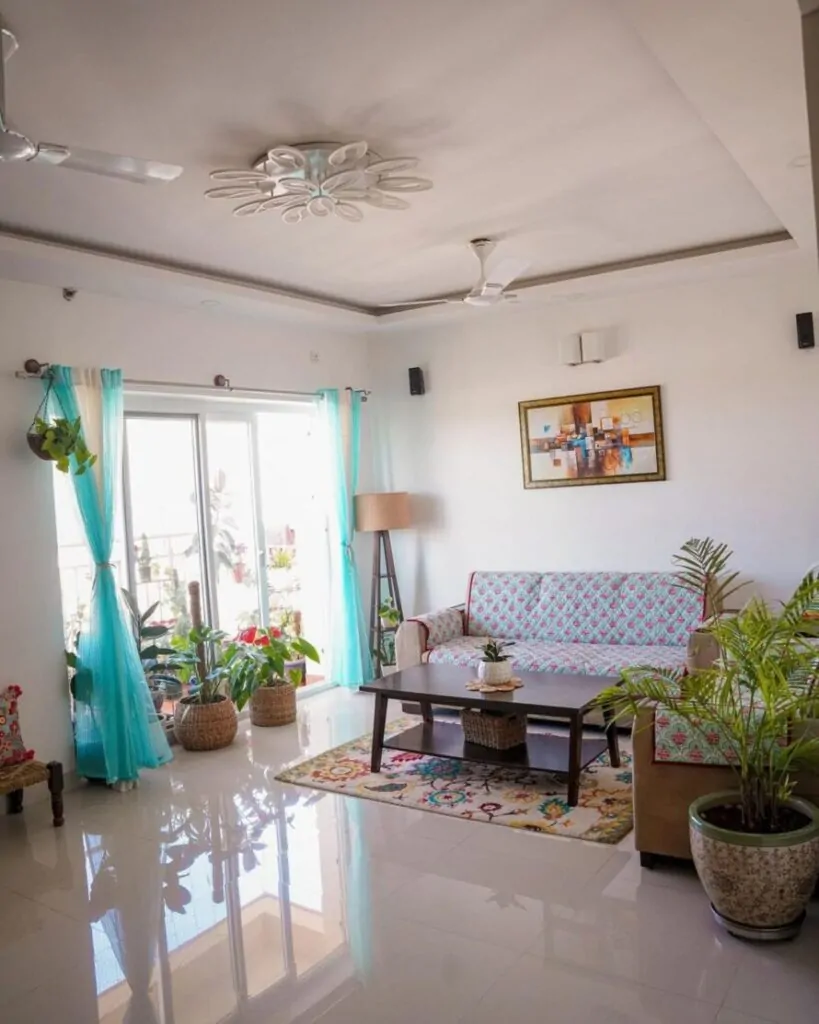
Blue and earthy tones have a quiet chemistry that most people don’t expect. A dusty denim throw pillow on a caramel sofa, or a deep navy vase sitting next to a terracotta pot, brings this cool-warm balance that keeps a room from feeling one-note. The blue acts almost like a breath of fresh air in all that warmth.
The key is picking blues with a little dust or gray in them. Think faded indigo, soft slate, or that muted teal that looks like it’s been sun-washed for a decade. Skip the bright royal blues and clean sky tones. They fight with earthy palettes instead of settling into them. A single blue accent chair or a pair of ceramic lamps can shift the whole mood of a beige-heavy room, giving it that collected-over-time feeling instead of matchy perfection.
Works beautifully in rooms with a lot of natural wood, since blue plays nicely against warm grain.
💡 Pro Tip: When adding blue to an earthy palette, test the swatch next to a piece of raw wood or a woven basket before committing. If the blue looks too crisp against those textures, it’s too clean for the room. The right blue should look slightly faded, almost like it’s already been living there for years.
5. Add Plenty Of Plants
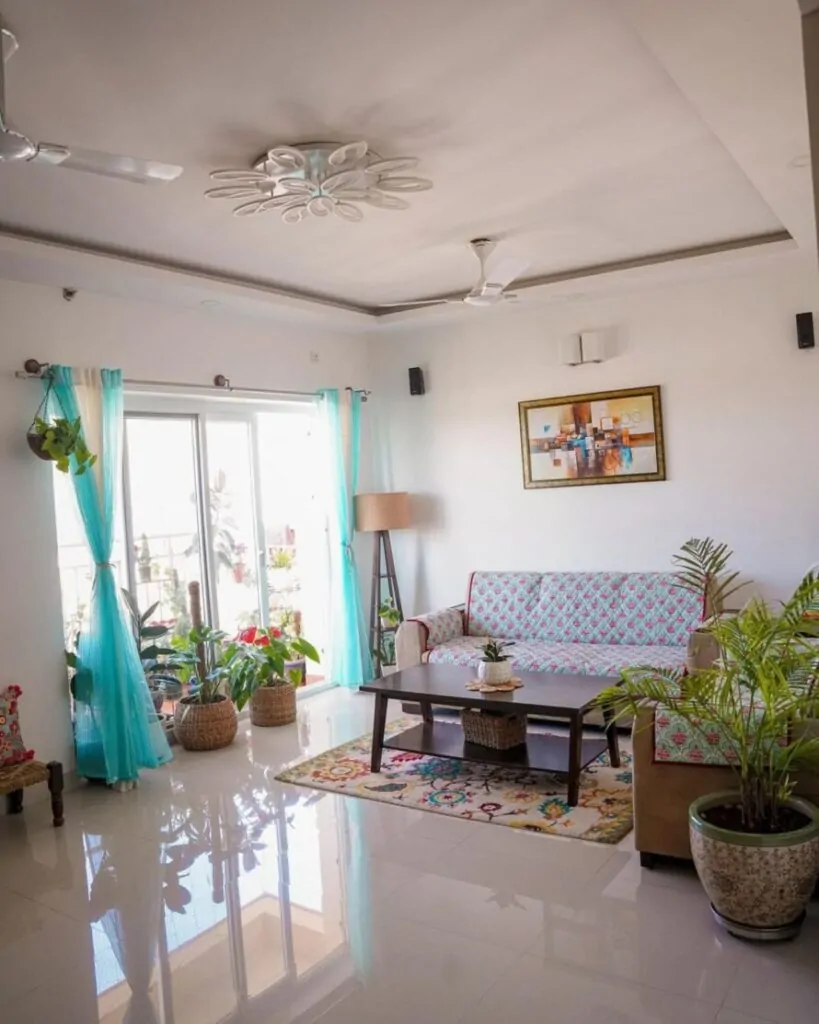
Plants might be the easiest way to make an earthy-toned room feel finished. All those warm browns, creams, and clay tones practically beg for something green and alive to break them up. A tall fiddle leaf in the corner, a trailing pothos on a floating shelf, and a chunky snake plant near the window can transform a flat-looking space into something that feels lived in and breathing.
The trick is variety in height and leaf shape. A row of matching succulents on the coffee table looks sweet, but mixing a spiky dracaena with a soft trailing ivy and a broad-leafed monstera creates that layered, jungle-adjacent look without tipping into chaos. Terracotta pots keep everything grounded in the earthy palette, while a few woven baskets around the base of larger plants add another layer of texture. The room ends up feeling like a small indoor garden that just happens to have a sofa in it.
Perfect for rooms with lots of natural light, but pothos and snake plants forgive darker corners too.
🌿 Suggestion: Group plants in odd numbers, especially threes and fives. Two plants side by side tend to look staged, while three at varying heights feel collected and natural. Add one tall floor plant, one medium tabletop plant, and one trailing plant per grouping for instant balance.
6. Modern Earthy-Toned Living Room
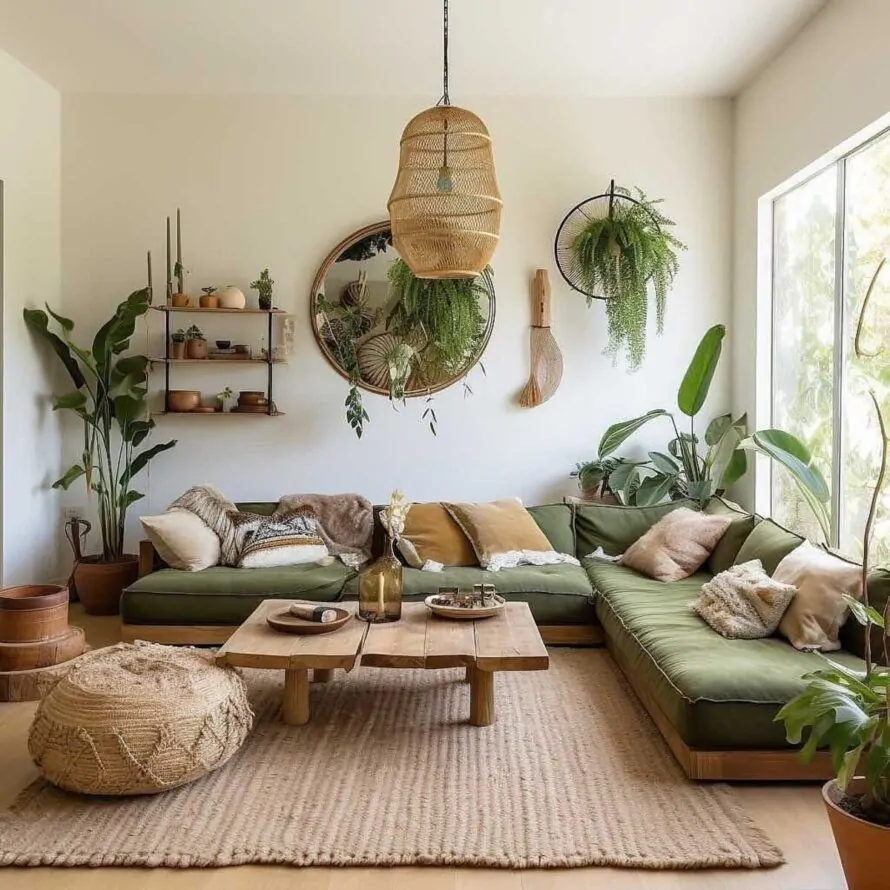
Modern and earthy sound like opposites, but they meet in the middle better than most people expect. Clean lines, low-profile furniture, and a tight color palette give the room its modern edge, while warm clay tones, natural wood, and soft textiles keep it from feeling cold or gallery-like. The result is a space that reads polished without feeling untouchable.
Think a sleek walnut coffee table paired with a boxy oatmeal sofa, one large piece of abstract art in muted rust tones, and a single sculptural floor lamp arching over the corner. Nothing extra, nothing cluttered. The magic happens in the material mix. Smooth ceramics against nubby wool, matte black metal against pale oak, a single leather bench that softens with every year it sits there. Even the throw pillows stay disciplined here, sticking to two or three colors max so the eye can rest.
Best suited for anyone who loves minimalism but wants the room to still feel warm at the end of a long day.
7. Neutral Colors
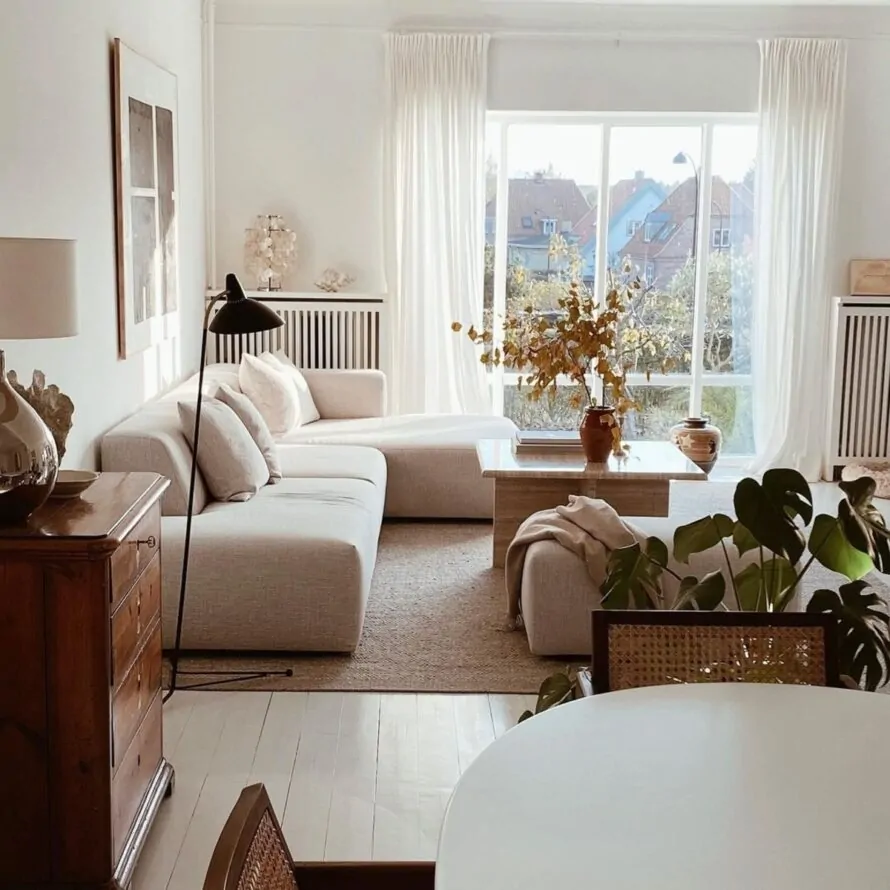
Neutral doesn’t have to mean boring, and an earthy-toned living room proves it every time. The whole palette lives in that soft middle ground between warm and cool, giving the room a settled, easy feeling that never fights for attention. Cream walls, a putty-colored sofa, and a few slate gray accents can carry an entire space without needing bold color anywhere.
Layering is what keeps it from falling flat. A ribbed ceramic vase next to a smooth wooden bowl, a chunky knit throw folded over a linen cushion, a jute rug tucked under a leather ottoman. Small styling shifts like these are some of the clever styling tricks that make a neutral room feel curated instead of unfinished. Even the art stays quiet here, leaning into black and white photography or soft abstract washes in taupe and clay. The room ends up feeling like a long exhale after a busy day.
Great for renters or anyone who wants a base that works with almost any accent color down the line.
8. Art Wall Hangings
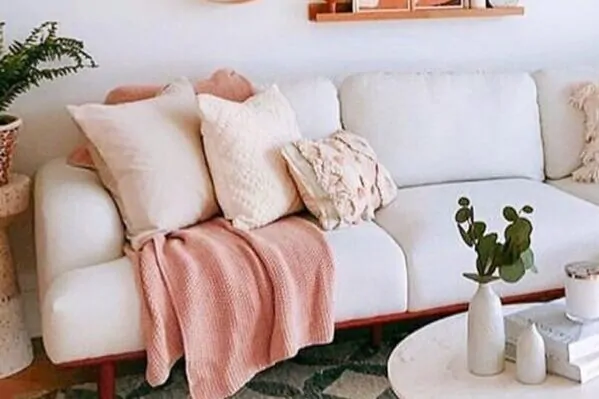
A blank wall in an earthy-toned living room is basically a canvas waiting for something with soul. Woven wall hangings, macramé pieces, and hand-loomed tapestries slot right into this palette because they bring texture along with visual interest. A large fiber wall piece above the sofa can do the work of five smaller frames, and the shadows it casts throughout the day become their own kind of art.
The colors matter almost as much as the piece itself. Natural undyed cotton, jute, and wool blend into earthy walls without disappearing, while pops of rust, mustard, or deep olive add just enough contrast to keep things interesting. Mixing mediums helps too. A woven piece next to a small framed botanical print, or a wooden bead garland draped near a canvas painting. The wall stops feeling like decoration and starts feeling like a small collection someone actually cares about.
Ideal for rooms with tall ceilings or long empty walls that need softening.
9. Earthy Tones With Bold Color Accents
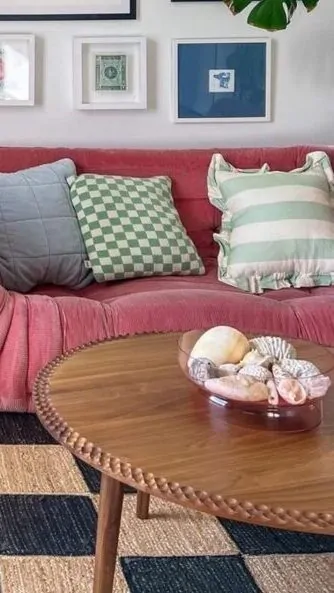
Earthy palettes have this quiet confidence that lets one bold color do all the talking. A single mustard yellow armchair in a room full of oatmeal and terracotta becomes the whole conversation. A deep emerald green throw on a camel sofa reads intentional instead of random. The neutrals hold everything steady, so the bold color never has to fight for its place.
The rule of thumb is stopping at one or two bold moments per room. A rich cobalt lamp on a side table plus a matching cushion, or a single burnt orange rug anchoring an otherwise soft palette. Any more than that and the earthy foundation starts to lose its grounding effect. Small doses also mean easier updates later. Swapping out a pillow cover or a small vase can shift the whole mood of the room without repainting a single wall.
Best for anyone who loves color but doesn’t want to commit to it everywhere at once.
10. Exposed Beams
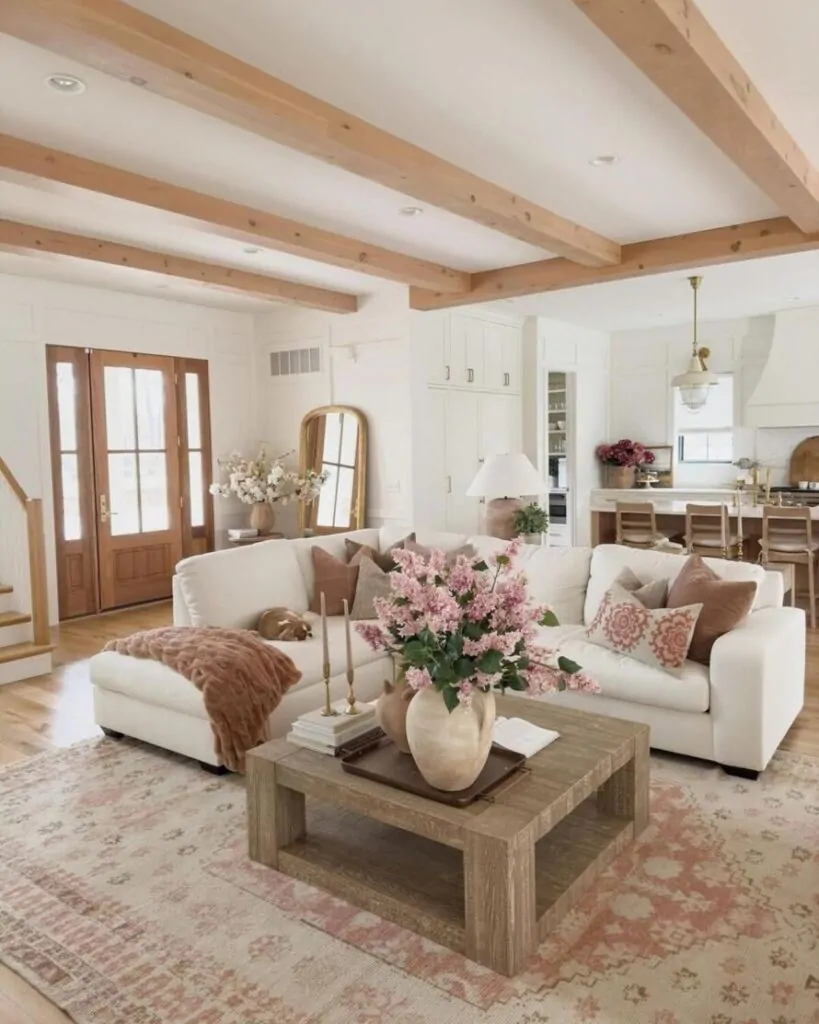
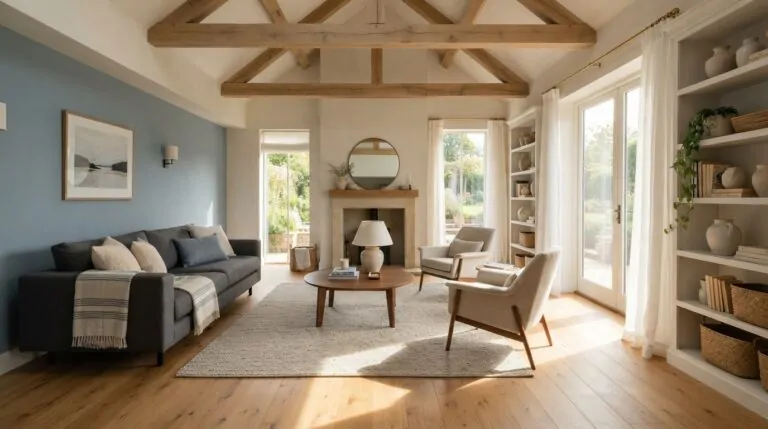
Exposed beams do something magical to an earthy-toned living room. They add instant character, break up flat ceilings, and pull the eye upward in a way that makes even a small space feel taller and more grounded at the same time. Whether they’re original to the house or added in later, wood beams give a room that lived-in, been-here-for-decades kind of warmth.
The wood tone is worth thinking about. Dark walnut beams against a cream ceiling read dramatic and cozy, perfect for cooler climates or homes that lean toward moody. Lighter oak or whitewashed beams keep things airy and work beautifully with softer palettes like sand, blush, and dusty green. Pair the beams with a matching wood coffee table or floating shelves to tie the whole ceiling detail into the rest of the room. Even a small chandelier hung between two beams can turn the ceiling into a design feature instead of an afterthought.
Works especially well in cottages, farmhouses, and any home with even slightly vaulted ceilings.
11. Milky Pink Accents
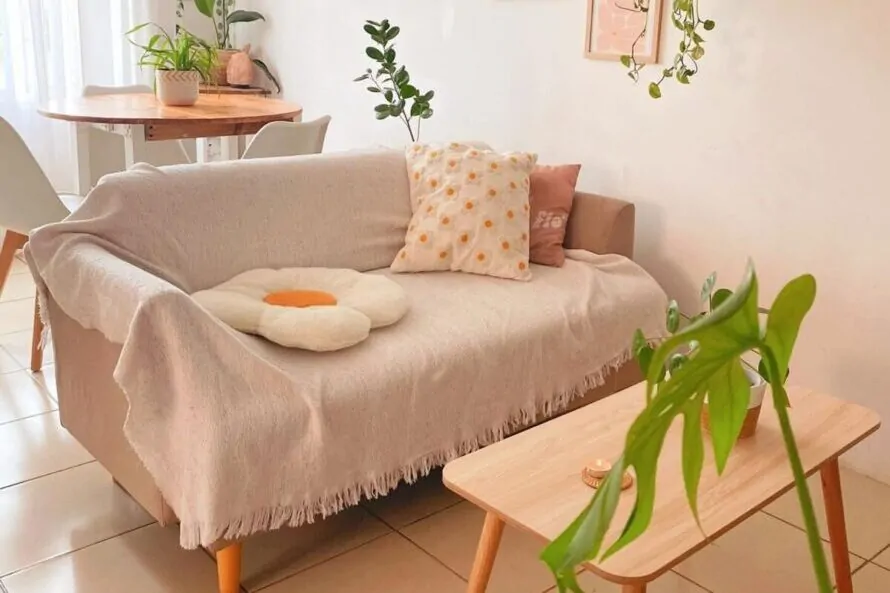
Milky pink might sound sweet, but the dusty, muted version of it plays surprisingly well with earthy tones. Think soft blush that leans slightly beige, or that faded rose color that looks like it’s been sitting in the sun for a season. Against warm clay walls or a caramel sofa, these pinks feel grown up and quiet instead of girly or loud.
A milky pink throw pillow, a ceramic vase in dusty rose, or a small velvet ottoman can add just enough softness to keep the room from leaning too rustic. Keep the finishes matte and the shapes rounded, since anything too glossy pulls the pink into a different mood entirely. A single pink accent chair tucked into a corner with a woven basket beside it can quietly become the favorite reading spot in the whole house.
Perfect for anyone who wants their earthy palette to feel a little more romantic without going full cottage.
💡 Pro Tip: When picking milky pink accents, hold the swatch or fabric next to a piece of terracotta or unglazed pottery. If the pink still looks warm and slightly muddy against those tones, it’s the right shade. If it looks bright or cool by comparison, it will fight the earthy palette instead of complementing it.
12. Keep Colors Neutral
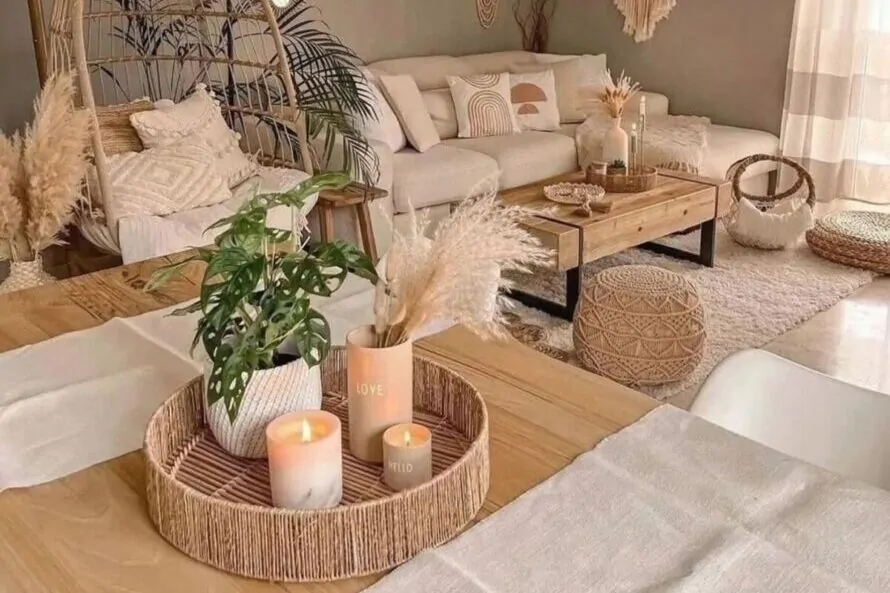
Sticking to a fully neutral palette in an earthy-toned living room is a bit like designing with whispers. Every shade sits close to the others, so the differences show up in texture and finish instead of color contrast. Warm white walls, a sand-colored sofa, oatmeal curtains, and a taupe rug can all live in the same room without a single one competing for attention.
The trick is choosing neutrals with the same undertone. Warm neutrals stay with warm neutrals, cool ones with cool. Mix them and the room starts feeling off in a way that’s hard to name. Once the palette is locked in, the styling gets to shine. A stack of coffee table books with linen covers, a matte ceramic pitcher holding dried branches, a leather tray corralling remotes and coasters. Everything reads intentional because nothing is fighting for the spotlight.
Best for anyone who finds bold color exhausting and just wants their living room to feel like a quiet retreat.
13. Boho Styled Living Room In Earthy Colors
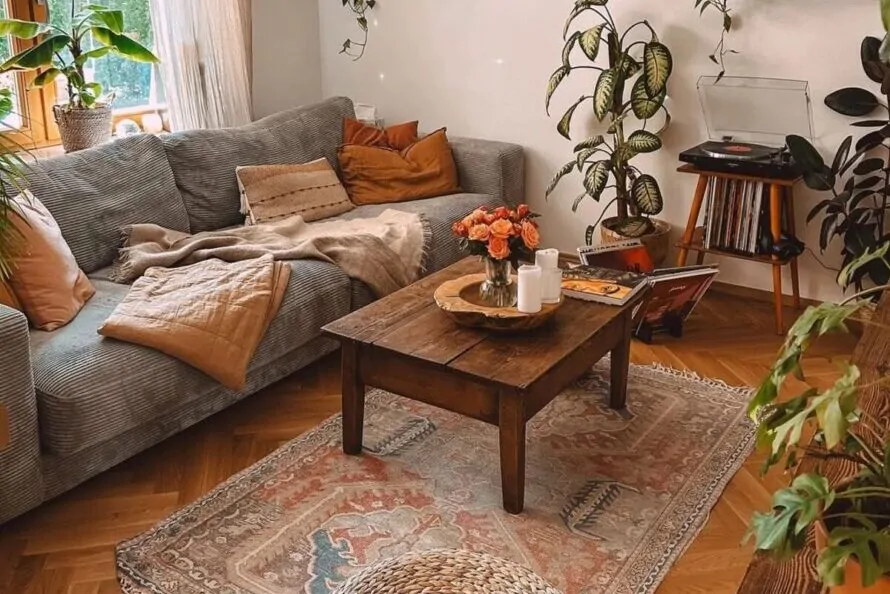
Boho and earthy tones were basically made for each other. Both lean warm, both love texture, and both feel best when nothing looks too perfect. A boho living room in earthy colors comes together with layered rugs, vintage furniture, plenty of plants, and that lived-in mix of patterns and materials that looks effortless but always takes a little planning.
Thrifted finds are the heart of this look, whether it’s a worn kilim rug or a set of mismatched rattan chairs. The same eye for good deals that fuels smart thrifting habits works wonders in a boho living room, since the best pieces usually come from second-hand shops and estate sales rather than showrooms. Add a low wooden coffee table, a few floor cushions in warm mustard or rust, and a macramé wall hanging or two. The room ends up feeling like it’s been curated over years of travel and hunting, even if half of it came from one lucky weekend.
Ideal for creative types who love their space to feel personal, collected, and just a little unpredictable.
14. Choose a Bold Color For A Statement
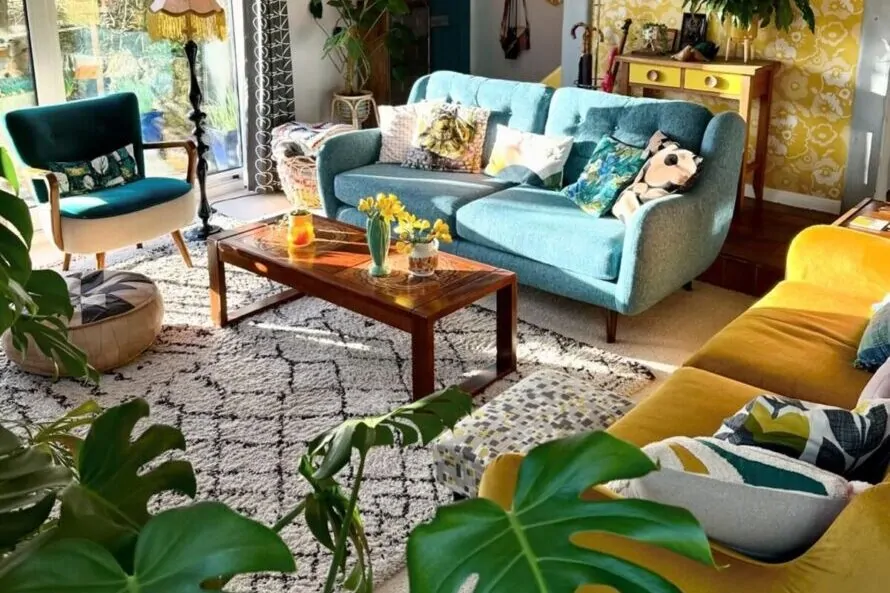
Committing to one bold color in an earthy-toned living room takes a little courage, but the payoff is worth it. A single deep terracotta accent wall, a rich forest green sofa, or a burnt sienna area rug can shift the entire personality of a room without touching anything else. The earthy palette keeps the bold choice grounded, so it never feels loud or trend-chasing.
The safest place to start is with one large piece rather than scattering the bold color everywhere. A statement sofa in mustard yellow lets the rest of the room stay soft and neutral around it. A single navy accent wall behind floating shelves adds depth without overwhelming. Once that main piece is in place, echo the color in one or two smaller spots, like a throw pillow or a ceramic bowl, so the eye moves naturally around the room. Skip painting all four walls or adding matching curtains, since that turns a statement into a takeover.
Great for anyone who’s ready to move past all-neutral rooms but still wants their space to feel calm.
15. Earthy Tones That Make The Living Room Shine
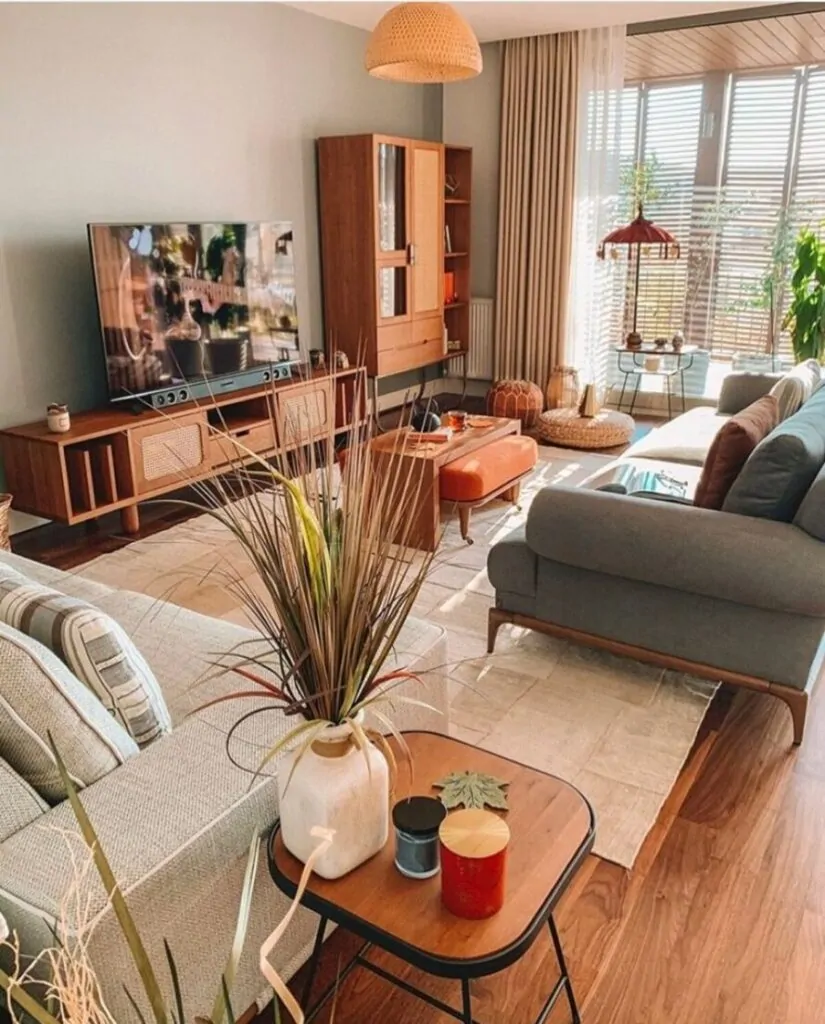
Some earthy palettes glow instead of just sitting quietly. The secret is picking tones with a little warmth and richness baked in, like honey, amber, caramel, and that golden ochre that catches every bit of afternoon light. These shades don’t just fill a room. They make it look softly lit from within, even when the sun goes down.
Layering matters more than picking one hero color here. A honey-toned leather chair next to an amber velvet cushion, a caramel wood side table catching light from a brass lamp, and a rug in warm ochre pulling the whole floor together. Metallic touches take the glow further, whether it’s a small brass tray on the coffee table or thin brass frames around botanical prints. Even the light fixtures start to matter more, since warm bulbs in the right shade pull all those honey tones into full bloom by evening.
Best in rooms with good natural light, or spaces where warm lamp lighting can do the same job after dark.
🌿 Suggestion: Switch out cool white LED bulbs for warm white ones around 2700K. Cool bulbs make honey and amber tones look muddy or gray, while warm bulbs bring them fully to life. This single swap can change how the whole room feels without spending a dollar on new decor.
16. An Earthy-Toned Rug
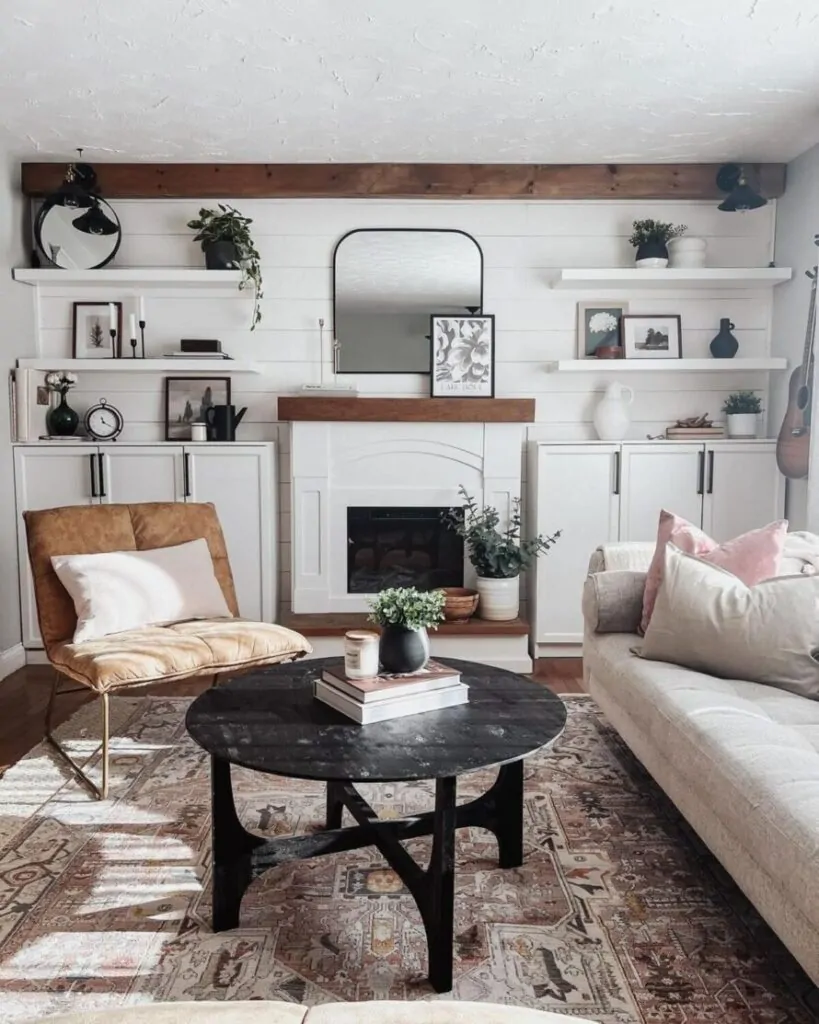
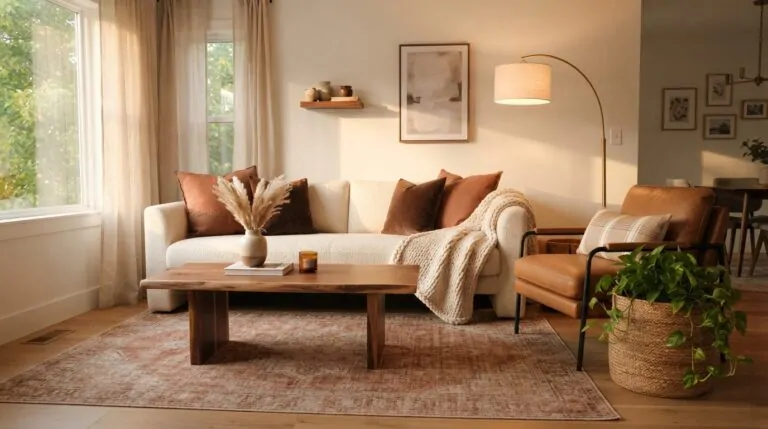
A rug can quietly set the tone for an entire living room, and an earthy-toned one does it without ever raising its voice. Warm terracotta patterns, faded rust motifs, or a soft caramel jute weave anchor the whole space and give every other piece something to work off. Even a room with plain walls and simple furniture starts feeling designed the moment the right rug hits the floor.
Size and texture matter almost as much as color. A rug that’s too small floats awkwardly and makes the room feel disconnected, while one large enough to tuck under the front legs of the sofa ties everything together. Vintage-style rugs with muted patterns bring instant character, while flat-weave jute or sisal keep things airy and casual. Layering a smaller patterned rug over a larger neutral one adds depth and hides the awkward transitions that hardwood floors sometimes create. The room ends up feeling grounded, warm, and complete.
Especially useful in open-concept spaces where a rug helps define the living area without needing walls.
17. Patchwork Accents
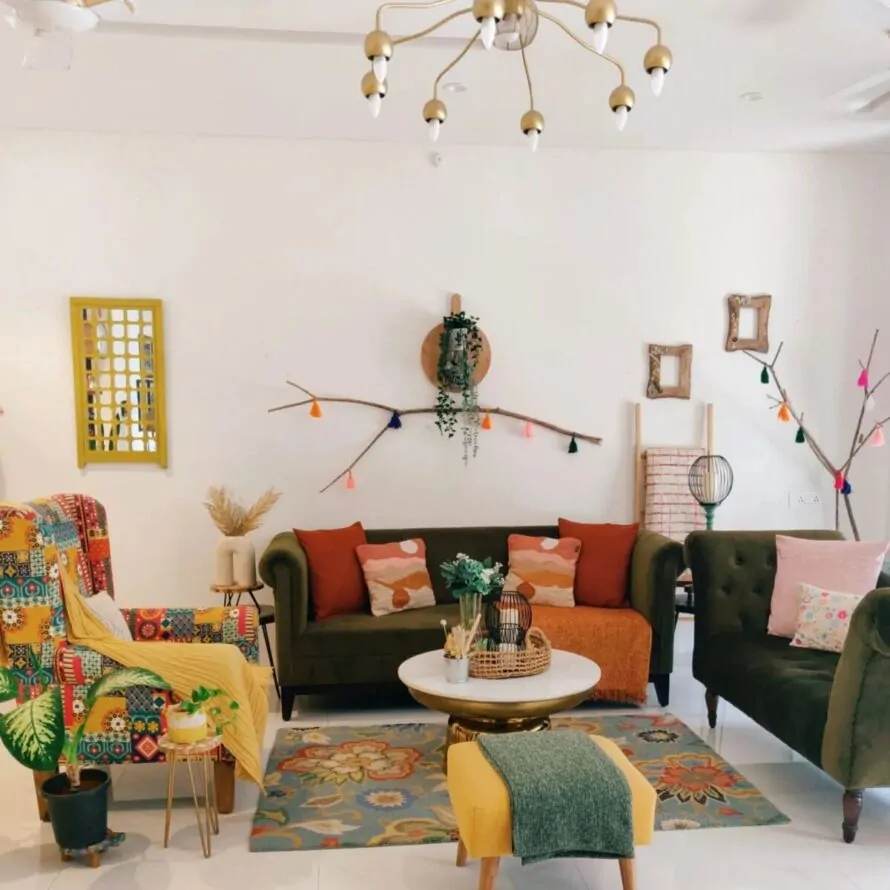
Patchwork brings a soulful, storied quality to an earthy-toned living room that store-bought pieces almost never match. A patchwork throw draped over the sofa arm, a stitched pillow cover made from fabric scraps, or a small quilt folded at the foot of a reading chair adds instant warmth and personality. The uneven seams and mismatched squares feel handmade, which is exactly the point.
The magic of patchwork is that it works with almost any earthy palette. Warm rust, mustard, and olive squares stitched together feel cozy against cream walls, while softer sand, blush, and taupe pieces keep things quiet and modern. Old fabric, worn quilts, and forgotten textiles often find new purpose here, which is one of the smart ways to reuse old items instead of tossing them out. A grandmother’s quilt tucked over a bench, or vintage grain sacks turned into cushion covers, brings history into the room in a way that no new decor ever could.
Perfect for anyone who loves texture, story, and that slightly imperfect handmade feel.
18. Natural Can Be Colorful
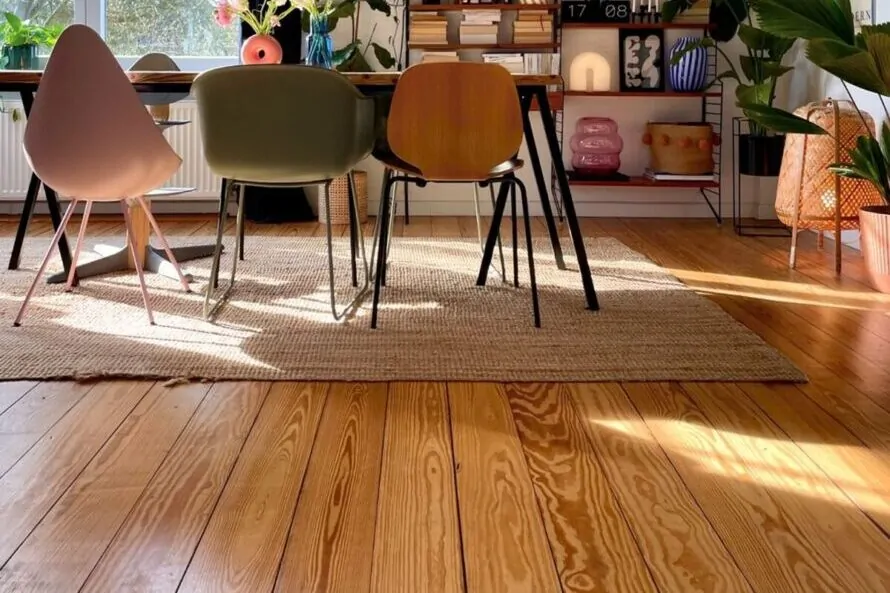
Natural doesn’t have to mean muted. Some of the most beautiful earthy-toned rooms pull in real color straight from nature itself, like the deep green of moss, the burnt orange of autumn leaves, the soft yellow of dried wildflowers, and that rich berry red that shows up in ripe fruit. All of these read as earthy because they belong to the natural world, but together they create a room that feels alive with color.
The trick is letting each shade stay a little bit dusty or faded, like it’s been touched by sun and time. Bright emerald green fights an earthy palette, but a soft sage or eucalyptus tone slides right in. Neon orange feels out of place, but a warm pumpkin or persimmon works beautifully. Layer these colors through cushions, art, small ceramics, and one or two larger pieces like a rug or an accent chair. The room ends up feeling joyful and grounded at the same time, which is a hard balance to strike with any other palette.
Wonderful for anyone who loves color but never wants their living room to feel loud.
19. Boho Earthy-Toned Living Room
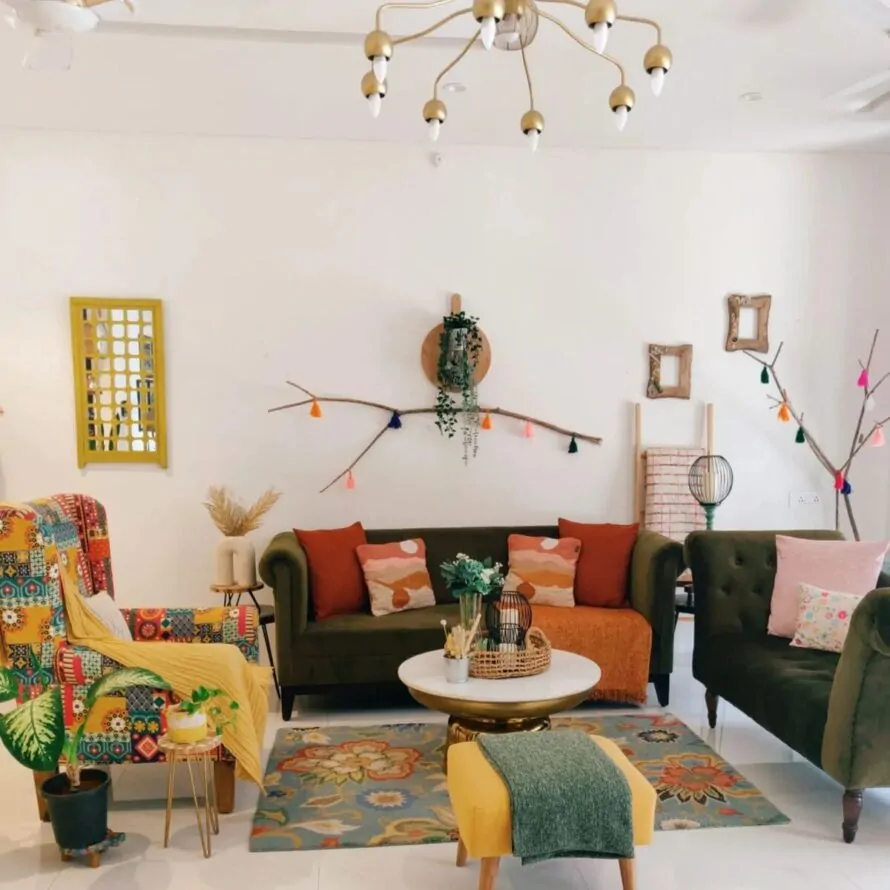
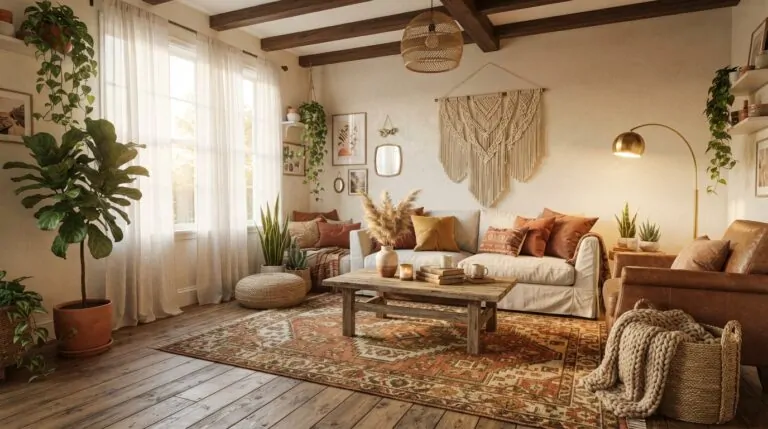
A full boho earthy-toned living room is where all the ideas from earlier finally come together. Layered rugs, plants spilling from every corner, patchwork cushions, woven wall hangings, and low wooden furniture that looks like it was collected slowly rather than bought in a set. Nothing matches perfectly, and that’s exactly why the room works. It feels like it belongs to someone with stories to tell.
The palette leans into warm terracotta, dusty olive, faded mustard, and creamy oatmeal, with small pops of muted teal or milky pink for interest. Furniture stays low to the ground, which makes even a small room feel more expansive. Floor cushions replace extra armchairs, a coffee table gets swapped for a vintage trunk, and lighting comes from a mix of paper lanterns, small lamps, and maybe a string of soft fairy lights. Add plenty of throws, some incense or a candle, and a stack of well-loved books on the coffee table. The room becomes less of a showpiece and more of a place people actually want to hang out in for hours.
Great for creative homes where the living room doubles as a reading nook, meditation spot, and Sunday afternoon hangout all at once.
Frequently Asked Questions
What colors count as earthy tones for a living room?
Earthy tones are the colors pulled straight from nature, like warm terracotta, soft clay, mossy green, dusty caramel, oatmeal beige, and deep rust. Think of anything you’d find in soil, stone, dried grass, or autumn leaves. These shades share warm undertones and a slightly muted quality, which is what makes them so easy to layer together without any single one feeling too loud.
Can earthy tones work in a small living room?
Absolutely, and they often work better in small rooms than bright bold colors do. Light earthy shades like cream, sand, and soft beige actually make small spaces feel more open, while darker tones like clay or olive create a cozy, wrapped-in feeling that small rooms wear beautifully. The key is sticking to a tight palette of three or four colors so the space doesn’t feel busy or chopped up.
How do I mix earthy tones without the room looking flat?
Texture does most of the heavy lifting here. Pair smooth ceramics with nubby wool, mix a jute rug with a velvet cushion, or set a leather armchair next to a linen sofa. When colors sit close together on the palette, the variety in materials keeps everything visually interesting. Adding one or two darker accents, like a black lamp or a deep walnut side table, also creates depth without breaking the earthy mood.
What furniture works best with an earthy-toned palette?
Natural materials look right at home here. Wood in any warm tone, rattan, leather, linen, cotton, and wool all pair beautifully with earthy colors. Low-profile sofas in oatmeal or clay, wooden coffee tables with visible grain, and woven baskets for storage are safe bets. Skip anything too glossy or chrome-heavy, since those finishes tend to fight the warmth that earthy tones are known for.
Are earthy tones still trendy or are they going out of style?
Earthy tones aren’t really a trend so much as a return to timeless design. They’ve been showing up in homes for decades because they feel calming and never date the way bold trend colors do. Even when a specific shade like terracotta or sage has a big moment, the wider earthy palette stays relevant year after year. It’s one of the safer palettes to commit to long term.
How do I add color to an earthy-toned room without ruining the vibe?
Start with dusty or muted versions of any color you love. A faded blue, a soft berry red, or a mustard yellow blends into earthy palettes without disrupting them. Stick to one or two accent colors and repeat each one at least twice around the room, like a throw pillow plus a small vase. Skip anything neon or overly saturated, since those shades tend to fight the natural warmth of the base palette.
What lighting works best in an earthy-toned living room?
Warm lighting is essential here. Cool white bulbs can wash out honey, caramel, and rust tones, making them look muddy or gray. Swap in warm white bulbs around 2700K, and add layered lighting with a mix of floor lamps, table lamps, and maybe a pendant or two. Brass, wood, and ceramic lamp bases blend right into the palette, while candles or string lights add that soft evening glow that makes earthy rooms feel their coziest.
Conclusion
Earthy-toned living rooms have this quiet way of making everyday life feel a little softer. Whether the palette leans full boho with layered rugs and patchwork throws, or stays modern with clean lines and one perfect terracotta accent, the warmth stays the same. These colors don’t chase trends or demand attention. They just settle into a home and grow with the people living there.
The best part is how forgiving this palette is. Start with one idea from this list, whether it’s adding more plants, swapping in a warm-toned rug, or committing to a stone accent wall, and let the room evolve from there. Earthy design rewards patience and personal touches, which means the room ends up feeling like an actual reflection of the people who live in it.