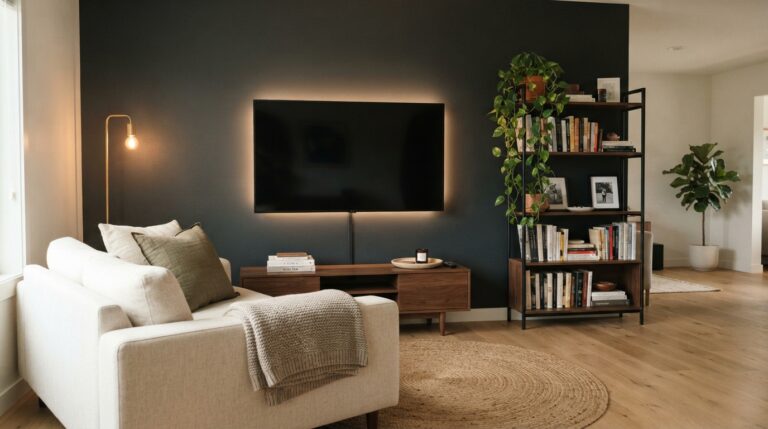
12 Fireplace Living Room Ideas That Make the Whole Room Feel Warmer
A fireplace changes the way a whole living room behaves. People drift toward it without thinking, chairs get pulled a little closer in winter, and somehow that’s where everyone ends up talking long after the coffee has gone cold. But figuring out how to arrange furniture around one? That part trips up a lot of homeowners.
Some rooms beg for perfect symmetry. Others feel better with the sofa pushed slightly off to one side, especially when there’s a TV, a wide window, or an awkward corner in play. And in bigger open rooms, the fireplace often needs help from shelves, art, or a well-placed rug to feel like it belongs instead of floating on a blank wall.
The 12 ideas ahead cover all of it. Exposed brick and antique wood for anyone chasing that lived-in cottage feel, clean minimal setups for those who like breathing room, deep U-shaped sectionals built for movie nights, and a few clever tricks for cozying up a room that feels too large.
1. Off-Center Works Too
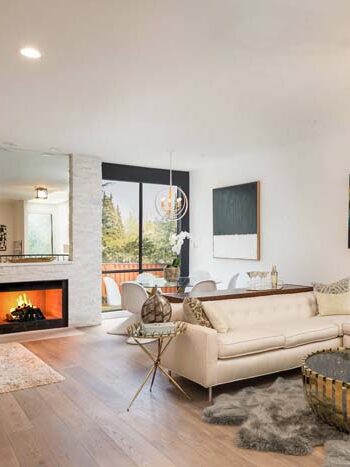
A fireplace doesn’t have to sit dead center on the wall to anchor a room. Plenty of older homes have one tucked slightly to the left or right, and fighting that with forced symmetry usually makes the whole space feel stiff.
The smarter move is leaning into it. Angle the sofa so it faces the fire while a pair of chairs fills the wider side of the wall, then let a low bookcase or a leggy console soak up the leftover space. Balance comes from weight, not from matching halves. That’s why an off-center hearth still feels calm once the seating spreads evenly around it, and it’s usually the arrangement where people naturally claim the chair closest to the flames on a cold night.
Sometimes the quietest details do the loudest work.
2. Surround Your Fireplace with Shelves

Where the last setup solved an awkward wall with furniture placement, this one solves it with built-ins. Flanking the fireplace with floor-to-ceiling shelves instantly makes the hearth look intentional, like it was always meant to be there.
The reason this works comes down to framing. Tall vertical shelving pulls the eye up and gives the fireplace a set of visual bookends, so it stops reading as a random hole in the wall. Keep the shelves styled loosely with books laid flat, a few ceramics, and one trailing plant so nothing feels staged. Leave some gaps on purpose. That’s what keeps a wall of shelves from looking like a showroom, and it gives you somewhere to stash the paperbacks that pile up by the sofa.
Works beautifully with painted brick, stone, or plain drywall surrounds alike.
💡 Pro Tip: Paint the shelf backs the same color as the wall and the fireplace surround. The whole wall reads as one unit instead of three competing pieces, which makes a narrow room feel wider.
3. Cozy Up a Large Living Room
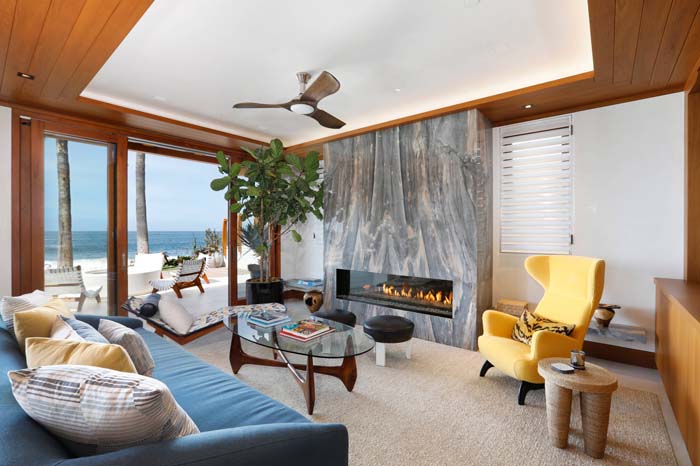
Big rooms have a habit of making a fireplace look lonely. All that open floor pulls attention away from the hearth, and suddenly the warmest thing in the room feels like an afterthought stuck against a far wall.
The fix is pulling everything inward. Float the seating group on a large rug so it sits closer to the fire instead of hugging the walls, then use the leftover perimeter for a reading nook or a few clever home storage solutions that fill dead corners without crowding the middle. Furniture pushed to the edges makes a room feel emptier, not bigger. Bring it close and the space starts feeling like somewhere you’d actually curl up on a rainy Sunday.
That’s usually the moment a big house finally starts feeling like a home.
4. Try Ditching the Symmetry
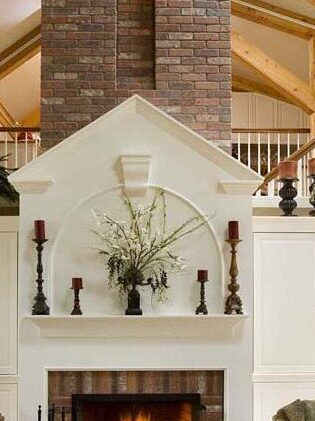
Matching pairs feel safe. Two identical chairs, two identical lamps, everything mirrored down the middle. It looks tidy in photos, but it can also make a living room feel like nobody actually lives in it.
Asymmetry brings the personality back. Try a long sofa on one side of the fireplace and a single wide armchair on the other, or swap one end table for a stack of vintage suitcases. The trick is keeping visual weight roughly even while letting the shapes differ, so the room reads relaxed instead of chaotic. A mismatched setup also gives you permission to keep the chair you love even though it matches nothing else you own.
Rooms that break their own rules tend to be the ones people remember.
5. Blend In
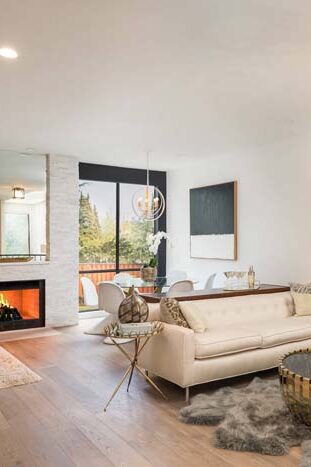
Not every fireplace wants to shout. Some rooms feel calmer when the hearth melts into the wall completely, painted the same shade as the surrounding trim and drywall so the whole surface reads as one quiet plane.
This approach shines in smaller rooms and modern builds where a heavy stone surround would eat the space. Losing the contrast lets the eye glide across the wall uninterrupted, so the room feels taller and less busy, and the fire itself becomes the only detail that stands out once it’s lit. Some homeowners take it further with flush cabinetry beside the hearth, tucking away remotes, blankets, and the kind of hidden storage spots that keep clutter completely out of sight.
Understated does not mean boring. Sometimes it just means confident.
6. Big Couches and Symmetry
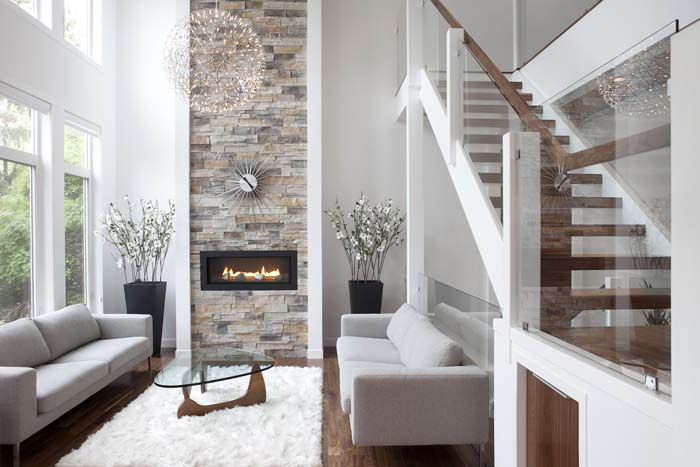
After all that talk of breaking the rules, here’s the case for keeping them. A wide, deep sofa centered squarely on the fireplace with matching side tables gives a room a kind of steadiness that mismatched pieces can’t quite copy.
Symmetry works because the brain stops searching for balance and just settles. Line up a generous three-seater facing the hearth, add a pair of identical lamps at either end, and let a large square coffee table hold the middle ground. Big furniture needs that structure or it starts looking like it wandered in by accident. The payoff shows up on a Friday night when three people can sprawl across the same couch without anyone fighting for the good spot.
There’s a reason this layout has stuck around for a century.
7. Make the Fireplace the Focal Point

Every living room needs one thing that pulls your eye first. When a fireplace competes with a TV, a gallery wall, and a busy bookcase all at once, nobody wins and the room feels restless.
Giving the hearth top billing is mostly about subtraction. Clear the mantel down to two or three pieces, keep the surrounding walls calm, and angle the seating so it points at the fire rather than at a screen. Anything that has to live nearby can disappear into baskets, a bench with a lift-top lid, or a few smart IKEA storage hacks that hide the clutter without adding visual noise. Once the distractions vanish, guests naturally look toward the flames the second they walk in.
Ask yourself what you want people noticing first. Then quiet everything else down.
🎯 Suggestion: Hang one oversized piece of art or a single tall mirror above the mantel instead of a cluster of small frames. One big statement reinforces the focal point, while five little ones split attention and undo the effect.
8. Go Rustic with Exposed Brick and Antique Furniture

There’s something about old brick that no smooth finish can imitate. The uneven color, the chipped edges, the mortar that never quite lines up. It gives a fireplace a history even in a house that was built last year.
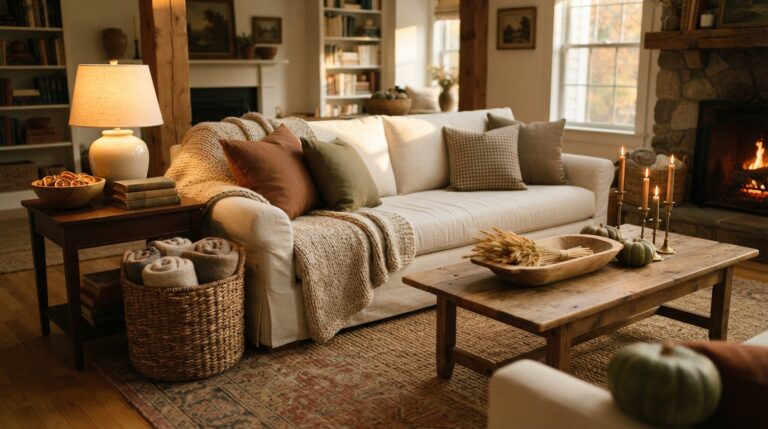
Pair it with furniture that has some age on it. A worn leather chair, a farmhouse trunk standing in for a coffee table, a wooden bench with visible saw marks along the legs. Rough textures next to rough textures build depth, which is exactly why rustic rooms feel warm before the fire is even lit. Add a wool throw and a woven basket of split logs and the corner starts looking like it belongs in an old countryside cottage.
Layer a few pieces that show wear and the room stops looking decorated. It starts looking lived in.
9. Add Visual Interest with Art and Mirrors
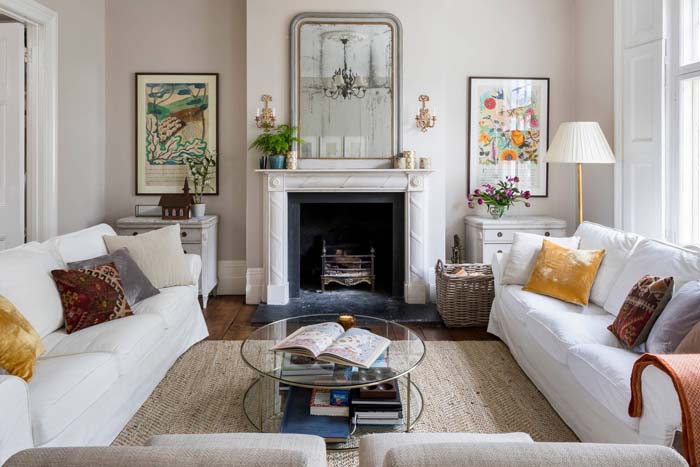
The wall above a mantel is prime real estate, and leaving it blank is a missed opportunity in most rooms. It’s the first place eyes land, so whatever hangs there sets the tone for everything below it.
Mirrors do double duty. They bounce firelight across the room after dark and make a small living room feel considerably deeper than it is. Art brings mood instead of light, and one large canvas usually beats a scattered collection because the fireplace stays the star. Some collectors even display their own handmade work above the hearth, from pottery to the kind of stunning artistic transformations that turn forgotten objects into showpieces. Lean a framed piece on the mantel instead of hanging it if you like swapping things out seasonally.
Guests almost always comment on whatever sits above the fireplace. Might as well make it something you love.
10. Sit by the Fire
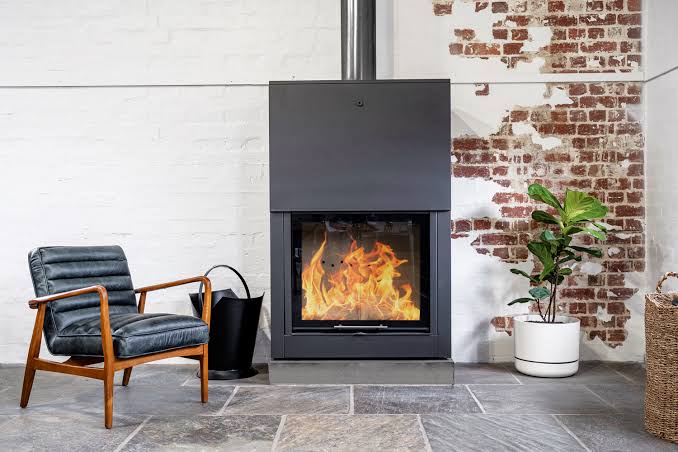
Most layouts put seating a polite distance from the hearth. But the best spot in any room with a fireplace is the one close enough to actually feel the heat on your shins.
Build that in on purpose. A low bench across the front, a pair of poufs you can drag forward, or two small armchairs pulled in tight will do more for a room’s atmosphere than any accessory. Proximity is what makes a fireplace functional instead of decorative, and rooms that ignore it end up with a beautiful hearth nobody uses. Winter evenings tend to sort themselves out once there’s a chair close enough for a book and a blanket.
Some houses even have a wide stone ledge built right at the base, which becomes everyone’s favorite perch without anyone planning it.
💡 Pro Tip: Choose lightweight seating for the pieces closest to the fire. Poufs, stools, and slim armchairs move easily, so you can slide them forward on cold nights and push them back when the room needs open floor.
11. Try a Minimalistic Interior
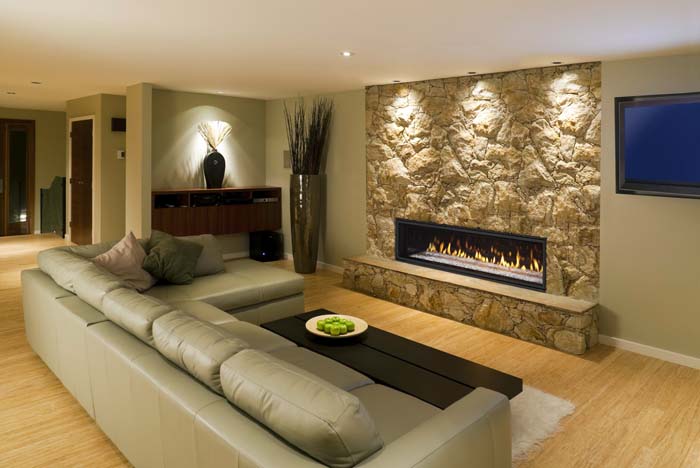
Minimalism and fireplaces get along better than you’d expect. Strip a room down to a few clean lines and the fire becomes the only thing moving in the whole space, which gives it far more presence than a crowded room ever could.
Keep the palette tight. Warm whites, soft greys, pale oak, maybe one black accent for contrast. A single low sofa, one slim side table, and a mantel holding nothing but a small vase is genuinely enough. Empty space isn’t wasted here, it’s what lets the eye rest, and that’s the whole reason minimal rooms feel calm the second you sit down. On a quiet evening the flames end up being the only thing you’re really looking at.
Less on the walls, more attention on the fire.
12. Make it the Center Place of a U-shaped Sectional
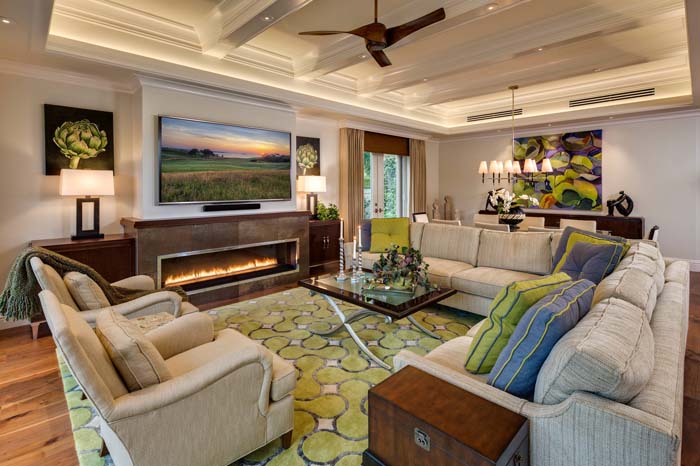
A U-shaped sectional wrapped around a fireplace is about as social as a living room gets. Everyone faces inward, nobody gets stuck on the outside of the conversation, and the fire sits right in the middle of it all.
The shape does the heavy lifting. Three connected sides create an enclosed pocket that holds warmth and sound, so voices carry easily and the room feels contained even when the house is large. Keep the open end pointed at the hearth, drop a big soft rug underneath, and skip the bulky coffee table in favor of two small ottomans that can move. Movie nights, board games, and holiday gatherings all fit into this layout without anyone dragging in extra chairs.
By the third hour someone’s usually asleep under a blanket in the corner, which is the honest sign that a living room got it right.
Frequently Asked Questions
How far should furniture sit from a fireplace?
Around three feet is the sweet spot for most rooms. Close enough to feel the warmth, far enough that nothing gets scorched or uncomfortably hot after an hour. Anything with fabric or wood should stay outside that zone, and rugs need the same treatment since stray sparks land more often than people expect. If you have a screen in front, you can nudge seating slightly closer without worry.
Can I put a TV above the fireplace?
You can, though it’s rarely the most comfortable choice. Mounting a screen that high forces your neck upward for the entire movie, and heat rising off the hearth isn’t great for electronics either. A better option is placing the TV on an adjacent wall so seating can angle toward both. Some homeowners solve it with a pivoting mount, which lets the screen turn away when the fire is the main event.
Should the sofa face the fireplace or the window?
Face the fireplace if you use it regularly, since that’s where people naturally gather once it’s lit. Rooms with a great view can split the difference by angling the sofa between the two, or using swivel chairs that turn either direction. Facing a window head-on also creates glare problems during the day, which is worth thinking about before committing.
What size rug works best in front of a fireplace?
Big enough that the front legs of every seat land on it. That’s what visually ties the group together instead of leaving furniture floating on bare floor. Leave a small gap between the rug edge and the hearth for safety, and choose wool or a tight flatweave since loose shag fibers and open flames are a bad combination.
How do I make a fireplace look good when it doesn’t work?
Fill the firebox instead of leaving it empty. Stacked birch logs, a cluster of pillar candles, a row of lanterns, or even a woven basket all read as intentional. Painting the interior a deep matte black adds depth so the opening doesn’t look hollow. A non-working hearth still anchors a room perfectly well as long as it doesn’t look neglected.
Does the mantel need to be decorated?
Not heavily. Two or three pieces at varying heights usually beat a full row of small objects, and one oversized item leaning against the wall works even better in minimal rooms. Overcrowding a mantel pulls attention away from the fireplace itself, which defeats the purpose. Leaving some breathing room is what makes the whole thing look styled rather than stacked.
Conclusion
A fireplace gives a living room its center of gravity, and everything else is just deciding how to arrange life around it. Some of these ideas lean cozy, some lean clean, and a few break the rules on purpose. None of them require gutting the room.
Start with the one thing that bothers you most. Maybe the sofa sits too far back, maybe the mantel is doing too much, maybe the whole corner feels forgotten. Fix that first and the rest tends to fall into place on its own.
Then light it, sit down, and see how the room feels. That’s usually all the feedback you need.