20 Vaulted Ceiling Living Room Ideas That Actually Feel Cozy
A vaulted ceiling changes how a living room feels before a single piece of furniture goes in. The air moves differently. Light travels farther. Sound softens instead of bouncing off a flat ceiling eight feet overhead.
But height alone doesn’t make a room feel finished. Plenty of vaulted ceiling living rooms end up feeling cold and echoey, like a nice hotel lobby nobody wants to sit in. The difference always comes down to what happens up there. Exposed beams, warm wood planks, the right light fixture hanging at the right height, a fireplace wall that pulls the eye back down to human level.
The 20 ideas below cover all of it. Some lean rustic with aged timber and iron. Others go clean and bright with white planks and tall windows. A few show how to keep that soaring feeling while still making the room somewhere people actually curl up on a Friday night with the good blanket.
Height is the gift. These ideas show how to use it.
1. Add Natural Wood and Gray Contrast for a Modern Look

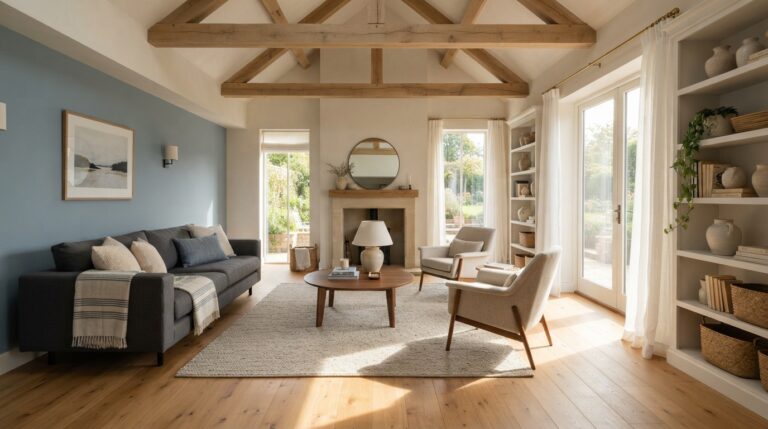
Warm oak beams stretched across a soft gray ceiling. That single pairing does more for a modern living room than a whole wall of art, because the wood keeps the gray from going flat and cold.
Gray on its own can read a little sterile, especially in a tall room where light bounces around all day. Natural wood fixes that instantly. The grain gives the eye something to land on, and the honey tones warm up everything below, from a charcoal sectional to a wool rug in dove and cream. It’s the kind of ceiling that makes a rainy afternoon on the couch feel cozy instead of gloomy.
Proof that small choices carry the biggest weight.
2. Make a Bold Statement with Dark Wood Beams

Deep walnut beams against a white ceiling read like heavy brushstrokes. They pull your eye straight up the moment you walk in, then hold it there.
The reason this works so well is contrast doing the heavy lifting. Dark timber against a pale ceiling creates hard lines the eye follows naturally, so a tall room suddenly has structure instead of just empty volume above your head. It also gives you permission to keep everything else quiet. A linen sofa, a jute rug, a few clay pots on the mantel, and the room still feels layered because the ceiling is already talking.
Guests tend to notice the beams before they notice the furniture.
3. Bring Nature into Your Living Room with Plants
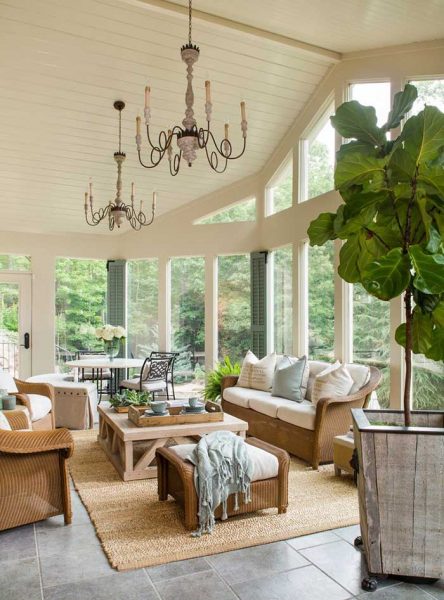
A fiddle leaf fig that finally has room to grow. That’s the quiet luxury of a vaulted ceiling, and it changes the whole mood of the room.
Tall ceilings leave a strange gap between furniture height and the peak, and plants fill it better than anything you could hang. A rubber tree in the corner, a hanging pothos trailing down from a beam, a bird of paradise near the window catching afternoon sun. The greenery breaks up all that vertical blankness and softens the hard angles where walls meet ceiling.
Mornings feel different in a room like this. Coffee on the couch, sunlight moving across the leaves, the whole space breathing a little.
4. Upgrade Your Home with Dark Contrasting Wood Ceilings

Here’s the move most people are scared to make: cover the entire vault in dark wood, not just the beams.
Espresso planks running the full slope sound risky in a living room, and they would be at standard height. But a vaulted ceiling has enough volume to absorb that much darkness without shrinking. The height keeps it from pressing down, and the wood turns all that open air into something that feels intentional and enclosed in the best way. Pair it with white walls and pale flooring so the contrast stays crisp.
The payoff shows up at night, when lamplight hits the grain and the ceiling glows amber instead of disappearing.
5. Allow Natural Light into the Room with Ceiling Windows
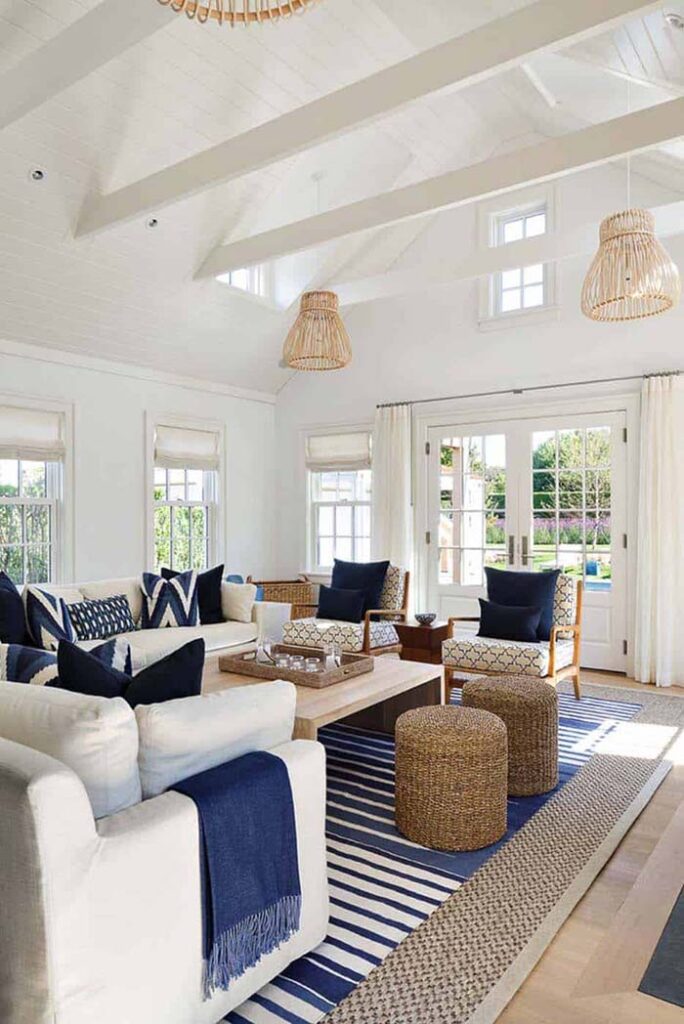
Skylights cut into a vaulted slope do something regular windows can’t. Light comes down instead of sideways, and it fills the whole room evenly.
Side windows only reach so far before the back half of a living room goes dim, which is why so many tall rooms need lamps on at two in the afternoon. Overhead glass solves that. The sun tracks across the ceiling all day, so the light keeps shifting, and a white ceiling bounces it deeper into the space. Place them on the slope facing away from harsh afternoon sun if you can.
Rainy days are the best part. You hear it and see it at the same time.
💡 Pro Tip: Add a remote-controlled shade to any skylight facing south or west. It costs a little more upfront, but it saves your sofa fabric from fading and keeps the room from turning into a greenhouse in July.
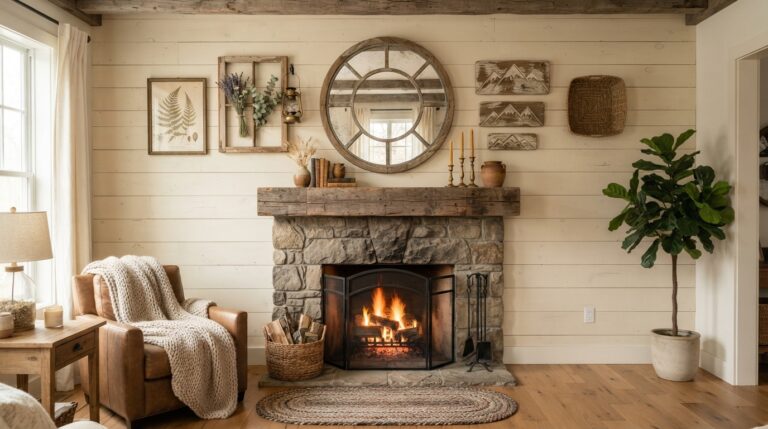
6. Create a Focal Point with a Rustic Fireplace Wall
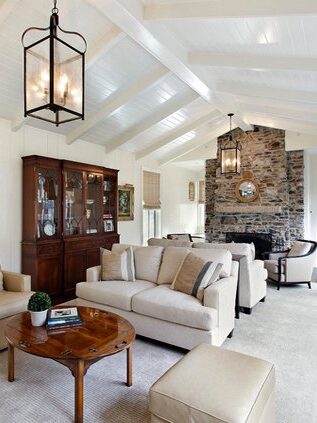
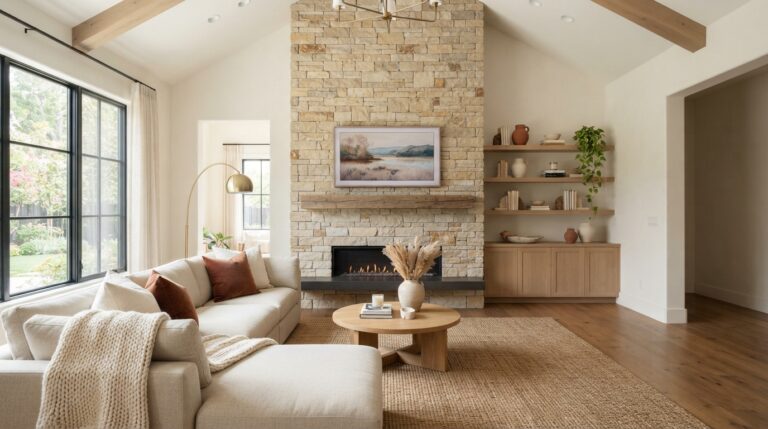
Stacked stone running floor to peak. It gives a vaulted ceiling something to lean on, and it stops the room from feeling like all that height has nowhere to go.
Tall rooms need an anchor, otherwise your eye keeps drifting upward with nothing to settle on. A full-height fireplace wall solves it in one shot, because the texture pulls attention across the whole vertical run instead of stopping at the mantel. Rough fieldstone, reclaimed brick, or a chunky timber beam laid across the top all work. Keep the hearth low and deep so the seating still feels grounded.
Winter evenings are what this wall was built for. Fire going, one lamp on, everyone gravitating toward the warm end of the room.
Suggestion: Angle two armchairs toward the fireplace rather than lining everything up flat against the wall. It shortens the distance across the seating area and makes a big room feel like a conversation spot instead of a waiting area.
7. Add Character to Vaulted Ceilings with Brass
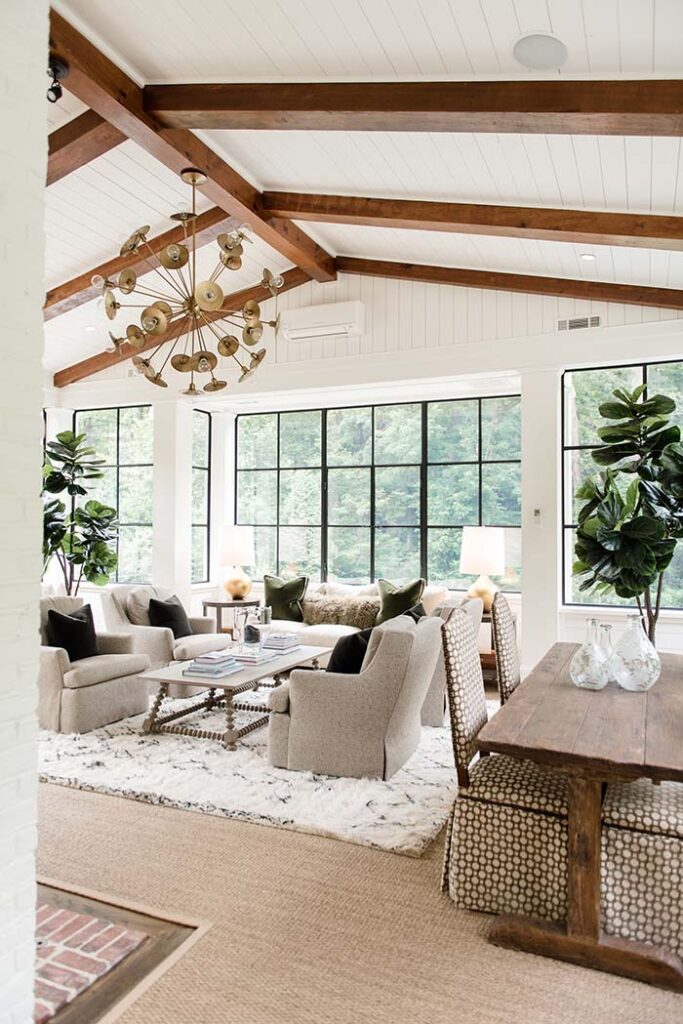
A brass fixture hanging from a vaulted peak catches light in a way black metal never will. It glints, softens, and warms the whole space above eye level.
The reason brass belongs up there comes down to scale. High ceilings swallow small details, so the metal needs something on its side, and reflection is what gives brass presence from twenty feet below. Unlacquered finishes work best because they age into a deeper tone instead of staying showroom shiny. Repeat it in smaller doses too, maybe a curtain rod, a coffee table base, or the hardware on built-ins flanking the fireplace.
That little repetition is what makes a room look designed rather than decorated.
8. Create a Bright and Airy Living Room with Vaulted Ceilings
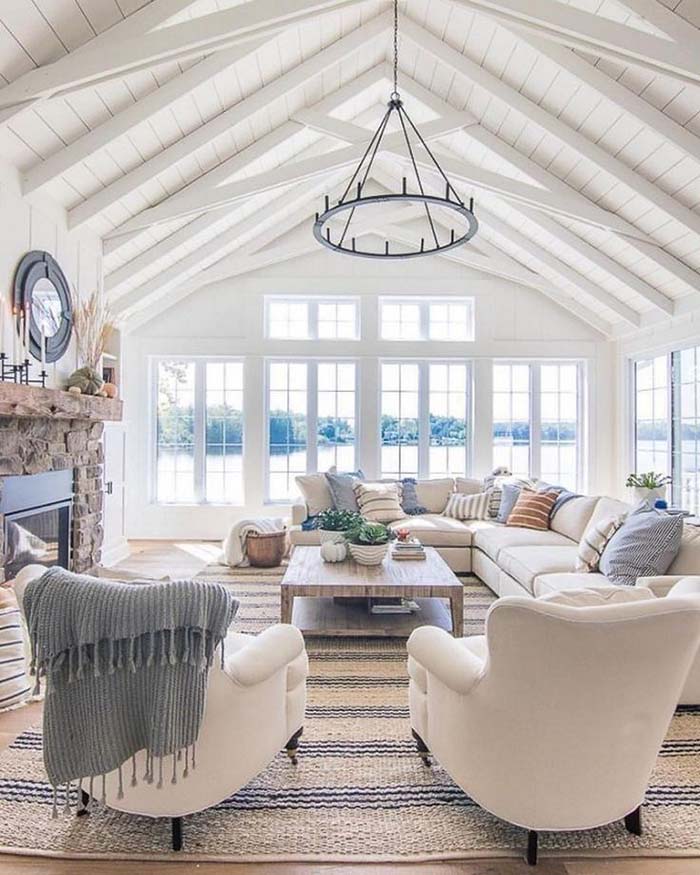
White ceiling, white walls, pale oak floors, and almost nothing overhead except height. Some rooms don’t need beams at all.
Going fully light works because a smooth vault reflects instead of interrupting. Every bit of sunlight coming through the windows hits that pale slope and scatters, which is why these rooms stay bright long after the sun moves off the glass. The trick is texture, not color. A boucle chair, a nubby wool throw, a rattan basket by the hearth, all in the same soft range so the room feels layered without going busy.
Walking in on a clear morning is genuinely a good way to start the day.
9. Enjoy a Panoramic View from Your Living Room
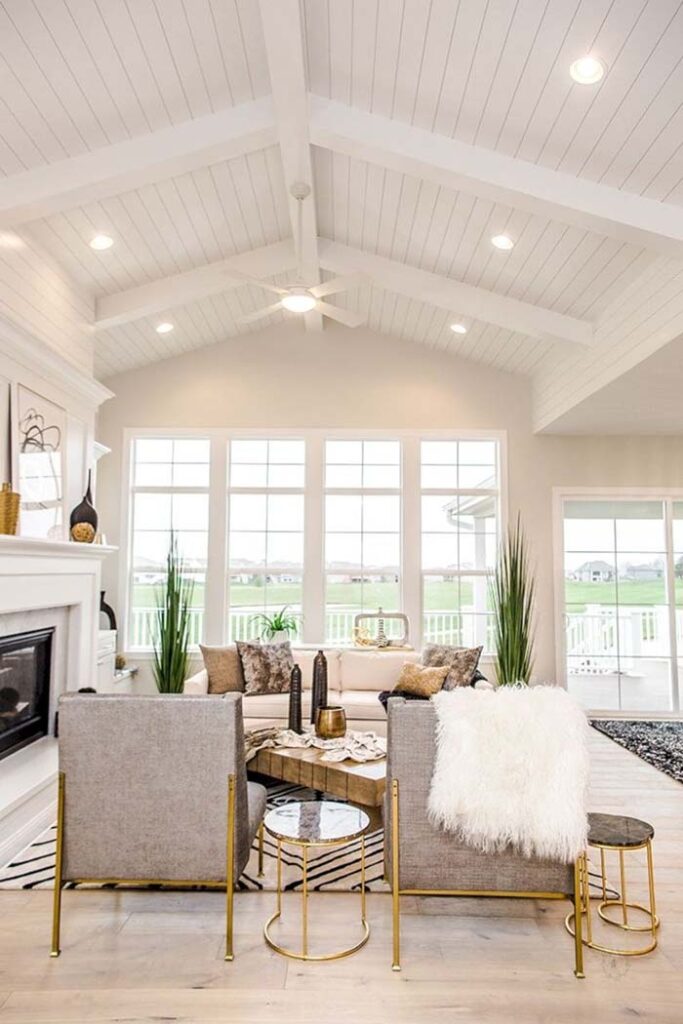
When the back wall is glass all the way to the peak, the ceiling stops being the main event. The view takes over.
That’s the whole point of pairing a vault with floor-to-ceiling windows. The slope of the ceiling naturally draws your eye toward the tallest part of the glass, so trees, hillside, water, whatever is out there gets framed instead of just glimpsed. Keep window treatments minimal, or skip them entirely on the upper section. Furniture should face outward too, with low backs on anything sitting between the seating and the view.
You also gain something practical here. A room like this rarely needs daytime lighting, which quietly cuts what you spend keeping it comfortable.
💡 Pro Tip: Have the upper glass panels treated with a low-E coating. You keep the full view and the light, but the room stops turning into an oven by mid-afternoon, and your flooring won’t bleach out along the sunny edge.
10. Build a Contemporary Living Room with Black and White
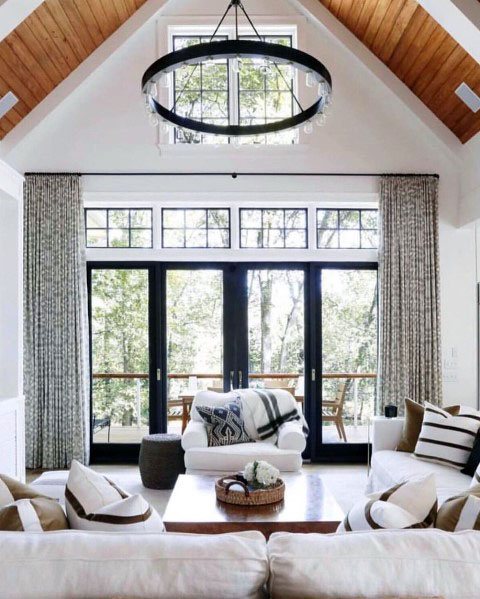
Black window frames, white vaulted ceiling, and not much in between. It reads sharp and current without trying hard.
The reason this palette holds up in a tall room is edge definition. Black outlines every opening and angle, so the white ceiling looks deliberately shaped rather than just big and blank. Push the contrast further with a charcoal sofa, a black iron chandelier at the peak, and white walls left mostly bare. Then break it once with something warm, a leather ottoman or a walnut side table, so the room doesn’t tip into graphic-print territory.
That one warm piece is what keeps a black and white room feeling livable instead of staged.
11. Transform Your Space with a Sleek and Simple Vaulted Ceiling
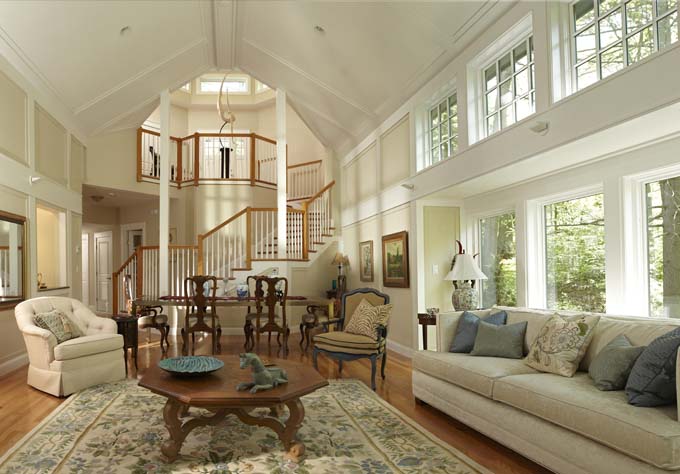
No beams, no planks, no fixture at the peak. Just a clean drywall slope painted the same white as the walls.
Restraint like this works because the ceiling angle is already interesting on its own. Adding wood or metal to a smooth vault sometimes competes with the shape instead of showing it off, and a single continuous surface lets the geometry read clearly from every seat in the room. Keep the trim minimal where the ceiling meets the wall so there’s no visible break in the line. Recessed lighting tucked close to the slope handles the rest.
Less to look at overhead means more attention on the sofa you actually spent money on.
12. Combine Living and Dining Spaces for a Modish Look
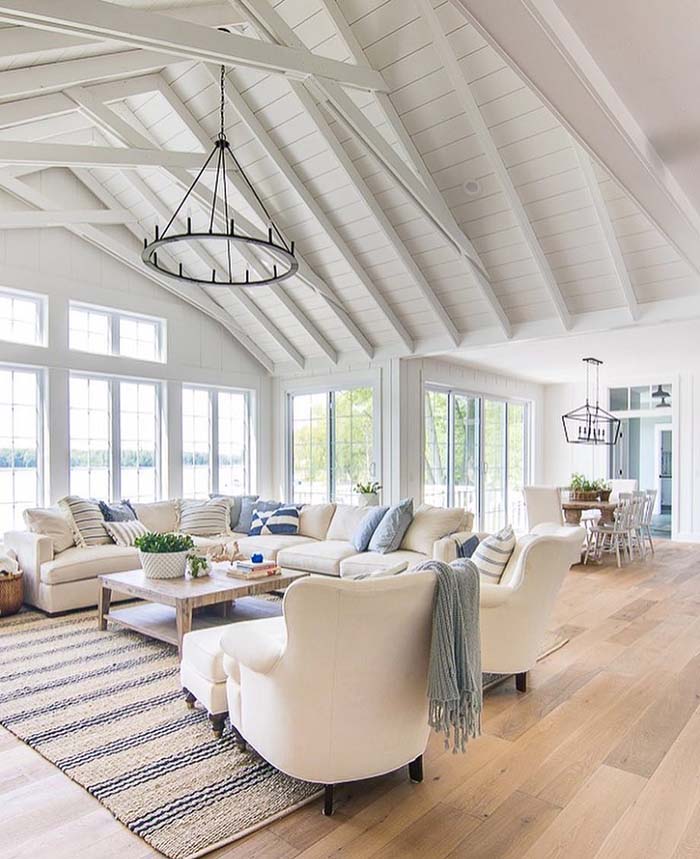
One vaulted ceiling running over both the sofa and the dining table. No wall between them, no drop in height anywhere along the way.
A continuous vault is what makes an open plan feel intentional instead of accidental. When the ceiling never breaks, the two zones read as one large room rather than a living room that ran out of space, and beams running the full length reinforce that direction. Define the areas below instead. A rug under the seating, a low pendant over the table, maybe a console standing in as a soft divider.
Hosting gets easier when whoever is cooking, sitting, and eating can all still hear each other.
13. Add More Visual Dimension with Long Planks
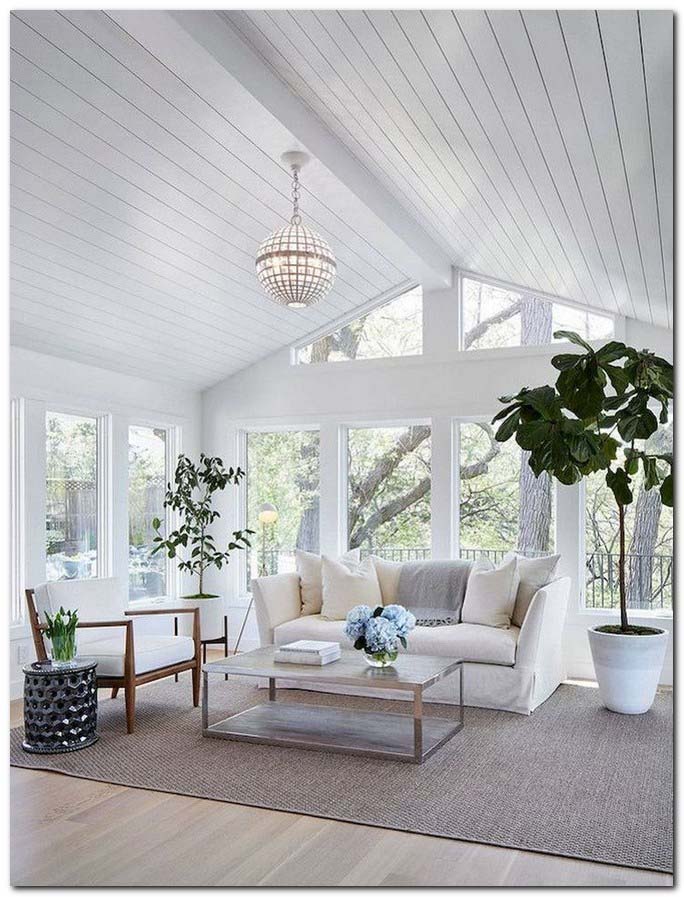
Narrow boards running the full length of the slope, peak to wall, with no seams breaking them up. The ceiling suddenly has direction.
Long planks work because the eye follows a line to its end, and an unbroken run makes a vault feel taller and deeper than it measures. Shorter boards with staggered joints do the opposite. They chop the surface into pieces and the height gets lost in the pattern. Tongue and groove in a pale wash keeps things airy, while a natural stain leans warmer without going heavy.
There’s a satisfying moment when you lie back on the couch and realize every board lines up perfectly.
Suggestion: Run the planks in the same direction as the longest wall in the room rather than following the roof slope. It stretches the space visually and makes a narrow living room feel noticeably wider from the doorway.
14. Embrace Classic Aesthetics with Distressed Beams
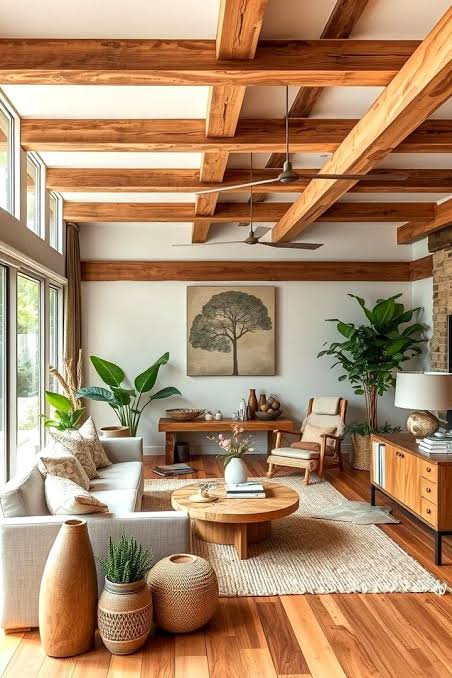
Beams with saw marks still in them, edges knocked soft, color uneven from one end to the other. They look like they’ve been holding up the roof for a century.
Distressing matters more in a vaulted room than a flat one, because those beams sit close enough to eye level along the low walls that perfectly smooth timber starts looking manufactured. Rough texture reads as real from across the room. Hand-hewn faces, visible checking, a little variation in tone between pieces. Pair them with plaster walls and a worn leather chair so nothing else in the room looks brand new either.
Rooms like this tend to feel settled the day you finish them.
15. Use Ceiling Lights to Create an Enchanting Ambiance
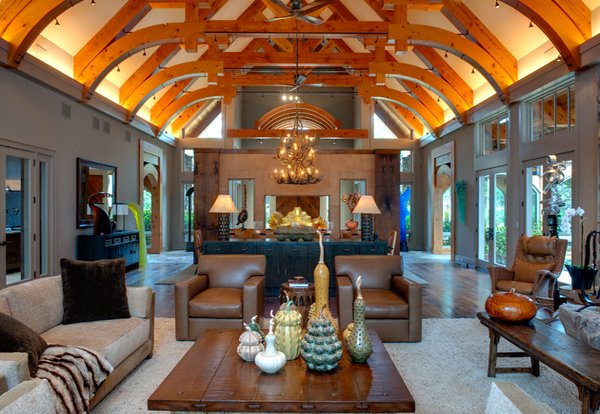
One fixture at the peak is rarely enough. Vaulted rooms need light at a few different heights to feel right after dark.
Here’s why. A single pendant twelve feet up throws light down in a cone and leaves the corners dim, which makes a big room feel emptier at night than it does at noon. Layering fixes it. A chandelier at the highest point, recessed cans washing the slope, then a couple of wall sconces at seated height. Put the overheads on dimmers so you can pull the brightness down as the evening goes.
The room stops feeling grand around nine o’clock and starts feeling like somewhere you’d stay up talking.
16. Give Your House a Vintage Look with Aged Beams
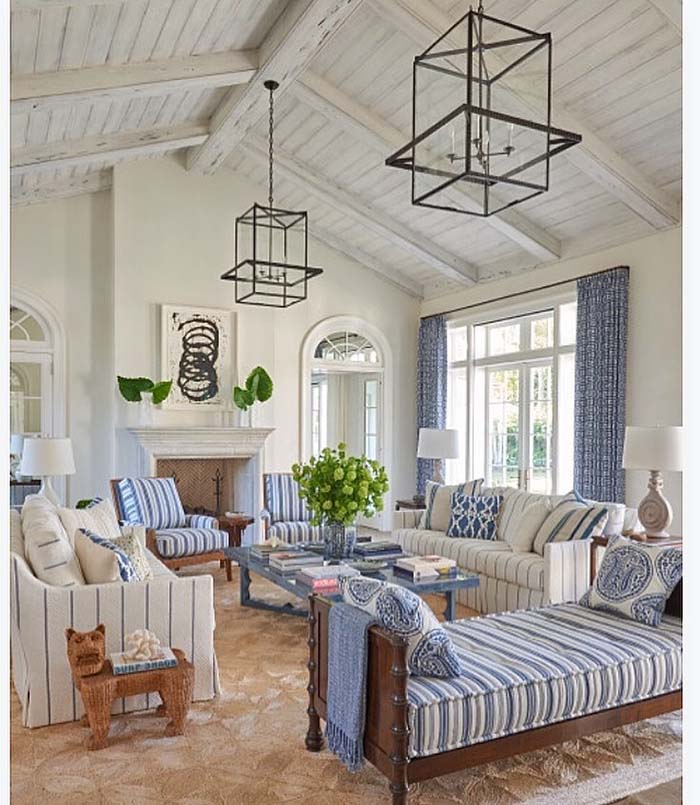
Salvaged timber comes with a record of its old life. Mortise pockets, square nail holes, a gray patina no stain can fake.
That history is exactly what a new vaulted ceiling is missing. Fresh construction reads clean and a little blank overhead, and reclaimed beams give the space a starting point that feels older than the house itself. Barn timber and old factory joists both work well since they were cut wide and left rough. Leave the surface alone apart from a light seal, because sanding it smooth erases the whole reason you chose it.
Ceilings like this quietly make everything below look like it was collected over years rather than ordered at once.
💡 Pro Tip: Ask for beams that have been kiln dried before installation. Reclaimed wood straight out of a barn still holds moisture, and it can twist or crack months after it goes up, right where you can’t reach it.
17. Define Your Room with Black Metal Cross Beams
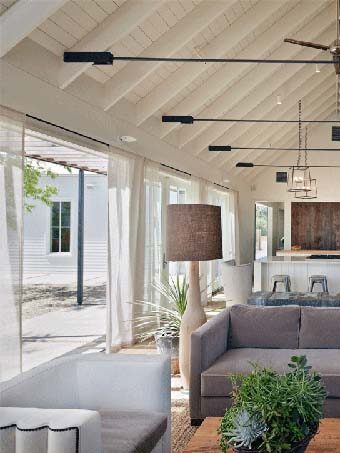
Steel running horizontally across the open span, painted matte black, thin enough to see past. Structure you can actually look through.
Metal earns its place here because it does the job with far less bulk than timber. A wood beam wide enough to cross that distance would sit heavy overhead, while a slim steel section holds the same line and leaves the ceiling feeling open behind it. The dark finish reads almost graphic against white drywall, which gives a plain vault some architecture without adding weight. Two or three spaced evenly beats one lonely beam in the middle.
Industrial rooms usually get called cold, but this detail is the part that keeps them from looking flimsy instead.
18. Evoke a Sense of Calm with Vaulted Ceilings
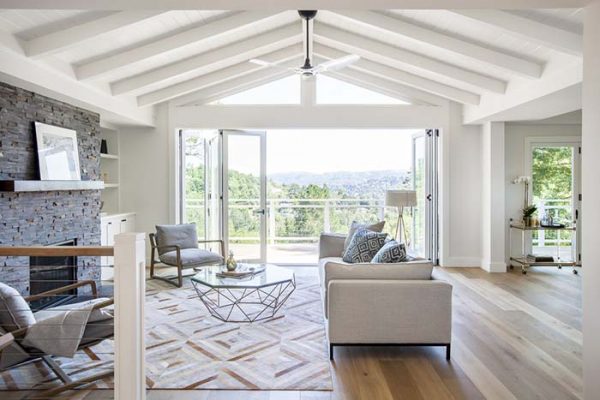
Some rooms make your shoulders drop the moment you sit down. Height has more to do with that than most people realize.
Extra volume above your head changes how the air feels and how sound behaves. Voices don’t bounce back at you, the room stays a degree or two cooler in summer, and there’s simply less pressing in on you than under a standard ceiling. Lean into it with a quiet palette. Oatmeal upholstery, unbleached linen curtains, soft matte white overhead, and nothing hanging that demands attention.
Sunday afternoons in a room like this go slower. Book open, nobody talking, light moving across the far wall while an hour disappears without much notice.
19. Add Life to Your Living Room with Striped Textures

Evenly spaced beams read as stripes from below, and stripes give a big ceiling rhythm it wouldn’t have otherwise.
Repetition is what makes the difference. A single beam looks structural, but six or eight running parallel at consistent intervals turn the whole slope into a pattern, and your eye moves along it instead of stopping dead. Tighter spacing feels detailed and cottage-like. Wider gaps read modern and calm. Echo the idea below with a striped rug, a ticking-stripe pillow, or slatted wood on the fireplace surround.
Look up in a room like this and the ceiling actually holds your attention for a second, which is rare.
💡 Pro Tip: Measure your span and divide it evenly before installing anything. A narrow leftover gap at one end is the detail people notice every single time, and there’s no fixing it once the beams are up.
20. Bring Farmhouse Charm with a Rustic Chandelier

Wrought iron, exposed bulbs, maybe a wood frame gone gray with age. Hung from the peak, it becomes the one thing everyone looks at first.
Farmhouse rooms need something imperfect up there, and a rustic fixture delivers it better than anything polished could. The visible hardware and uneven finish match the roughness of the beams around it, so the ceiling reads as one story instead of old wood with a new light bolted through it. Size up rather than down. Fixtures that look enormous on the floor shrink fast once they’re twelve feet overhead.
Long tables, warm bulbs, people staying past dessert. That’s the room this light belongs in.
Suggestion: Hang it low enough that the bulbs sit within the top third of the room rather than tucked up near the peak. You get real light on the seating below, and the fixture stops looking like it’s floating away from everything else.
You Might Also Love These Ideas
- DIY Plastic Chair Planters. Old seats and broken tiles reborn as textured garden pots with a warm, handmade glow.
- 50 Breathtaking Cities Worldwide. Golden rooftops, misty harbors, and lantern-lit streets that stay with you long after the trip ends.
- Grow Carrots in Plastic Bags. Sweet, fat roots pulled from soft soil, no garden or muddy boots required.
- Ice Cream Tulips. Creamy pink and white petals swirled like soft serve, blooming in cool spring light.
Frequently Asked Questions
Do vaulted ceilings make a living room feel bigger?
Yes, and the difference is immediate. All that extra volume overhead removes the closed-in feeling of a standard eight-foot ceiling, so even a modest footprint reads open and generous. The effect gets stronger with pale paint and tall windows, since light travels farther before it runs out of room.
Are vaulted ceilings hard to heat and cool?
They can be, mostly because warm air rises and settles up near the peak where nobody is sitting. Ceiling fans set to push air downward in winter help a lot, and good insulation in the roof deck matters more here than almost anywhere else in the house.
What kind of lighting works best with a vaulted ceiling?
Layers, not one big fixture. A pendant or chandelier at the peak handles the center, recessed cans wash the slope, and wall sconces bring light down to seated height. Put everything on dimmers so the room can shift from bright afternoon to soft evening.
Should beams match the floor?
Not exactly, and matching too closely often looks flat. Aim for the same family of tones instead, then let the ceiling sit a shade or two darker or lighter than the flooring. That small gap gives the room depth without the two surfaces competing.
How do you keep a tall living room from feeling cold or echoey?
Soft surfaces do the work. A large rug, full-length curtains, upholstered seating, and a few woven baskets all absorb sound that would otherwise bounce around the vault. A full-height fireplace wall or wood plank ceiling adds visual warmth at the same time.
Can you add a vaulted ceiling to an existing room?
Sometimes, depending on what’s holding up the roof. Homes with truss framing usually need structural work before anything opens up, while rafter-framed attics are often easier. It’s worth having a structural engineer look before you plan anything else.
CONCLUSION
Vaulted ceilings give you something most rooms never get, which is room to breathe. What you do with that height decides everything else.
Some of these ideas lean heavy and warm, with dark timber, salvaged beams, and stone climbing the fireplace wall. Others go the opposite direction and let a clean white slope carry the whole room on its own. Neither approach is more correct. It comes down to whether you want the ceiling to be the story or the quiet backdrop for everything below it.
If you only take one thing from this list, make it the layered lighting. A tall room without light at three different heights always feels a little unfinished after dark, no matter how good the ceiling looks at noon.
Start with the ceiling, then work your way down. The rest of the room tends to fall into place once that part is settled.