22 TV Wall Ideas That Actually Look Good in a Living Room
Every living room runs into the same question sooner or later. Where should the TV go, and how do you keep it from looking like a black rectangle stuck on the wall?
The screen usually wins by default. Furniture points at it, lamps work around it, and the whole layout quietly bends to fit. But a TV doesn’t have to run the show. With the right height, the right wall, and a few well-placed pieces around it, that screen can settle in like it was part of the plan from day one.
Some of these ideas lean warm and rustic. Others go clean and modern, or tuck the TV in so naturally that guests notice the bookshelf first. There are corner setups made for small apartments, built-in units for busy family rooms, and art-filled walls that make movie night feel a little more special.
Twenty-two ideas below, each one built around the same simple goal: a living room that still feels like a living room, screen and all.
1. Try Some Natural Light
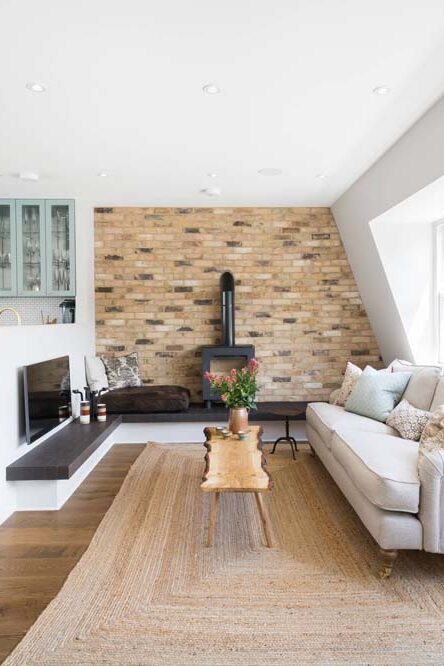
A TV sitting near a big window sounds like a mistake until you see it done right. Place the screen on the wall beside the window instead of across from it, and daylight skims past the glass rather than bouncing straight back at you.
That one shift changes the whole feel of the room. Sheer white curtains soften the glare during the day, the surrounding wall stays bright, and the black screen stops looking like a hole punched into the drywall. Add a low oak console underneath and a trailing plant on one end, and the corner reads like a living space first. Afternoon coffee with the news on stops being a squint-fest.
Best suited for south-facing rooms and anyone tired of closing the blinds just to watch something.
2. Behind the Sofa
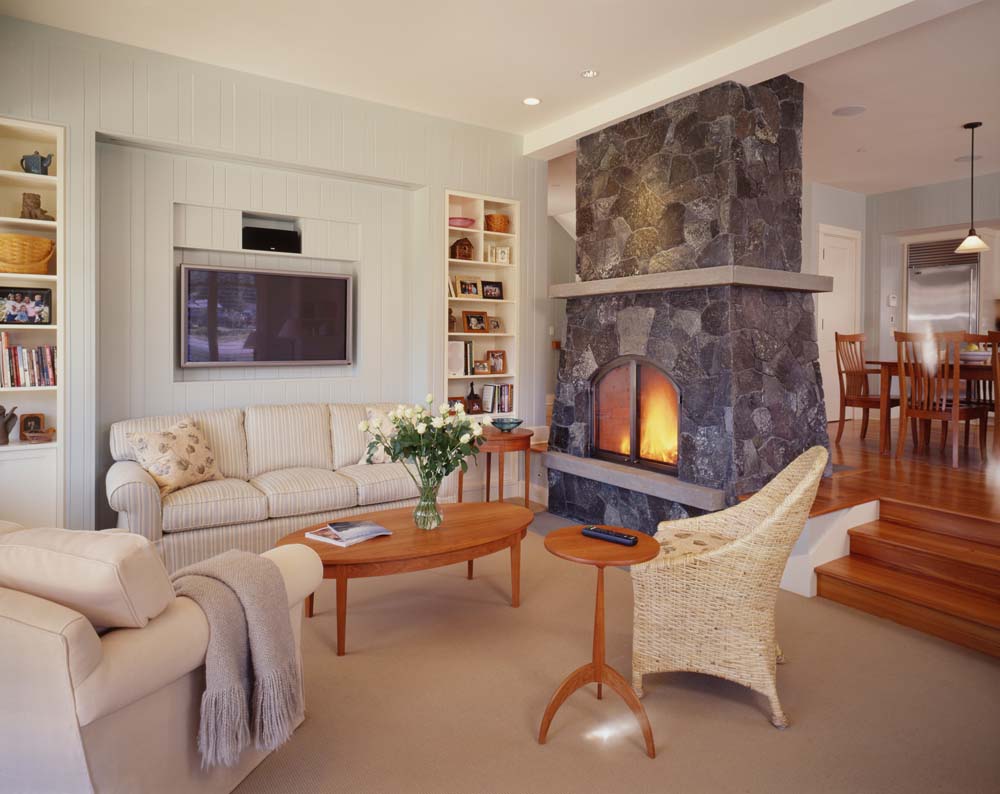
Long, narrow rooms fight you on TV placement. One fix: mount the screen on the wall behind the sofa and set two swivel chairs a few feet out, facing it. The sofa keeps its back to the screen, so anyone walking in sees seating and cushions, not a black panel.
When it’s movie time, the chairs turn. When it’s not, the room reads as a conversation space. A slim console under the TV holds remotes and a stack of books, and a tall floor lamp beside it pulls the eye upward instead of dead center.
Guests almost always sit on the sofa first and notice the screen second, which tells you the layout is doing its job.
💡 Pro Tip: Leave at least 30 inches between the swivel chairs and the sofa. Anything tighter and people knock knees every time a chair turns.
3. Embrace the Symmetry
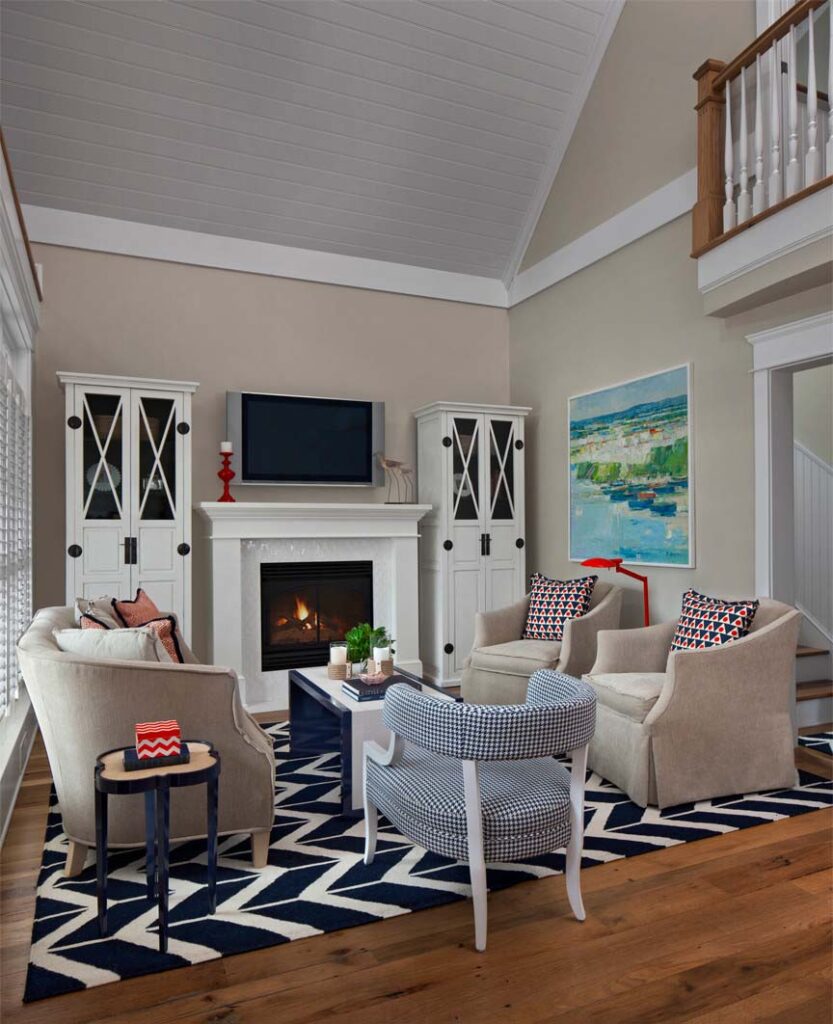
Symmetry is the shortcut nobody talks about. Center the TV on the wall, then flank it with matching cabinets, matching sconces, or a pair of identical shelving towers. Your brain reads the arrangement as one deliberate composition instead of a screen with stuff around it.
The screen still sits at the middle, but it no longer feels like an accident. Two tall plants on either side work just as well as cabinetry if you’re renting. Keep the sconces at the same height and the pieces at the same width, because near-symmetry looks sloppier than no symmetry at all.
There’s a real calm to walking into a room where both sides mirror each other. Nothing feels off-balance, and the eye stops hunting for what’s wrong.
📌 Suggestion: If a matching pair is out of budget, use one large piece on each side in the same color family. Same visual weight, different shapes, and the balance still holds.
4. Add Some Ambiance
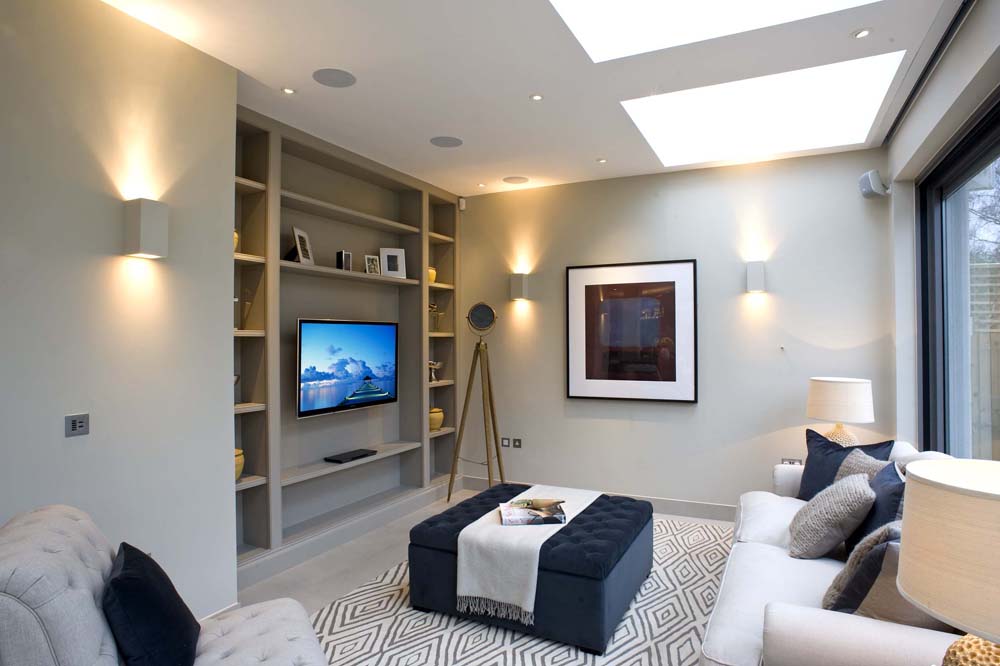
Backlighting does more for a TV wall than any piece of furniture. Run a warm LED strip behind the screen and let it wash the wall in a soft glow, and the harsh contrast between bright picture and dark wall simply disappears.
Your eyes stop working so hard. That’s the actual reason it feels better, not just the mood. Long stretches of watching get easier when the wall behind the screen isn’t pitch black.
Layer in a dimmable floor lamp on one side and a candle cluster on the console, and the whole corner turns golden after sunset. Same room, completely different temperature once the sun goes down.
5. Try a Rustic Look
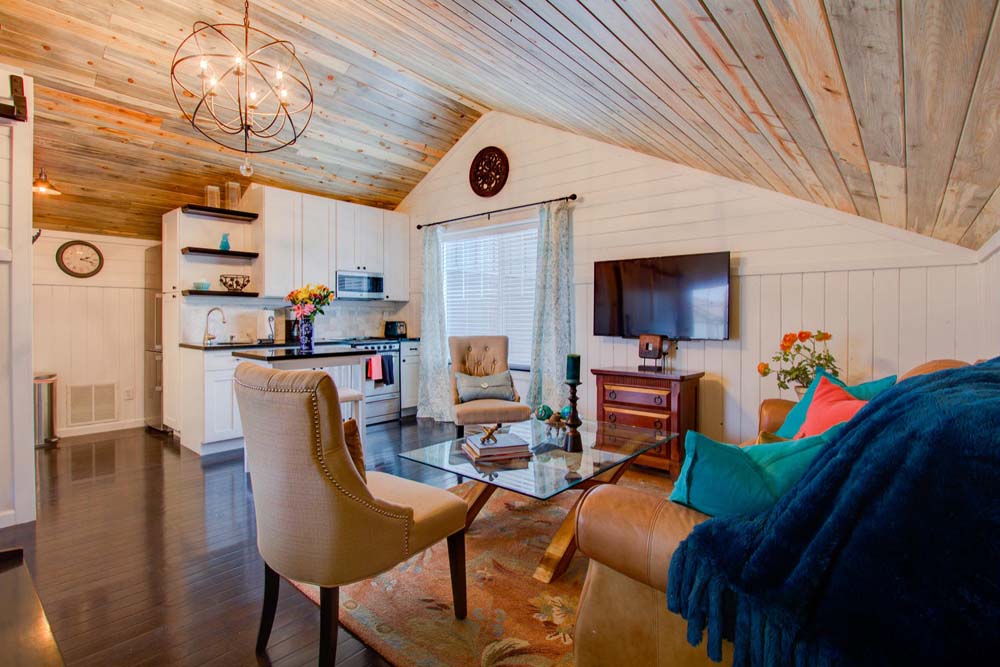
Reclaimed wood planks behind the TV change the argument entirely. Instead of hiding the screen, the wall gets so much texture and grain that the flat black surface just becomes one more element on it.
Go with weathered barn wood in mixed browns, run the planks horizontally, and mount the TV flush against them. Underneath, a chunky live-edge console with visible knots. Toss in a woven basket for blankets and an iron lantern at the end of the shelf.
The knots and saw marks give the eye somewhere to land, which is exactly why the screen stops dominating. Feels like a cabin room that happens to have a TV, not a media wall pretending to be cozy.
6. Table For One Please!
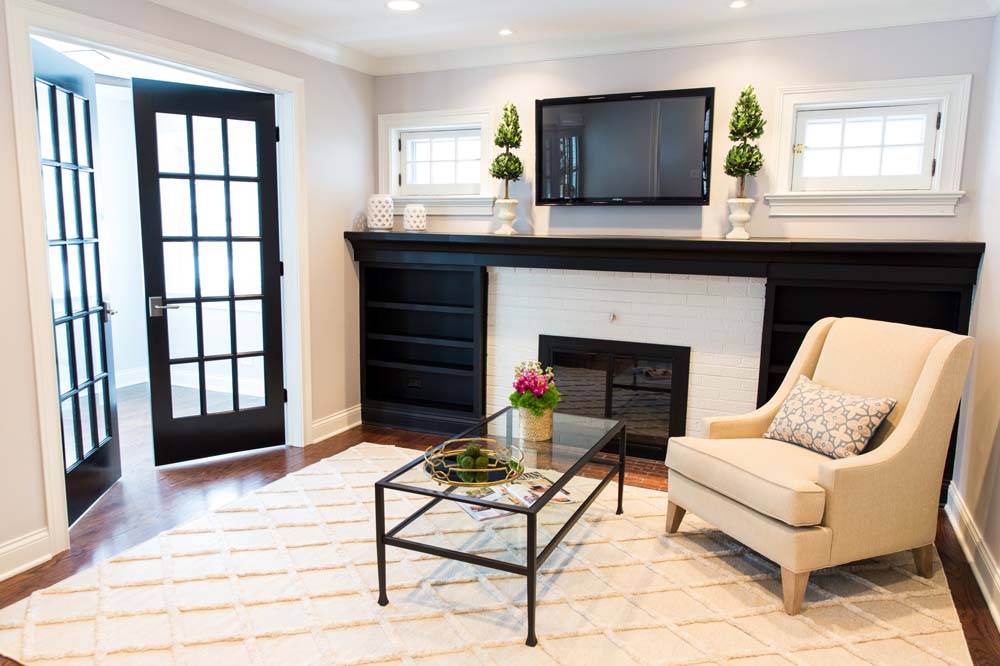
Not every TV needs a wall mount. A single narrow table under the screen keeps things flexible, especially in rentals where drilling isn’t an option. Pick one with a lower shelf so cables and devices have somewhere to disappear.
A slim console in walnut or black metal works because it sits lower than the sofa arm, which keeps sightlines open across the room. One of those easy home hacks using things you already have is running a bread tie or binder clip along the back leg to keep cords from tangling.
Set a small stack of coasters and a shallow tray on top, and the table earns its keep between shows too.
7. Decorate with Some Paintings on the Opposite Wall
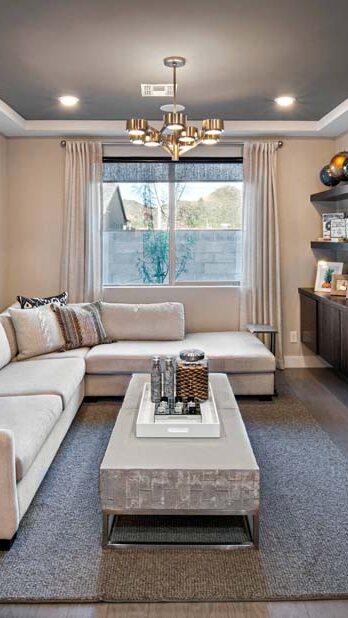
Here’s a trick that works by misdirection. Hang a gallery of framed art on the wall facing the TV, and suddenly the screen has competition for attention. Guests walk in, glance at the art first, and the TV becomes background.
Pick four or five frames in the same finish but different sizes, hung at eye level from the sofa. Botanical prints, black and white photography, whatever suits the room. The key is giving that opposite wall enough visual pull to hold its own.
There’s also a practical side. When the TV is off, people sitting on the sofa have something worth looking at instead of a blank dark rectangle.
8. Make it Proportionate
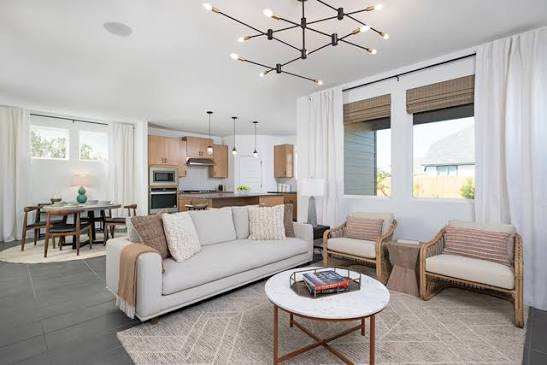
Screen size and wall size need to get along. A 55-inch TV on a narrow wall looks crammed, and a 43-inch screen on a wide feature wall looks lost. Neither one is a TV problem, it’s a proportion problem.
The simple check: your screen should take up roughly half to two-thirds of the furniture width below it. Console wider than the TV by a comfortable margin, and the whole grouping settles.
Wall too wide? Extend the arrangement outward with a tall plant on one side and a leaning frame on the other. Wall too narrow? Skip the console and float the screen instead.
Once the ratio feels right, you stop noticing the TV as a separate object. It just belongs there.
9. Blend In
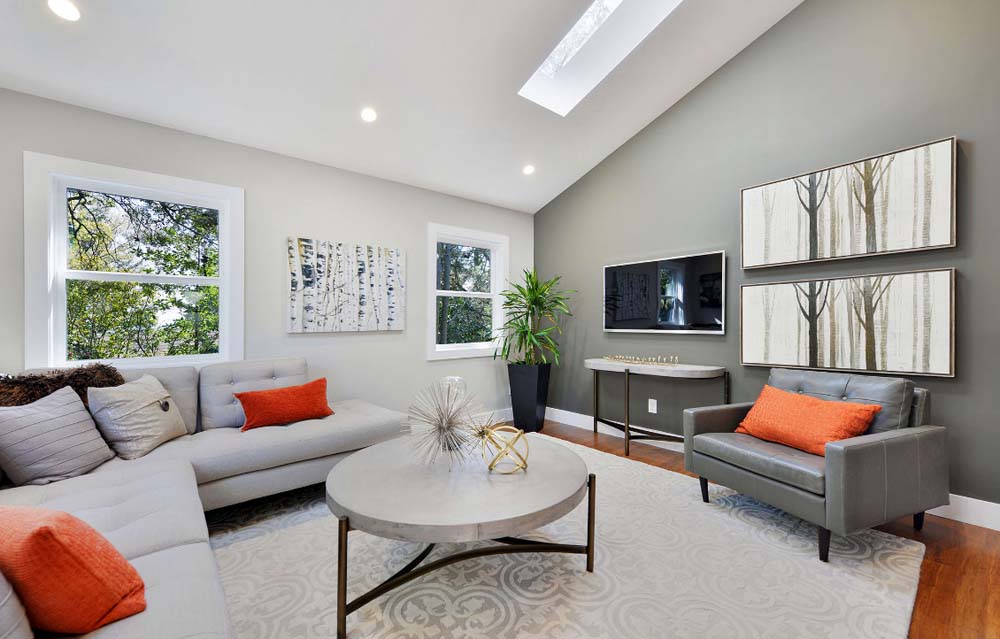
Paint the wall behind the TV a deep charcoal or matte black, and the screen practically vanishes into it. No contrast, no dark rectangle floating on a pale wall. Just one continuous surface that happens to light up when you want it to.
Matte finishes matter here more than color choice. Anything glossy catches light and reveals the screen’s edges, which defeats the whole point.
Keep the surrounding decor darker too. Black metal shelving, a walnut console, moody art in dark frames. Then let one warm lamp sit nearby so the corner doesn’t turn into a void.
Someone walked into a friend’s living room last winter and asked where the TV was. It was three feet in front of her.
💡 Pro Tip: Test the paint on a poster board first and hold it against the wall at night with the lights on. Dark shades read completely differently under lamplight than they do in daylight.
10. Over the Fireplace
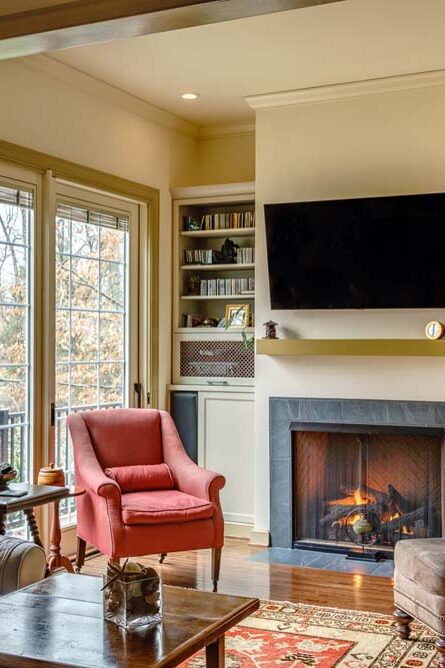
The classic setup, and the one people argue about most. Mounting above a fireplace saves floor space and gives the room one clear focal point instead of two competing ones. The catch is height, because too high means sore necks by episode three.
Measure from the mantel up and keep the screen’s bottom edge within a few inches of it. A pull-down or tilting mount solves the angle problem entirely, letting the screen drop and lean toward the sofa when it’s in use.
Heat is the other thing. Gas and electric units run cool enough, but a working wood fireplace pushes serious warmth straight upward, and that shortens a screen’s life fast.
Done right, though, the effect is hard to beat. Fire below, movie above, and the whole room pointed at one warm, glowing wall on a cold night.
📌 Suggestion: Build a shallow mantel shelf that projects a few inches further out than usual. It deflects rising heat away from the screen and gives you a spot for candles at the same time.
11. Multi Sectional
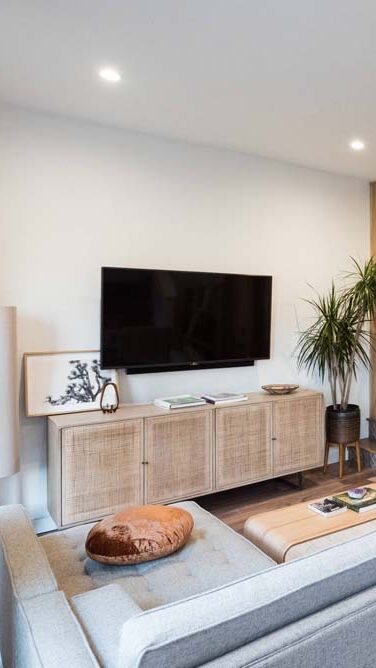
via Wander Designs
A sectional changes the math on TV placement. Instead of everyone lined up in a row, you get an L or a U shape where two or three sides all have a decent view of the screen. Mount the TV on the wall facing the longest run, and nobody ends up craning sideways.
The chaise end is where people fight over seats, so aim the screen slightly toward it. One of those simple life hacks for an easier life is keeping a slim basket tucked into the sectional’s corner for remotes, chargers, and the blanket that always goes missing.
Big sectional, one screen, and suddenly six people can watch something together without anyone claiming the floor.
12. Go For an Artistic Approach
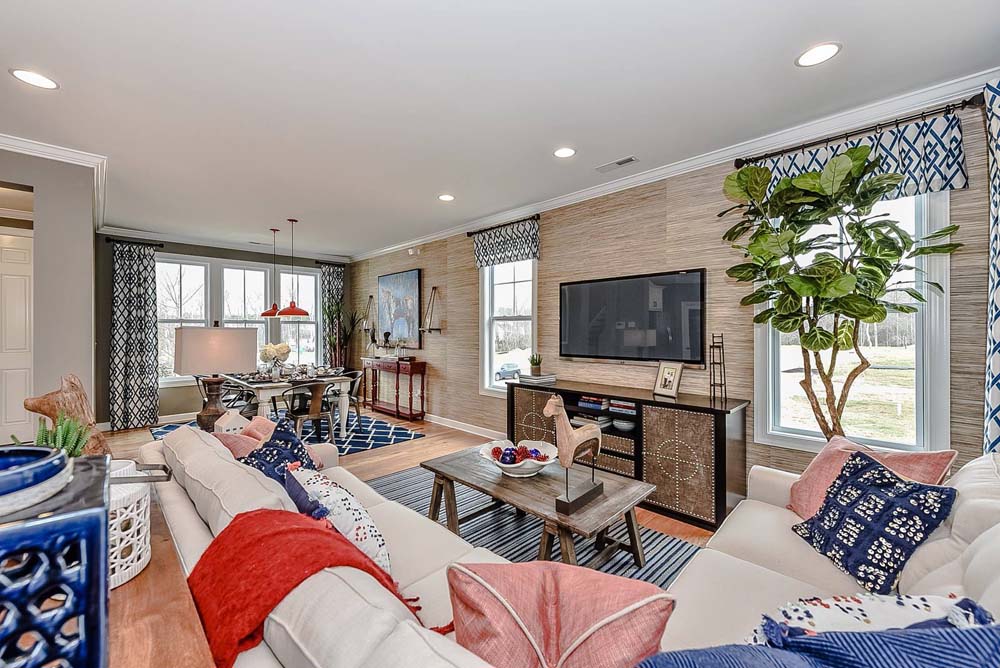
Treat the TV like a piece in a gallery wall, and it stops reading as electronics. Surround the screen with framed art of varying sizes, all in the same frame finish, spaced evenly so the black rectangle becomes just one panel among many.
Thin black frames work best because they echo the TV’s own bezel. That repetition is the whole reason the illusion holds, since the eye groups similar shapes together instead of singling out the odd one.
Leave two to three inches of breathing room between pieces and keep the arrangement roughly rectangular overall. Sketches, abstracts, or old maps all work.
Turn the screen off and the wall looks intentional. Turn it on and the art frames it like a spotlight.
13. Place it on the Side
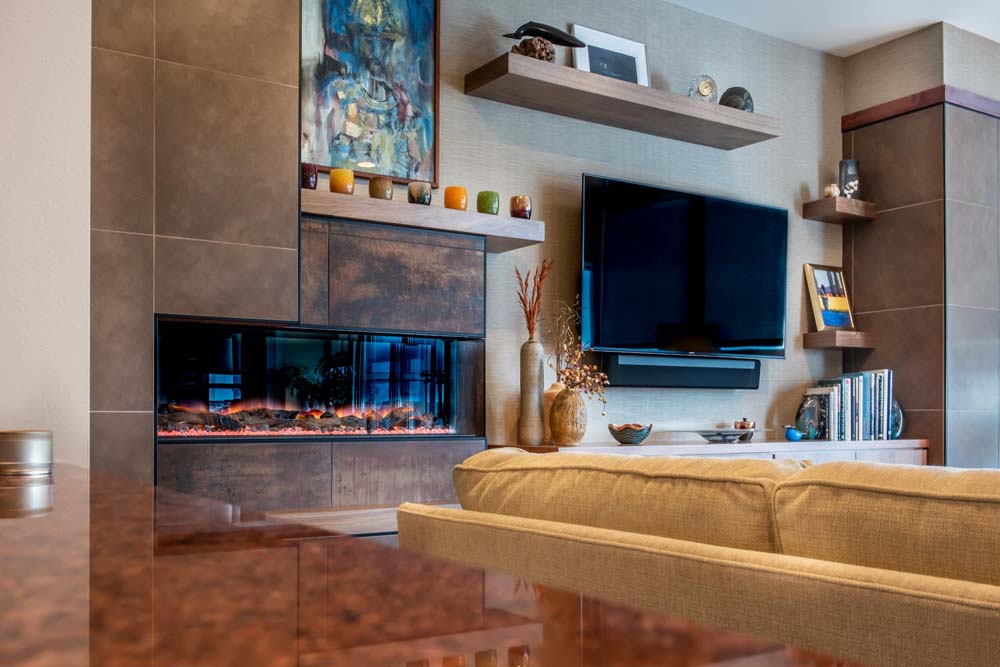
Side placement is for rooms where the main wall is already taken. Angle the TV into the side wall next to the sofa, and you keep the window, the fireplace, or the artwork as the room’s real focal point.
A swivel mount does the heavy lifting here, letting the screen turn toward whoever’s watching. Skipping a full wall rebuild is one of those simple hacks that save you money when a room doesn’t cooperate with a standard layout.
Guests sitting sideways get a straight view too, which is more than most center-wall setups can manage.
14. Try Some Bright Colors
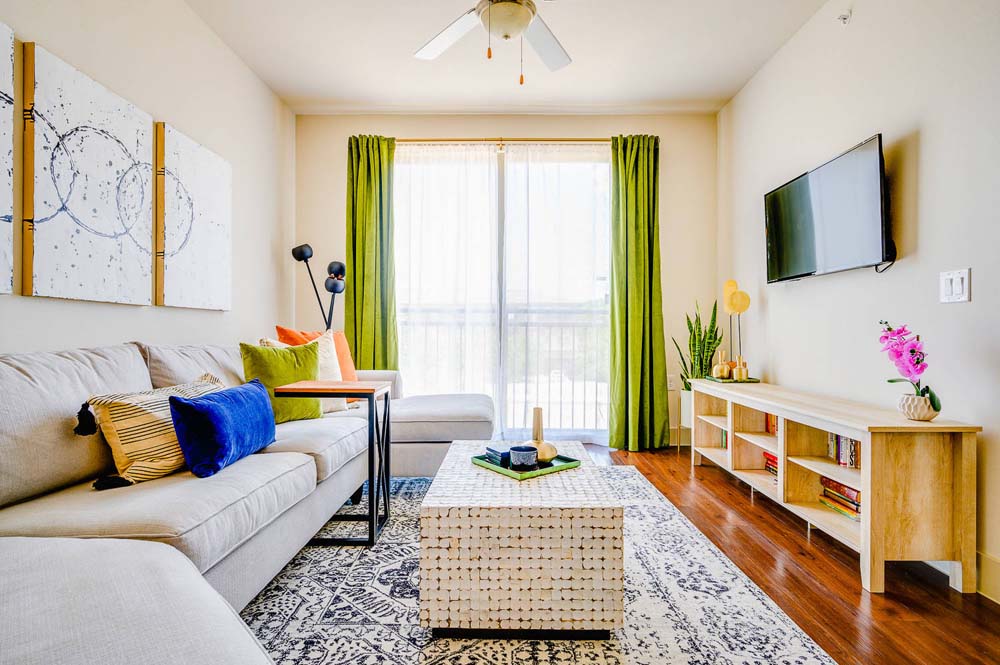
Dark walls aren’t the only option. Go the opposite direction and paint the TV wall a bold mustard, deep teal, or terracotta, and the screen becomes a small dark accent on something far more interesting.
Bright color pulls attention outward instead of inward. That’s the mechanism, and it works because the eye chases saturation before it chases contrast.
Balance it with neutral furniture so the room doesn’t tip into chaos. A cream sofa, a light wood console, maybe a jute rug underneath. Then repeat the wall color once or twice in small doses, like a cushion or a vase, so it feels connected rather than random.
Rooms like this photograph well and feel even better in person, especially on gray afternoons when the whole space needs a lift.
15. Two Screens? No Problem
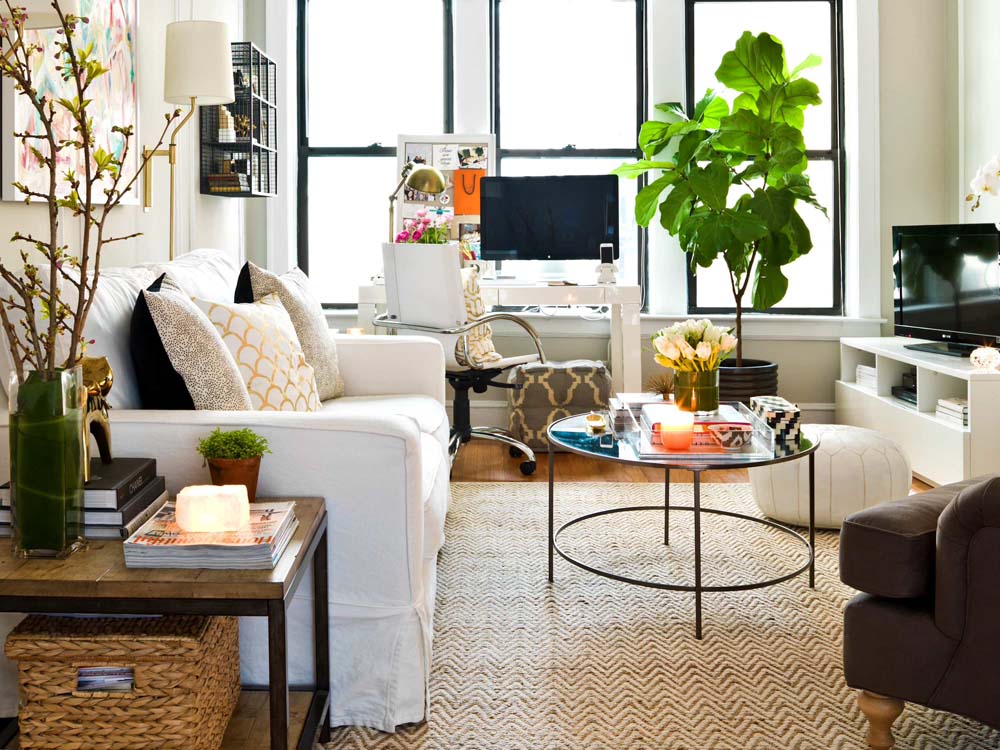
Two screens in one room sounds like overkill until you’ve got a gamer and a sports fan sharing the space. Set the main TV on the primary wall and a smaller second screen on a perpendicular wall or a rolling stand, angled away from the first.
Keep the smaller one visually quieter with a slim mount and no console beneath it. If reception ever gets patchy on an antenna setup, one of those smart tinfoil hacks can sharpen the signal enough to skip a service call.
Two screens, two people, one room, and nobody negotiating over what’s on.
16. Corner It
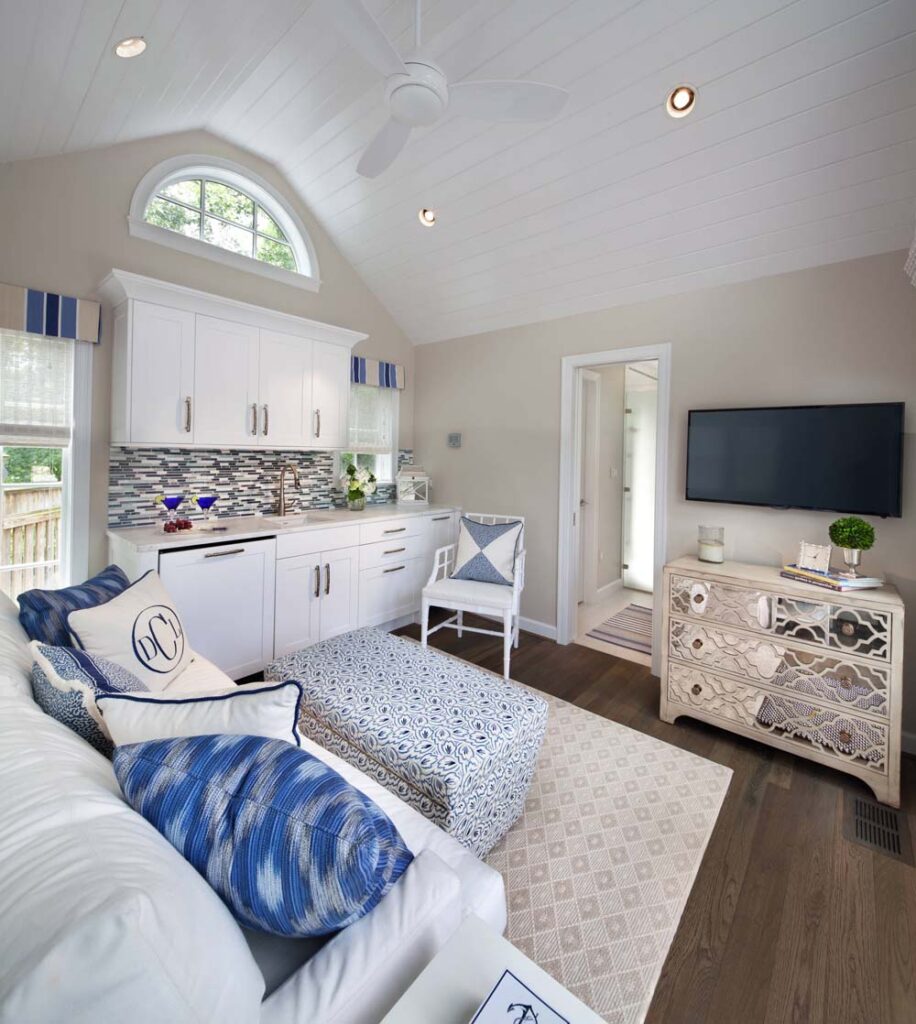
Small apartments run out of wall fast. A corner mount solves it by using the one spot most people write off, and it opens the middle of the room back up for a sofa and a coffee table.
Corner brackets swing out and pivot, so the screen can face the sofa head-on even though it lives at a 45-degree angle. Underneath, a triangular corner unit or a small round side table fills the gap without eating floor space.
Cable management gets easier too, since both walls meet right there and outlets are usually close by.
Studio dwellers figure this one out quickly. There’s something satisfying about turning the most useless corner in the place into the spot everyone gathers around.
💡 Pro Tip: Check that the corner has a stud or solid backing before mounting. Corners often hide framing gaps, and a heavy screen on drywall anchors alone won’t hold long.
17. Try a Traditional Design
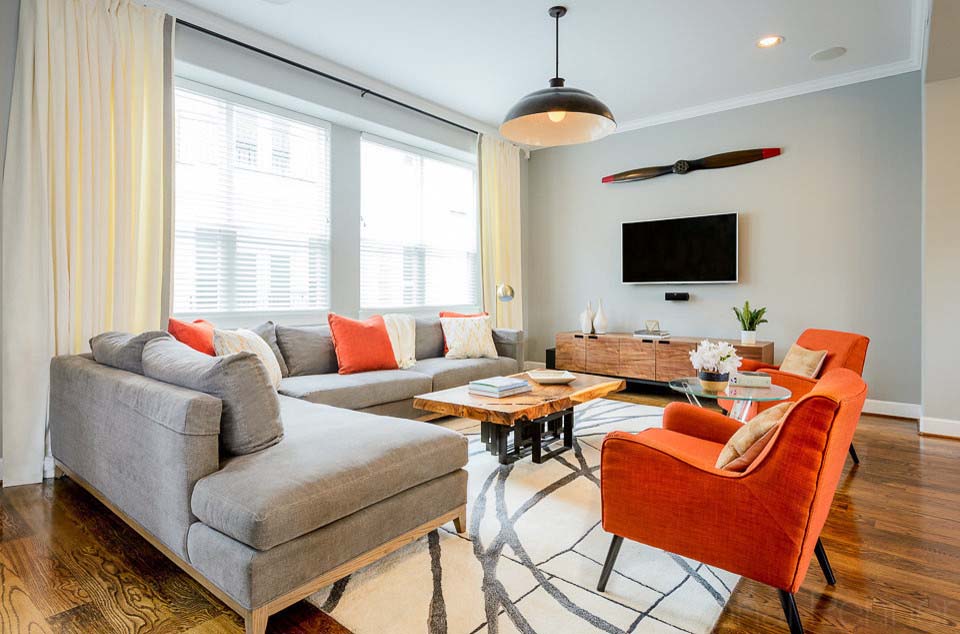
Traditional rooms and flat screens can coexist. The move is surrounding the TV with details that read older, so the modern object sits inside a classic frame rather than fighting it.
Think a dark wood cabinet with paneled doors below the screen, crown molding above, and a pair of brass sconces on either side. Add a patterned area rug, a wingback chair, and heavy drapes with proper rods. The screen is still there, but everything around it is speaking a different, older language, and that’s what softens it.
Deep greens, burgundies, and warm woods do more work than any single piece of furniture here.
Rooms like this feel settled in a way newer spaces rarely do. The kind of place where a book gets read as often as a show gets watched.
📌 Suggestion: Look for a cabinet with retractable or bi-fold doors that close over the screen. Traditional styling on the outside, hidden TV on the inside, and no visible mount hardware at all.
18. Make it the Center of the Design
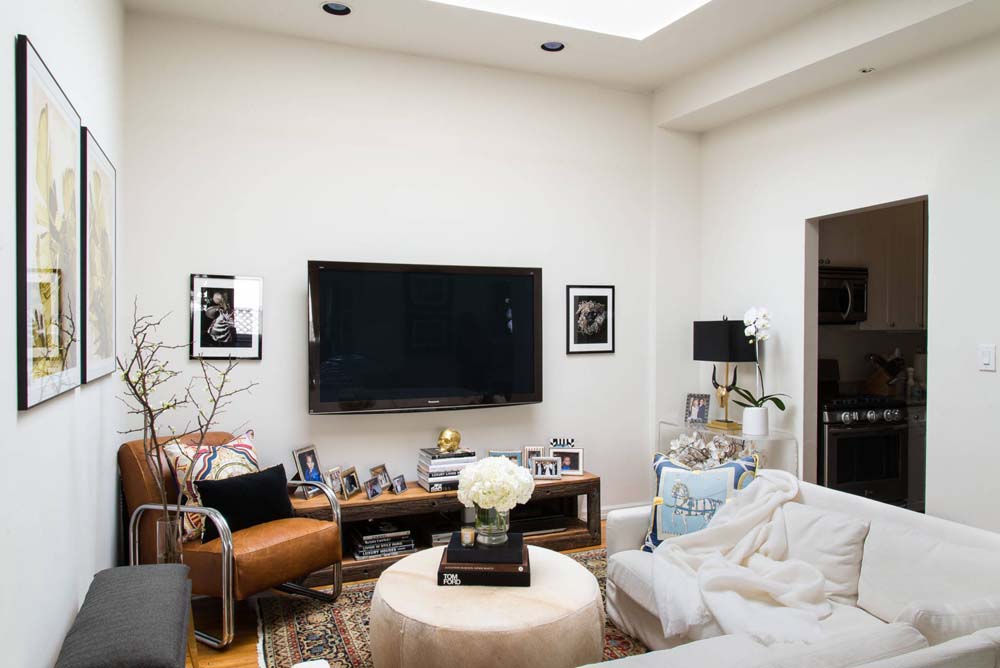
Some rooms are honest about it. The TV is the reason people gather, so build the design around that instead of apologizing for it. Center the screen, then arrange every piece of seating to face it directly.
Two sofas across from each other with the screen at the head of the arrangement works. So does a single deep sofa with a pair of armchairs angled inward. Keep the coffee table low and the rug wide enough to sit under everything, which visually ties the whole group to that one wall.
Sightlines are the real reason this feels good. Nobody twists, nobody leans, and no seat is the bad seat.
Movie nights get easier when the room was already designed for them.
19. Behind All the Furniture
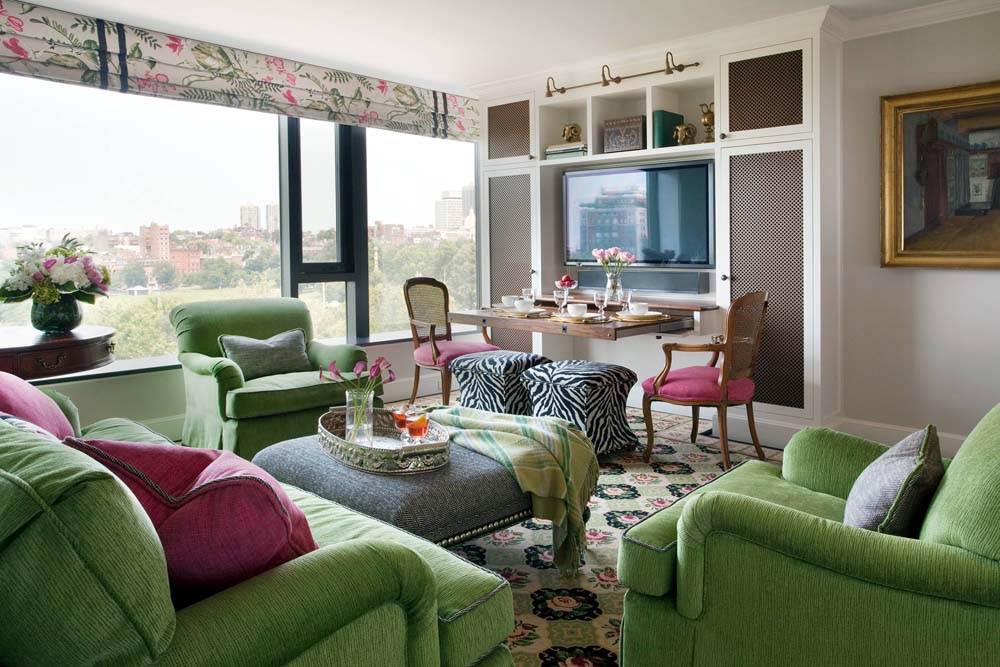
This one flips the usual arrangement. Push the sofa, chairs, and side tables into the middle of the room, and set the TV on the far wall behind all of it, slightly recessed or set into a niche.
The gap between the furniture and the screen is what makes it work. Distance shrinks the TV’s presence, and the seating group becomes the first thing anyone notices when they walk in.
Fill that space behind the sofa with a low bench, a runner rug, or a couple of floor plants. Not clutter, just enough to signal that the area has a purpose beyond holding a screen.
Open-plan rooms benefit most here, since the furniture cluster creates a defined living area without a single wall being built.
20. Add a Bookshelf Next to the TV
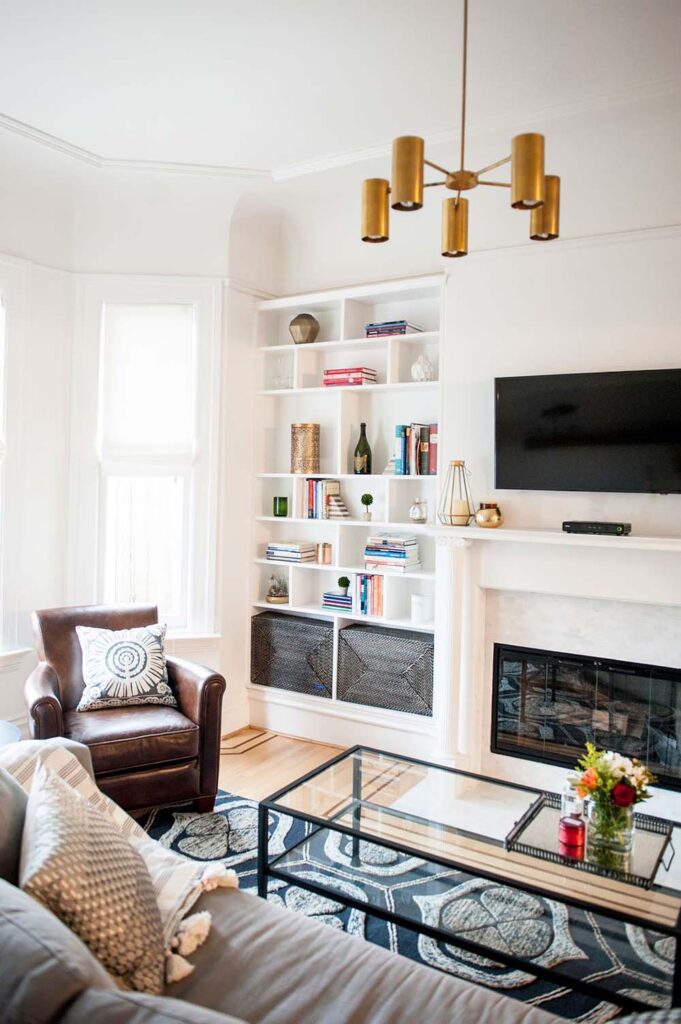
A tall bookshelf beside the screen does something furniture rarely manages. It gives the eye a competing destination, and a busier one, since spines, colors, and objects hold attention far longer than a flat black panel ever will.
Fill it unevenly on purpose. Books stacked flat on one shelf, standing upright on another, a small framed photo leaning at the back, a trailing plant spilling over an edge. That irregularity is what keeps it from looking staged.
Match the shelf height roughly to the TV’s top edge or go taller, never shorter. A short shelf makes the screen look bigger by comparison.
People browse the shelf while waiting for everyone to settle in. That alone tells you where the attention lands first.
21. Try a Minimalist Approach
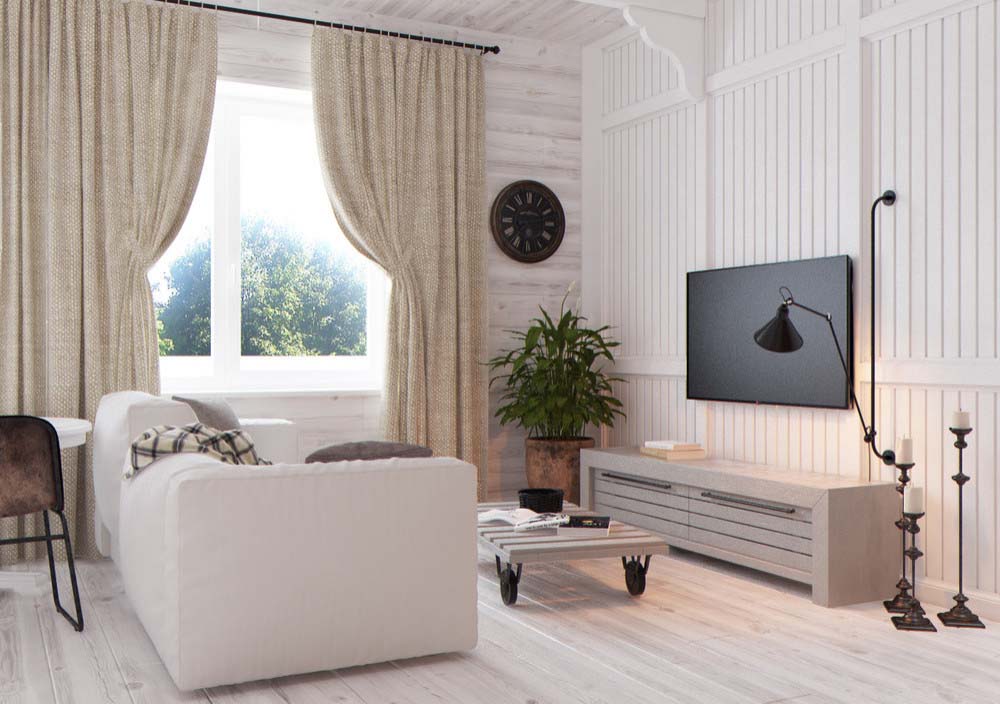
Minimalism handles the TV problem by removing everything else. Bare white wall, floating screen, no console, no shelves, no art. Cables run inside the wall or through a paintable cord channel painted to match.
Less around the screen means less for the eye to compare it against. That’s the logic, and it’s why an empty wall reads calmer than a decorated one, even with the same TV on it.
Below, a single low bench in pale oak or nothing at all. One sofa, one rug, one lamp. Every piece has to earn its place.
The upside shows up in daily life rather than photos. Nothing to dust around, nothing to tidy, and the room resets itself in about two minutes.
22. Try an Inbuilt Wall Unit
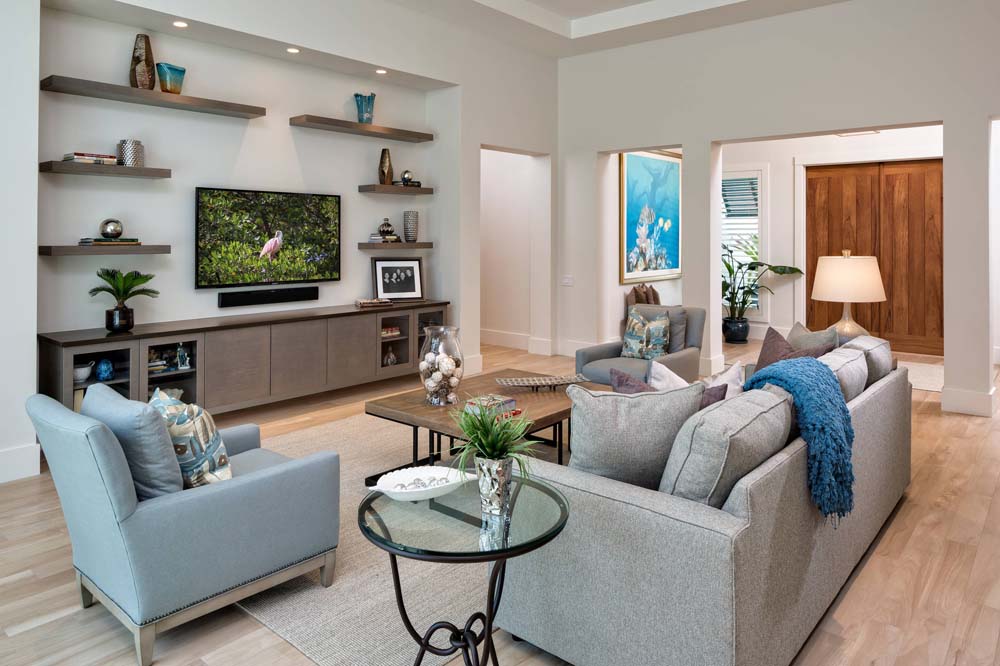
A built-in unit is the most permanent answer on this list, and the tidiest. Cabinetry runs floor to ceiling with a recessed opening sized exactly to the screen, so the TV sits flush inside the millwork instead of hanging on top of it.
Closed cabinets below swallow consoles, controllers, and the tangle of cables nobody wants to see. Open shelving above holds books and a few objects. The recess is the key detail, because setting the screen back even an inch removes the shadow line that makes a mounted TV look attached rather than integrated.
Paint the unit the same shade as the surrounding walls and the whole thing reads as architecture. Contrast it in a deep color and it becomes the feature wall.
Family rooms take a beating, and a built-in absorbs it. Everything has a home, and the mess disappears behind a door.
Frequently Asked Questions
How high should a TV be mounted in a living room?
The center of the screen should land at roughly eye level when you’re seated, which usually works out to 42 to 48 inches from the floor. Sit on your sofa first, look straight ahead, and mark that spot on the wall. Every room is a little different, so measuring beats guessing.
Is it bad to put a TV above a fireplace?
Not always. Gas and electric fireplaces stay cool enough to be fine. A working wood-burning fireplace pushes real heat straight upward, and that heat shortens a screen’s lifespan. If you go this route, use a tilting or pull-down mount so the viewing angle stays comfortable.
How do I hide TV cables without opening the wall?
A paintable cord channel sticks to the wall, covers the cables, and blends in once you match it to the paint color. Cheaper still, run cords behind a console and clip them to the back leg. Renters get the tidy look without patching drywall later.
What color should I paint a TV wall?
Deep charcoal or matte black hides the screen best because there’s no contrast between the wall and the dark panel. If you’d rather draw attention away from the TV, a bold teal or terracotta pulls the eye to the color instead. Just skip glossy finishes, since they catch light and highlight the screen’s edges.
Can a TV work in a small living room?
Absolutely. Corner mounts use the space most people write off, and a swivel bracket lets the screen face the sofa directly. Keeping the console narrower than the sofa also helps sightlines stay open, which makes the whole room feel less crowded.
How do I make a TV look less like a TV?
Give the eye something else to look at. A tall bookshelf beside it, a gallery of matching frames around it, or a textured wood wall behind it all break up that flat black rectangle. Backlighting helps too, since a soft glow behind the screen softens the contrast.
Should the TV or the fireplace be the focal point?
Pick one. Two focal points on different walls make furniture placement awkward and leave people twisting in their seats. If the fireplace wins, mount the TV on a side wall with a swivel arm so it stays usable without competing.
Conclusion
A TV doesn’t have to be the thing you design around apologetically. Some of these ideas hide it, some frame it, and a few just let it sit there proudly at the center of the room. All of them work because the screen stops being an interruption and starts being part of the plan.
Start with height and proportion before anything else. Get those two right and even a bare wall looks intentional. From there, pick the approach that fits how you actually live, whether that’s a built-in unit for a busy family room, a corner mount in a small apartment, or a dark wall that makes the whole thing disappear.
The best living rooms don’t hide their TVs or worship them. They just make room for one.