20 Blue Sofa Living Room Ideas You’ll Love
A blue sofa has a way of setting the tone for an entire living room before anything else gets added. It reads calm in soft daylight, dramatic once the lamps come on, and somehow works with almost every style people already love. Navy leans polished. Denim blue feels relaxed. Ocean blue brings that easy, breezy pull most rooms are missing.
The best part is how forgiving blue actually is. Pair it with warm oak and cream linen for a cottage feel, or push it against charcoal walls and brass for something moodier. Blue plays nice with pattern, art, plants, and even other blues stacked together.
What follows are 20 ideas that show how much range one blue sofa really has. Some lean quiet and soft, made for slow mornings with coffee and a book. Others go bold with color, layered pillows, and gallery walls that pull the whole room together.
Grab inspiration, save the ones that click, and start picturing that sofa in a room that finally feels finished.
1. Play with Textures
A blue sofa can look flat and lonely in a room until texture shows up and gives it something to lean on. Nubby boucle, a chunky knit throw, and a jute rug underneath do more for a blue couch than any accent color could. The color stays the star, but the surfaces around it decide whether the room feels cold or lived-in.
Velvet cushions catch light in a way that makes even a mid-tone blue look deeper at night. Add a rattan side table, a linen pillow or two, and one worn leather pouf for that soft-scuffed contrast. This is what keeps the corner comfortable enough that nobody moves once the movie starts.
Small changes create most of the impact, and texture is the easiest place to start.
2. Blue Sofas and Gray Walls
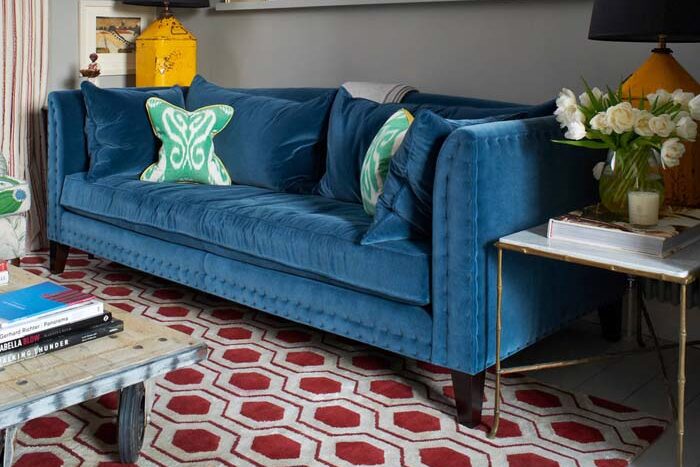
Gray walls give a blue sofa room to breathe without competing for attention. Warm grays soften a navy couch and make it feel settled, while cooler grays sharpen it into something closer to a design statement. Either direction works, so the real decision comes down to whether you want the space calm or crisp.
The trick is keeping undertones in the same family. Cool gray next to a warm, slightly green-blue sofa can look accidental, and that mismatch is what makes people feel like something is off without knowing why.
Layer in white trim, a few black accents, and one plant with real height. Suddenly the whole wall reads intentional instead of unfinished.
3. Deep Blue Sofa in a Bright Room
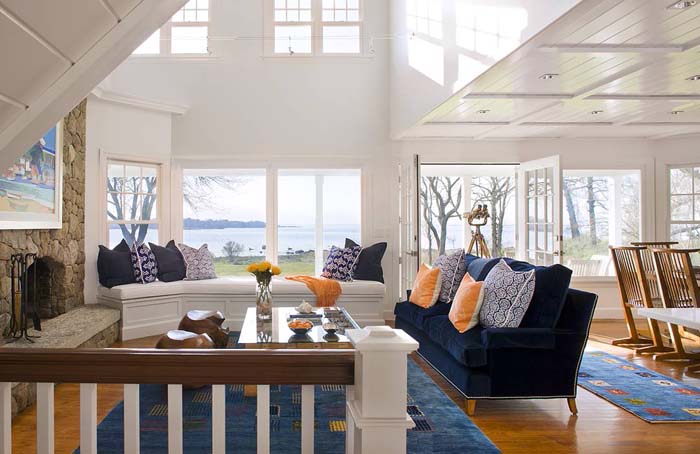
Sunlight changes everything about a deep blue sofa. In a room with big windows and pale floors, that dark upholstery stops feeling heavy and starts working like an anchor, the one solid thing holding a bright, airy space in place.
Keep the rest light. White or bone walls, sheer curtains, a pale rug, maybe a glass or light wood coffee table. The contrast does the work for you, and the sofa becomes the piece guests notice the moment they walk in.
Morning is when this setup really pays off. Light spills across the cushions, the blue shifts from almost-black to something richer, and the room quietly looks more expensive than it is.
4. Throw Pillows Can Change a Room’s Mood
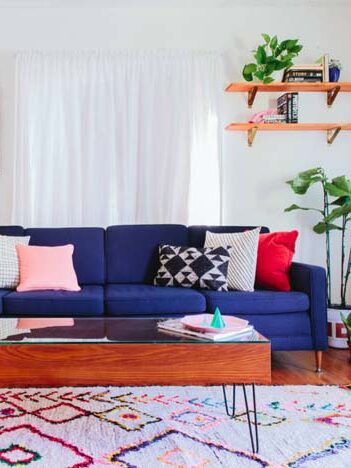
Pillows are the cheapest way to redirect a blue sofa without buying anything big. Swap in rust and mustard and the room warms up fast. Go with white, sand, and pale gray instead and the same couch suddenly feels coastal and quiet.
Odd numbers tend to look better than even ones, so try five across a standard three-seater. Mix one solid, one pattern, and one with texture like linen or a subtle stripe. That combination keeps things from looking like a matched set someone bought in a single grab.
Seasonal swaps are the sneaky benefit here. Heavier fabrics in winter, lighter cotton in summer, and the room resets twice a year with almost no effort.
💡 Pro Tip: Keep two pillow covers per insert instead of buying whole new pillows. Storage stays manageable, and changing the entire mood of your living room takes about four minutes.
5. Denim Blue Sofas in a Formal Living Room
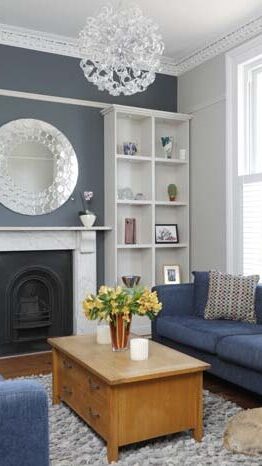
Denim blue sounds too casual for a formal room, and that is exactly why it works. It softens all the structure around it. Crown molding, symmetrical lamps, and a proper wool rug can start to feel stiff, but a washed blue sofa in the middle keeps the room from feeling like a museum.
Lean into the contrast on purpose. Pair it with tailored details like welted cushions, slim wooden legs, and a pair of matching chairs facing the couch. The formality stays intact while the color quietly relaxes everything.
Brass or antique gold accents seal it. Suddenly the space feels grown-up and welcoming at the same time, which is the balance most formal rooms miss completely.
6. Stack Your Blues
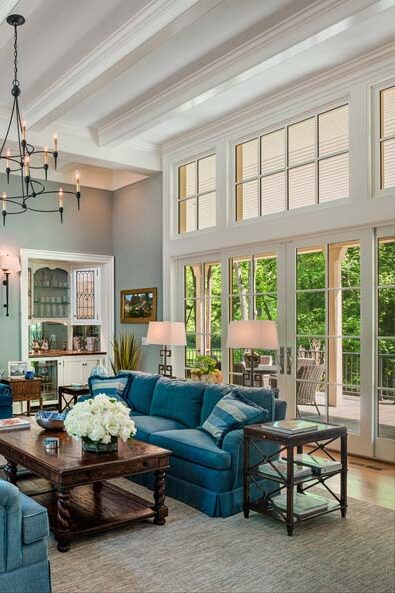
Monochrome blue rooms look intimidating until you break them into layers. A navy sofa, a mid-tone blue rug, and pale blue walls read as one thoughtful idea instead of three colors fighting each other. The eye moves through the shades without stopping, which is what makes the whole room feel deliberate.
Spacing matters more than matching. Leave enough contrast between each blue that you can tell them apart from across the room. If two shades sit too close together, they just look like a fabric mistake.
Add white or cream somewhere to give everything a break. Trim, a lampshade, a stack of books on the table, anything that interrupts the blue for a second.
The payoff is a room that feels deep and layered, like it was styled by someone who knew exactly what they were doing.
💡 Pro Tip: Photograph your blues in black and white before committing. If the shades look nearly identical in grayscale, they need more contrast to work in real life.
7. Soft and Serene
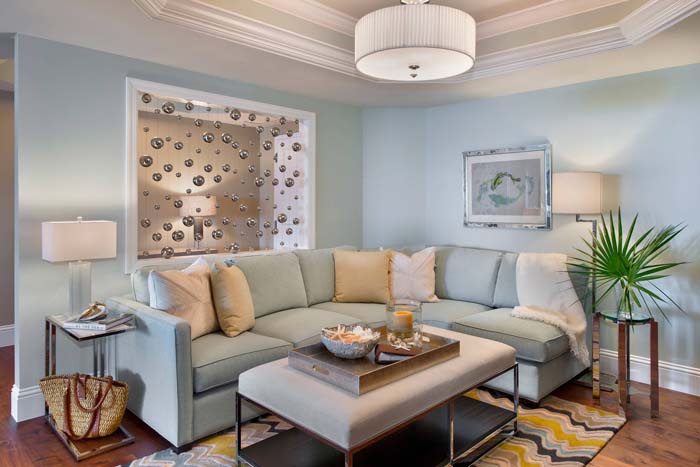
Some rooms are built for winding down, and a pale blue sofa sets that tone faster than anything else. Dusty blue or a faded sky tone keeps the whole space quiet, especially when the walls stay close to white and nothing in the room shouts for attention.
Softness comes from the edges more than the color. Rounded arms, a low profile, cushions that sink a little, and fabrics that feel worn in rather than showroom crisp. Hard lines fight the calm, so keep them minimal.
Finish with a cream throw, one ceramic vase, and light filtering through linen curtains. It becomes the room where phones get put down without anyone deciding to do it.
8. Blue Couch Brings High Style
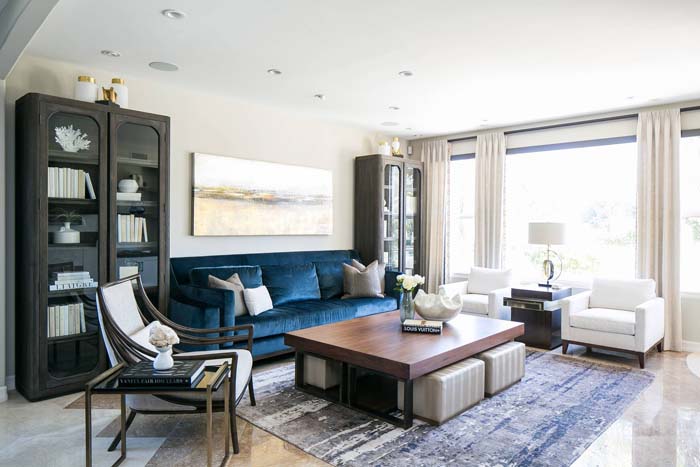
A blue couch can carry a room the way a statement coat carries an outfit. Sapphire velvet, a tufted back, or a curved silhouette turns the sofa into the reason the space looks styled rather than just furnished.
Keep the supporting cast restrained so the couch stays in charge. A marble or stone top table, one oversized art piece, sculptural lighting, and floors left mostly bare. Too many competing statements and the effect collapses into clutter.
Scale is where this either lands or fails. A dramatic sofa needs breathing room around it, so pull it slightly off the wall and resist filling every corner. That empty space is what makes the piece look expensive.
Guests notice it before they notice anything else, and that reaction is the entire point.
9. Contrasting Piping in Navy Blue
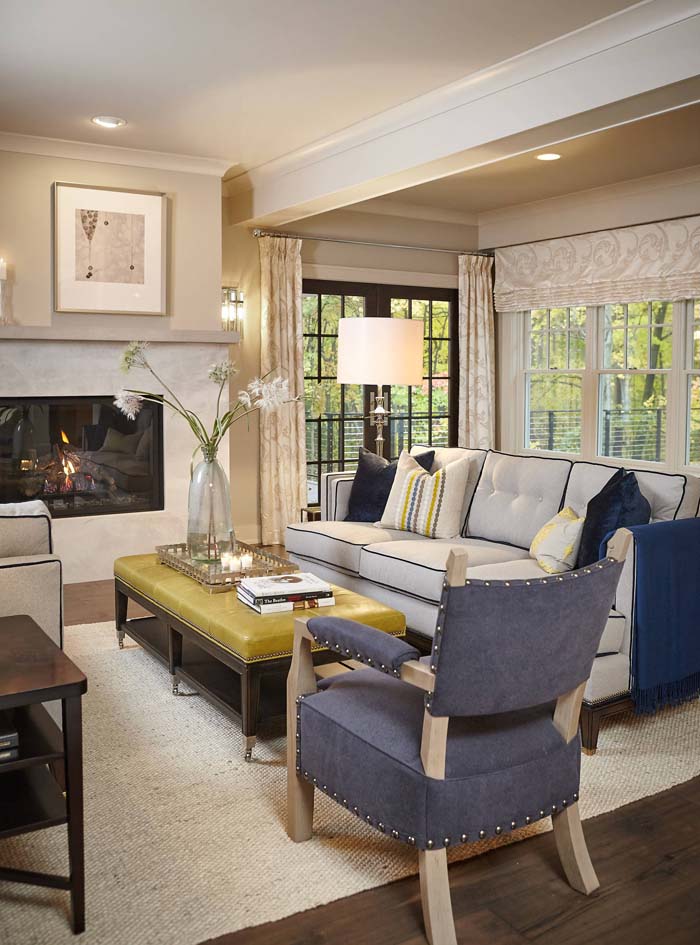
Piping is the detail nobody talks about until they see it done well. A navy sofa with white or cream cord tracing the cushions and arms suddenly looks tailored, almost like furniture that was made to measure instead of pulled off a floor model.
The outline does something clever to the shape. It traces every curve and seam, so the sofa reads sharper and more defined against the wall behind it. Rooms with simple, plain walls benefit the most because the piping gives the eye something to follow.
Keep the rest of the room quiet so the detail stays readable. Solid pillows, an uncomplicated rug, nothing busy sitting right beside it.
It is a small line of thread doing a surprising amount of work.
✨ Suggestion: If your current navy sofa feels plain, look for slipcovers or custom cushion covers with contrast piping. It costs a fraction of replacing the piece and delivers most of the visual upgrade.
10. Casual Cottage Charm
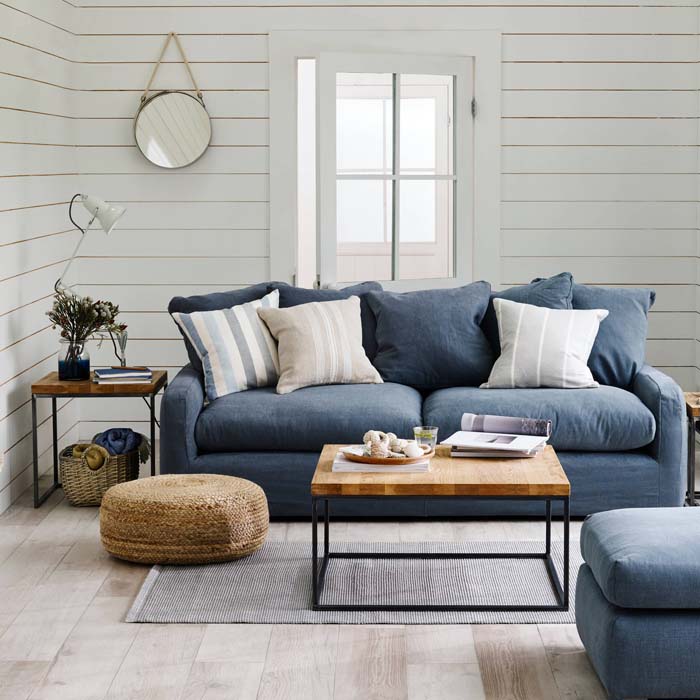
Cottage style and blue sofas belong together, mostly because both feel unbothered. A soft slipcovered blue couch with slightly rumpled cushions gives a room permission to look lived in, which is the whole appeal of cottage decor in the first place.
Surround it with things that show their age. Painted wood, a worn floral pillow, chipped ceramics on the shelf, a rug that has clearly hosted a few dogs. Perfection kills this look faster than anything.
Keep the palette gentle. Blue, cream, a touch of faded green, maybe a warm wood tone in the floors.
Sunday afternoons in a room like this stretch out longer than they should
11. Choose a Background with a Neutral Palette
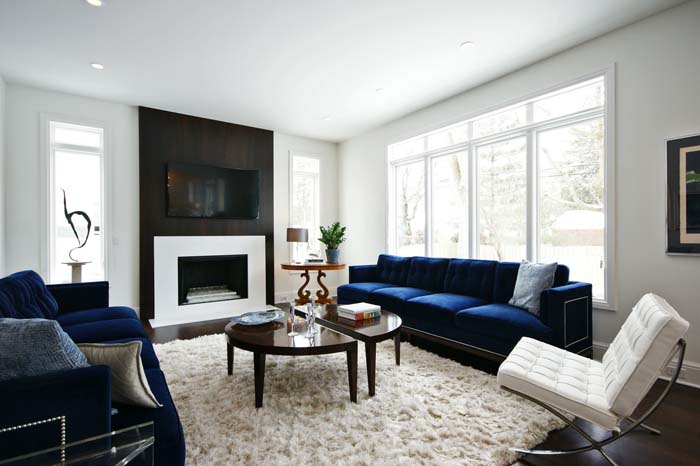
Neutrals behind a blue sofa are less boring than they sound. Beige, greige, oatmeal, or soft white walls act like a blank canvas, and the blue reads clearer because nothing else is interrupting it.
There is a practical reason to go this route too. Neutral backdrops let you change everything else on a whim. New pillows, a different rug, seasonal art swaps, all without repainting a single wall.
Warmth is the thing to watch. A cool blue sofa against a very cool gray-white can feel clinical, so a warmer neutral usually softens the whole picture and makes the room feel more inviting.
The sofa stays the focal point, exactly where it should be.
12. Try Multi-Color Groupings
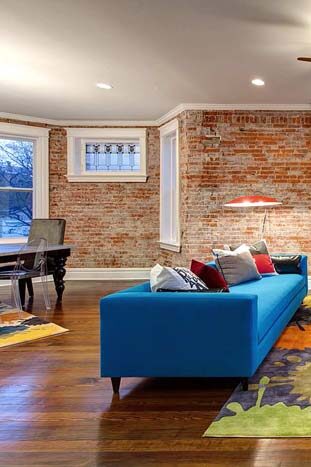
A blue sofa handles color better than most people expect. Group terracotta, mustard, olive, and blush around it and the room turns into something with actual personality. Blue sits in the middle of the color wheel comfortably, which is why it rarely clashes with anything.
Grouping is the key word though. Scattering five colors randomly reads as chaos, but repeating each one two or three times around the room creates rhythm. A rust pillow, a rust throw, a rust stem in a vase, and suddenly it looks planned.
Keep one color dominant and let the rest support it. Usually that dominant tone is the blue itself.
Rooms like this photograph beautifully and feel even better in person.
💡 Pro Tip: Pull your palette from a single patterned object you already own, like a rug or a piece of art. The colors are already proven to work together, so you skip the guesswork entirely.
13. Deep Blue with Light Walls
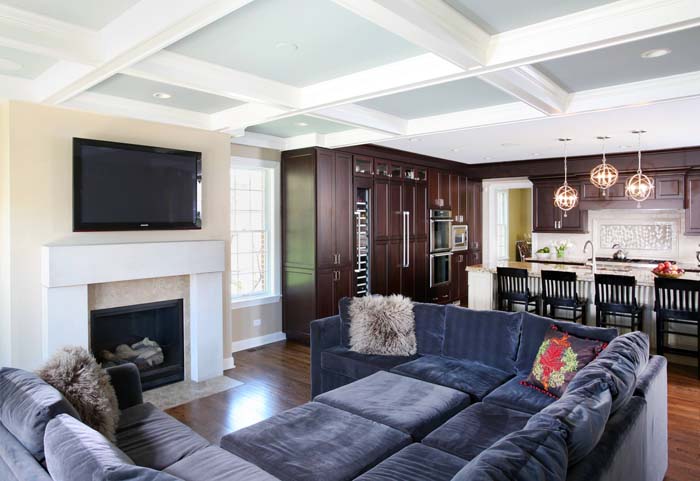
This pairing shows up constantly, and for good reason. Light walls push a deep blue sofa forward so it looks intentional rather than lost in a shadowy corner. The contrast is doing something simple but effective: it draws a clear edge around the furniture.
Where it gets interesting is the paint finish. A matte light wall absorbs light and keeps things soft, while an eggshell or satin finish bounces it around and sharpens the outline of the sofa. Same colors, noticeably different feeling.
Try warm white if the blue leans cool, and a cooler white if the blue has green or teal in it. Balancing those undertones stops the room from feeling either icy or muddy.
Evening light is when this combination really shows off, with lamps glowing against pale walls and that dark sofa sitting confidently in the center.
14. Sophisticated Blue Sectional Sofa
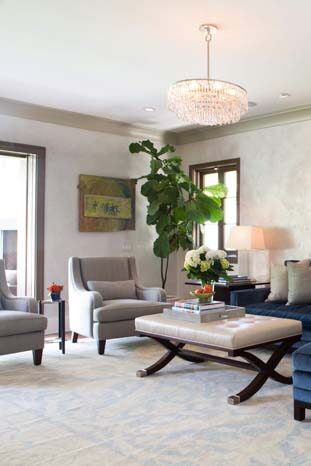
Sectionals get a reputation for being bulky, but a blue one flips that idea completely. The color adds enough interest that the size stops reading as heavy and starts reading as generous. Big becomes intentional.
Clean lines are what separate a sophisticated sectional from a slouchy one. Look for a tight back, defined arms, and legs that lift the frame slightly off the floor. That gap underneath makes a large piece feel lighter than it actually is.
Anchor it with a rug wide enough to sit under the entire footprint. Half-covered sectionals always look like the rug was an afterthought.
Then add a low table, a floor lamp in the corner, and enough throw pillows to make the long side worth stretching out on. That is where everyone ends up sitting anyway.
15. Connect the Room with Wall Art
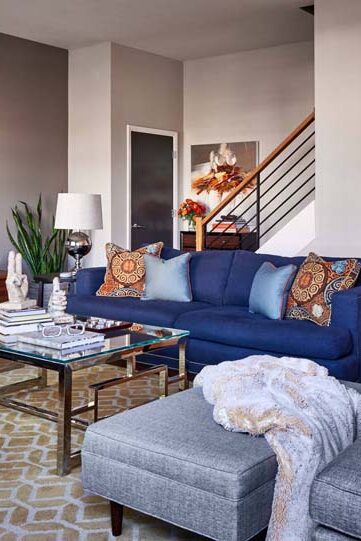
Wall art is what stops a blue sofa from feeling like it landed in the room by accident. Choose pieces that pick up the blue somewhere, even in a small way, and the whole arrangement suddenly looks connected instead of coincidental.
Height is where most people go wrong. Art hung too high leaves a strange gap above the sofa, so keep the bottom edge around eight to ten inches above the back cushions. That closer spacing ties the two together visually.
Width matters just as much. Aim for art that spans roughly two-thirds of the sofa length, whether that comes from one large piece or a grouping treated as a single block.
Abstract prints, framed photography, and vintage landscapes all work with blue, so the choice comes down to whatever you actually enjoy looking at every day.
💡 Pro Tip: Cut paper templates to size and tape them on the wall first. Live with the layout for a day before putting a single nail in, because the right arrangement usually looks different in person than on paper.
16. Bold Colors and Patterns
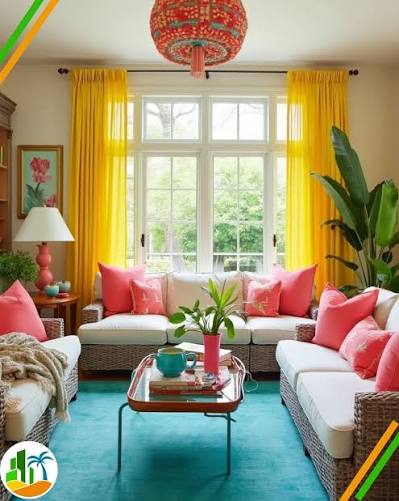
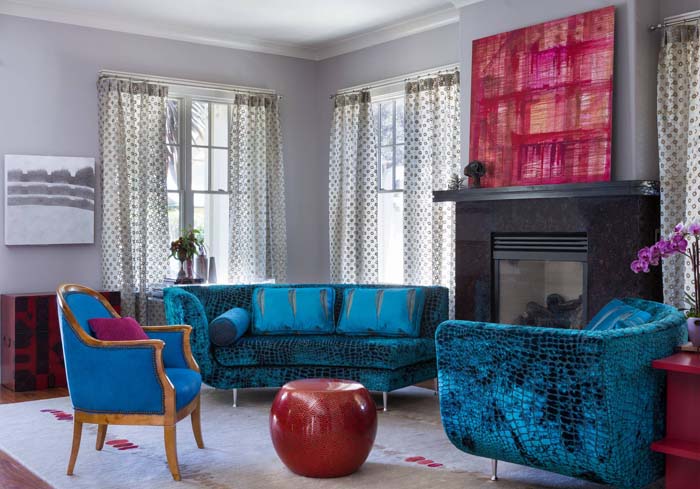
Blue sofas can take more pattern than people give them credit for. Stripes, florals, geometrics, and animal print can all share a room with a blue couch as long as the scale varies. Large pattern, medium pattern, small pattern, that mix is what keeps the eye moving instead of overwhelmed.
Bold color raises the stakes and the reward. Emerald curtains, a crimson pillow, or a wallpapered accent wall behind the sofa turns a nice room into one people actually remember.
Give the blue one clear job in all of it. Usually that means staying the calm center while everything else gets loud around it.
✨ Suggestion: Start with pattern on the smallest items first, like two pillows or a single lampshade. If the room still feels balanced after a week, add one larger patterned piece and build from there.
17. Ocean Blue Living Room Idea
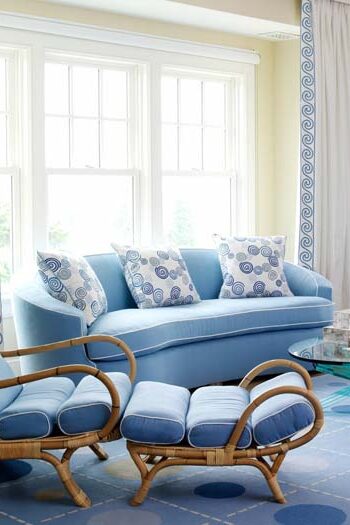
Ocean blue lands somewhere between teal and denim, and that in-between quality is exactly why it feels so easy to live with. It reads fresh in daylight and surprisingly cozy once the sun drops, which is a rare combination for any color.
Coastal styling comes naturally here without needing to go literal. Skip the anchors and shells. Instead reach for sandy neutrals, woven baskets, driftwood tones, and plenty of white to keep everything open and breathable.
Natural light amplifies the whole effect, so leave windows as bare as your privacy allows.
There is a reason this palette shows up in vacation rentals everywhere. It makes an ordinary Tuesday feel a little slower.
18. Use Bold, Bright Colors
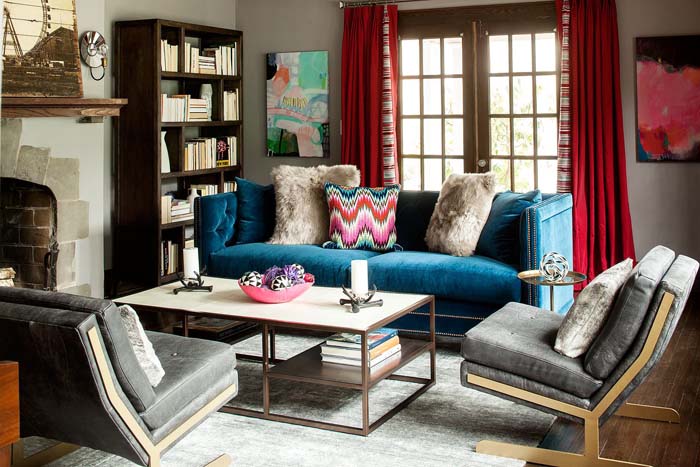
Bright color next to blue creates energy that neutral rooms never quite reach. Hot pink, sunny yellow, tangerine, or lime green against a blue sofa feels playful rather than reckless, because blue is stable enough to hold the chaos in place.
Restraint still matters, just in a different way. Pick two bright accents maximum and repeat them deliberately. Yellow in a pillow and a piece of art, pink in a throw and a vase. Repetition is what separates confident from cluttered.
Keep the floor and walls calm so all that brightness has somewhere to land.
Rooms like this pull a reaction out of people the second they walk in, usually a smile before they say anything at all.
19. Create a Soft and Subtle Reading Nook
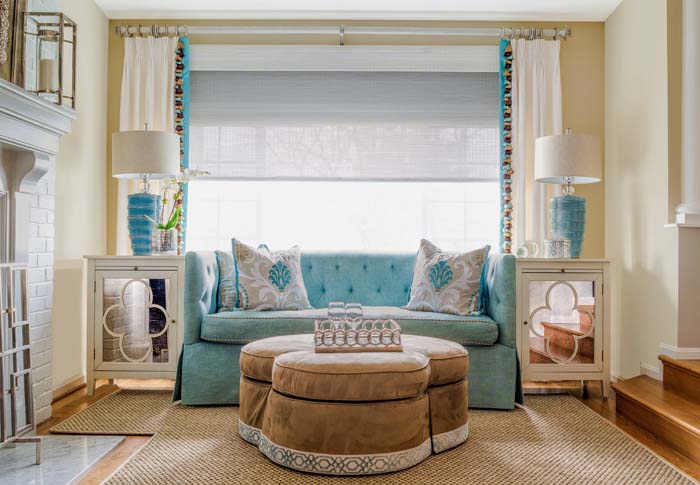
A blue sofa tucked into a quiet corner becomes something more useful than seating. Push it near a window, add a small side table and a lamp with a warm bulb, and the corner turns into the spot people actually retreat to.
Comfort here is about support more than softness. One firm pillow behind the lower back, a lighter one for the head, and a throw folded over the arm so it is always within reach. Those three things do more for a reading spot than any expensive chair.
Lighting decides whether the nook works after dark. Aim the light over your shoulder rather than straight ahead so pages stay readable without glare.
Books stack up nearby, a mug leaves a ring on the table, and eventually that corner feels like it belongs to whoever claimed it first.
💡 Pro Tip: Position the sofa so the window sits beside you rather than behind or in front. Side lighting prevents both screen glare and the harsh contrast that tires your eyes out within minutes.
20. Dark Blue in a Light Room
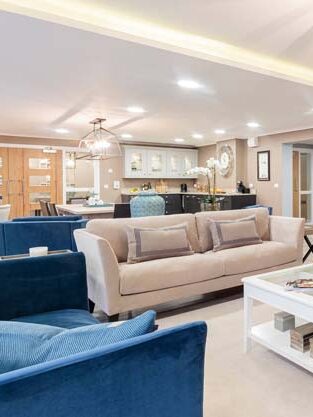
There is something satisfying about one dark piece sitting in an otherwise pale room. A midnight or navy sofa surrounded by light floors, white walls, and airy curtains gives the space a center of gravity it would not have otherwise.
Balance comes from repeating the dark tone somewhere else, just in smaller doses. Black picture frames, a dark lamp base, iron curtain rods, or the legs on a nearby table. Without those echoes, the sofa can look like it wandered in from a different house.
Keep the surrounding pieces light and low so nothing competes for the same attention.
The result is a room that feels bright and grounded at once, which is harder to pull off than it looks.
✨ Suggestion: Add a light-colored throw draped over one arm of the sofa. It softens the hard color break between dark upholstery and pale surroundings, and it makes the pairing feel intentional rather than abrupt.
You Might Also Love These Ideas
- 25 Genius Cleaning Hacks. Simple tricks that leave overlooked corners of your home sparkling clean and smelling fresh again.
- Cleaning Hacks for Impossible Items. Rescue stained, grimy pieces you nearly tossed and watch them look brand new.
- 45 Uses for Dryer Sheets. Soft, lint free tricks that make daily chores faster and rooms smell warmly clean.
- 25 Home Design Fails. Baffling layouts and choices so strange you will study every photo twice, half amused.
Frequently Asked Questions
What wall color goes best with a blue sofa?
Soft white, warm greige, and pale beige are the safest starting points because they let the blue stay the focal point. Gray works beautifully too, as long as the undertone matches your sofa. If you want drama instead of calm, a deep charcoal or muted sage wall makes navy look richer than any neutral could.
Is a blue sofa hard to decorate around?
Not really, and that surprises most people. Blue sits comfortably beside neutrals, warm woods, brass, black accents, and even bold colors like rust or mustard. The only pairing that gets tricky is another strong color in the same intensity, since two loud tones tend to compete instead of cooperate.
Which shade of blue is most timeless?
Navy holds up longest. It reads almost like a neutral, hides wear well, and moves easily between traditional and modern rooms. Denim blue comes in second because it feels casual without dating itself. Brighter shades like cobalt look incredible but tie your room to a specific mood.
What rug works with a blue couch?
Natural fiber rugs like jute and sisal are the easy answer, adding texture without adding color. A cream or oatmeal wool rug feels softer underfoot and warms the whole arrangement. Patterned rugs work too, just make sure at least one color in the pattern echoes your sofa.
Do blue sofas make a small room feel smaller?
Dark blue can visually shrink a space if the walls are also dark, but light walls solve that instantly. Pale blue and denim tones actually help small rooms feel airier. Lifting the sofa on visible legs is the other trick, since seeing floor underneath makes any room read larger.
What curtain color should I choose?
Match your curtains to the wall rather than the sofa. That continuity makes walls feel taller and keeps attention on the couch. White, cream, and light linen work in almost every setup. For a moodier look, curtains one shade deeper than your wall add quiet depth.
Can I mix a blue sofa with brown leather?
Absolutely, and the combination is better than most people expect. Warm cognac or tobacco leather chairs beside a blue sofa create that collected, lived in feeling designers love. Keep the leather warm rather than cool toned, and add one wood element to bridge the two materials.
How do I keep a blue sofa looking new?
Rotate and flip the cushions monthly so wear spreads evenly. Vacuum the crevices regularly since dust dulls color faster than anything else. Keep the sofa out of direct all day sunlight if possible, because prolonged sun fades blue dye more noticeably than it fades neutrals.
Conclusion
A blue sofa is one of those choices that keeps giving back long after the delivery truck pulls away. It works in bright rooms and dark ones, formal spaces and cottage corners, minimal setups and layered maximalist scenes. That kind of range is rare in furniture, and it means your room can change direction later without the couch ever feeling wrong.
Start with the version that made you pause while scrolling. Maybe it was the navy against pale walls, or the pillow swaps, or that quiet reading nook by the window.
You do not need every idea here. You just need one that fits how you actually live.
Then let the room grow into it, season by season.