14 Storage and Decor Ideas Above Kitchen Cabinets
Most kitchens have a stretch of wall doing nothing. Sometimes it is the gap above the upper cabinets. Sometimes it is the strip above the sink, or the awkward run over a window that never got a cupboard.
That space is usable. The catch is that it comes with two problems nobody mentions.
The first is reach. Anything stored up high needs to be something you only want a few times a year, or the step stool becomes part of your daily routine. The second is grease. Cooking sends a fine film into the air that settles on everything above the stove, which is why open storage up there needs a plan, not just pretty jars.
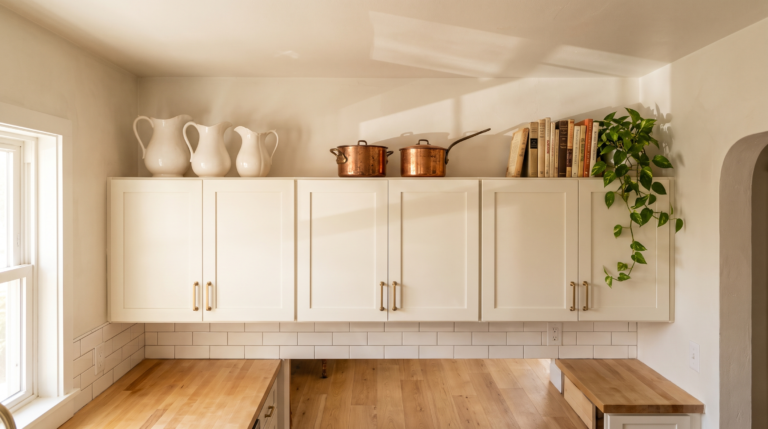
Handle both and the space earns its keep. Shelves can hold the pasta and the porcelain. The cabinet tops can carry art, pitchers, or a collection worth looking at.
Ahead are 14 ways to use that wall, split between real storage and pure display, with the practical details that make each one work.
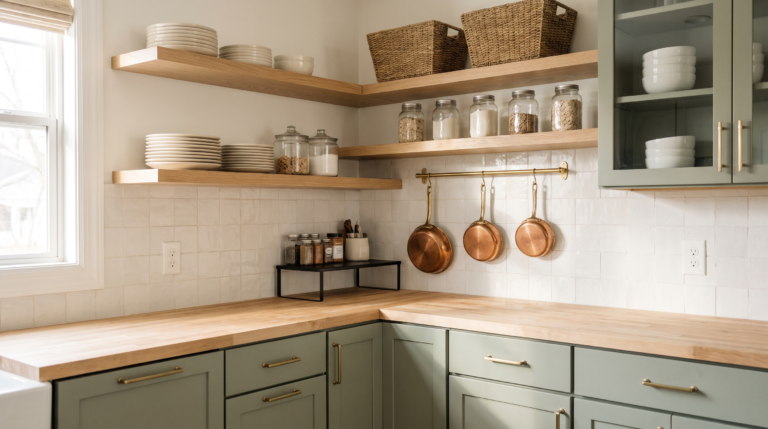
1. Open Shelves For Airy Feel
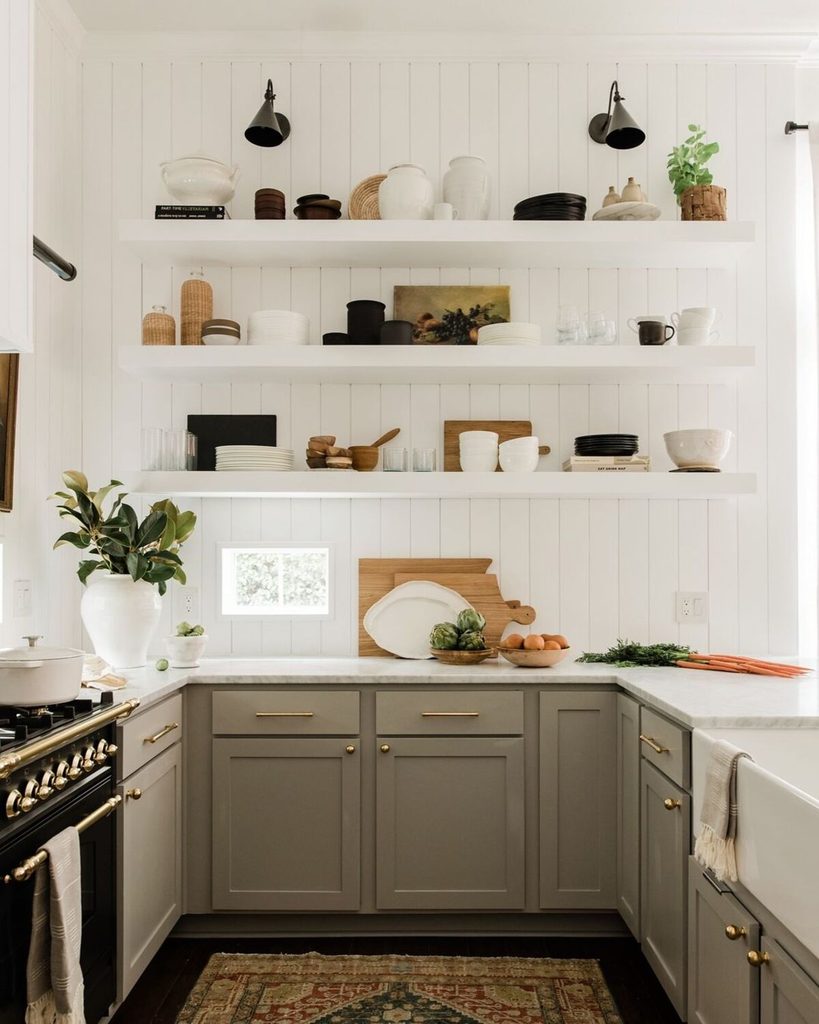
Some walls are too narrow for a cabinet but too tall to leave bare. Open shelves solve that exact problem, and the shallow depth is what keeps a tight kitchen from feeling any tighter.
One shelf, two, or three depending on the height you have to work with. Because there are no doors swinging out, the wall stays visually flat and the room keeps its breathing room. Fill them with a porcelain collection, glass jars of pasta and dried herbs, or whatever changes with the season. Jars earn their spot twice over, since dry goods look good and get used, which means nothing sits up there quietly going stale.
Best suited for narrow wall runs where a cupboard would feel bulky.
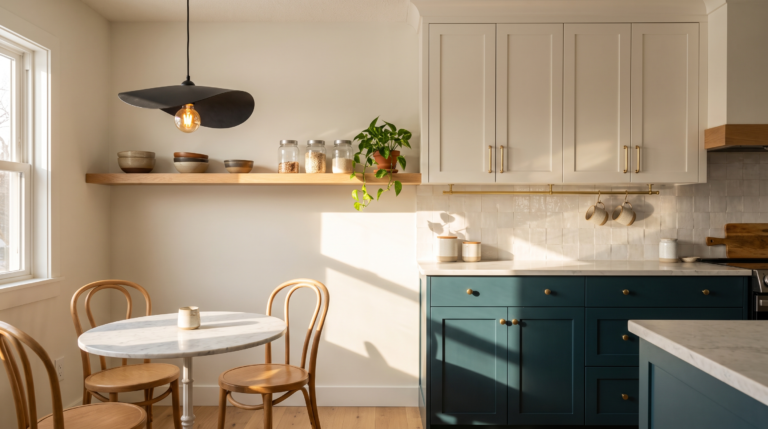
2. Floating Shelves Above The Sink

Take that same idea and put it where the light is. The wall above the sink usually gets the best daylight in a kitchen, and floating shelves there catch it all day long.
Small kitchens already packed with cabinets rarely have room for more storage, so this spot works better as display than as a pantry. Keep it to a few pieces worth looking at, since anything that lives here gets seen constantly. The hidden brackets are what sell the look, because a shelf with no visible hardware reads as part of the wall rather than something bolted to it. Standing at the sink is already a fair chunk of the day, and it helps to have something good to look at.
The light shifts across the shelf from morning through to evening.
3. A Combination Of Closed And Open Shelves
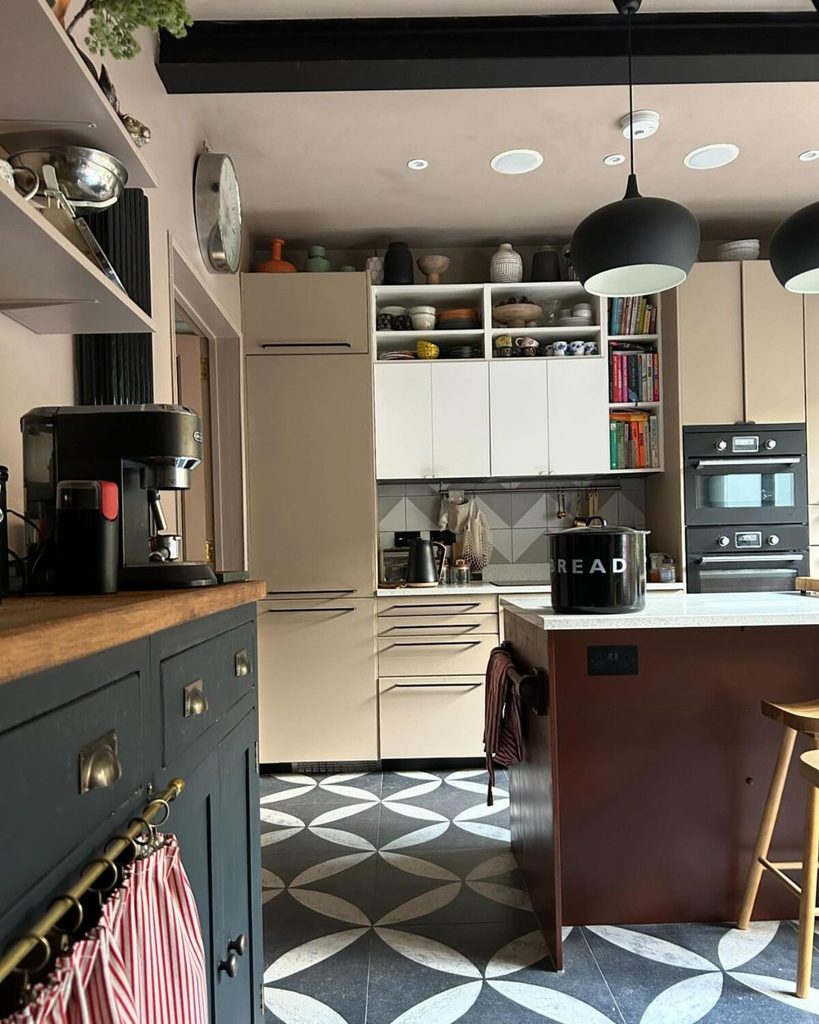
There is a smarter option than choosing between doors and no doors. Mixing both in the same run gives a kitchen the open, characterful look while keeping the messy things behind a door where they belong.
Cabinets above the sink fitted with open shelf units let a few good pieces do the talking, and the closed sections quietly absorb everything else. The vertical side panel becomes a narrow bookshelf, which is exactly where cookbooks belong instead of stacked on a counter. Horizontal shelves take the unique housewares worth showing. That balance is the whole point, because a wall of pure open shelving demands constant tidying and most kitchens never get it.
A smart pick for anyone who wants the look without the upkeep.
💡 Pro Tip: Put the open sections at eye level and the closed ones above and below. Eye level is where the display actually registers, and it keeps the pieces you look at within easy reach instead of stranded up high.
4. Shelves Up To The Ceiling
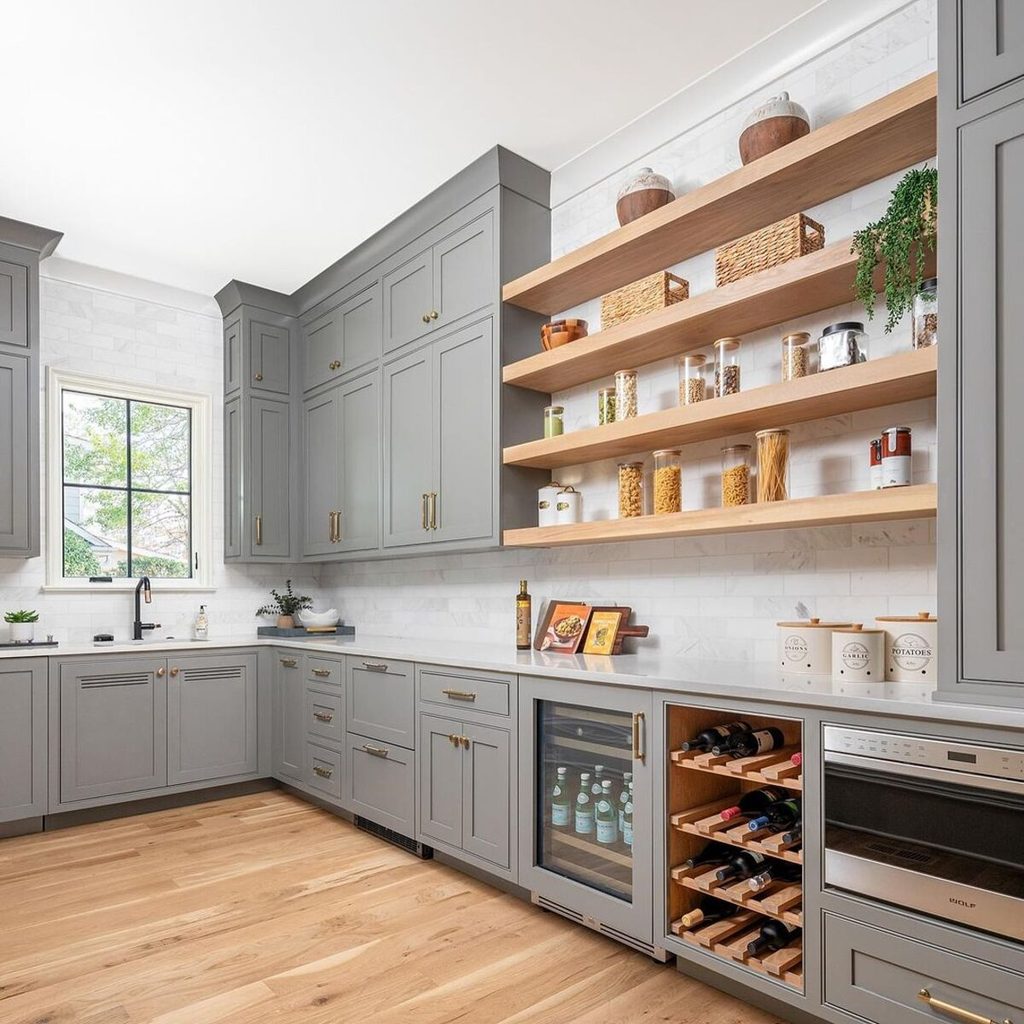
A full wall of upper cabinets running to the ceiling can feel like a lot, no matter how much storage it holds. Breaking that run with a tall open shelf unit lifts the weight off the whole kitchen.
The gap in the cabinetry is what does it. Solid doors stacked floor to ceiling read as one heavy block, while an open section lets the eye pass through and keeps the wall from closing in. Light wood shelves soften it further, since pale timber never carries the visual weight that dark finishes do. These shelves sit within easy reach too, which makes them the right home for the ingredients used most, or for vases and cookbooks if storage is not the issue.
Proof that what you leave out matters as much as what you put in.
5. Cupboards Without Doors
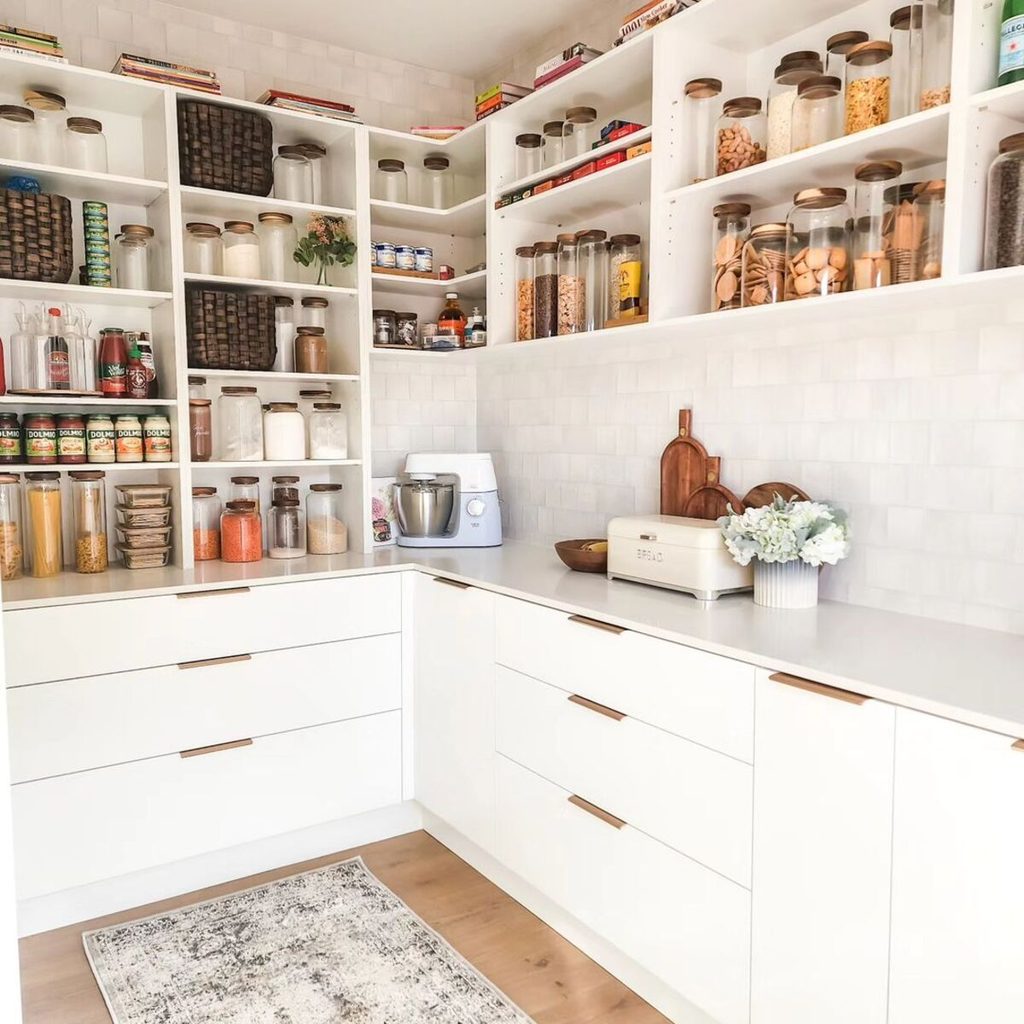
For anyone drawn to open shelving but worried about holding weight, there is a middle path. Keep the cabinet boxes and simply take the doors off.
The structure is the advantage here. A full box carries far more than a plank on brackets, so heavy stacks of plates and mixing bowls stay safe, and the framed sides keep each section looking like a finished unit. Everything is on show, though, so the organizing has to be real. Loose ingredients like pasta, spices, and dried herbs belong in jars, and everything else goes into matching baskets. That sameness is the quiet secret, because identical containers turn a jumble of odds and ends into something that looks arranged on purpose.
The kind of storage that looks composed even on a busy week.
👉 Suggestion: Choose baskets in one material and one color, ideally seagrass or woven cotton in a natural tone. Matching texture across the whole run is what makes a doorless cabinet read as styled rather than simply undressed.
6. Shelves As Extension Of The Cupboards
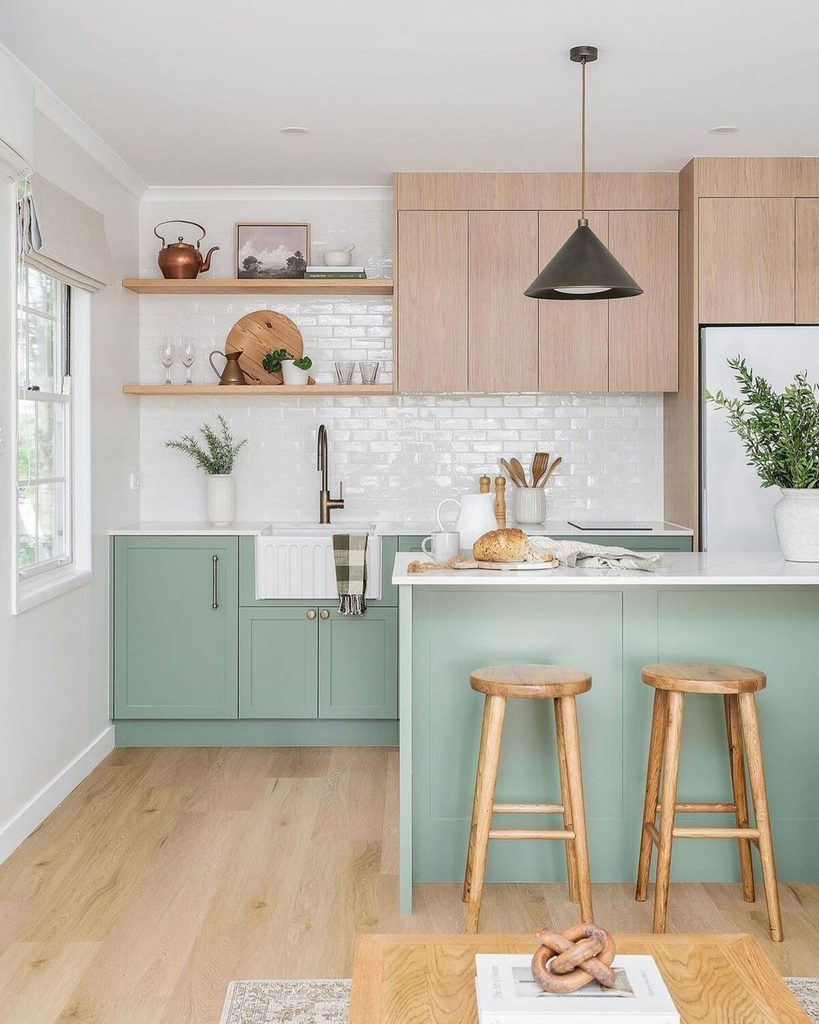
Matching materials is what separates shelving that looks planned from shelving that looks added later. Running cabinets to the ceiling and continuing the same wood into open shelves beside them keeps the whole wall reading as one piece.
The repeated grain is doing the work. When the shelf timber matches the cabinet fronts exactly, the eye travels across the wall without stopping, so nothing announces itself as an afterthought. Wood also brings warmth into a modern kitchen that flat painted fronts and steel appliances cannot manage on their own. That warmth shows most on a gray morning, when the room still feels comfortable before the lights go on.
The grain catches light differently across the day, so the wall never looks flat.
7. Cabinets With Glass Doors
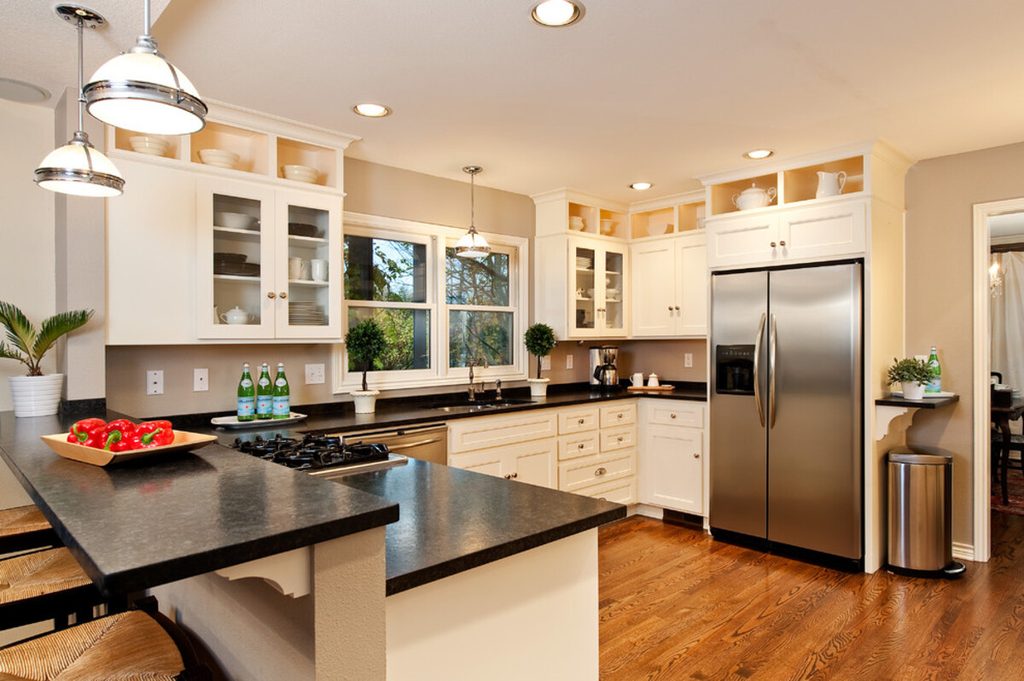
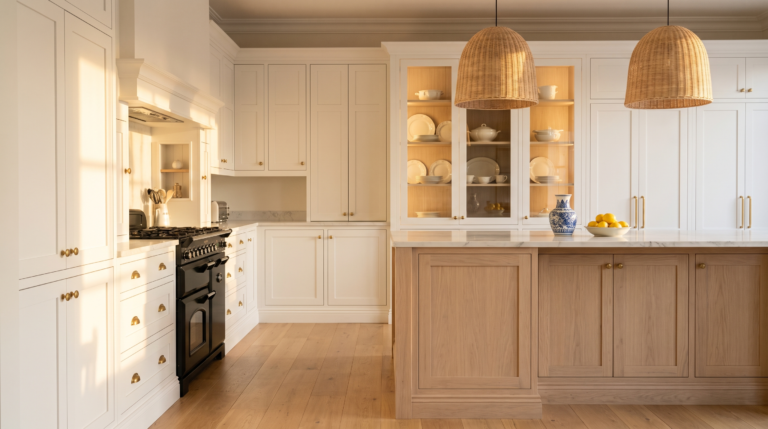
There is a way to keep open storage looking open while solving the dust problem entirely. Glass doors on part of the run let everything stay visible behind a panel that wipes clean in seconds.
Glass also pulls the two storage types together. When a kitchen mixes open shelves with closed cabinets, a glass-fronted section sits between them and makes the whole wall feel considered rather than mismatched. Save these doors for the pieces worth framing, like a collection of porcelain bowls or matching stoneware. A small built-in light inside turns that collection into a proper feature after dark, which is when the kitchen usually gets its second shift of the day.
Made for collectors who want their best pieces seen but not dusted every week.
💡 Pro Tip: Choose reeded or fluted glass for the cabinets holding everyday items. The ribbed surface blurs what is inside into soft shapes, so those shelves never need to look perfect to look good.
8. Storage Over The Cabinets

Kitchens with tall ceilings end up with a generous stretch above the cabinets, and that height is an opportunity rather than a gap to hide. Two-tone wood cabinetry underneath sets the stage for whatever goes up there.
Scale decides everything at that height. Pieces that look large on a counter shrink to nothing near the ceiling, so coastal finds with a bit of size, like lanterns, aged vessels, and weathered wood, hold their own where small trinkets disappear. Keeping the collection to one story ties it together, whether that is lake house, farmhouse, or something else entirely. Blue rattan chairs and sea-themed paintings below carry the theme down to eye level, which is what stops the display up top from feeling stranded.
Ideal for open-concept kitchens with tall ceilings and a theme worth committing to.
9. Modern Farmhouse Kitchen Cabinets and Decorations
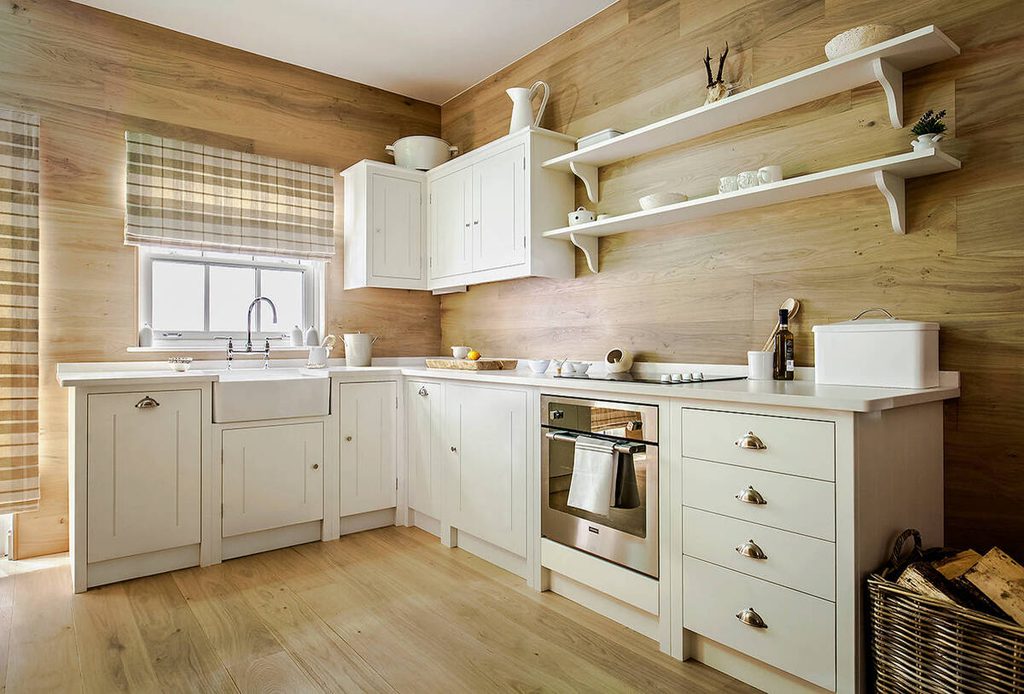
Farmhouse cabinetry in crisp white against paneled walls is the pairing that keeps this style from ever feeling dated. Traditional shapes, modern color, and the two get along better than they should.
White is what updates it. The same cabinet profile in dark wood reads old-fashioned, while white paint keeps the detail and drops the heaviness, which is why it sits comfortably beside stainless appliances. Open shelves with corbel supports carry the traditional detail through. Above the cabinets and across those shelves, the everyday dishware does the decorating. Porcelain cups, pitchers, and bowls all look good sitting out and all get used, which means nothing up there is purely ornamental.
That rare balance of relaxed and put-together.
👉 Suggestion: Look for ironstone or plain white stoneware with a slightly uneven glaze rather than perfectly smooth modern porcelain. The small variations read as collected over time, which is exactly what farmhouse styling needs.
10. Vintage Shelves Into A Niche

Shaping the wall itself changes how a display reads. Setting open shelves into a recessed niche gives them a frame, and that frame is what makes a handful of old pieces look like a proper collection.
Shiplap running through the niche adds the rustic texture that flat plaster never delivers, and copper dowels fitted across the shelves finish the look with a bit of warm metal. Because the recess creates its own edges, everything inside reads as one arrangement instead of separate objects sitting on a plank. Antiques suit this treatment best, since a frame gives older pieces the weight they deserve. It becomes the corner people stop and look at while the kettle heats.
Sometimes the quietest details do the loudest work.
11. Dowel With S-hooks And A Shelf
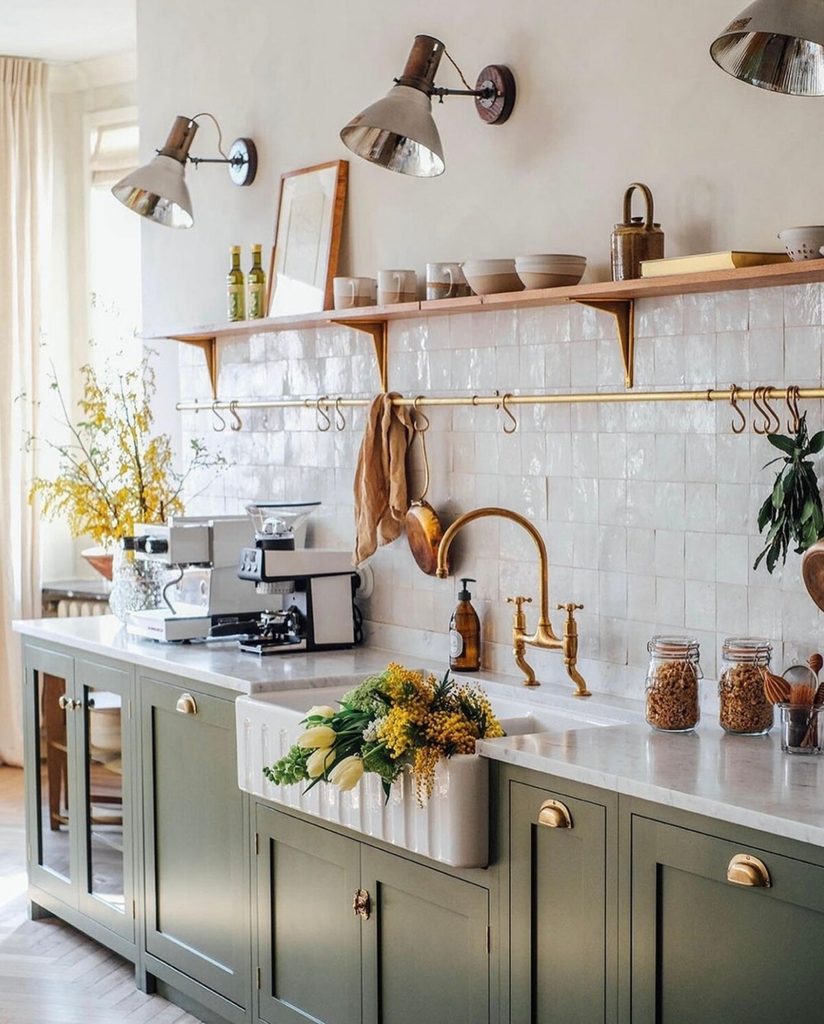
Not every bit of vertical space deserves a full shelf. A simple dowel fitted with S-hooks uses the strip above or below the upper cabinets, and it costs almost nothing to put up.
Weight is the limit worth knowing. A dowel handles cutting boards, mugs, tea towels, and light decorative pieces perfectly well, but heavy cast iron belongs somewhere sturdier. Picking the dowel and hooks in a contrasting metal finish is what turns a practical fix into something intentional, and a bright color does the same job in a plainer kitchen. Hanging the daily mugs here also clears counter space, which shows up fast on mornings when everyone needs coffee at once.
A smart pick for renters and narrow gaps where a shelf will not fit.
12. Corner Cupboards And A Shelf Over The Window
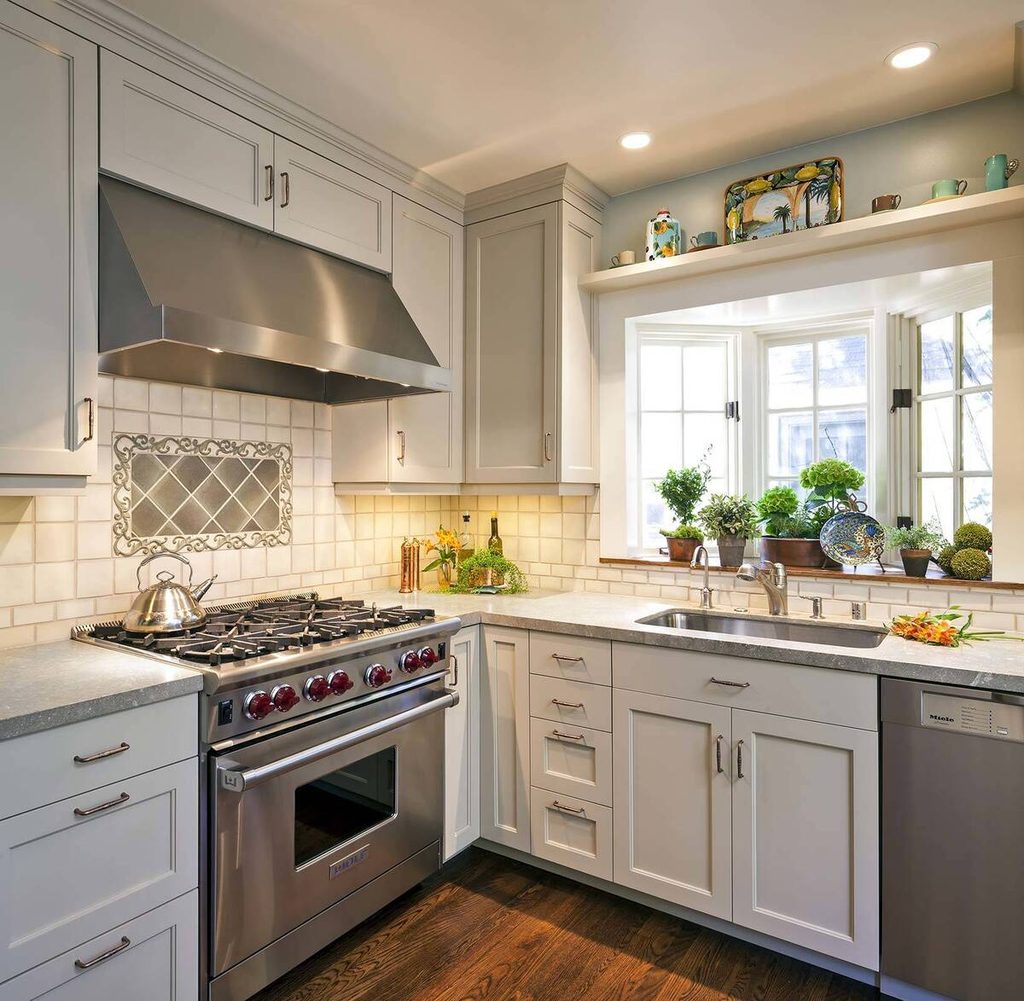
In a small kitchen, every vertical inch has to pull its weight. Running the corner cupboards right up to the ceiling and adding a shelf across the top of the window turns two overlooked spots into real space.
Tall cabinets do more than hold things. Carrying the cabinetry all the way up removes the broken line near the ceiling, and that unbroken height makes a small room read as taller than it measures. The shelf above the window and the sill below become the softer spots, holding plants and a few art pieces so the kitchen does not feel like pure storage. Greenery framing a window catches the morning light in a way no cupboard door ever will.
The whole room feels bigger and warmer at the same time.
💡 Pro Tip: Keep the over-window shelf narrow, around four to six inches deep. Anything deeper casts a shadow across the glass and cuts the daylight the window was supposed to bring in.
13. Display Art On Open Shelves

Art in a kitchen sounds risky until you think about where it goes. Up high on open shelves or along the top of the cabinets, a framed piece sits well out of range of splashes, steam, and whatever the pan is doing.
Height is the protection. Anything at counter level takes grease and water over time, while a piece a few feet above the cooking zone stays clean and still gets seen from anywhere in the room. Scale matters as much as placement, since a small frame disappears at that height and a large one anchors the whole wall. Lean it rather than hanging it, which makes swapping the piece a two-minute job. Guests always notice it, mostly because nobody expects real art in a kitchen.
The kind of detail that shows how much personality a room can hold.
14. Enhance The Kitchen Style With Decor Accents On The Top Of The Cabinets
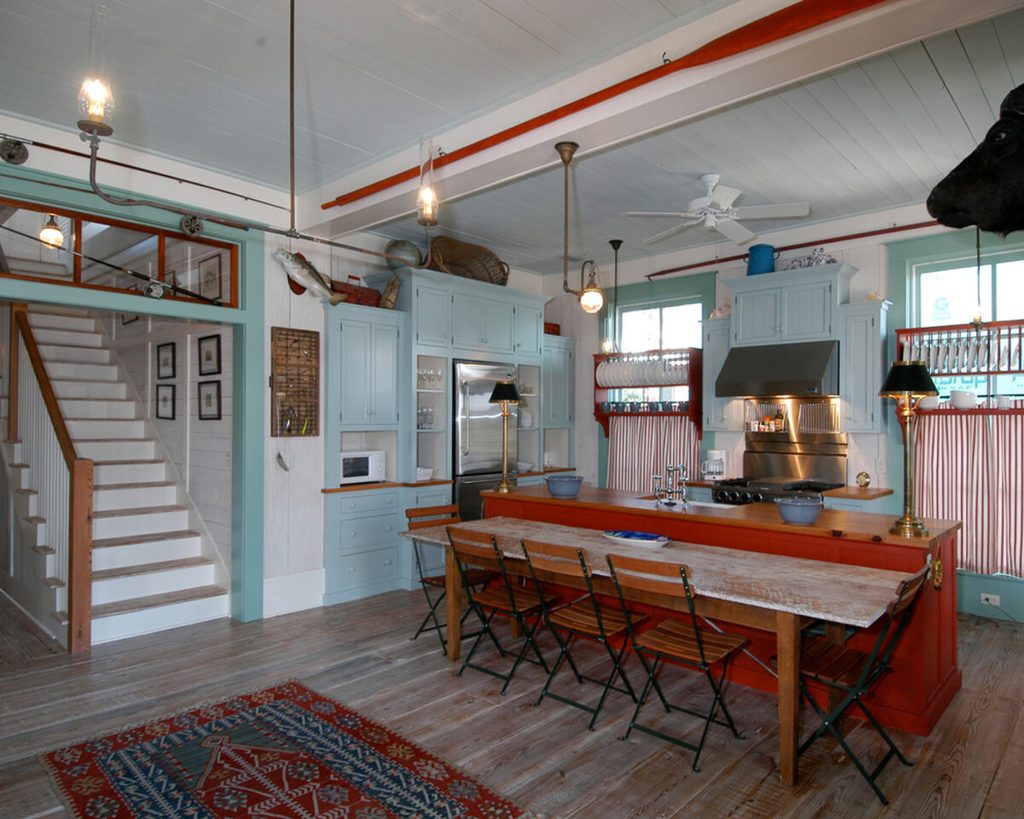
A beach style kitchen in soft blue already carries plenty of mood, and the tops of the cabinets are where that mood gets finished. Vintage pieces up there complete the story the cabinet color starts.
Staggered cabinet heights are the detail that makes this one work. When the run steps up and down instead of holding one flat line, each section gets its own pocket of space, and the pieces sitting in those pockets look placed rather than parked in a row. Antique farmhouse finds suit blue cabinetry particularly well, since aged wood and worn paint warm up all that cool color. The whole arrangement looks like the cabinets were built with it in mind.
A room that feels calmer the longer you stand in it.
💡 Pro Tip: If your cabinets run in one flat line, fake the staggered effect with risers. Setting two or three pieces on small hidden stands creates the same stepped rhythm without touching the cabinetry.
You Might Also Love These Ideas
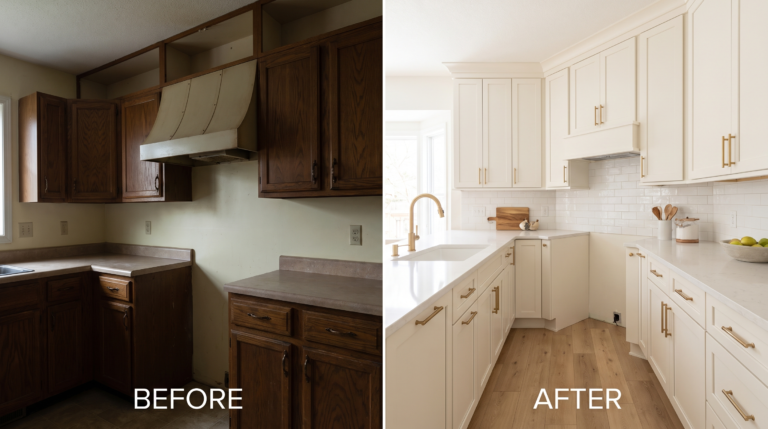
- 9 Kitchen Cabinet Makeovers. Real before and after reveals where dark, boxed-in kitchens open up into bright, breathing rooms.
- 18 Smart Decor Ideas. Warm, easy touches that make any room feel finished without a single big change.
- 22 Budget Kitchen Countertop Ideas. Smart pairings in wood, quartz, and concrete that look custom under soft morning light.
Frequently Asked Questions
What should you store above kitchen cabinets?
Only what gets used a few times a year. Holiday platters, large stockpots, spare dish sets, and seasonal serveware all belong up there because reaching them rarely is not an inconvenience. Keep everyday items within arm’s reach instead, since anything needing a step stool daily becomes a chore fast. Lightweight pieces are safer up high than heavy cast iron or stacked stoneware.
How do you stop open shelving from getting greasy?
Wipe weekly and keep the greasy zone clear. Cooking sends a fine oily film into the air that settles hardest within a few feet of the stove, so decorative pieces belong further along the run. Line cabinet tops with shelf liner paper and swap it twice a year instead of washing every item. Glazed ceramic, glass, and metal wipe clean, while raw wicker traps grease and holds onto it.
How much does it cost to add open shelving to a kitchen?
Most kitchens stay under a few hundred dollars for a couple of solid wood shelves plus brackets. Pine and birch sit in the budget-friendly range, while thicker oak or walnut boards cost noticeably more. Home improvement chains like Home Depot or Lowe’s cut boards to length at no extra charge, which saves buying a saw. Removing cabinet doors to create open storage costs nothing at all.
Can you mix open shelving with farmhouse and modern styles?
Yes, and the mix usually works better than one style alone. Keep the shelf itself simple so the pieces on it carry the character, which lets aged ironstone sit comfortably on a clean-lined oak board. Stay within one warm palette of cream, brass, and natural wood to hold it together. Two styles blend well, three starts looking accidental.
How do you change shelf displays for the seasons?
Swap two or three pieces rather than redoing the whole shelf. Keeping the larger anchor items in place and rotating only the smaller accents takes about ten minutes and costs nothing. Shift tones with the calendar, moving toward rust and amber in fall, then cool white and evergreen in winter. Dried stems and branches handle seasonal changes better than fresh flowers.
Conclusion
The walls most kitchens ignore usually have the most to give. A shelf above the sink, a run of open boxes where doors used to hang, or the strip along the top of the cabinets can carry real storage and still look like something worth seeing. What makes these ideas work is that nothing up there is purely decorative. Jars of pasta, stacked porcelain, a leaning piece of art, and a few aged finds all earn their spot, whether the kitchen leans modern farmhouse, coastal, or quietly vintage.
Pick one wall and one job for it. Storage or display, not both at once, because trying to do everything is how open shelving ends up looking cluttered. Save the idea that fits your kitchen to a Pinterest board, bookmark this post for the next free afternoon, and pass it along to a friend with a blank wall she keeps meaning to deal with. The best kitchens use every inch without ever looking full.