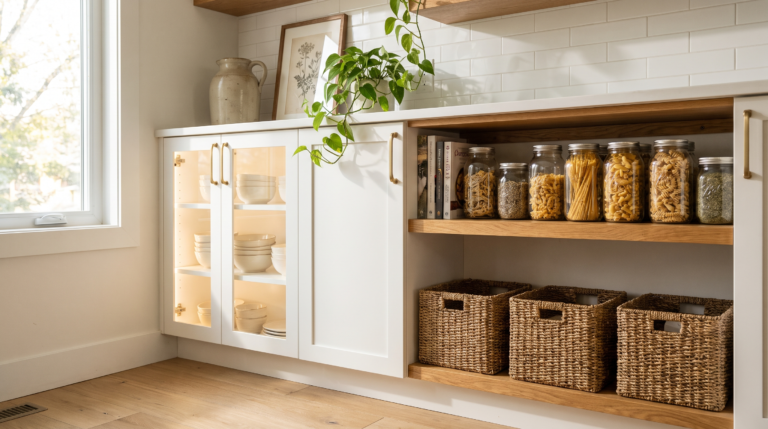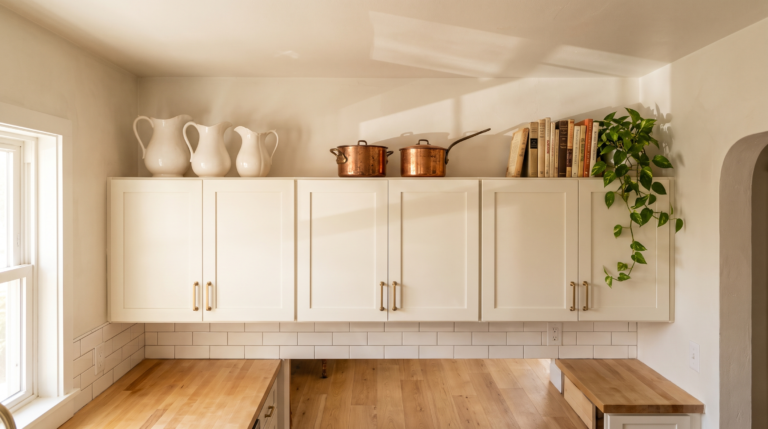
23 White Kitchen Ideas That Never Feel Cold
White kitchens get chosen for a reason. They bounce light, they never date, and they make a small room read larger than it measures.
They also carry one real risk. Get the white wrong and the room turns cold, more operating theater than kitchen.
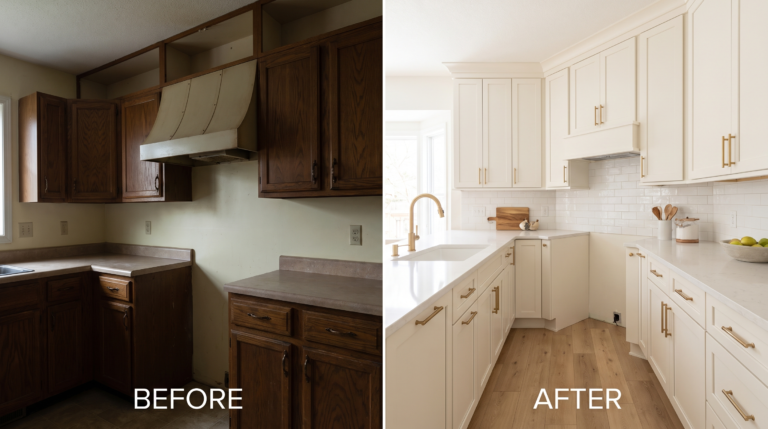
The difference is almost never the white itself. It is everything sitting next to it. A pale oak counter, an aged brass handle, one rattan pendant, a black range anchoring the far wall. Those are the pieces that give white something to lean against, and without at least one of them a white kitchen has nowhere to land.
Undertone matters too. A cool bright white works beautifully in a room that gets afternoon sun and turns gray and flat in one that faces north.
The 23 ideas ahead are all about that balance. Some add warmth through wood and texture, others through contrast and color. Pick the ones that suit the light your kitchen actually gets.
1. A Modern White Look for a Minimalistic Design

Committing fully to white is a bolder choice than it sounds. No contrast color, no wood tone, just white on white and the light doing all the work.
Texture carries the whole room in a setup like this. Luminous white wall tile picks up light differently than flat painted cabinet fronts, and that small shift is what keeps the space from going blank. White chairs continue the line, while soft LED lighting along the counters keeps the surfaces bright after dark. The look demands tidiness, though. With nothing to distract the eye, a stack of mail on the counter stands out immediately.
Best suited for modern homes where clean lines matter more than cozy layers.
2. White Marble Countertop Design for an Elevated Aesthetic

Softening that pure white scheme takes one surface with movement in it. Marble brings pattern without color, which is exactly what an all-white kitchen needs to stop looking flat.
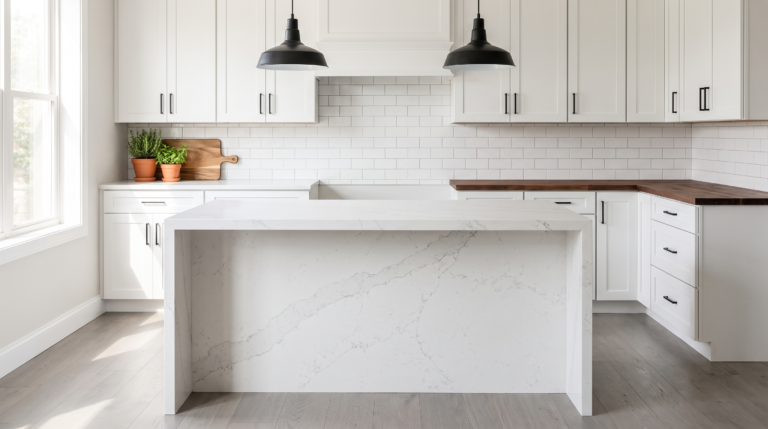
The veining does the work no paint color can. Soft gray lines drifting across a white slab give the eye something to follow, so the counter reads as a feature rather than a blank plane. Pale wood cabinets underneath warm it up and keep the marble from feeling clinical. A single orchid or a small trailing plant nearby adds the one living thing every hard-surfaced room needs. Marble does stain, which is worth knowing before it goes anywhere near a red wine glass.
One of those combinations people rarely regret choosing.
3. White Kitchen with Incorporated Pale Wood for a Sense of Coziness
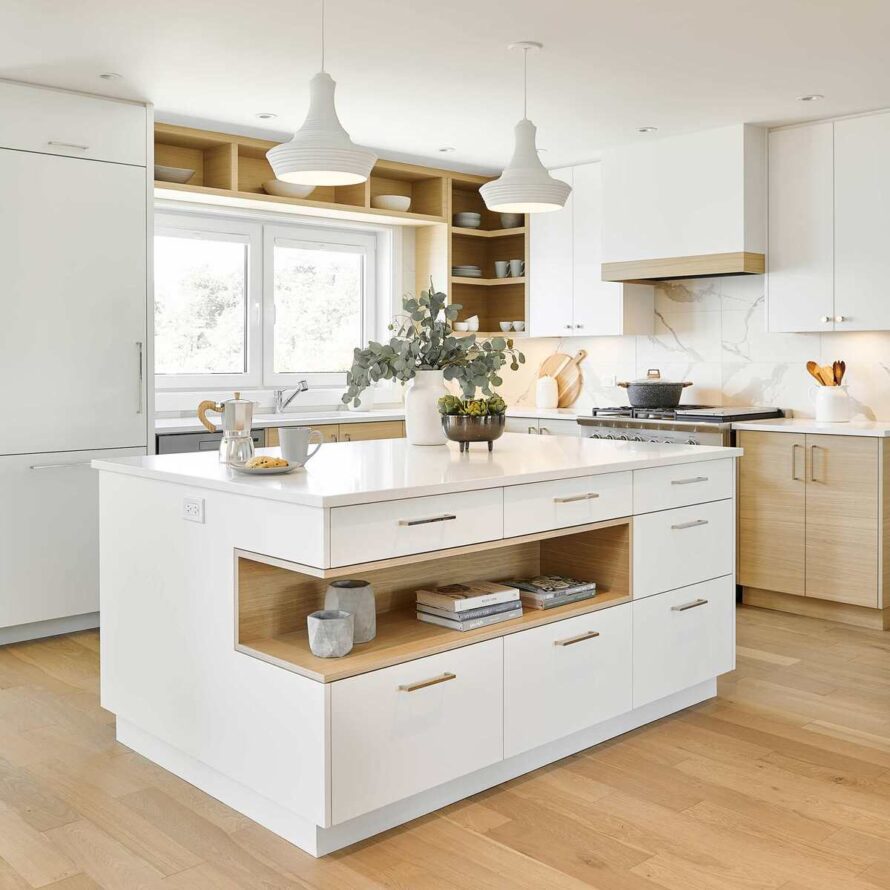
Wood is the fastest cure for a cold white kitchen, and pale wood does it without darkening the room. Light oak or ash sits close enough to white in tone that the space stays bright while the temperature climbs.
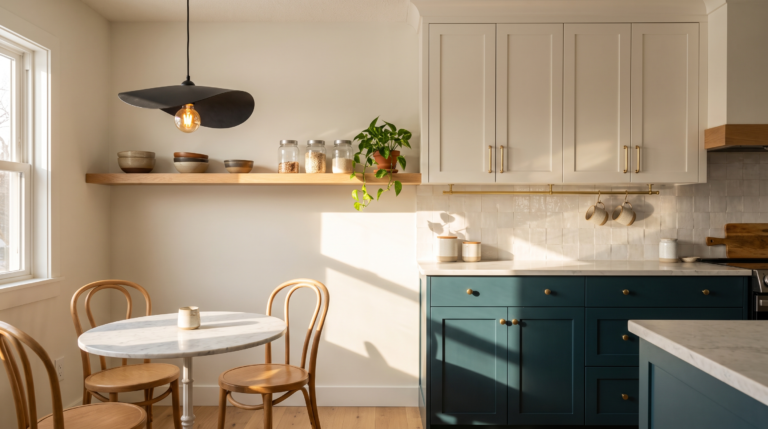
Open shelving in pale timber is the easiest place to start. The grain introduces natural pattern at eye level, which is where the eye lands most, so a couple of shelves change the feel of the whole room. Light wood flooring carries that warmth down and underfoot, closing the loop. Standing barefoot on wood instead of cold tile on a winter morning is a small thing that gets noticed daily.
A room that feels better the longer you stand in it.
💡 Pro Tip: Pick wood with a warm honey undertone rather than a gray-washed finish. Gray-toned timber reads as another cool surface and cancels out the warmth the wood was supposed to bring.
4. Abundance of Natural Light to Show the White Kitchen in All its Splendor
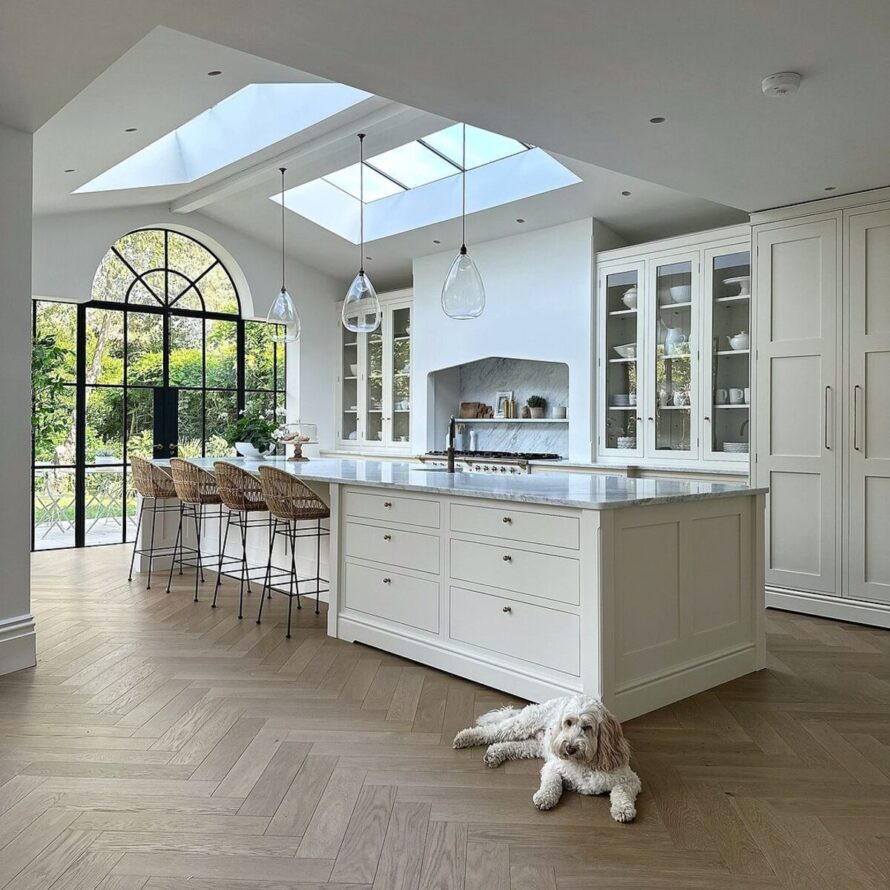
Wood adds warmth from the inside. Daylight adds it from the outside, and no white kitchen looks its best without plenty of it.
White surfaces are essentially reflectors, which is why a bright room feels twice as bright once the cabinets go white and a dark room just turns gray. Frameless glass doors pull in far more light than a standard door with heavy framing, since the frame itself is what blocks the view. A skylight does even more, dropping light straight down onto the counters instead of across them from one side. Breakfast in a kitchen like this rarely needs a light switch, even in winter.
The white shifts tone all day, cooler at noon and golden by late afternoon.
👉 Suggestion: Choose sheer linen or cotton voile at the windows rather than heavy lined curtains. Light fabrics soften the glare without cutting the daylight a white kitchen depends on.
5. Black Furniture and Details for a Harmonious Contrast
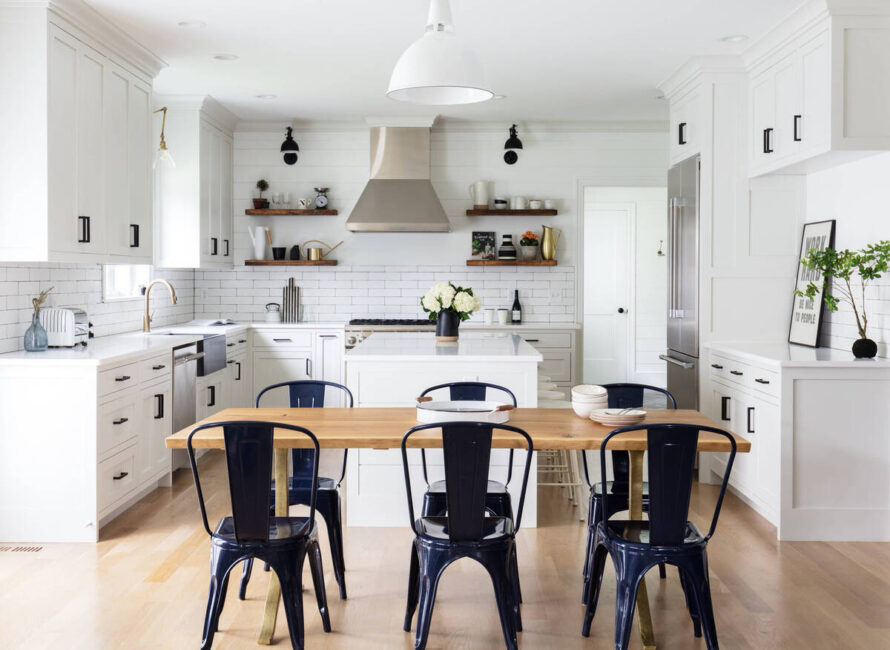
All that brightness needs something to push against. Black is the classic answer, and used in small doses it sharpens a white kitchen rather than darkening it.
Contrast works because the eye needs a resting point. In a room where every surface reflects light, black chairs and black cabinet handles give it somewhere to stop, and suddenly the white reads as deliberate instead of default. Keep the black to details and furniture rather than large surfaces. A few dark vases and a pair of black wall sconces finish it without tipping the balance. The handles get touched a hundred times a day, which is another reason dark hardware makes sense.
Proof that small choices carry the biggest weight.
6. Wooden Countertop Addition for a Sense of Homeliness

Softer than black, warmer than stone. A wooden counter running through a white kitchen brings the temperature up in a way no accessory can manage, because it covers real surface area.
Counters sit at the exact height the eye scans when you walk in, so whatever material lives there sets the mood for the room. Pale timber against white cabinetry keeps everything bright while adding the grain and warmth that stone never offers. Wood also feels different under the hands, which shows during a long baking session when the surface stays comfortable instead of cold. Running it across just the island is often enough, since a little goes a long way.
The kind of kitchen where people end up standing around long after dinner.
💡 Pro Tip: Keep wood counters away from the sink run if possible. Standing water is what eventually splits and darkens timber, so putting stone around the sink and wood on the island gets the warmth without the maintenance headache.
7. Low Pendant Lights as a Stylish Addition to Your White Kitchen

Hanging lights low over a counter changes a room more than most people expect. Bringing them down closer to the surface adds a second layer of height to a kitchen that otherwise runs in flat horizontal lines.
Height is the whole trick. Lights dropped near eye level break up the long run of counter and cabinet, so the room gains depth instead of reading as one continuous band. They also pool warm light exactly where hands are working, which matters on evenings when the overhead light feels too harsh for chopping and talking at the same time. Two or three across an island, evenly spaced, is usually the right number.
Made for kitchens that feel flat and need something with vertical presence.
8. Cabinet Lighting for a Luxurious Feel and a Modern Look
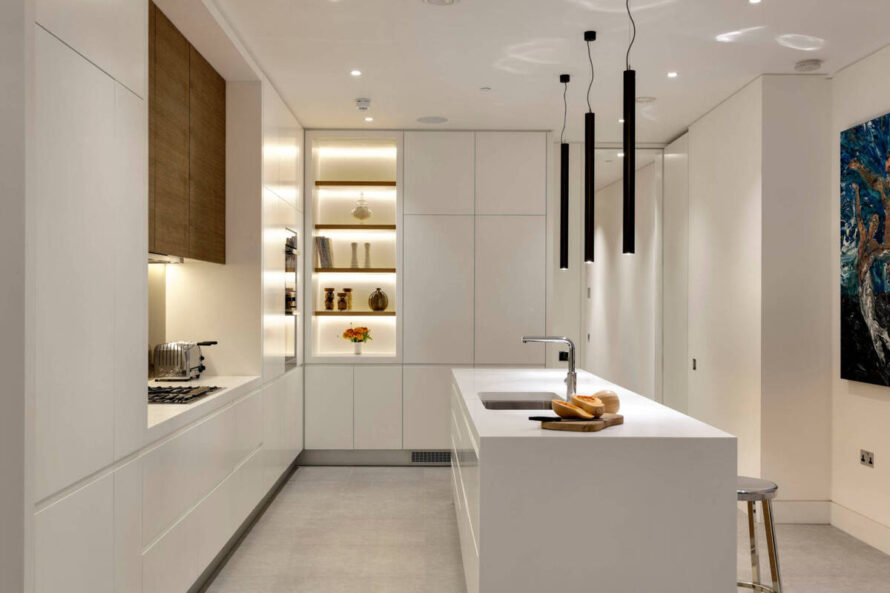
Where pendants hang in the open, this light hides completely. Strips fitted under and inside the cabinets throw a soft glow across the counters without a single visible fixture.
Concealed lighting reads as expensive because the source stays invisible, so the counter simply appears lit rather than shone upon. In a white kitchen the effect doubles, since pale surfaces carry that glow further than dark ones ever would. Lit shelves inside glass cabinets also turn ordinary glassware into something worth looking at, which is where a few storage and decor ideas come in handy for arranging what sits up there. Late at night, that low strip of light is usually all anyone needs, which saves flipping on the harsh overhead for a glass of water.
The whole kitchen carries a calmer mood once the main lights go off.
9. Display Cabinets for a Stylish Arrangement of Tableware

Once there is light inside the cabinets, the next question is what deserves to sit in them. Glass fronts turn everyday tableware into part of the decor, and in a white kitchen that visible color does real work.
Plain white cabinet doors give the eye nothing to hold, so a glazed section filled with stacked plates, tumblers, and colored glass becomes the natural focal point. Keep the arrangement simple. Group by type, stack by size, and leave a little air between the piles so it reads as arranged rather than stored. The pieces on show are usually the ones tied to a wedding, a trip, or a grandmother, which is what makes this more personal than most decor choices.
A reminder that good design starts with how a space feels.
💡 Pro Tip: Paint the inside back panel of the display cabinet a soft color like sage or warm greige. A tinted backdrop makes white and clear pieces pop, while a white interior lets them disappear into the background.
10. Rattan Pendant Lights for an Organic Touch and Warmth
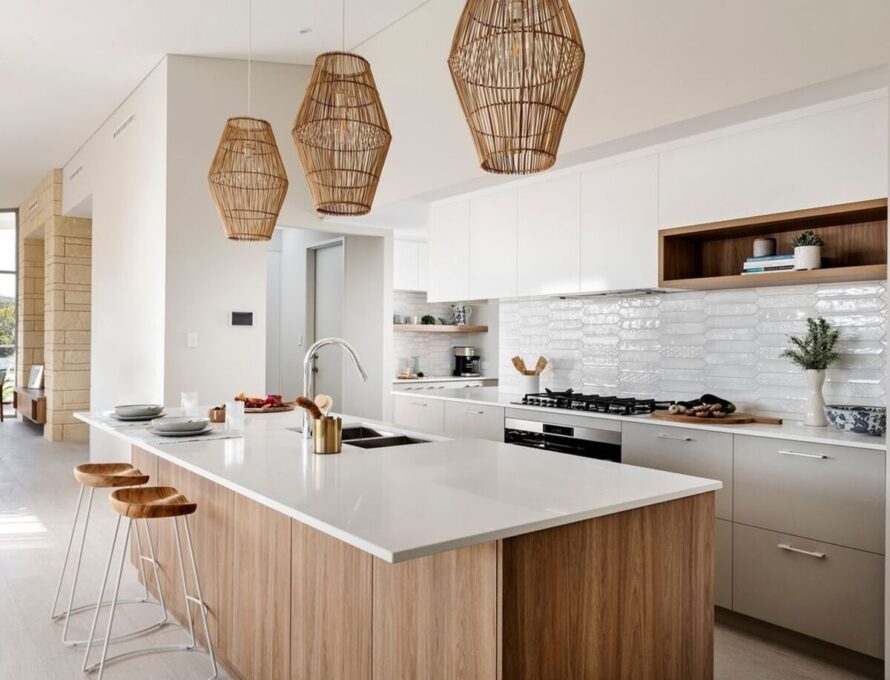
Swap sleek metal shades for something woven and the whole kitchen loosens up. Rattan pendants bring texture into a room built from flat, hard surfaces, and that contrast is the entire appeal.
Woven shades do something metal ones cannot. Light passes through the gaps in the weave and throws soft patterns onto the ceiling and counters, so the fixture keeps working after dark instead of just hanging there. The natural fiber tone also warms up white cabinetry without introducing a color that has to be matched elsewhere. Two or three above the counter is plenty. It gives the room a relaxed, coastal feel, the kind of kitchen where nobody minds sitting on a stool for an extra half hour.
A setup that turns an ordinary evening into a slower one.
👉 Suggestion: Look for rattan or seagrass shades in a natural undyed finish rather than a white-painted weave. Raw fiber holds the warm honey tone that makes this pairing work, while painted versions blend into the white and lose the contrast.
11. A Black Oven as a Contrasting and Elegant Focal Point

Appliances usually try to disappear. A black range does the opposite, and in a white kitchen that boldness is exactly what the room needs.
Every kitchen benefits from one clear anchor, something the eye finds first and returns to. A matte black oven set into a run of white cabinetry does that without any extra decorating, because the contrast alone makes it a feature. Carrying the color through to a black dining table and chairs ties the two ends of the room together so the range does not sit there alone. Black also hides the marks that a heavily used cooker inevitably collects, which white appliances never manage past the first month.
Ideal for open kitchens that need one strong anchor point.
12. Sliding Windows for a Stylish Connection to Nature

A strong focal point gives a kitchen its center. A wide sliding window gives it a view, and in a white room that framed patch of green becomes a piece of art you never have to hang.
White walls act like a mat around a picture, so whatever sits beyond the glass reads sharper than it would against a busy backdrop. Sliding panels open the wall completely in warm weather, which turns the counter into a pass-through to the garden. Conversations carry straight out to whoever is sitting outside, so nobody ends up stuck alone in the kitchen while everyone else is on the patio. The breeze moving through while something simmers is worth the install on its own.
The view changes with the seasons, so the kitchen never looks the same twice.
💡 Pro Tip: Keep the counter run low and clear beneath a sliding window, with no upper cabinets on that wall. Anything above the opening cuts the light and blocks the view the window was installed to deliver.
13. Gilded Chairs and Elements as a Complement to the White

Gold against white is the pairing that turns a plain kitchen into something that looks considered. Warm metal has a glow that silver and chrome simply do not carry, and white gives it all the room it needs to show.
The warmth is the point. White on its own reads cool, so a gold finish adds temperature without adding a color that has to be repeated anywhere else. Counter stools with slim gilded legs are the easiest entry, since they bring the metal down to seating height where it gets noticed. Repeat it lightly on the lamps and the vent hood and the room ties itself together. Two or three touches is enough, because gold stops feeling special the moment it is everywhere.
Best suited for kitchens that already have good light and want a little polish.
14. Silvered Elements for a Harmonious Complement to the Room

Cooler metal makes a different argument. Where gold warms a room up, silver keeps it crisp, and in a modern kitchen that clarity is often the better fit.
Silver sits in the same tonal family as white, so it blends rather than contrasts, letting the cabinetry stay the main event. That subtlety is why it suits minimal kitchens where a warm metal would read as an interruption. Bring it in through trays, small decorative vases, and polished serving plates rather than fixed hardware, which keeps it easy to change later. Silver also picks up whatever light the room has and scatters it, so the kitchen stays bright as the afternoon fades.
The finishes catch light differently from morning through to evening.
15. Baby Blue Walls for an Inviting Ambiance
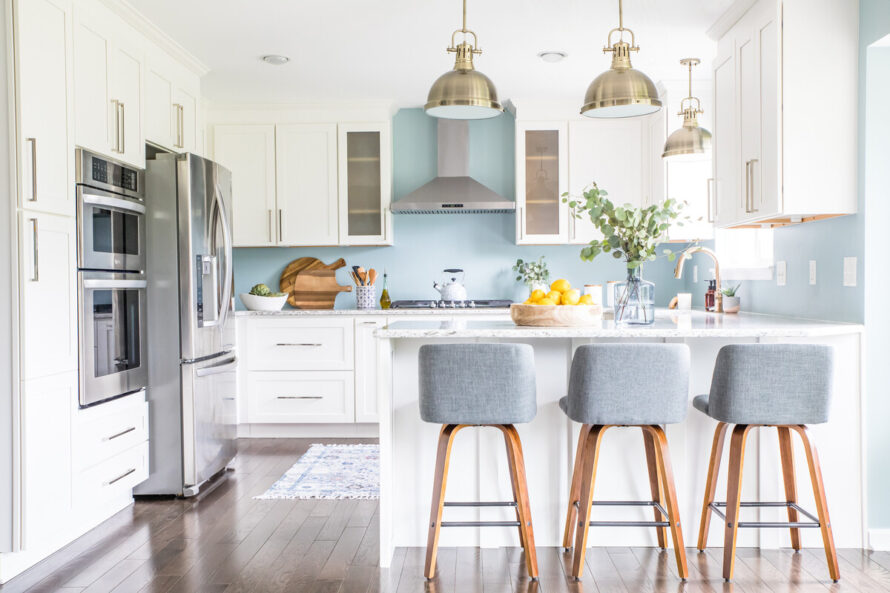
Metals add polish. Color adds personality, and soft blue is the gentlest way to bring some into a white kitchen without losing the brightness.
Pale blue behaves almost like a neutral, which is why it works where a stronger color would overwhelm a small space. It keeps the room feeling open and airy while quietly removing the clinical edge that plain white walls can have. Anyone weighing paint against bigger changes will find that most kitchen cabinet makeovers start with color before anything structural gets touched. Light blue counter stools with wooden legs pull the shade down into the room and add warmth at the same time.
A smart pick for small kitchens that need color without losing light.
💡 Pro Tip: Choose a blue with a gray or green base rather than a purple one. Purple-leaning blues turn chalky under warm kitchen lighting, while gray and green undertones stay soft at any time of day.
16. Bold Yellow Kitchen Focus for a Joyous Mood
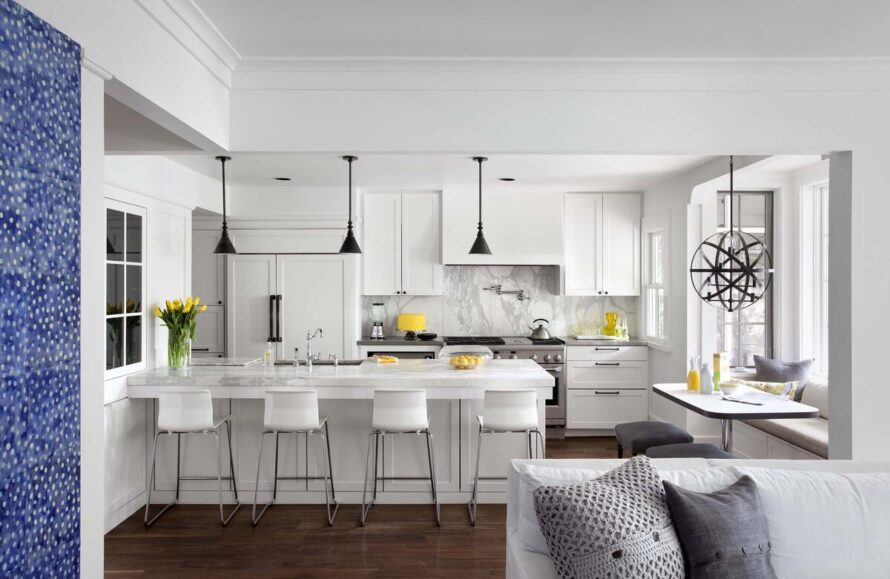
Now for something with volume. Where soft blue whispers, yellow announces itself, and a white kitchen is the only backdrop that can carry it without the whole room shouting.
Bright color needs space around it, which is exactly what white provides. Pick one shade and repeat it two or three times, through a kettle, a mixer, a stack of bowls, and the room reads as designed rather than accidental. Scatter five different colors instead and it just looks like whatever was on sale. Yellow in particular lifts a room on gray mornings, which is half the reason people choose it. Small pieces also make it easy to change course later.
The kind of kitchen that quietly becomes everyone’s favorite room in the house.
17. Red Focus for a Dramatic and Stylish Effect
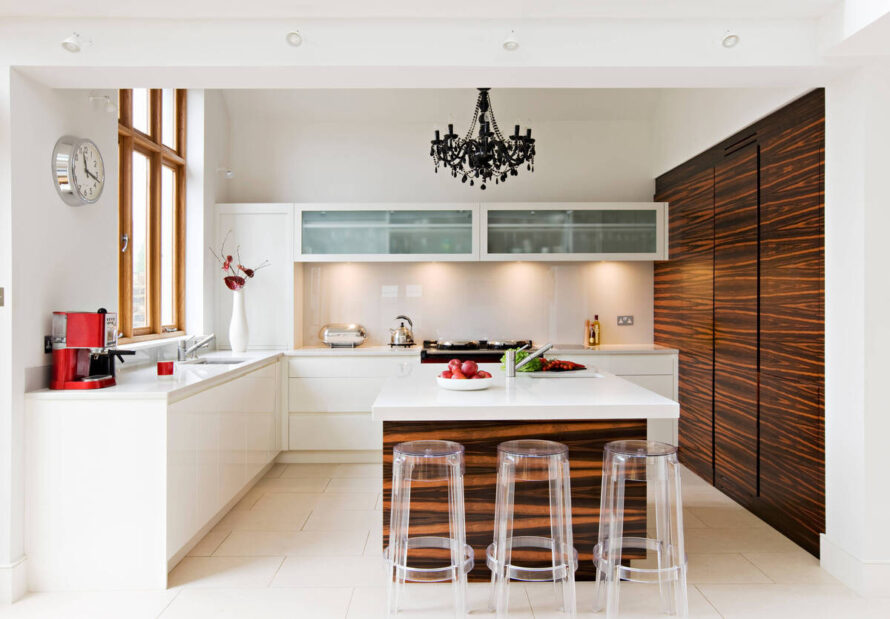
Same idea, heavier hand. Red carries more weight than yellow, so it turns a bright white kitchen dramatic rather than cheerful.
Pairing it with mahogany wood is what keeps the drama grounded. Deep timber and red sit in the same warm family, so the color reads as rich instead of loud, and that shared warmth is what stops the room feeling jarring. A red coffee machine and toaster are the usual starting point, with a few small pieces echoing the shade elsewhere. Keep the count low, because red draws the eye harder than any other color and too much of it makes a kitchen feel restless. The coffee machine becomes the thing everyone comments on.
The kind of space that shows how much one color can change the mood.
👉 Suggestion: Go for a deep brick or oxblood red rather than a bright primary. Darker reds sit comfortably beside wood tones and age far better, while bright reds date quickly and fight with warm cabinetry.
18. Artistic Pendant Lamp Design for a Sense of Luxury
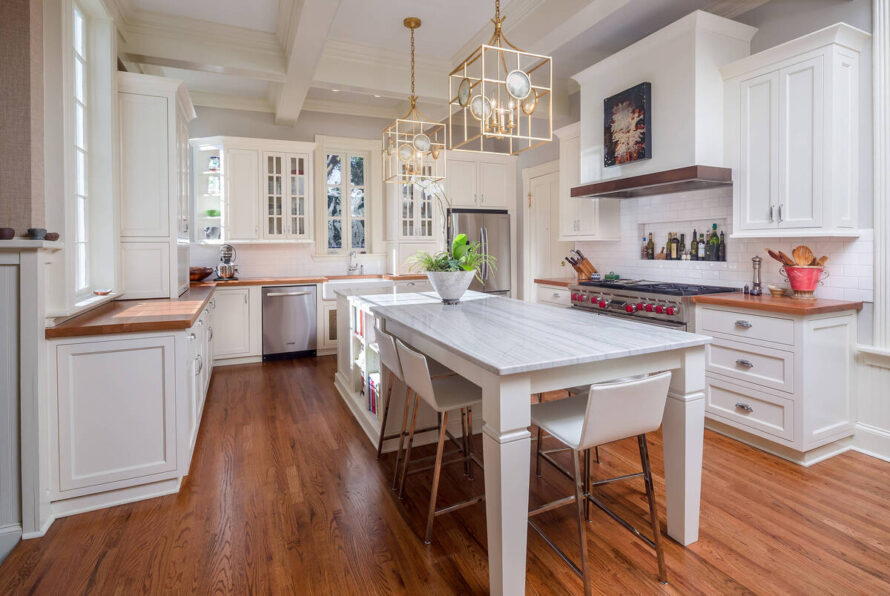
Color is one way to make a statement. Shape is another, and a sculptural pendant hanging over a white counter does the job without adding a single new hue to the room.
Plain white cabinetry is essentially a gallery wall, so an unusual light fixture becomes the piece on display. Go black for sharp contrast against the pale surfaces, or gilded if the goal is warmth rather than drama. Either way the fixture should be the boldest thing in the room, which means everything else stays quiet around it. Guests almost always look up when they walk in, and a good pendant gives them something worth looking at.
One of those setups where every piece earns its place.
19. Japanese Blue Ceramic Vases for an Elevated Style

Bring the attention back down to counter height with something quieter. Blue and white ceramics have been pairing well for centuries, and that history is exactly why they never look like a trend.
The reason this combination holds up is that blue and white already belong together. Floral and naturalistic patterns bring softness and movement into a room of flat surfaces, without introducing a color that has to be repeated across the cabinetry. Mix the sizes rather than matching them, with a tall vase, a low bowl, and something small between. Filling the bowl with lemons or oranges adds one warm note against all that cool blue, and the fruit actually gets eaten.
A look that stays fresh long after trends move on.
20. A Vintage Dining Table for a Vintage Sense of Nostalgia

Crisp white cabinetry looks brand new by definition, which is exactly why one genuinely old piece changes everything. A vintage dining table set in the middle of a white kitchen brings a sense of history into a room that otherwise has none.
Age is the contrast here, not color. Worn timber with scratches and softened edges tells the eye that something in this room has been lived with, and that single piece keeps the whole kitchen from looking like a showroom. An inherited table carries more weight again, since it holds a few decades of meals in its surface. People always ask where it came from, and the answer is usually better than anything bought new.
The kind of table that quietly becomes the center of the house.
💡 Pro Tip: Leave the old finish alone rather than sanding it back. Those marks are the reason the table works against new cabinetry, and a fresh sanded surface loses the contrast that made it worth bringing in.
21. Vintage Ornamental Kitchen to Evoke a Sense of Elegance
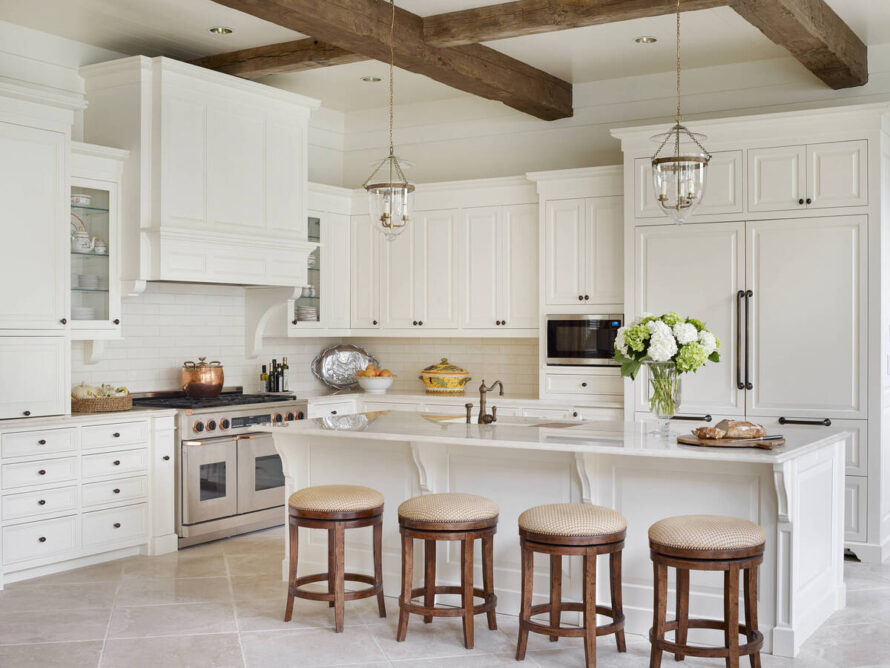
One old table brings history into a room. Running that same instinct through the whole kitchen takes it further, with ornamental cabinetry and textured counters that look like they have been there for generations.
Detail is what separates this from plain white. Beaded panels, carved trim, and shaped edges catch light and throw small shadows, so the cabinetry has depth even in a single color. Vintage chairs and lamps carry the look outward, and a few genuinely old utensils sitting out add the final layer, the way most good smart decor ideas rely on real objects rather than bought decoration. An old copper pot or a worn wooden tray does more for a room than anything from a shelf display.
Made for older homes where a modern flat-front kitchen would feel out of place.
22. Mahagony Chairs for a Timeless Elegance and Sophistication

Deep wood against pale cabinetry is one of those pairings that never stops working. Mahogany brings a rich, grown-up tone into a white kitchen and grounds a room that can otherwise float.
Light rooms need weight somewhere, and dark timber supplies it better than paint ever could. Mahogany chairs pulled up to a white counter create that contrast at seating height, right where people gather, and carrying the same tone into the flooring stops the chairs from looking like an afterthought. Repeat it lightly through small pieces, a bowl, a tray, or the base of a lamp. Dark wood also wears well, so the chair that gets dragged out every night keeps looking good for years.
That rare balance of relaxed and put-together.
👉 Suggestion: Look for solid wood chairs with a satin or oiled finish rather than a high gloss. Matte and satin surfaces show the grain properly and sit more comfortably against soft white cabinetry than anything shiny.
23. Creative Signs to Keep You In High Spirits in the Kitchen

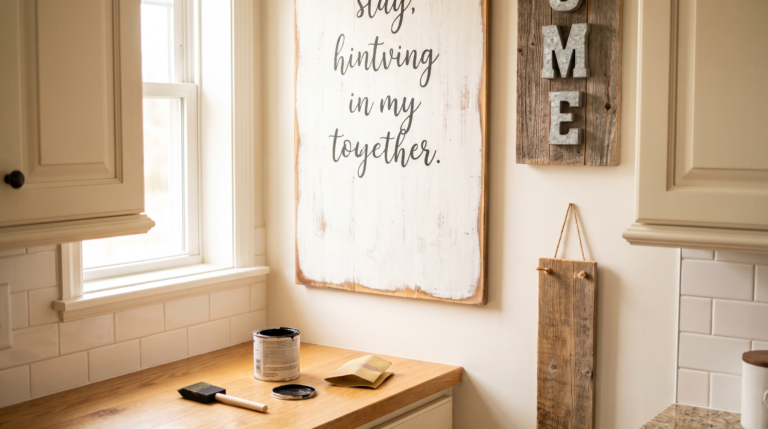
The last layer in any kitchen is the personal one. A framed quote or a wooden sign is a small addition, but it makes a white room feel like it belongs to someone in a way cabinetry never can.
White walls give lettering plenty of space to read clearly, which is why simple black or wood-toned type works better here than anything busy. Choose words that actually mean something rather than a phrase picked because it fit the frame, since generic lettering is what makes this look dated. Add a rack for recipe books nearby and the corner becomes a proper little station. It catches the eye on the way past, usually first thing in the morning when the coffee is still brewing.
Easy to enjoy every day without feeling overly designed.
Frequently Asked Questions
What is the best white paint for kitchen cabinets?
A warm white with a soft beige or greige base suits most kitchens. Pure bright whites can read blue or gray once they sit next to stainless appliances and daylight, while warmer whites hold their color through the day. Paint retailers and big-box stores like Home Depot or Lowe’s sell sample pots in the budget-friendly range, which is the only reliable way to check. Test on two walls, not one.
How do you keep white cabinets from yellowing?
Choose the right paint first and clean regularly second. Oil-based paints yellow over time, especially in low-light corners, so water-based enamel or acrylic holds its color far better. Grease from cooking also settles on cabinet fronts near the range and dulls them within months. Wiping the doors around the stove with warm soapy water every couple of weeks prevents most of it.
What countertop color looks best with white cabinets?
Warm-toned surfaces work hardest because they balance the coolness of white. Butcher block, warm-veined quartz, and soft greige stone all add temperature without adding a color that has to be repeated elsewhere. Black counters give sharp contrast, though they show every crumb in a bright room. Soft gray veining remains the safest choice for resale.
How do you make a white kitchen feel warmer without painting?
Add texture and natural material instead of color. Rattan pendant shades, a wooden cutting board left out, linen café curtains, and a woven runner all warm a room without touching a brush. Swapping chrome hardware for brushed brass makes a noticeable difference for a small spend. Renters can do all of it and take it with them.
Does a white kitchen work in a small or dark room?
Yes, but the shade matters more than in a bright room. North-facing and low-light kitchens need a warm or creamy white, because cool whites turn gray and flat without direct sun. Adding under-cabinet lighting lifts the surfaces where daylight never reaches. Keeping counters clear does more for the sense of space than the paint color itself.
Conclusion
A white kitchen is never really about the white. It is about everything sitting beside it, the pale oak counter, the aged brass handle, the one black range anchoring the far wall. Those pieces decide whether the room reads warm or clinical, and they cost far less than new cabinetry. Some of these ideas lean clean and minimal, others go vintage and ornamental, and a few bring real color through soft blue walls or one bold accent. All of them start from the same white.
Pick one or two, and let the light in your kitchen decide which. A north-facing room needs warmth from wood and brass, while a sunny one can carry cooler contrast beautifully. Save the look that fits your space to a Pinterest board, bookmark this post for the next free weekend, and send it to a friend halfway through choosing paint samples. The right white kitchen feels calm and lived in, never cold.