19 Affordable Kitchen Storage Ideas That Look Built-In
Some kitchens run out of room long before they run out of stuff. The lids never stack right, the good pans live at the back of a cabinet nobody wants to crawl into, and the counter slowly fills up with things that technically have a home somewhere else.
The fix usually is not more square footage. It is smarter storage that looks like it came with the house.
That built-in feel is easier to fake than most people think. A slide-out tray, a shelf tucked above the backsplash, a wood organizer sized to the drawer it lives in. Small changes, but they make a kitchen read as planned instead of patched together.
What follows are 19 storage ideas that work in real kitchens, not just photographed ones. Some take a weekend and a drill. Others take an afternoon and no permanent changes at all, which matters when the lease says no holes in the walls.
Start where the clutter bothers most. The rest usually falls into place from there.
1. Install Pull-Out Drawers

Deep cabinets promise a lot and deliver frustration. Everything past the first row disappears into the dark, and the stockpot you actually use ends up living on the stove because reaching it is a whole event. Pull-out drawers fix that by bringing the back of the cabinet to you instead of the other way around.
The reason this works is simple. You see the entire contents at once, so nothing gets forgotten and re-bought. Sort them by how often things get used, with the everyday pans up front and the holiday roasting pan in the back. That small bit of order is what keeps a weeknight dinner from turning into a search party.
A smart pick for anyone stuck with deep lower cabinets and no plans to gut the kitchen.
2. Organize with Drawer Dividers
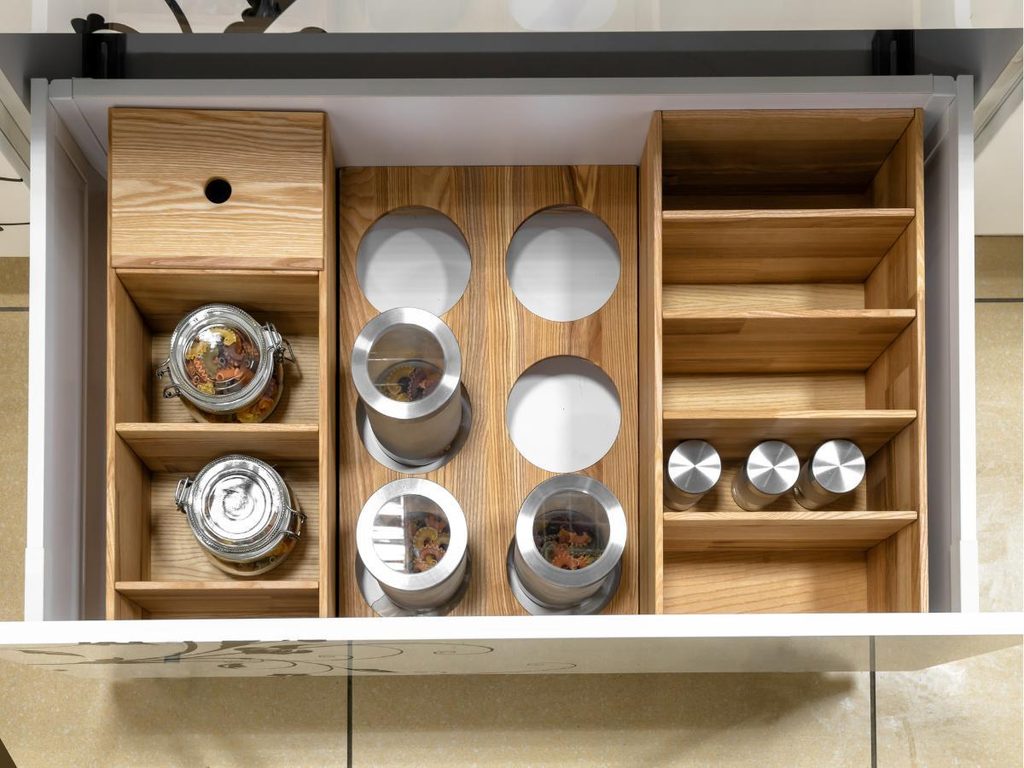
Take that same idea and shrink it down a drawer size. Dividers turn a jumbled utensil drawer into clean lanes, and the difference shows the second you open it. Everything sits where it was put, even after a week of slamming the drawer shut with a hip.
Wood dividers in oak or birch feel warm and match most cabinets without trying. Bamboo works well in drawers that see steam and spills, since it handles moisture better than softer woods. Give each lane one job. Spatulas here, measuring spoons there, nothing floating loose. That’s what keeps the arrangement from drifting back into chaos by Thursday.
The whole drawer feels calmer, and so does the person opening it mid-recipe with sticky hands.
3. Go for Slide-Out Trays

Staying with that same pull-it-toward-you logic, trays take it up to the cabinets you actually stand in front of. One light tug and the whole shelf slides into the open, spices facing forward, labels readable without squinting into a shadow.
What makes this work is the sightline. A fixed shelf hides its back row behind the front one, so half your jars might as well not exist. A tray puts everything at eye level in one motion. Line them with a thin cork or felt mat and bottles stop skating around every time the tray moves. Anyone who has knocked over the cumin reaching for the paprika knows exactly why that matters.
Small choices carry the biggest weight, and this is one of them.
💡 Pro Tip: Measure the cabinet opening, not the inside width, then subtract about one inch for the slide hardware. Cabinet frames are usually narrower than the box behind them, and that inch is what keeps the tray from binding halfway out.
4. Install Glass Cabinets

Where the last few ideas hid things better, this one puts a few of them on display. Swapping solid cabinet doors for glass fronts makes a wall of cabinetry stop feeling like a wall. The room reads deeper, lighter, and a lot less boxed in.
Glass only flatters what sits behind it, so save these doors for the stacked white plates and the bowls that actually match. Everyday clutter stays behind solid fronts where it belongs. Fluted or reeded glass is the forgiving option, since it blurs the shelves into soft shapes instead of showing every crooked mug handle. Painted shelf interiors in sage green or warm cream give the whole thing a finished, built-in look.
Best suited for kitchens that feel dark or closed off and need breathing room without losing storage.
5. Build a Microwave Cabinet

If glass fronts are about showing off the good stuff, this one is about hiding the ugly stuff. The microwave is usually the loudest thing on a counter, all black plastic and glowing numbers, and tucking it into its own cabinet quiets the entire room down.
Give it a dedicated cubby with a solid door and the counter underneath opens right back up for actual cooking. The trick is ventilation. Leave a few inches of clearance at the back and sides so heat has somewhere to go, and the appliance lasts longer for it. Dust stays off it too, which anyone who has wiped down a greasy microwave top can appreciate.
The kitchen looks planned instead of pieced together, and that’s the whole point.
👉 Suggestion: Match the cabinet door to your existing fronts in the same finish and hardware, or go with a slatted wood door for airflow that still looks intentional. Warm oak or painted shaker fronts both blend in without drawing attention to the appliance behind them.
6. Place a Shelf Above the Backsplash
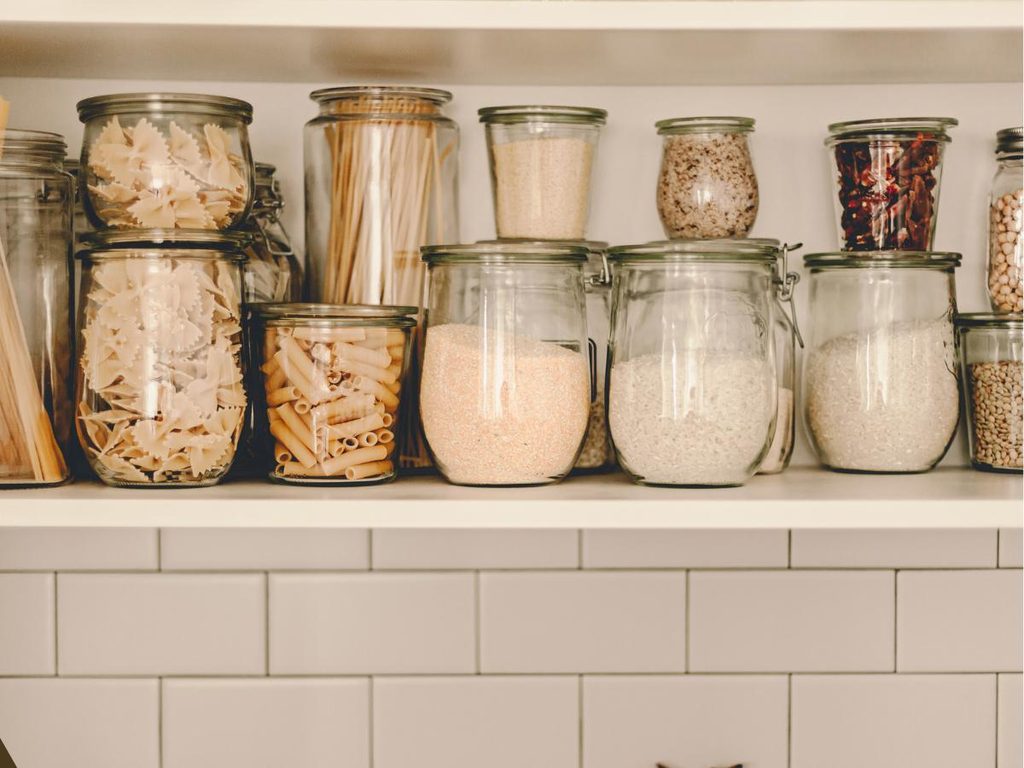
There’s a strip of wall above most backsplashes doing absolutely nothing. A slim shelf running along it picks up all the small things that otherwise crowd the counter, and it does it right where hands already reach.
Keep the depth shallow, around four to six inches, so it holds jars and oil bottles without eating into workspace or blocking light. That restraint is what keeps it looking built-in rather than tacked on. Oak or walnut against white tile gives the warm contrast that photographs so well, and a thin brass lip stops things from sliding off. It becomes the spot where the salt cellar and the good olive oil live permanently, always within arm’s reach while something sizzles.
The finishes catch light differently as the day moves across the kitchen.
RELATED:
SMART SMALL KITCHEN IDEAS THAT MAKE EVERY INCH COUNT
7. Add Countertop Shelves

Not every wall can take a shelf, and not every renter is allowed to try. Countertop shelves solve the same problem from the ground up, stacking storage on the counter itself without a single hole in the wall.
A two-tier riser doubles the usable surface in a corner that was only holding one row of things. Cereal boxes, spice jars, the coffee mugs that get used daily. All of it goes vertical instead of sprawling sideways. Powder-coated metal in matte black looks crisp against tile, while a small wooden riser in birch softens a kitchen that already has a lot of hard surfaces. The win shows up on busy mornings, when three people need three different things and nobody has to move anything to find them.
Made for renters, small kitchens, and anyone who cannot drill into a single wall.
💡 Pro Tip: Place risers in the dead corner where two counters meet, not along the open prep run. That corner is the hardest spot to actually work in, so it loses nothing by going vertical while your usable counter stays clear.
8. Add a Floating Shelf
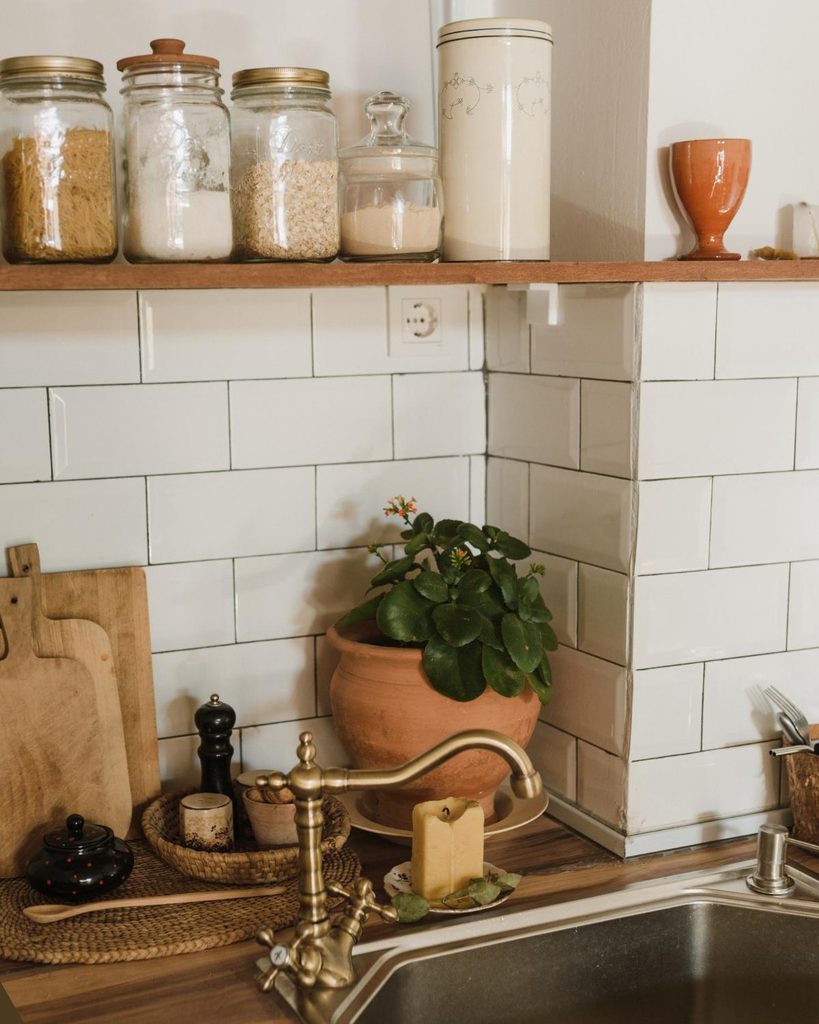
A quieter version of that same idea works beautifully on the wall. Floating shelves carry no visible brackets, so they read as part of the room rather than hardware bolted onto it. One or two are usually all a kitchen needs.
Keep them thick. A chunky oak or walnut plank looks solid and intentional, while a thin shelf can feel flimsy under a stack of plates. Mount the first one about eighteen inches above the counter so there’s room to actually work underneath. Style it loosely, because a shelf packed wall to wall loses the airy effect that made it worth installing. Leave space for the mug that always ends up sitting out anyway.
Proof that small choices carry the biggest weight.
9. Mounted Metal Shelf with Hooks
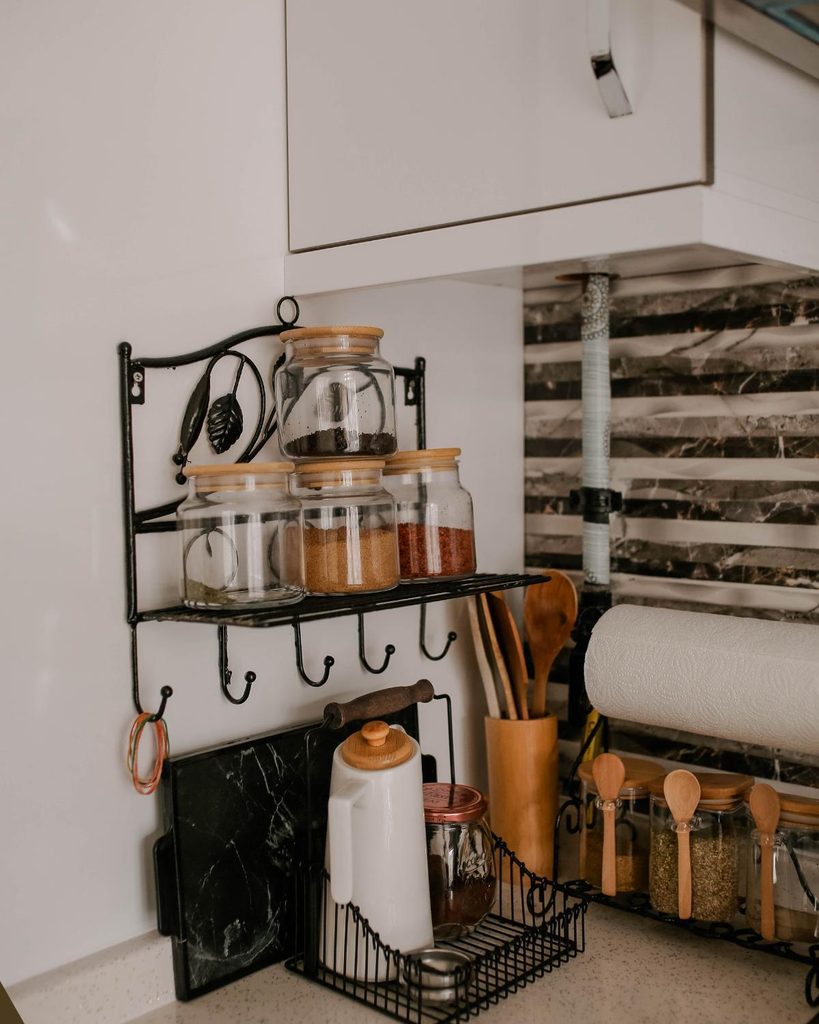
Now for something with a bit more grit. A metal shelf with hooks along its underside does two jobs at once, holding things on top while mugs and measuring cups hang below. In a tight kitchen, that doubling is the whole reason it earns wall space.
Matte black steel brings a crisp line into rooms full of soft wood and tile, and brushed brass warms things up if the kitchen already leans cool. The reason this combination works is that hanging items stay visible, so nothing gets buried and forgotten in a cabinet. Hooks also keep the daily mugs off the counter entirely. Reach, pour, done, before the kettle even finishes.
Getting breakfast on the table stops feeling like a scramble.
10. Install a Hanging Rod

Push that hanging idea a little further and drop the shelf altogether. A single rod mounted under a cabinet or along an open stretch of wall turns dead space into storage for the pans, ladles, and strainers that never fit anywhere good.
The payoff is access. Cookware hanging in the open gets grabbed mid-recipe without opening a door or unstacking anything, and the pieces you reach for most stop hiding behind the ones you don’t. Stainless steel keeps it clean and simple, while an unlacquered brass rod ages into something softer over time. Hang the heaviest skillet closest to a mounting point so the rod stays true. It also makes a decent excuse to finally use the pretty copper pan instead of storing it.
Easy to live with every day without feeling overly designed.
👉 Suggestion: Look for a rod with a solid round profile and closed S-hooks rather than open ones. Closed hooks stop pans from lifting off when a heavy pot gets pulled from beside them, and a round bar lets hooks slide freely instead of catching.
11. Try a Pegboard
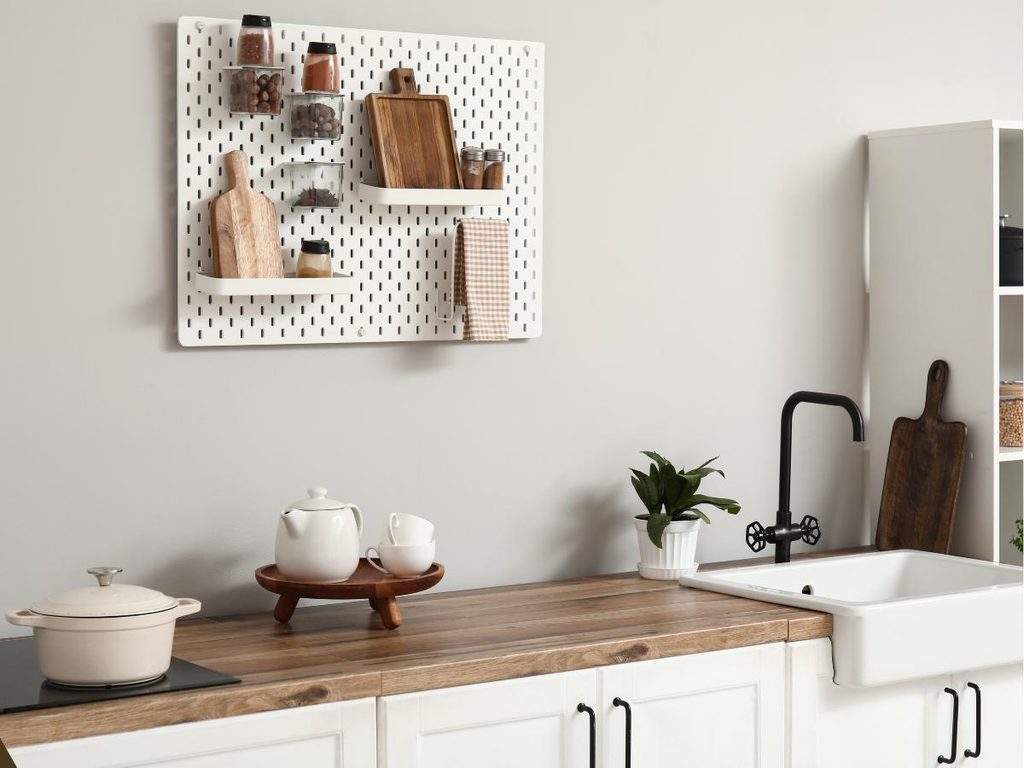
Same energy, brand new setup. Where a rod commits to one straight line, a pegboard hands over a whole wall and lets the layout change whenever the kitchen does. Pegs move, small shelves clip in, hooks shift an inch left when a new pan joins the rotation.
That flexibility is the real draw. Nothing is permanent, so the wall adapts instead of being rebuilt. Paint the board the same color as the wall behind it and the tools appear to float, which keeps a busy wall from looking cluttered. Warm plywood left raw leans farmhouse. Deep charcoal feels more modern. Either way it becomes the wall people stop and look at when they wander in while dinner is still going.
One of those setups where every piece earns its place.
💡 Pro Tip: Mount the board on thin furring strips instead of flat against drywall. That gap of half an inch behind it is what lets peg hooks seat properly, and skipping it is the reason most pegboards end up wobbly.
RELATED:
MODERN MINIMALIST BEDROOM IDEAS FOR A CALMER SLEEP SPACE
12. Get Creative with Corner Storage
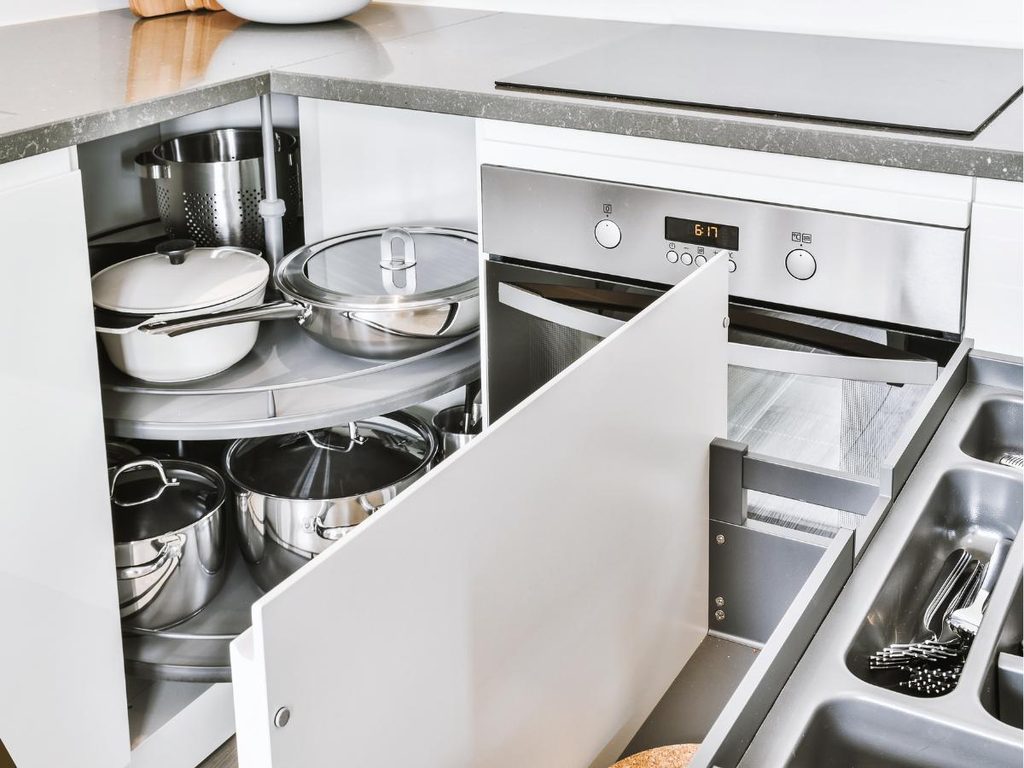
Every kitchen has one corner that swallows things whole. It’s the hardest cabinet in the room to reach into, so it slowly fills with the appliances nobody uses and a bag of something expired.
Corner space works once you stop asking your arm to do the traveling. A lazy Susan spins the back around to the front, and a swing-out system walks the whole shelf into the open on a hinge. Both do the same thing, which is trade awkward depth for easy sightlines. Even a simple two-tier turntable for oils and vinegars beats reaching blindly past a wall of bottles. That corner stops being the place things go to disappear.
A smart pick for older kitchens with awkward layouts and one stubborn dead corner.
13. Go for Textured Baskets
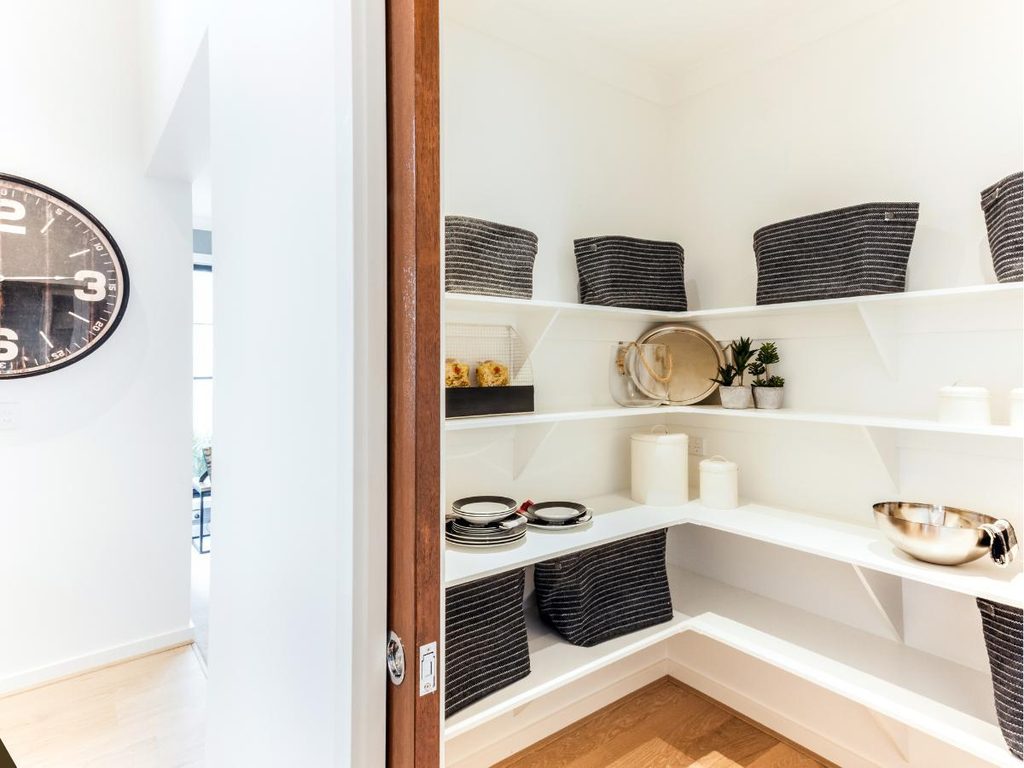
Softer materials do a lot of quiet work in a room full of tile and steel. Woven baskets take all the loose odds and ends nobody has a plan for and turn them into something that actually looks good sitting out.
Seagrass, rattan, and raw jute bring warmth that metal bins never manage, and the texture keeps an open shelf from feeling flat. Group by use rather than size. Snacks in one, dish towels in another, potatoes and onions in a deeper one that breathes. That grouping is what makes the system stick, because putting things away requires no thinking. Nobody stands there deciding where the granola bars go.
The whole kitchen feels a little warmer without adding a single decorative object.
💡 Pro Tip: Pick baskets about one inch narrower than your shelf depth so they slide in and out without catching the front lip. Anything flush to the edge gets knocked loose every time someone reaches past it.
14. Custom Wood Organizers

Baskets handle the soft, shapeless stuff. For everything with edges, a wood organizer built to fit does a better job. These are not fixed to anything, so they move from drawer to counter to shelf as the kitchen changes around them.
The advantage is the fit. A store-bought tray leaves gaps, while a simple organizer sized to the exact space wastes nothing and stops sliding around. Deep slots for knives, shallow ones for spice tins, a narrow channel for the peeler that always ends up underneath everything. Oak and maple hold up to daily handling and only look better as they wear in. Little by little, the drawer stops needing a rummage.
The fit is what makes it look built-in rather than bought.
15. Upcycle a Dresser
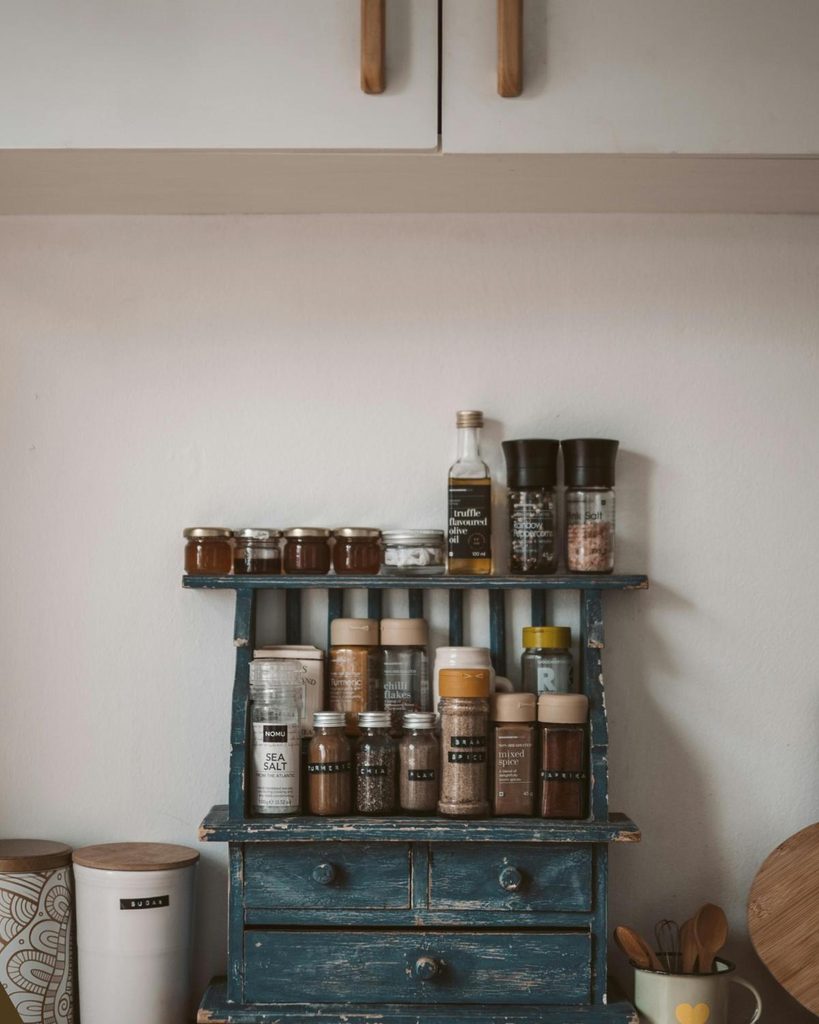
Now scale that same wood-and-drawers thinking all the way up. An old dresser rolled into a kitchen brings storage that a flat-pack cabinet never could, because it arrives with character already built in. The drawers are there, the bones are solid, and the piece has some history behind it.
Kitchens full of matching cabinetry can feel a little showroom-flat, and one older piece breaks that up fast. Use the deep drawers for linens, serving pieces, and the appliances that only come out for holidays. Swap the pulls for something cleaner and the whole thing reads intentional instead of secondhand. It ends up being the piece guests ask about while they’re leaning against it with a drink.
A reminder that good design starts with how a space feels.
👉 Suggestion: Look for a solid wood dresser with a deep top surface and dovetailed drawers, then seal the top with a food-safe finish or top it with a butcher block slab. Painted finishes in muted olive or deep navy sit well against most cabinet colors.
16. Opt for a Rolling Cart

If a dresser stays put, this one refuses to. A rolling cart goes wherever the work is happening, which is exactly what makes it useful in a kitchen that never has enough landing space.
Roll it beside the stove during prep and it holds oils and utensils within reach. Push it to the table when people sit down and it becomes the serving station. Butcher block tops take knife work without complaint, while powder-coated steel frames stay light enough to move with one hand. The reason it earns its keep is that the storage follows the cook instead of staying stuck against a wall. On busy nights, that extra surface is the difference between cramped and comfortable.
Best suited for small kitchens where every square foot has to do more than one job.
17. A Slide Out Wire Rack
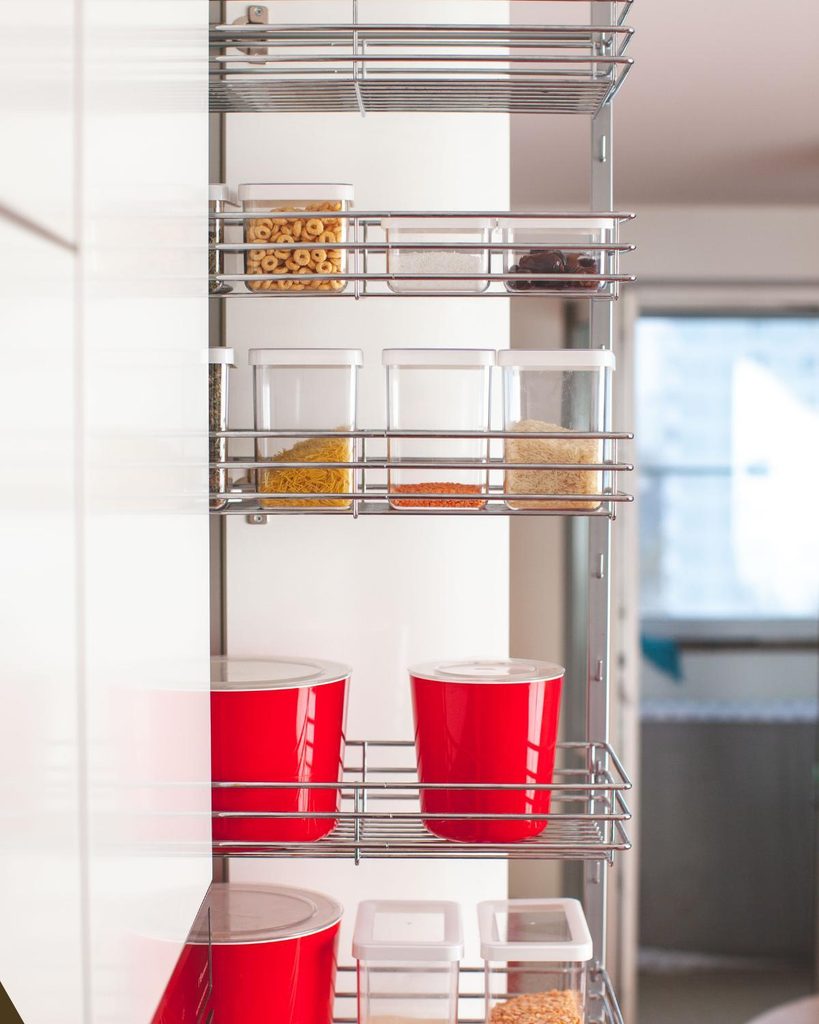
Back inside the cabinets, there’s one more way to stop the rummaging. A slide-out wire rack stacks two or three tiers onto a single shelf and pulls the whole thing forward, so tall bottles and short cans stop competing for the same space.
Open wire is the quiet advantage here. You see straight through every level instead of lifting the front row to check what’s behind it, and air moves freely around produce that would otherwise sweat in a closed bin. Chrome keeps it bright and clean, while matte black disappears into darker cabinets. Under the sink, it finally separates the sponges from the cleaning sprays. The cabinet you used to dread opening turns into the one that works.
Sometimes the quietest details do the loudest work.
💡 Pro Tip: Check the height of your tallest bottle before choosing tier spacing, then set the top tier at least two inches above it. Most racks get returned because the dish soap will not stand upright under the shelf above it.
18. Create a Coffee Station
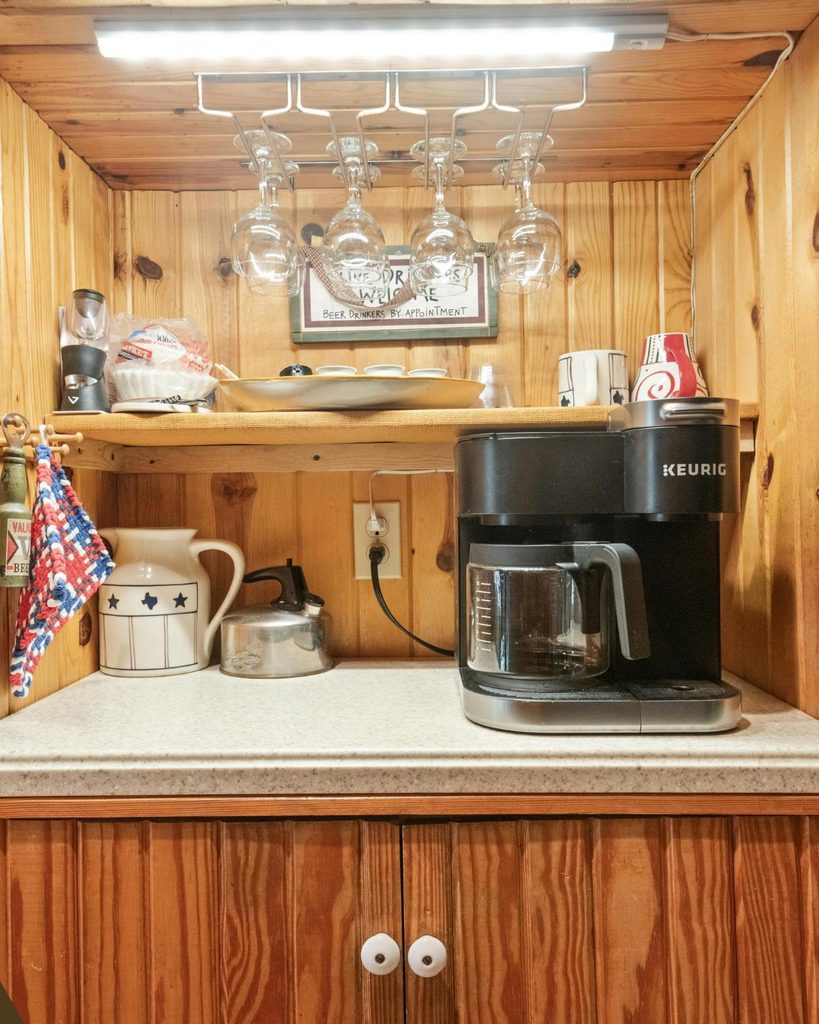
Storage stops feeling like a chore once it’s built around something you actually look forward to. A coffee station gathers the machine, the beans, the mugs, and the spoons into one small corner instead of scattering them across three cabinets and a drawer.
Zoning like this works because the whole routine happens in one spot, with no crossing the kitchen mid-pour. Give it a tray or a marked-off stretch of counter so the edges stay clear. Glass jars for beans, a small shelf above for mugs, a drawer underneath for filters and sugar. Mornings get noticeably easier when the first thing you touch is already exactly where it should be, before anyone has said a word.
The kind of corner that quietly becomes everyone’s favorite.
19. Storage Stand

For anyone who wants more room without touching a wall or a cabinet, a freestanding stand handles it. Nothing to install, nothing to patch over later, just vertical shelving that arrives ready to hold whatever the kitchen has run out of space for.
Narrow stands slide into the gap beside the fridge or against the wall a pantry never got built into. Stack produce, dry goods, and the mixing bowls that never fit anywhere sensible. Because it moves, it can follow the task too. Wheel it near the chopping area on a big prep day and everything is within reach instead of across the room. Open shelving keeps it all visible, so ingredients get used before they quietly expire.
Best suited for renters, first apartments, and kitchens that never came with a pantry.
👉 Suggestion: Choose a stand with adjustable shelves and a narrow footprint, ideally under fourteen inches deep. Warm wood shelves on a slim metal frame feel lighter in a small kitchen than solid cabinets, and the open sides keep the corner from looking blocked off.
Frequently Asked Questions
How much does it cost to add storage to a kitchen?
Most kitchen storage upgrades stay under $200 total when the work is done in stages. Drawer dividers, wire racks, and woven baskets fall into the affordable range and need no tools, while pull-out hardware and pegboard walls land closer to mid-range. Big-box stores like IKEA, Target, or Home Depot carry the basics, and thrift stores are worth checking for solid wood dressers and carts. Starting with one problem zone keeps the spending low and the payoff visible.
What is the biggest mistake people make with kitchen storage?
Buying containers before measuring the space. Bins and racks that do not fit the cabinet get shoved in sideways, which wastes more room than it saves. Measure the interior width, depth, and the cabinet opening (usually narrower than the box behind it) before shopping. The second common mistake is storing rarely used appliances at eye level, which pushes daily items into awkward corners.
How can renters add kitchen storage without drilling holes?
Tension rods, adhesive hooks, over-the-door racks, and freestanding stands all add real storage with no permanent damage. Countertop risers and rolling carts work the same way, stacking things vertically instead of relying on wall anchors. Command-style hooks hold mugs and light utensils, but check the weight rating before hanging cast iron on one. These affordable kitchen storage solutions come right back out at move-out with nothing to patch.
How do you keep open kitchen shelving from getting greasy?
Wipe shelves weekly with a mix of warm water and a few drops of dish soap, then dry immediately so wood does not swell. Grease builds up fastest within a few feet of the stove, so keep decorative pieces away from that zone and store daily-use items there instead. Seal raw oak or walnut shelves with a food-safe finish once a year. Items that sit untouched for months collect the worst film, which is a good reason to store only what gets used.
Where should you start if the whole kitchen feels disorganized?
Start with the drawer or cabinet that causes the most daily frustration, not the one that looks worst. Fixing the spot that gets opened ten times a day delivers the biggest return on effort and builds momentum for the rest. Empty it completely, toss anything expired or duplicated, then add dividers or a rack sized to what is left. Most people find that clearing out unused items solves half the problem before any affordable kitchen storage solutions get bought.
Conclusion
A well-stored kitchen has a quiet kind of confidence. Nothing is fighting for counter space, the pans hang where hands already reach, and the room finally looks like someone planned it instead of patching around it. The best part is that none of these ideas require tearing out cabinets or hiring anyone. From warm oak floating shelves to matte black pegboard walls and one upcycled dresser with real character, there is a look here for farmhouse kitchens, modern spaces, and small rentals alike.
Pick one or two ideas rather than trying all nineteen at once. Start with the drawer or cabinet that causes the most daily frustration, because fixing that one spot makes the whole kitchen feel different by Sunday night. Save the favorite idea to a Pinterest board, bookmark this post for the next free weekend, and send it to a friend still stacking pot lids on the counter. Good storage is what makes a kitchen feel like it belongs to you.