20 Smart Small Apartment Living Room Ideas for Style and Space
Small living rooms get a bad reputation, but honestly, they hold some of the best design potential in the whole house. When square footage is tight, every choice matters more. That’s where the fun starts.
The trick is knowing which small moves carry the biggest visual weight. A floated sofa can make a room breathe. A ceiling-high curtain can trick the eye into thinking the walls are taller than they are. Vintage pieces add soul without adding clutter. And a smart storage cube setup can quietly solve the mess problem most small spaces struggle with.
This list pulls together twenty small living room ideas that actually work in real homes. Not staged showrooms. Not impossible Pinterest fantasies. Just smart, doable design choices that make a compact space feel bigger, warmer, and more like a place people actually want to hang out in.
1. Gallery Wall
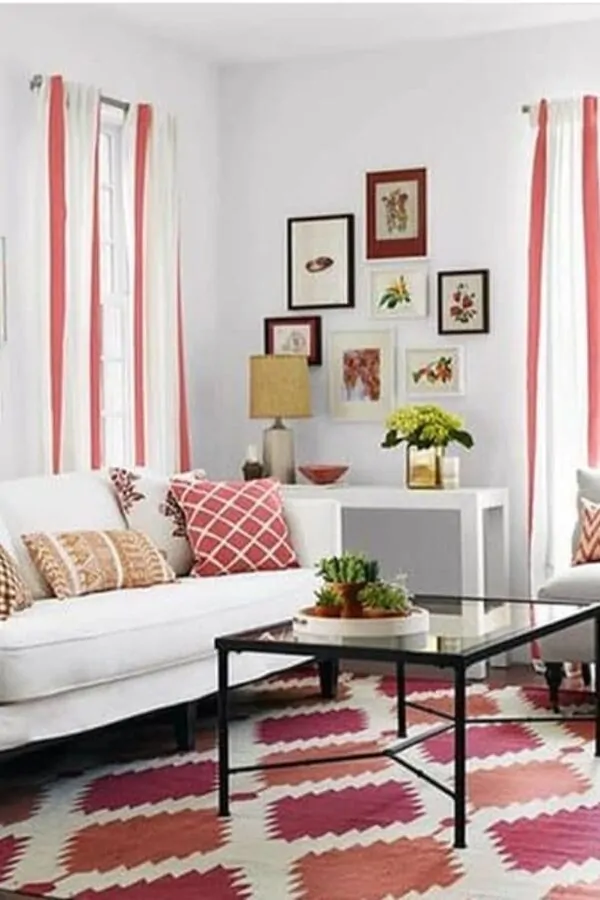
Blank walls in a small living room can feel like wasted potential, especially when the square footage is already working overtime. A gallery wall turns that empty space into the room’s biggest personality moment, drawing the eye up and outward instead of letting it settle on how tight the floor plan actually is.
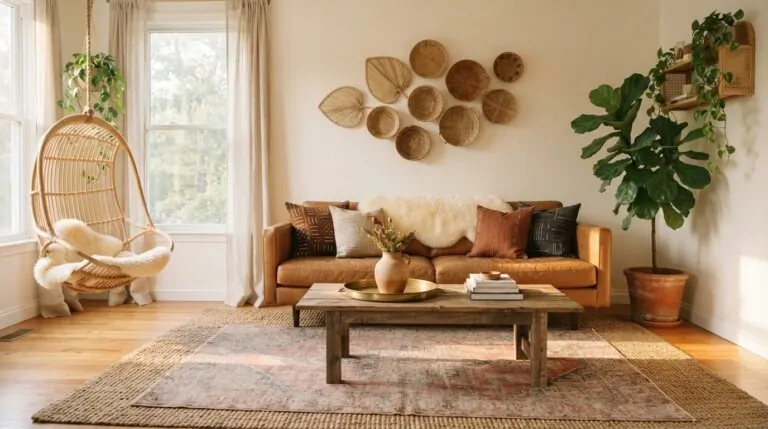
Mix framed prints, black and white photos, and one or two textured pieces like a small woven basket or a brass sunburst. The trick is keeping frame colors in the same family (black, brass, or warm wood) so the wall reads as one composition instead of scattered chaos. Leave two inches between frames for that gallery-tight feel. It’s the kind of wall that turns into a slow conversation starter whenever someone new sits on the couch.
Ideal for renters and anyone wanting personality without a paint project.
2. Float The Couch
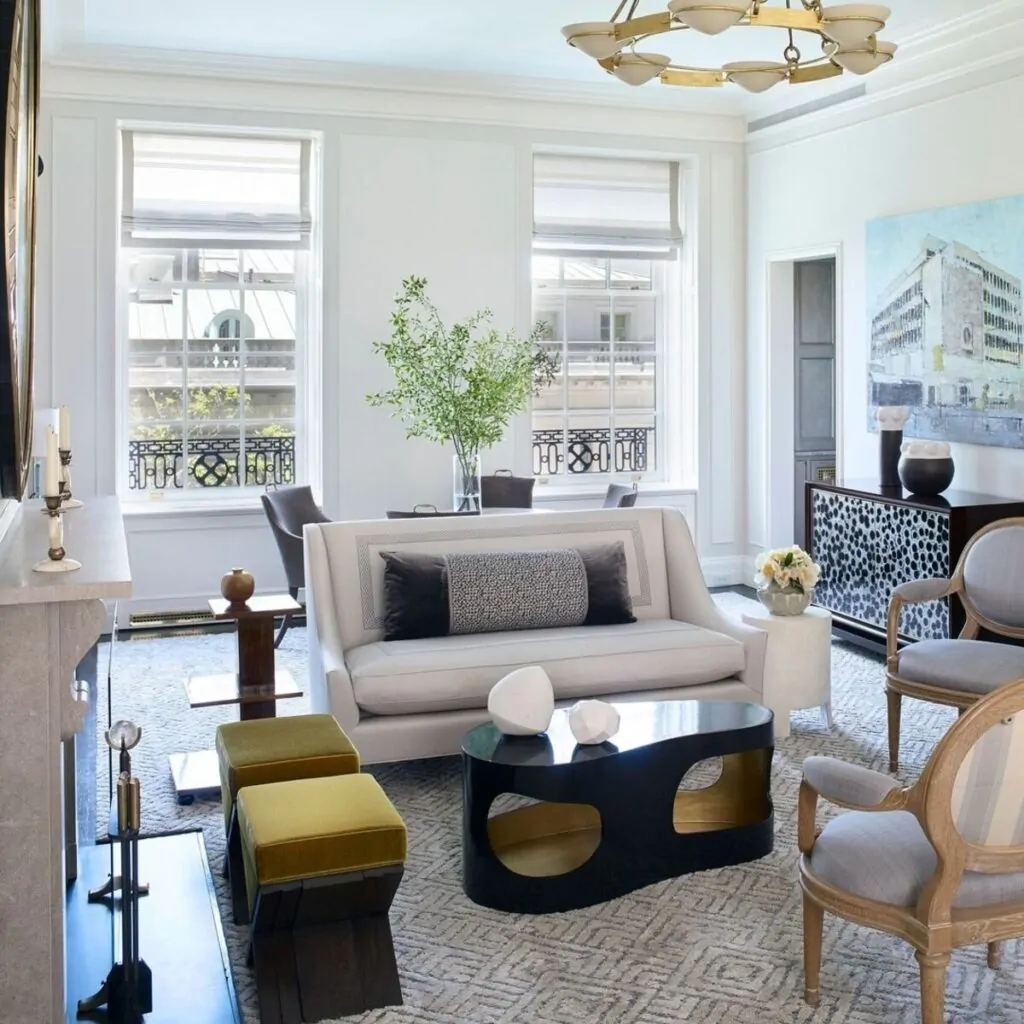
Staying with that same idea of making walls do the heavy lifting, the next move happens on the floor. Pulling the couch away from the wall sounds counterintuitive in a small room, but it’s one of the oldest tricks decorators use to make a space feel intentional instead of cramped.
Even six or eight inches of breathing room behind the sofa changes everything. It creates a natural walkway, opens up space for a slim console table, and makes the seating area feel like its own zone. Add a low-pile rug underneath that extends past the front legs to anchor the whole setup. Suddenly the space feels like a real room, not just furniture pushed against drywall. The chair that always has a book waiting on it finally has a proper home.
The kind of setup that shows how much mood matters.
3. Good Furnishing
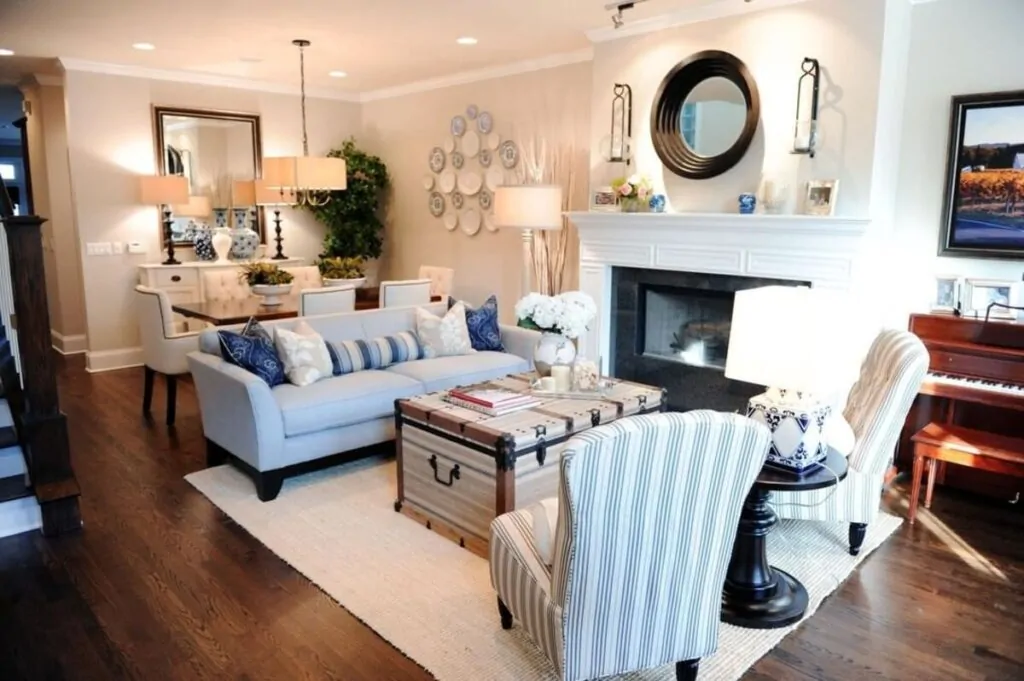
Once the couch is floating and the walls are working, the next question is what actually fills the room. Good furnishing in a small living space isn’t about buying more, it’s about buying smarter. Every piece needs to earn its spot, and the ones that pull double duty always win.
Think slim-armed sofas instead of bulky sectionals, side tables with a lower shelf for magazines, and armchairs that look light on their legs so the eye can travel underneath. Choose materials that feel warm together like a linen sofa paired with a walnut coffee table and a boucle accent chair. Skip anything oversized or overstuffed. The room should feel curated, like each piece was chosen on purpose, not grabbed in a rush during a weekend sale. That’s when a small living room starts feeling like a designed space.
Perfect for anyone rebuilding a room from scratch or slowly upgrading over time.
4. Built-in Shelves
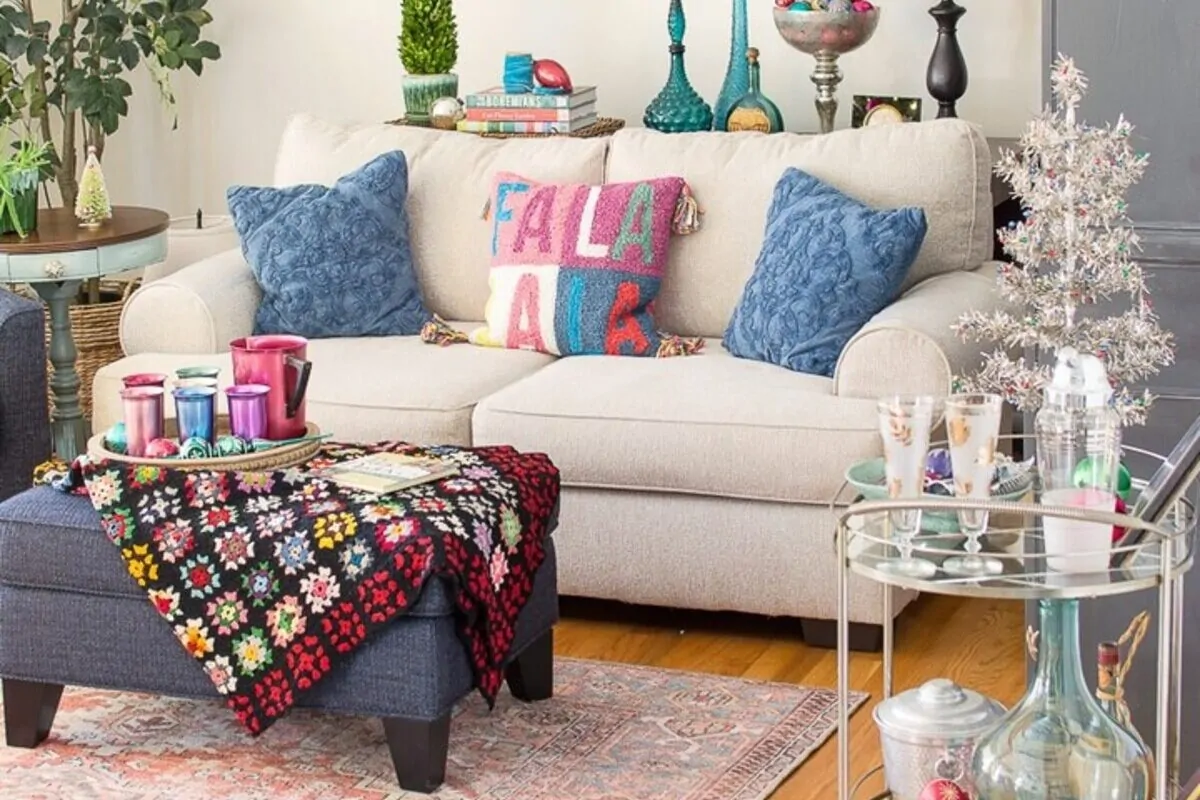
Built-ins are one of those upgrades that quietly change how a small living room functions. Instead of eating floor space with a bulky bookcase, they use the vertical real estate that most rooms completely ignore. The wall around a doorway, the awkward nook beside the fireplace, that weird strip next to the window. All of it becomes storage.
The best part is how built-ins blend into the architecture. Painted the same color as the wall, they almost disappear, letting the books, ceramics, and framed photos become the visual moment. Add a mix of open shelves and closed lower cabinets so the pretty stuff stays on display and the remote-control clutter stays hidden. It’s the kind of upgrade that makes a rental feel like a home and a starter house feel like a forever one.
Great for book collectors, plant people, and anyone tired of furniture that only does one job.
💡 Pro Tip: Paint the back of open shelves in a slightly darker shade than the wall. It adds unexpected depth and makes whatever sits on the shelf pop like it’s on a small stage.
5. Decorate With Plants
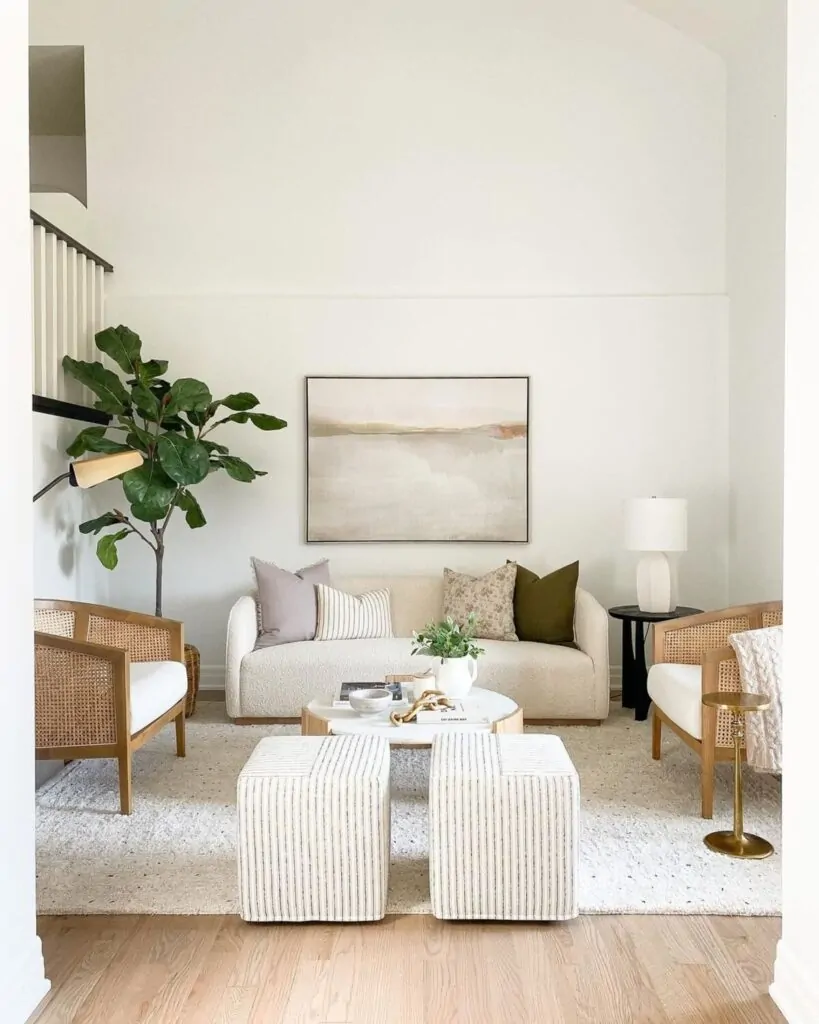
Nothing softens a small living room faster than a few well-placed plants. They bring in movement, color, and that fresh, lived-in feeling that no throw pillow can replicate. And in a compact space, greenery actually makes the room feel larger because it blurs the hard lines where the walls and floor meet.
Mix heights and leaf shapes for the most natural look. A tall fiddle leaf or bird of paradise in the corner, a trailing pothos on a floating shelf, and a small snake plant on the coffee table. Group them in odd numbers because clusters of three or five always feel more organic than pairs. Choose planters in warm terracotta, matte black, or woven baskets to keep the whole look grounded. The room slowly starts feeling less like a space and more like somewhere that breathes with the seasons.
Perfect for anyone who wants that easy, garden-adjacent calm without leaving the couch.
Suggested Image: A sunlit small living room corner with a tall fiddle leaf fig beside a linen armchair, a trailing pothos on a floating shelf above, and a small snake plant on a wooden side table. Soft morning light, warm neutral tones, terracotta planter visible.
6. Large Sofa
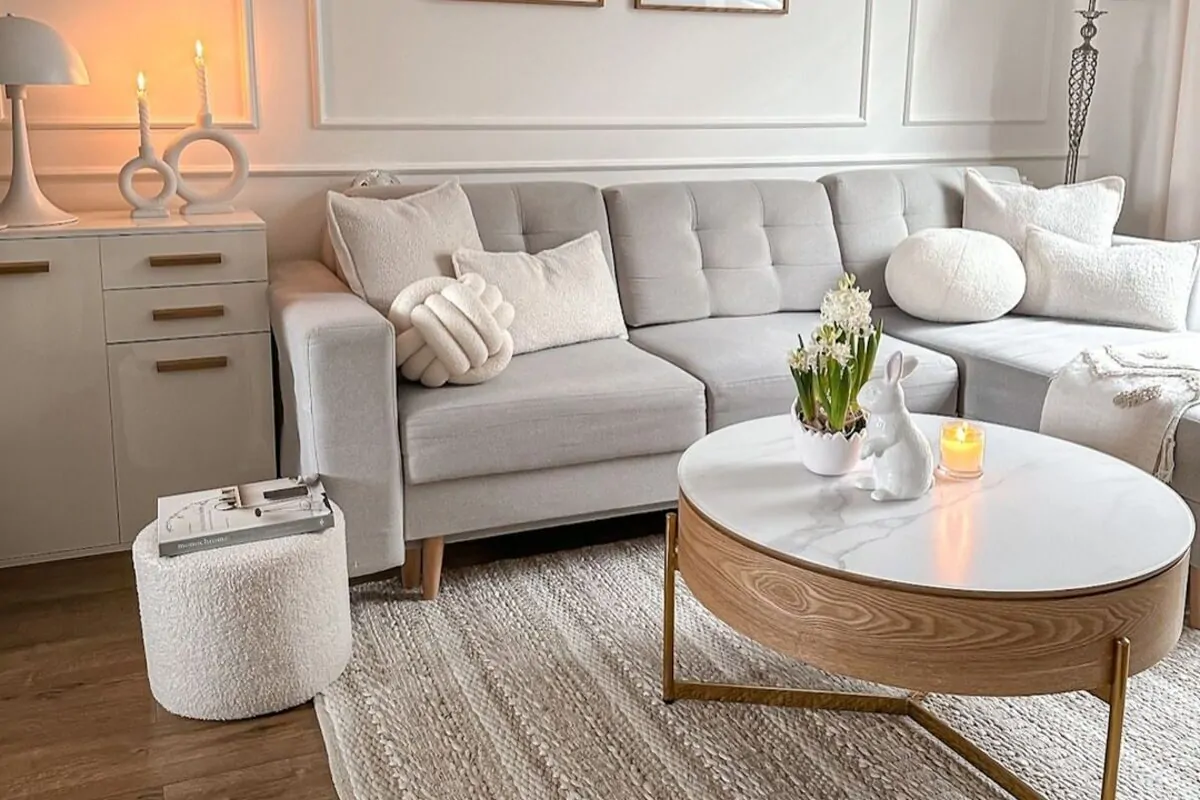
It sounds backwards, but a single large sofa often works better in a small living room than two small chairs and a loveseat combo. One generous piece reads as intentional, while a scattered mix of small furniture creates visual noise that makes the room feel busier than it actually is.
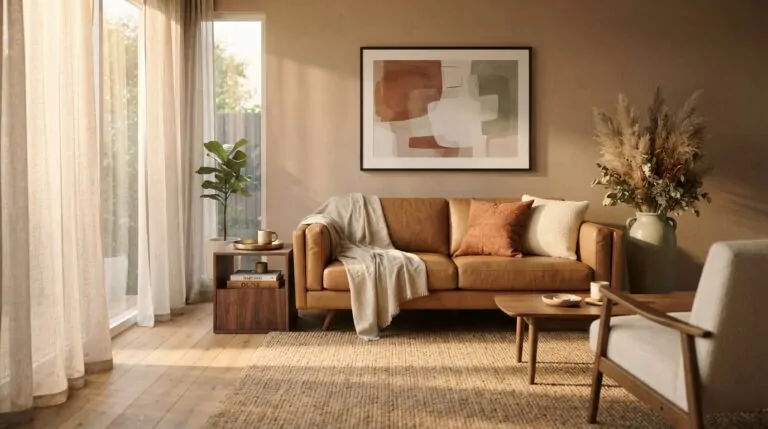
Pick a sofa with clean lines and legs that lift it off the floor. That little bit of visible floor underneath tricks the eye into seeing more space. Stick with a neutral upholstery like oatmeal, soft grey, or warm sand so the piece grounds the room without overwhelming it. Then layer in personality through pillows and a chunky knit throw tossed over one arm. Suddenly the sofa becomes the anchor, and everything else in the room quietly falls in line around it.
Ideal for movie nights, long Sunday afternoons, and anyone who values comfort over piece count.
7. Go For Ceiling-high Curtains
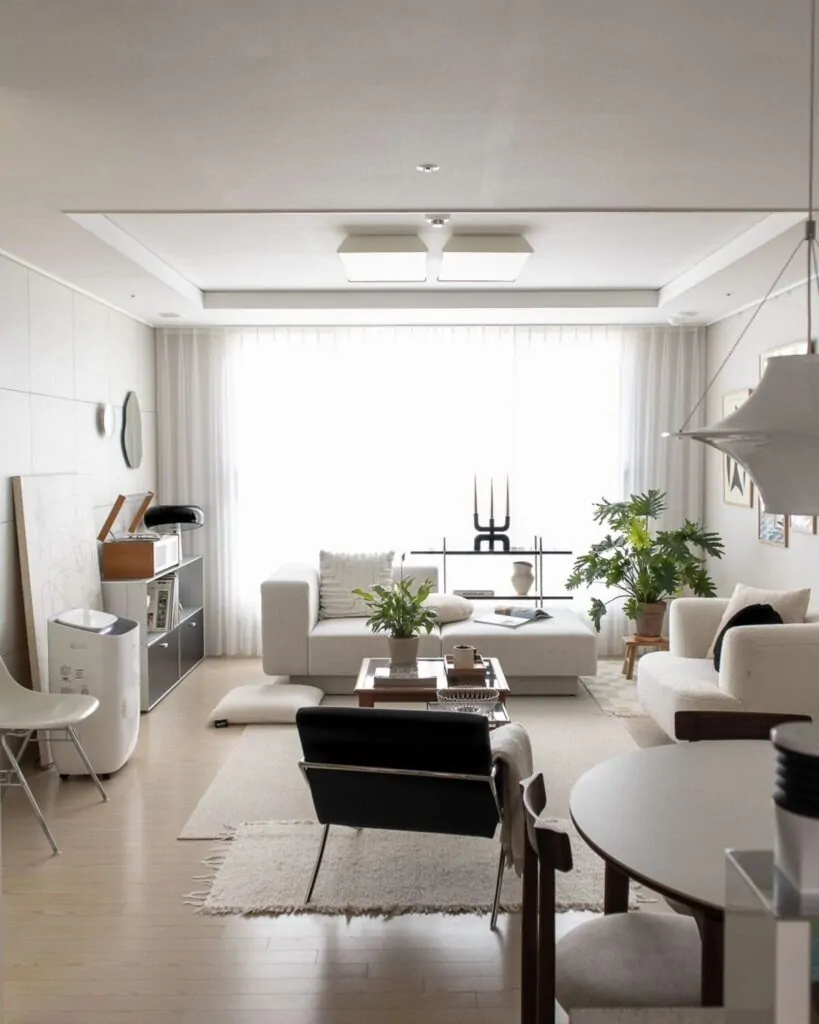
Curtains hung right above the window frame are one of the most common small-room mistakes. They cut the wall in half and make the ceiling feel lower than it is. Mounting the rod just below the ceiling instead completely changes how tall the room feels, even when nothing else about the space has changed.
Choose long panels in linen or a soft cotton blend that puddle slightly on the floor. Stick with pale, airy colors like ivory, greige, or a soft dusty rose to keep the light bouncing around the room. The vertical lines pull the eye upward, making the walls read taller and the whole room feel more open. It’s a five-minute rethink that quietly delivers the biggest visual payoff on the entire list.
Perfect for low-ceiling apartments, garden-level flats, and any room that needs a little architectural boost.
8. Number Of Cubes For Storage
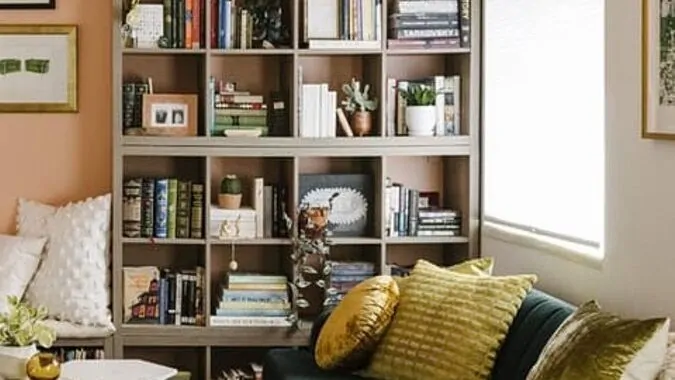
Storage cubes are the quiet workhorses of small living room design. They stack, they slide, they hide the stuff that would otherwise pile up on the coffee table by Friday night. And unlike traditional shelving, cubes give you flexibility to rearrange the whole setup whenever the mood strikes.
A four-cube grid works as a low console behind a floated sofa. A tall six-cube tower fills a narrow wall without eating floor space. Mix open cubes with fabric bins in a matching tone so half becomes display and half becomes hidden storage. Fill the open ones with books, a small plant, or a stack of vintage magazines. The rest quietly swallow up the remotes, chargers, and random paperwork that every living room somehow collects. It’s the kind of solution that keeps the room looking calm on a Tuesday, not just on photo day.
Great for families, small apartments, and anyone tired of coffee table clutter.
9. Enhance The Light Amount
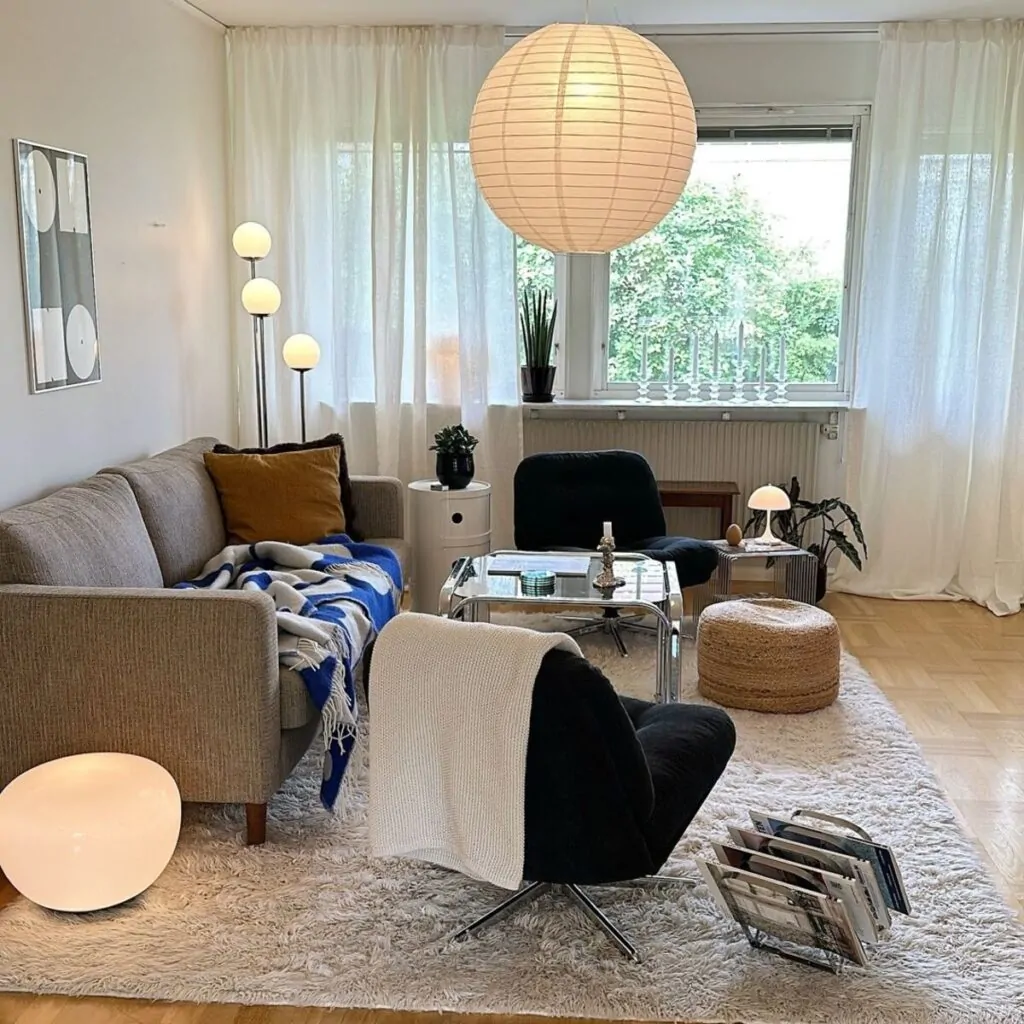
Light is the secret weapon of every small living room. A well-lit space always feels larger than a dim one, even when the square footage is identical. The goal is layering, not just adding a brighter bulb to the ceiling fixture and calling it done.
Start with the natural light by keeping windows unblocked and swapping heavy blinds for sheer panels. Then build in three layers of artificial light. An overhead fixture for general glow, a floor lamp beside the reading chair for warm evening light, and a small table lamp on a side table for that soft mood pool people gravitate toward. Choose warm bulbs in the 2700K range so the room feels golden instead of clinical. Suddenly the space feels twice as big at 8pm as it did before, without moving a single piece of furniture.
Perfect for rooms with only one window, north-facing spaces, and anyone who does most of their living after sunset.
10. Corner Shelf Unit
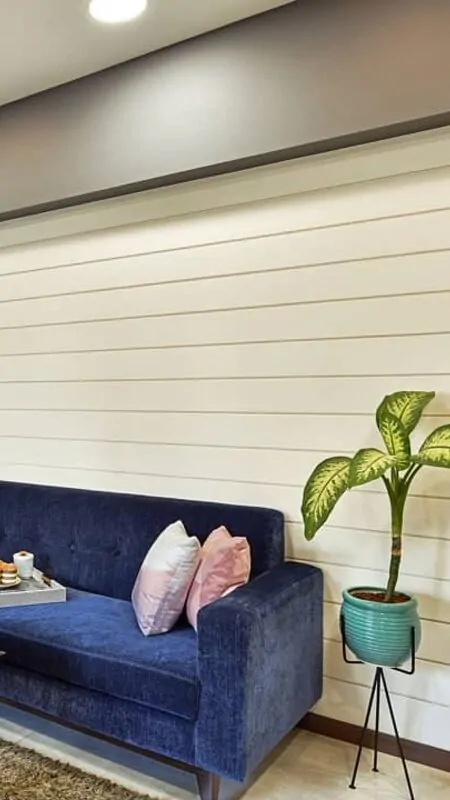
Corners are the most overlooked real estate in any small living room. They usually sit empty or get filled with a random floor lamp that never quite fits the space. A corner shelf unit changes that by turning dead space into a functional display moment that actually adds to the room instead of just occupying it.
Look for units with a slim triangular footprint and four or five open shelves. Style them the way you would a bookshelf. Books stacked horizontally and vertically, a small trailing plant on the top shelf, a ceramic vase or two, and maybe a framed photo leaning casually against the back. The vertical lines draw the eye up and make the ceiling feel higher, while the open shelves keep the corner feeling airy instead of stuffed. It’s the kind of small addition that quietly pulls the whole room together.
Perfect for awkward corners, tight layouts, and anyone who has run out of wall space but not stuff to display.
💡 Pro Tip: Style the top shelf with the lightest, most delicate items and save the heaviest books for the bottom. It creates a visual gradient that feels balanced and keeps the unit from looking top-heavy in a small room.
11. Multifunctional Ottoman
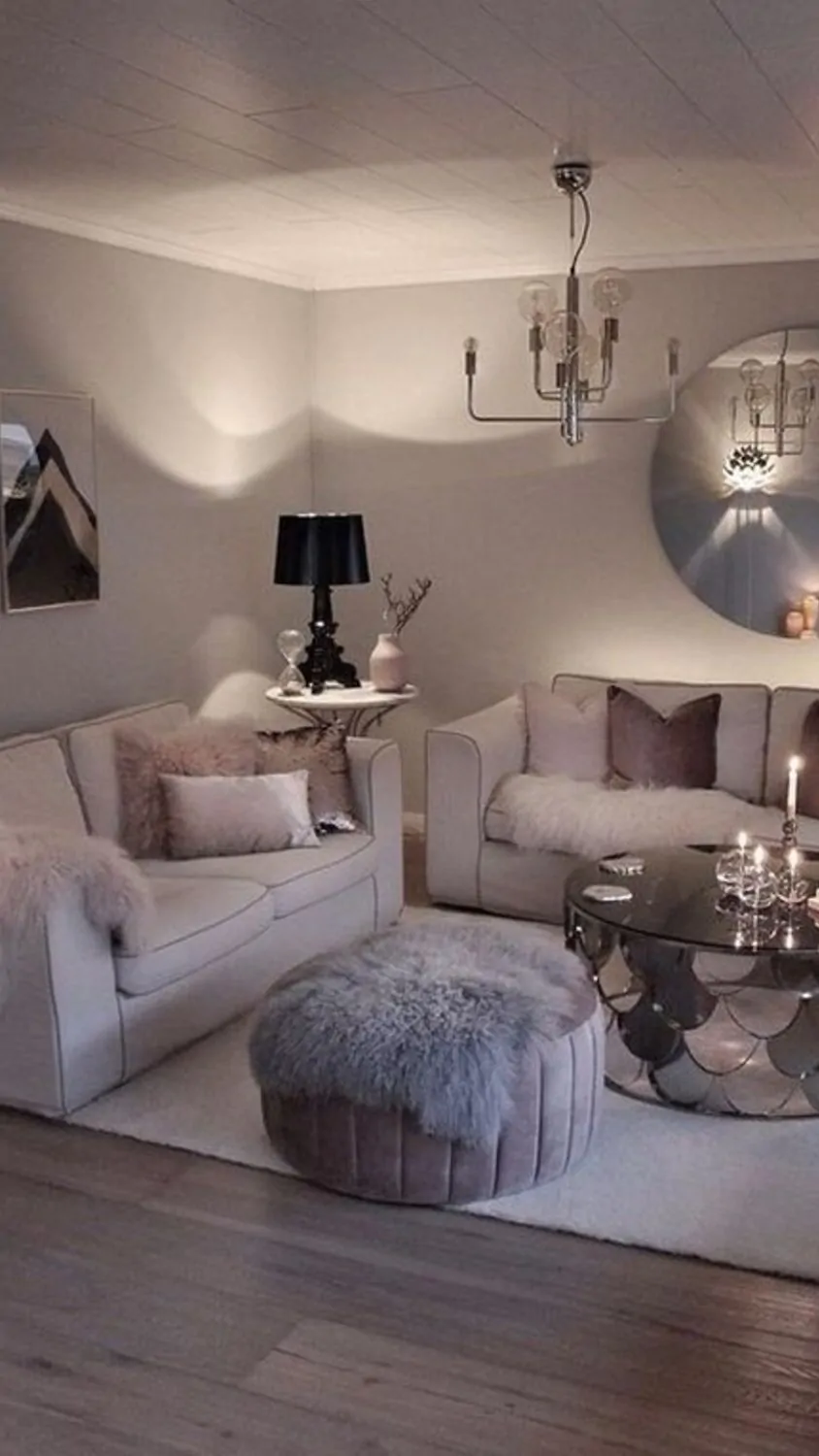
An ottoman that only does one job is a missed opportunity in a small living room. The right one works as a footrest in the evening, extra seating when friends drop by, a coffee table with a tray on top, and hidden storage for blankets all at once. That kind of versatility is exactly what tight spaces need.
Look for a storage ottoman with a flip-top lid and a soft upholstered finish in a durable fabric like performance linen or bouclé. Pick a size that fits comfortably in front of the sofa without blocking the walkway. Add a woven tray on top and it instantly becomes a coffee table for morning cups and evening books. Inside, tuck away throws, board games, or the extra pillows nobody wants to look at during the day. It’s the single hardest-working piece in the room, and it never announces how much it’s doing.
Perfect for small apartments, family rooms, and anyone who hosts more people than their space technically allows.
12. Go For A Modern Fireplace
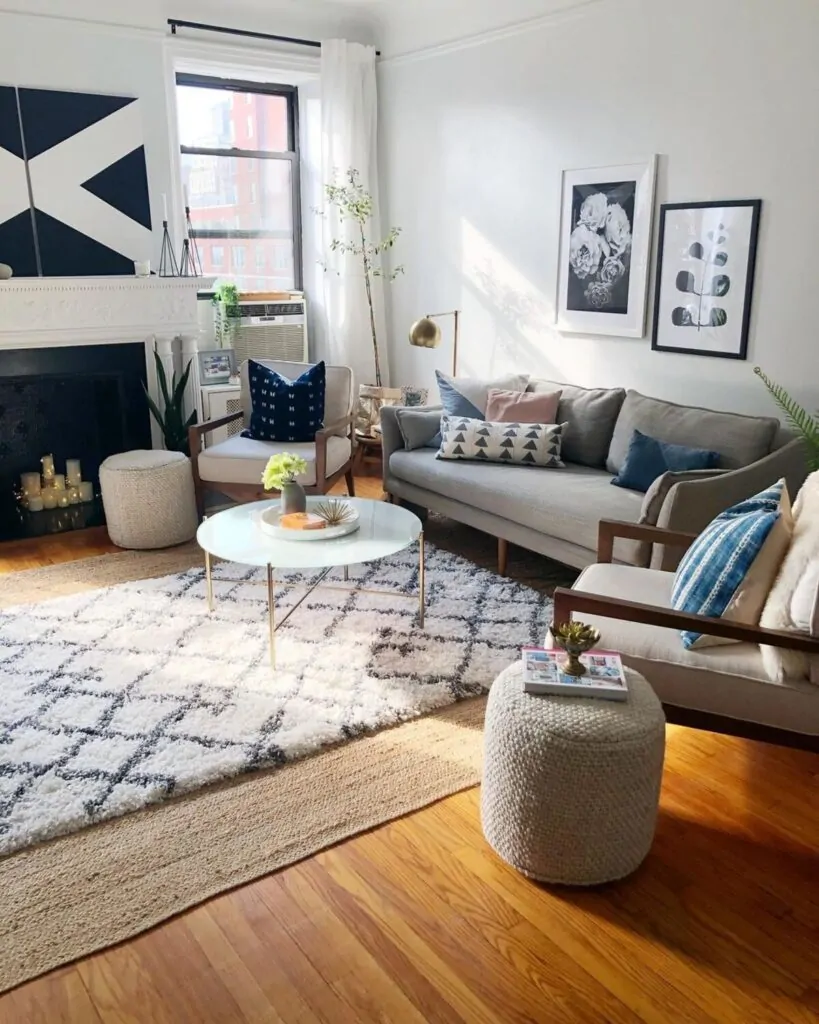
A fireplace in a small living room used to feel impossible. Traditional builds ate up wall space and required chimneys nobody wanted to deal with. Modern fireplaces changed that entirely. Slim electric units and wall-mounted linear designs bring the warmth and glow without demanding half the room in exchange.
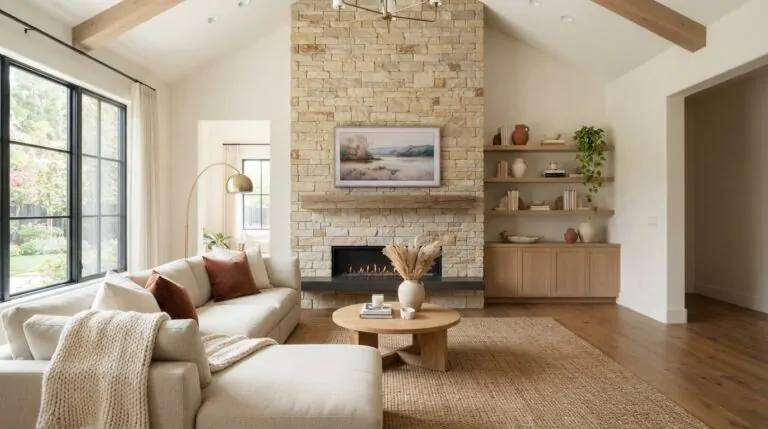
Choose a linear electric fireplace mounted at eye level, or a freestanding bio-ethanol unit that slides against any wall. Frame it with a simple stone or matte black surround to keep the look grounded and architectural. Skip the heavy mantel and let the fireplace itself become the focal point. On cold evenings, the flicker of flame draws everyone toward it and makes even the smallest room feel like the coziest spot in the house. It’s the kind of detail that turns a living room into a place people actually want to linger.
Great for renters with wall-mount options, modern apartments, and anyone chasing that quiet, evening-glow feeling.
13. Choose Wall-mounted Storage
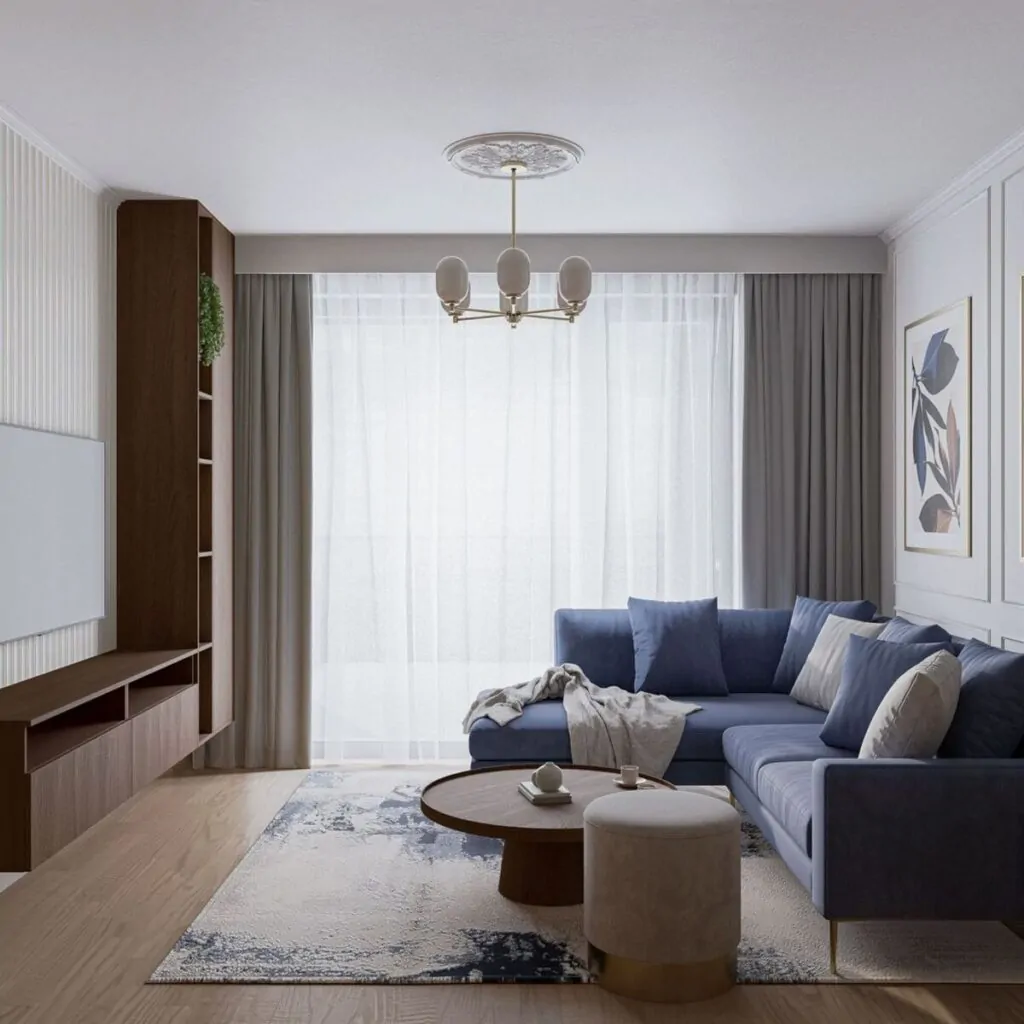
Floor space is precious in a small living room, so the smartest move is often to stop using it entirely. Wall-mounted storage lifts everything off the ground and gives the room that light, floating quality that makes even the tiniest space feel intentional and modern.
Think floating shelves in staggered arrangements, a wall-mounted media console under the TV, and slim ledge shelves for framed art that can be swapped out on a whim. The magic happens underneath. That visible strip of floor beneath every piece tricks the eye into reading more space than actually exists. Stick with warm woods or matte finishes to keep the look soft rather than sterile. Vacuuming becomes easier, dust has fewer places to hide, and the whole room feels like it’s breathing a little deeper.
Ideal for renters willing to patch a few holes, minimalist lovers, and anyone who wants their floors to feel as open as possible.
Suggested Image: A small living room wall featuring a floating walnut media console under a wall-mounted TV, two staggered floating shelves above styled with books and a small trailing plant, and visible floor space beneath. Warm neutral tones, soft daylight from a side window.
14. Partition To Zone Areas
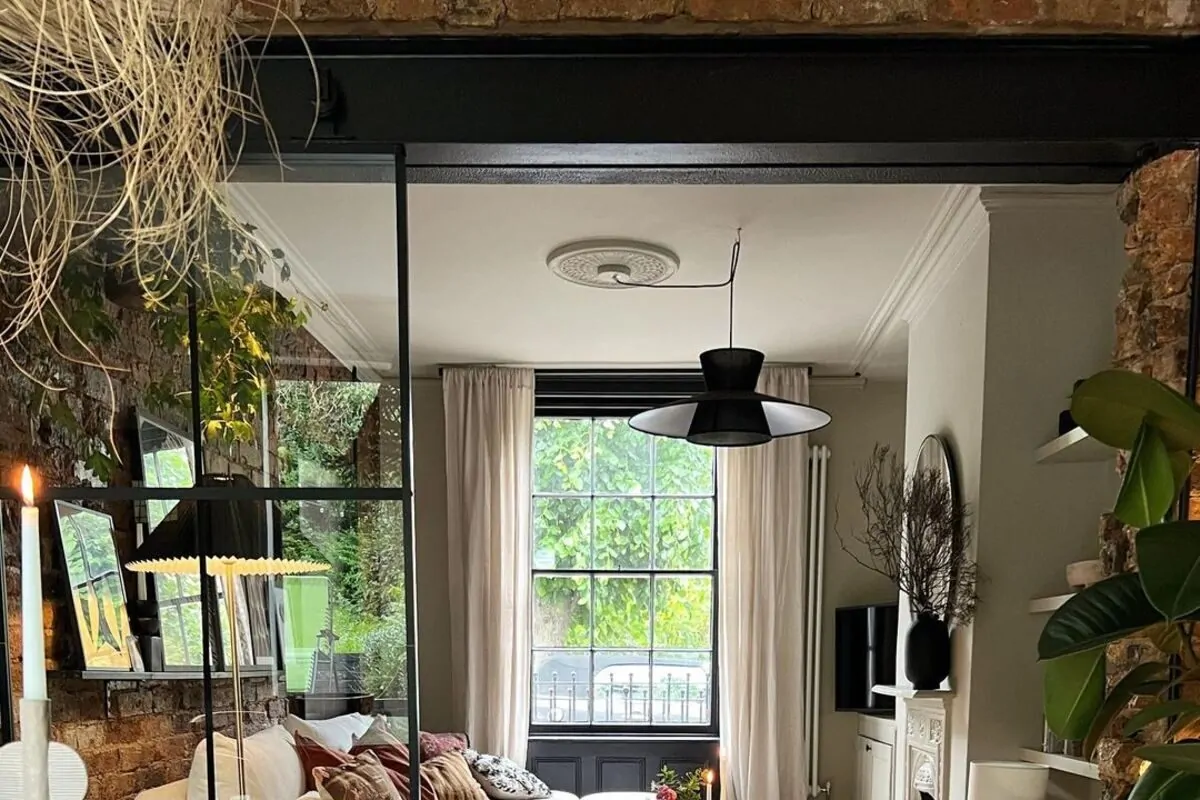
Open-plan small living rooms can feel like one big undefined blob, especially when the living area, dining nook, and entryway all share the same square footage. A partition gives the room structure without adding walls, quietly telling the eye where one zone ends and the next begins.
Skip the heavy floor-to-ceiling dividers and go for something lighter. A slatted wood screen, an open bookshelf used as a room divider, or even a tall trailing plant on a stand. Each one creates separation while still letting light and air flow through. Place it between the sofa and the dining table, or between the front door and the seating area to define an entryway that didn’t exist before. Suddenly the room feels organized instead of scattered, and every zone has its own quiet purpose.
Perfect for studio apartments, open-plan layouts, and anyone tired of a living room that bleeds into every other function of the home.
15. Integrate Vintage Furniture
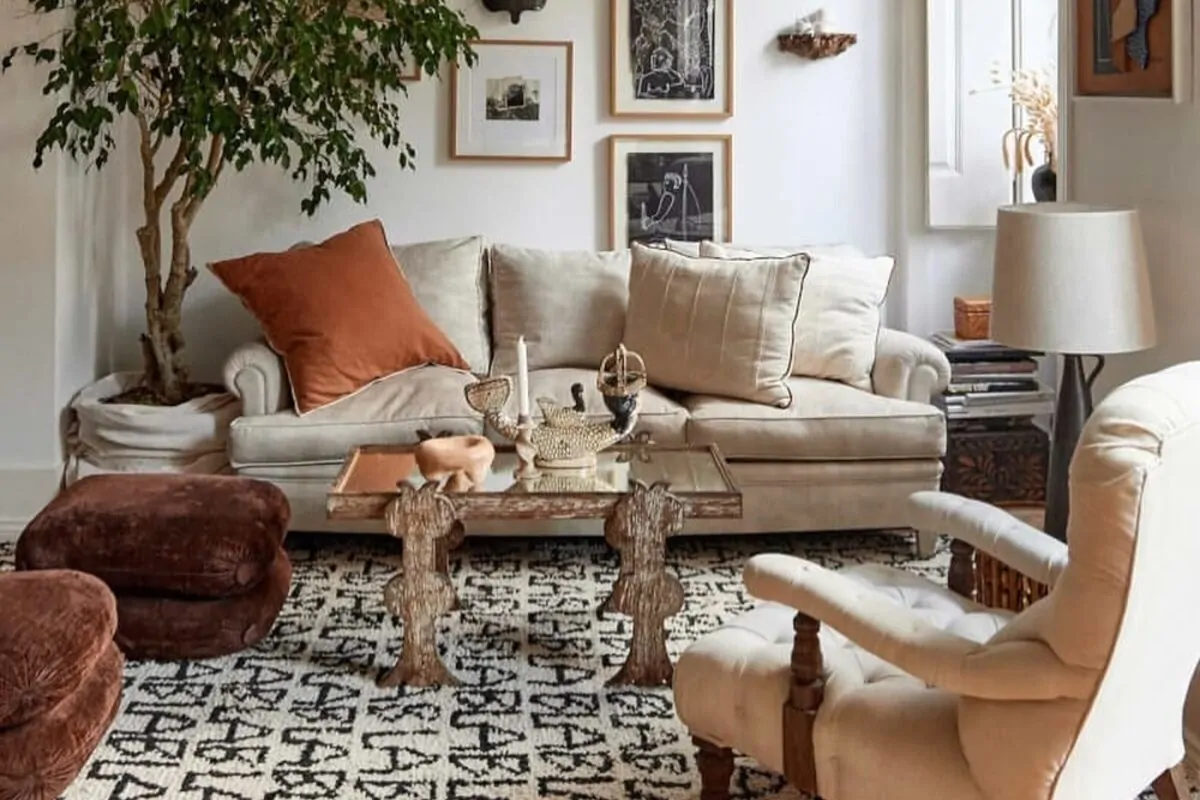
Vintage pieces bring something new furniture just cannot replicate. A story, a patina, a character that took decades to develop. In a small living room, even one well-chosen vintage piece can shift the whole vibe from generic to collected, from styled to actually lived-in.
Hunt for a mid-century side table with turned legs, a worn leather armchair with a soft slouch, or a brass floor lamp with a weathered shade. Pair it with modern pieces to keep the room feeling fresh instead of dated. The contrast is what makes it work. A sleek linen sofa next to a vintage walnut coffee table looks curated in a way that all-new furniture never quite achieves. Weekend flea markets, estate sales, and secondhand shops become part of the fun. The room grows slowly, one story at a time.
Great for slow decorators, character seekers, and anyone who prefers rooms with a little history in them.
16. Focus On The Sofa
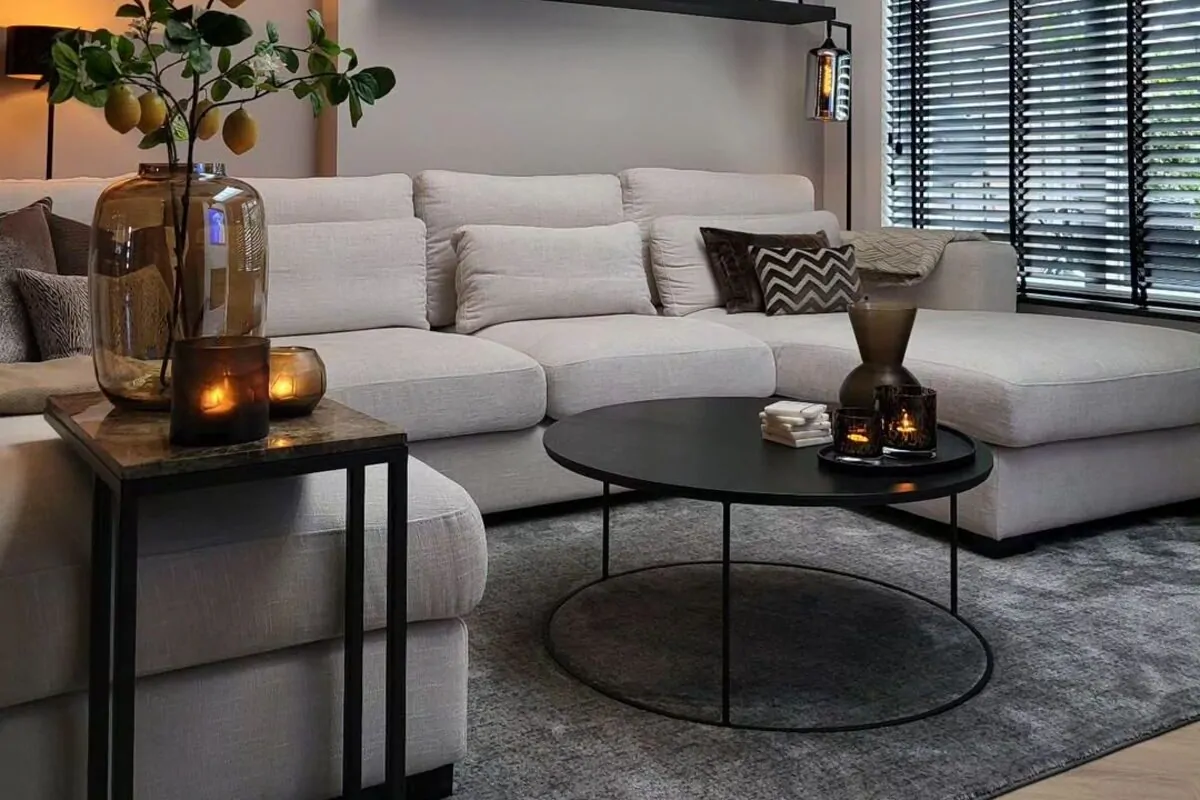
In a small living room, the sofa is almost always the first thing anyone sees walking in. That makes it the piece worth spending the most time choosing. A great sofa anchors the whole room, while a wrong one throws off the balance no matter how carefully everything else is styled around it.
Measure the space twice before falling in love with anything. Depth matters as much as length, and low-back designs almost always feel less bulky in a compact room. Choose a fabric that can handle real life like a tight-woven performance blend or a durable linen in a forgiving mid-tone. Then style it slowly. Two large pillows in the corners, one lumbar in the middle, and a soft throw folded over the arm. The sofa becomes the piece the room quietly organizes itself around, the way a good song has one melody everything else supports.
Perfect for anyone starting a small living room from scratch or ready to invest in the piece that matters most.
17. Elegant Bench For Extra Seating Space
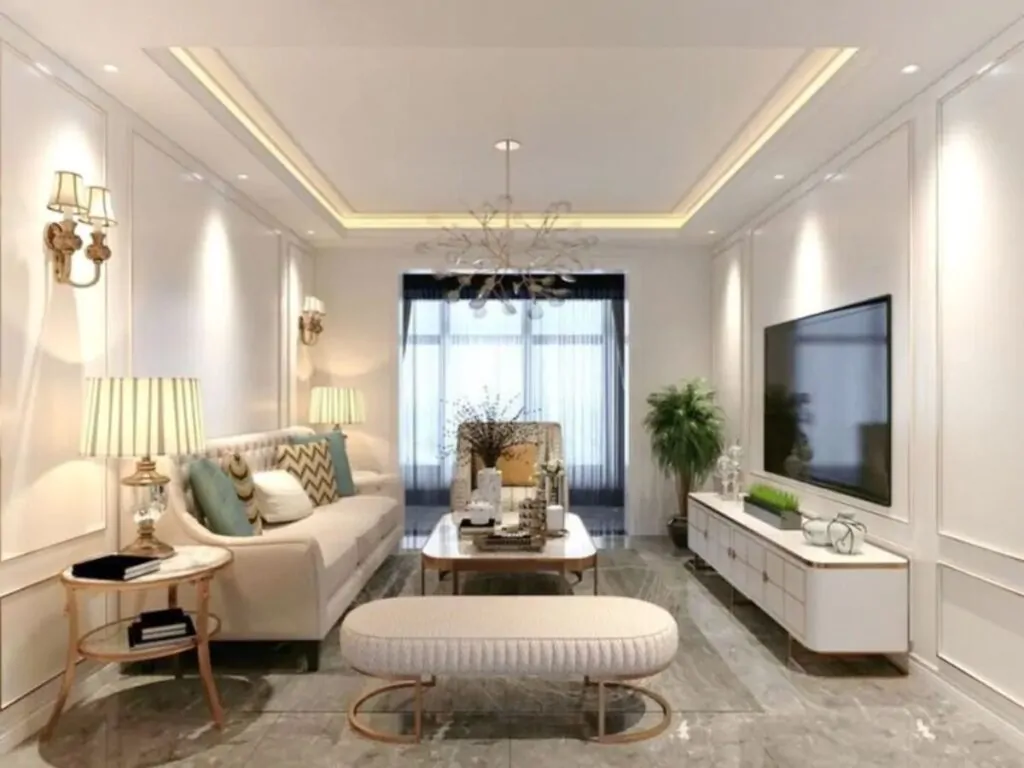
A bench is one of the most underrated pieces in small living room design. It offers extra seating when friends drop by without permanently eating up the floor space that a second armchair would demand. When nobody is sitting on it, it becomes a styling opportunity instead of dead weight.
Slide a slim upholstered bench along the back of a floated sofa, or tuck one under a window to create a soft reading nook. Choose one with tapered legs and a low profile so it disappears visually when not in use. Style it with a folded throw and a small stack of coffee table books when guests are gone. When the room fills up, the books slide onto the coffee table and the bench pulls up to the seating circle. It quietly solves the extra-seat problem every small living room eventually runs into.
Great for frequent hosts, book lovers, and anyone who wants flexibility without cluttering the room.
18. Choose Muted Tones
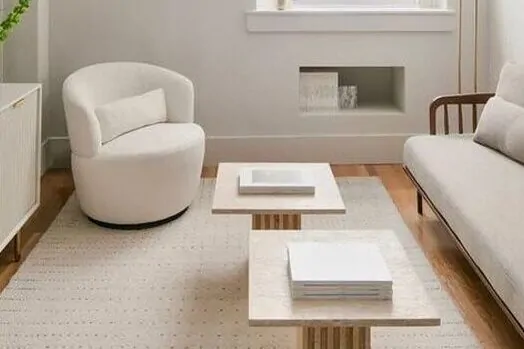
Bold, saturated colors have their moment, but in a small living room, muted tones almost always win. Soft, dusty shades bounce light gently around the room instead of absorbing it, which quietly makes the whole space feel bigger, calmer, and more grounded.
Think warm oatmeal walls, a soft sage green throw, a dusty terracotta pillow, and a pale wood coffee table. The palette should feel like it was pulled from a slow morning rather than a paint chip aisle. Muted tones also age beautifully. They never feel dated the way trend colors do, which means the room still looks intentional five years from now without needing a repaint. Add texture through boucle, linen, and wool to keep the softness from feeling flat. The room ends up feeling like a long exhale after a long day.
Perfect for slow decorators, quiet homebodies, and anyone building a room that should feel timeless instead of trendy.
19. Blend The Utilities
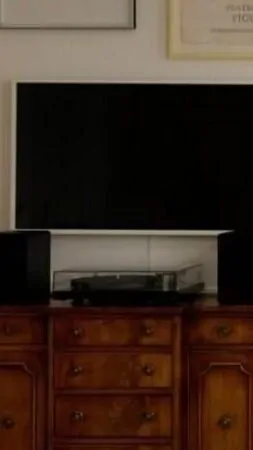
Every living room has utilities that nobody wants to look at. The router blinking on a shelf, the tangle of charging cables behind the sofa, the thermostat sitting in the middle of the wall. In a small space, these things get noticed faster because there is nowhere for them to hide. Blending them into the design is what separates a styled room from a truly polished one.
Route cables through adhesive channels painted the same color as the wall. Tuck the router into a woven basket with the lid slightly open for ventilation, or slip it inside a decorative box on a lower shelf. Swap generic white outlet covers for ones that match the wall paint. Even the TV can be softened by mounting it flush and surrounding it with framed art so it reads as part of a gallery instead of a black rectangle. Suddenly the room feels calm because the eye finally has nothing distracting to catch on.
Great for renters, remote workers, and anyone who wants their small living room to feel finished instead of functional.
💡 Pro Tip: Grab a small roll of cable clips and a fabric cord sleeve in a color close to your wall. Ten minutes of hiding cords behind the TV console makes the whole room look ten times more expensive without spending anything else.
20. Shelves For Decorations
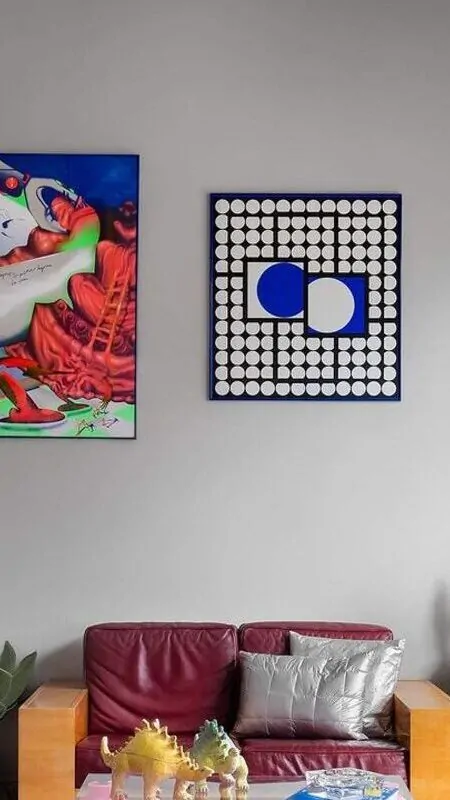
Shelves built purely for decoration serve a different purpose than storage shelves. They are less about function and more about giving the room a place to breathe, a spot where the eye can rest on something intentional instead of scanning for clutter. In a small living room, that quiet moment of styled emptiness matters more than most people realize.
Float two or three slim shelves in a staggered arrangement above a console or along a bare wall. Style them loosely with plenty of negative space between objects. A ceramic vase with a single dried stem, a small stack of art books, a framed photo leaning casually against the back, and one sculptural object that catches the light. Rotate the pieces seasonally to keep the room feeling fresh without buying anything new. The shelves quietly become the room’s personality, changing gently as life does.
Perfect for collectors, seasonal decorators, and anyone who wants a small living room that always feels alive.
That’s a wrap on all twenty ideas. Small living rooms hold more potential than square footage ever suggests, and the right mix of these small moves turns tight spaces into the coziest rooms in the whole house.
You Might Also Love These Ideas
- Galentine’s Party Decor. Soft pinks, warm candlelight, and playful touches that turn any gathering into a dreamy evening with friends.
- Modern Wallpaper Decor Ideas. Bold patterns and rich textures that instantly add personality and warmth to plain, forgotten walls.
- 15+ Genius Small Living Space Ideas. Smart, stylish tricks that make tight rooms feel open, calm, and beautifully lived-in.
- 15 Space Saving Products. Clever finds that quietly solve clutter while keeping your home feeling airy and effortlessly organized.
Frequently Asked Questions
How can I make my small living room look bigger without renovating?
The fastest tricks are floating the couch a few inches off the wall, hanging curtains right below the ceiling, and swapping heavy blinds for sheer panels. Layered lighting with warm bulbs also makes a huge difference. These small moves cost almost nothing but change how the whole room feels within an afternoon.
What color palette works best for a small living room?
Muted, warm tones almost always win. Think oatmeal, soft sage, dusty terracotta, and pale wood. They bounce light gently around the room and never feel dated. Save bold colors for pillows, throws, or a single accent piece so the palette stays flexible over time.
Should I use a large sofa or two small chairs in a small living room?
One generous sofa usually beats a scattered mix of small furniture. It reads as intentional instead of busy, and it anchors the room visually. Add a bench or ottoman for flexible extra seating instead of squeezing in a second armchair.
How do I add storage without making the room feel cluttered?
Go vertical and go hidden. Wall-mounted shelves, storage ottomans, and cube units with fabric bins keep the mess out of sight while using space that would otherwise sit empty. Built-ins painted the same color as the wall almost disappear entirely.
Do plants really make a small living room look bigger?
Yes, surprisingly so. Plants soften the hard lines where walls meet floors and add movement that static furniture cannot. Group them in odd numbers and mix heights for the most natural look. Even two or three well-placed plants shift the whole vibe.
Can I fit a fireplace in a small living room?
Absolutely. Slim electric or bio-ethanol fireplaces mount flat against the wall and need no chimney. They deliver the warmth and glow without eating up floor space, and they instantly become the room’s focal point on cold evenings.
What is the biggest mistake people make in small living rooms?
Hanging curtains right above the window frame. It chops the wall in half and makes the ceiling feel lower than it is. Mounting the rod just below the ceiling instead is a five-minute fix that quietly transforms how tall and open the whole room feels.
Conclusion
Small living rooms are not a limitation, they are an invitation to design smarter. Every choice carries more weight, every piece has to earn its spot, and the results almost always feel more intentional than sprawling rooms ever do. The twenty ideas in this list are not rules, they are starting points. Pick the three or four that feel right for your space and start there.
The best small living rooms are the ones built slowly, one good decision at a time. A floated sofa this month, ceiling-high curtains next month, a vintage side table found at a weekend flea market after that. The room grows with you, and eventually it stops feeling small and starts feeling exactly like home.